You sit in the chair with a photo of a layered cut saved, but the grow-out line from last time makes you hesitate. A long layered haircut buys you the most styling flexibility for the least daily effort, layers can be blown out smooth or left to air-dry with texture, and the shape holds for months between trims.
31 options cover the spectrum from subtle face-framing to voluminous, air-dried to neat. Which is why Dreamy Long Layered Haircuts 2027 fill so many saved boards. Fine, thick, wavy, or straight hair finds a version here. The hard part is picking one.
Face-framing layers and curtain bangs on a thick wavy brunette
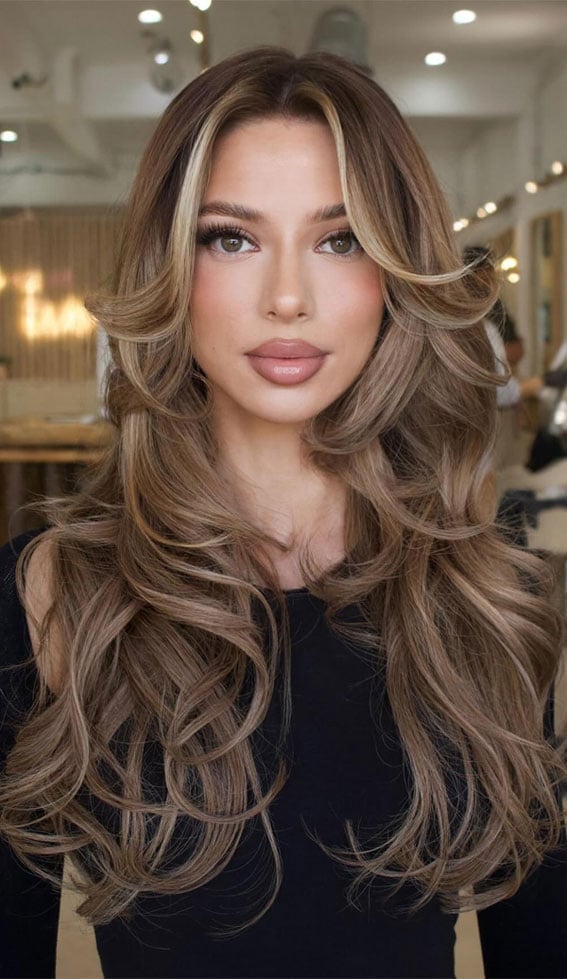
Face-framing layers that start around the chin and cascade down give thick wavy hair a shape that moves instead of sitting in a heavy block. The curtain bangs blend into those front sections, so the line from brow to jaw is one continuous curve rather than a hard cut. A middle part keeps the bangs symmetrical, and the bouncy blowout lifts the wave pattern without fighting the natural texture. This works because the layers remove weight exactly where thick hair needs it most. The catch: fine hair collapses in this cut. The layers rely on the density to keep their shape, and a blowout on fine strands would fall flat within an hour. Tell your stylist: long layers starting at chin, blended curtain bangs, bouncy blowout.
Softness from face-framing pieces and curtain bangs

Blunt cuts sit still; this one moves with the air-dried wave. The long face-framing pieces blend into the body without a visible step, and the curtain bangs sweep the cheekbone softly. Fine wavy hair needs that lightness at the front to avoid looking stringy as it dries. The ash blonde base with honey highlights adds dimension without a full bleach commitment. Skip it if you prefer high-shine styling; the air-dried finish looks matte and textured, not glossy. A middle part lets the bangs fall symmetrically, which suits longer face shapes by drawing the eye outward rather than straight down.
Voluminous layers and soft bangs for fine wavy hair
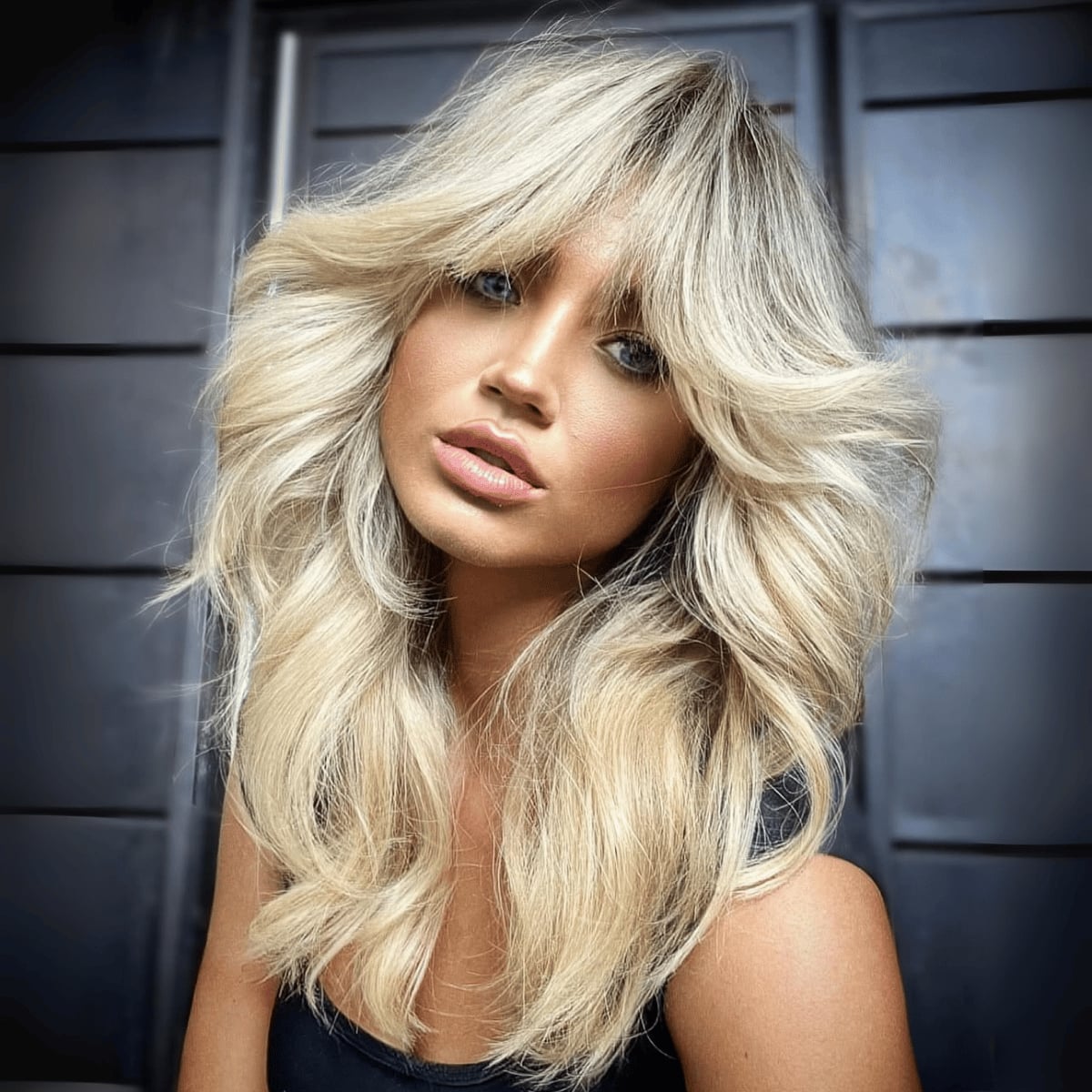
Can fine wavy hair hold a blowout? It can when the cut removes enough weight. The long layers here start higher than you think, which releases the hair from its own mass and lets the wave pattern lift rather than hang. Soft curtain bangs add softness around the face without cutting the overall length. The ash blonde base with lighter highlights gives the eye something to track through the texture. Pass when you have thick hair; this shape relies on the fine strands to build lift, and dense hair would just sit heavy. A round brush and a cool shot finish the blowout.
Movement from shorter front layers and balayage
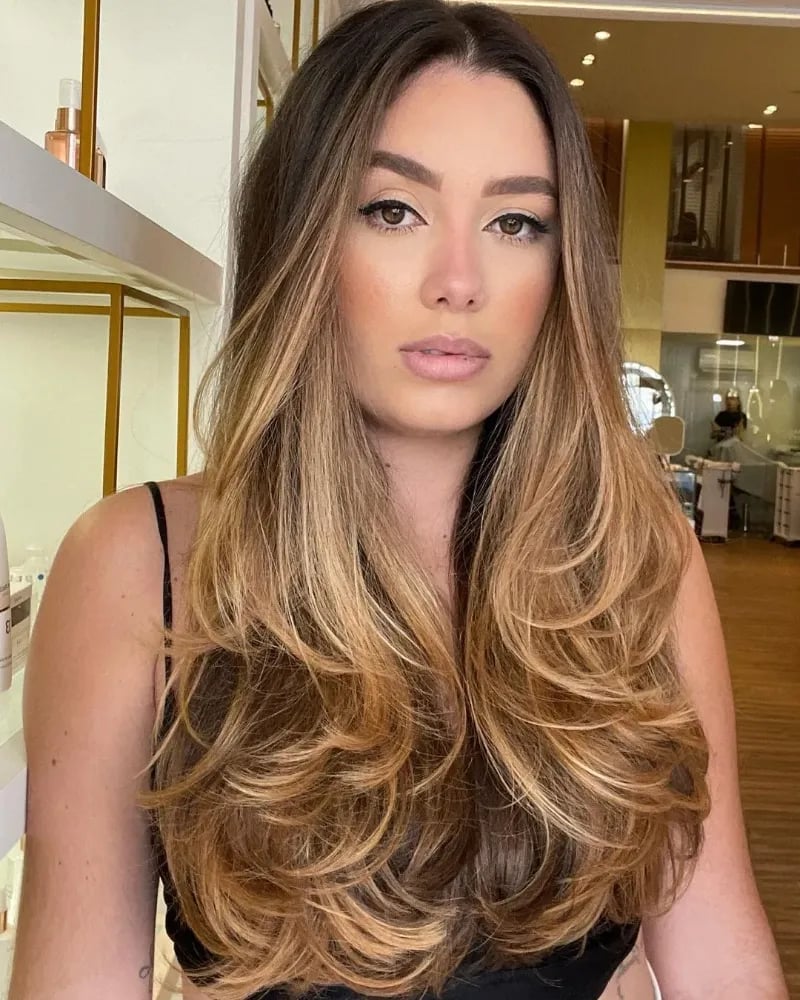
Long layers and a middle part keep the silhouette clean while the blonde balayage does the color work. Fine, wavy texture needs that lift around the face, and the shorter front sections deliver it without cutting the overall length. The blowout smooths the wave just enough to show the balayage transition.
The honest trade-off: no bangs means no softening at the brow. If your forehead is long or you rely on fringe to balance a square jaw, this cut will not help. Skip it when you want a low-styling routine. The front pieces need a round brush to curve properly, and the layers look blunt if you let them air-dry flat. Ask your stylist for: long layers, shorter front sections, dark brown with blonde balayage.
Ash blonde with honey highlights framing face
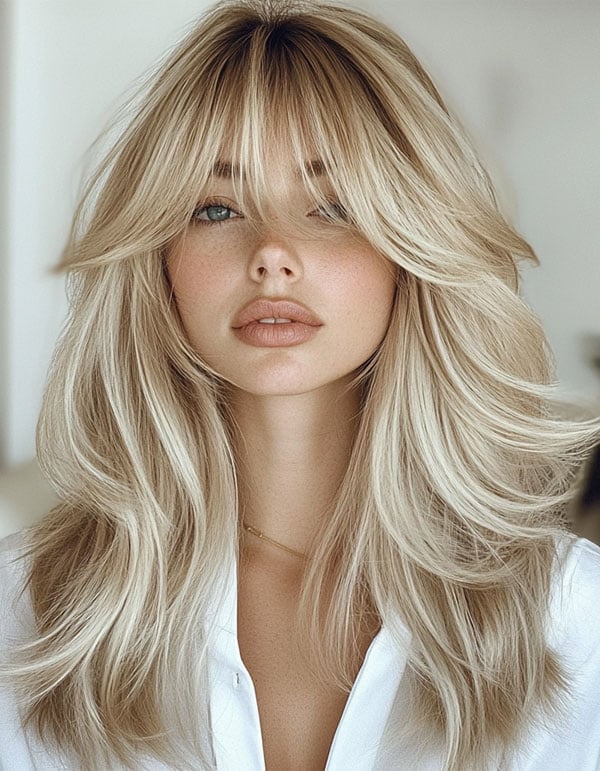
Curtain bangs in ash blonde with lighter highlights look deliberate rather than accidental. The fine, wavy texture here is the key: the layers are cut so the bangs fall just past the cheekbone, blending into the longer body without a visible step. A middle part keeps the bangs symmetrical, and the gentle blowout gives the wave pattern room to bend without frizz.
The precision is in the transition. Those curtain bangs need to be cut dry and checked against your natural wave, or they will sit straight then curl too short. The ash base keeps the highlights from looking brassy, but the lighter pieces still catch enough light to soften the overall tone.
Flowing layers and curtain bangs in ash blonde

Fine, wavy hair needs a cut that does not let the weight pull the shape flat. Long flowing layers with curtain bangs solve that exact problem. The ash blonde base with lighter highlights catches the eye without demanding a full commitment to platinum. Tell your stylist: long flowing layers, curtain bangs, ash blonde with highlights. The blowout is the finishing move. A large round brush and some patience give the fine texture the volume it otherwise lacks. Layers that land at the chin and collarbone create the lift; the curtain bangs soften the transition. A trim every eight weeks keeps the shape from turning into one long blanket.
Air-dried waves with face-framing pieces
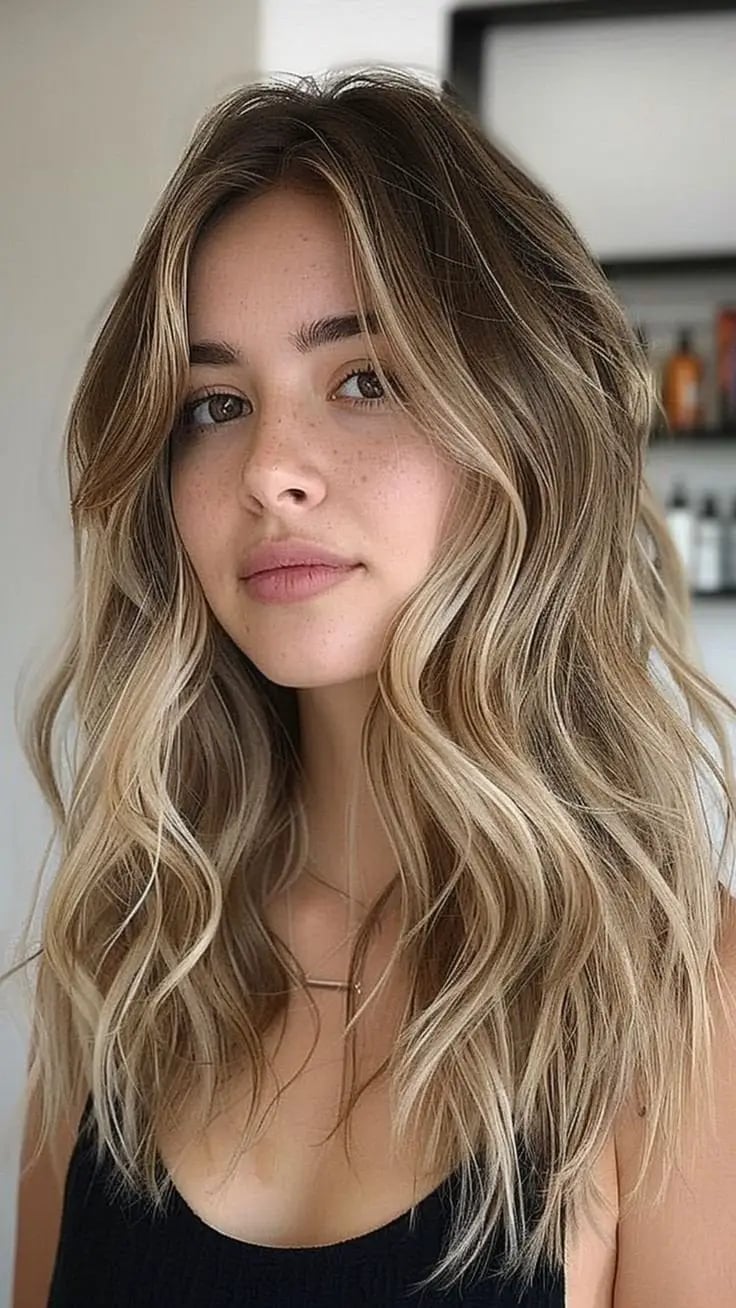
A blowout version of this cut would look more neat, but the air-dried finish is the whole point. The dark blonde base with lighter highlights works with the natural wave, not against it. Curtain bangs and the shorter front sections frame the face without needing a curling iron. A wave-enhancing cream on damp hair is enough to encourage the texture. The cut does the work: long layers that start below the chin stop the ends from dragging the wave out. Not for anyone who prefers a sleek, glassy finish. This look thrives on a little imperfection. Trim every ten to twelve weeks, or the face-framing pieces will outgrow their job.
Thick wavy hair with face-framing curtain bangs, close-up take
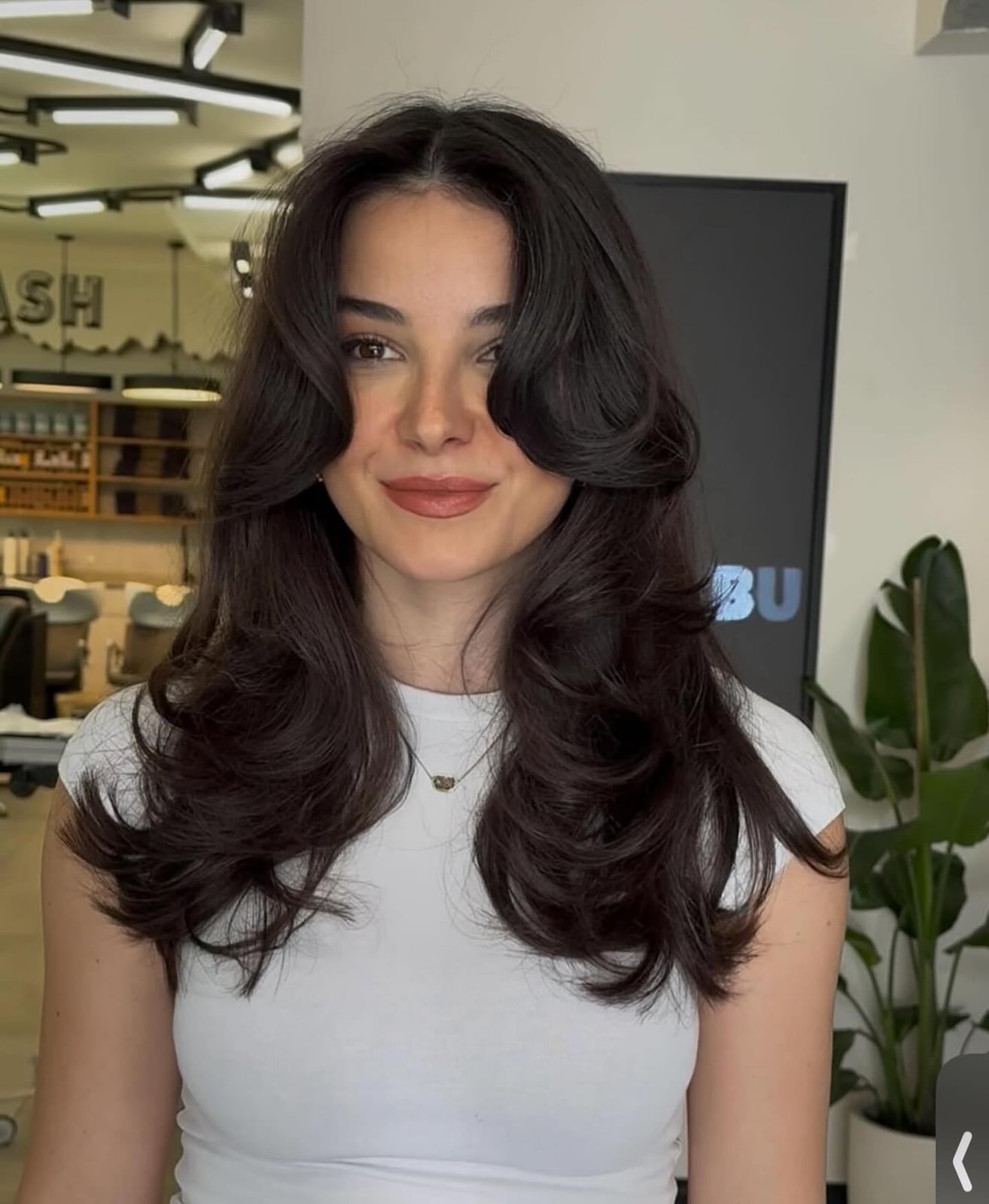
The trick here is the volume at the sides. Thick, wavy dark brown hair can feel heavy, but the blended layers release the weight without losing the fullness. The middle part and face-framing curtain bangs draw the eye outward instead of straight down. A voluminous blowout with a large round brush sets the shape. The layers are cut so the wave sits at the same height around the head, no random bumps. This cut asks for a blow-dryer and a few minutes of attention. The silhouette moves instead of sitting still.
Dark brown air-dried hair with soft front pieces

Salon-leaning does not have to mean salon-only maintenance. This cut works because the shorter front sections and soft curtain bangs are designed to air-dry into shape. The dark brown base is the anchor; the fine, wavy texture does the rest. A centered part keeps the face-framing pieces symmetrical. This is not a DIY project for a kitchen mirror. The layers need a trained hand to land at the right points. But once the cut is done, the daily routine is simple: a leave-in conditioner, a scrunch, and walk out the door. The trade-off is that a sleek blowout will take extra effort here.
Dimension from lighter strands on dark brown base

A single shade of dark brown can look flat on fine, wavy hair. Thin lighter strands woven through the base solve that without a full color commitment. The long layers and soft curtain bangs keep the silhouette airy. Styled with an air-dried texture, the lighter pieces create subtle dimension at different angles. A texturizing spray on dry hair adds separation and prevents the fine texture from clumping. The catch: this look works best when the layers are cut to hit just below the collarbone and around the jaw.
Neat finish from smooth blowout on layers
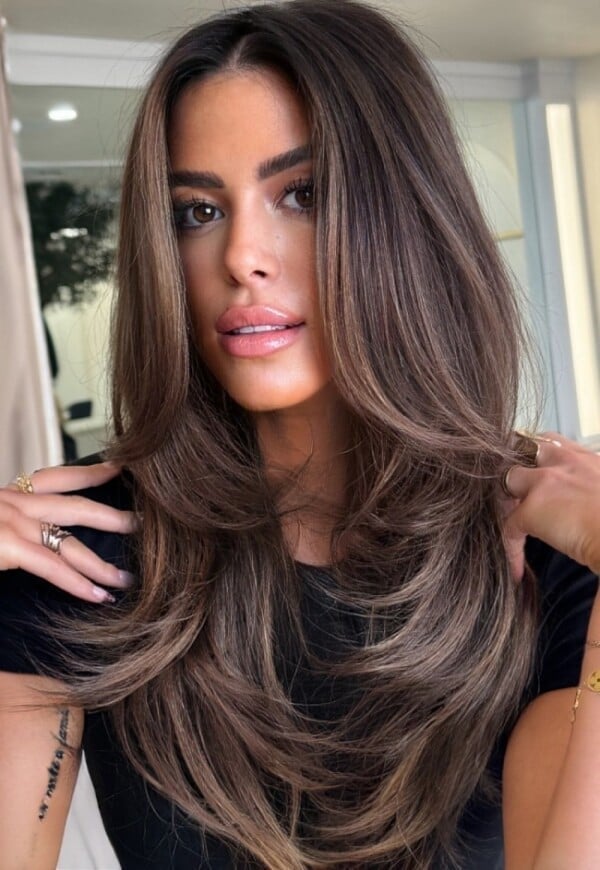
Dark brown with subtle highlights reads richer when the cut does the work. Long layers cut through the density, so the wave pattern bends instead of sitting in a heavy block. A middle part keeps the face-framing pieces symmetrical. They land at the cheekbone and jaw without needing a bang. The smooth blowout seals the polish. Fine highlights are placed at the ends, not the root, so grow-out stays soft. This is a cut that expects a round brush and a heat protectant. Air-drying is not an option here; without the blowout, the layers can look blunt instead of blended.
Thick, wavy texture needs that precision layering to avoid a triangle shape at the bottom. The stylist carves the layers so the weight falls at the collarbone, then tapers through the mid-lengths. The result: a silhouette that moves when you turn your head.
Copper highlights with a full fringe and face-framing layers
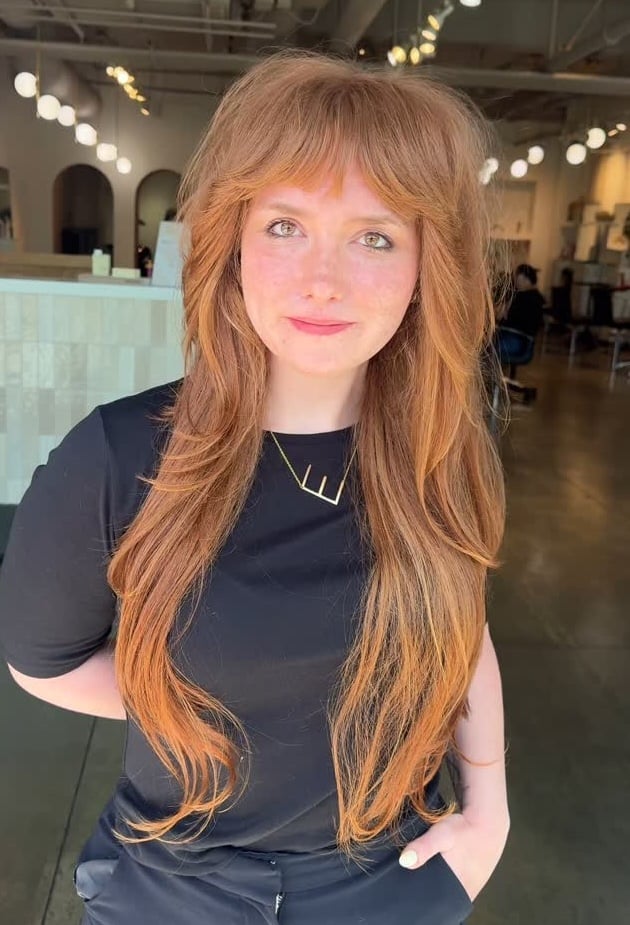
Does a full fringe work on fine, wavy hair? It does when the cut keeps the fringe light and the layers short enough at the front to avoid pulling the weight downward. The long layers stay soft through the body, while the shorter front sections frame the cheekbone and soften a square or oval face. The copper base with blonde highlights creates dimension without needing a full head of foils; the lighter pieces sit near the face and the ends. Pass when you have very thick hair that might turn the fringe into a heavy curtain. The fringe needs a quick dry every morning. A minute with a round brush keeps it from splitting into two uneven wings by noon.
Voluminous blowout with curtain bangs on thick dark brown hair
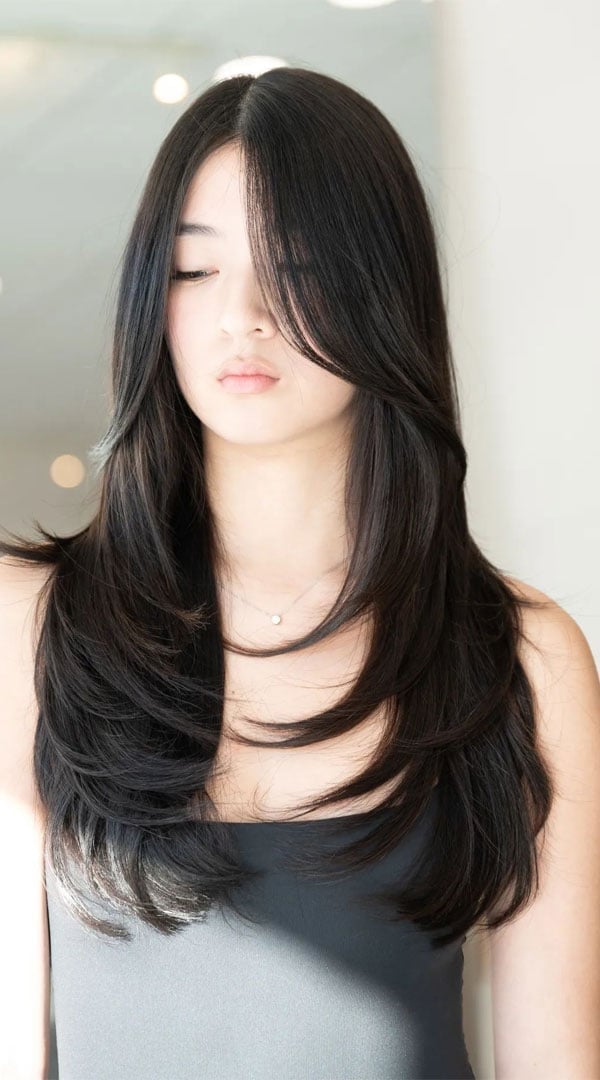
A voluminous blowout on a dark brown base holds its shape for about two days before the wave pattern starts to relax. The long layers are cut so the curtain bangs blend into the face-framing sections, which land near the cheekbone and jaw. That middle part lets the bangs fall symmetrically on both sides, so the volume sits evenly. The real wear reality: by day three, the bangs need a refresh with a round brush and a spritz of water. The blowout itself takes a solid twenty minutes with a large round brush and a nozzle. This cut demands the dryer.
Air-dried layers and curtain bangs in ash blonde, wavy

Ash blonde with lighter highlights reads softer when the cut lets the wave pattern do the shaping. The long layers are cut so the curtain bangs fall just past the brow bone, blending into the face-framing pieces. A middle part keeps the bangs symmetrical without effort. The fine texture benefits from the lighter highlights at the mid-lengths and ends. They add the illusion of depth without bulk. This cut rewards a wave spray and zero heat. The catch: the bangs need a quick dry with a round brush on humid days, or they curl into a tight spiral.
Smooth blowout on thick straight dark brown hair
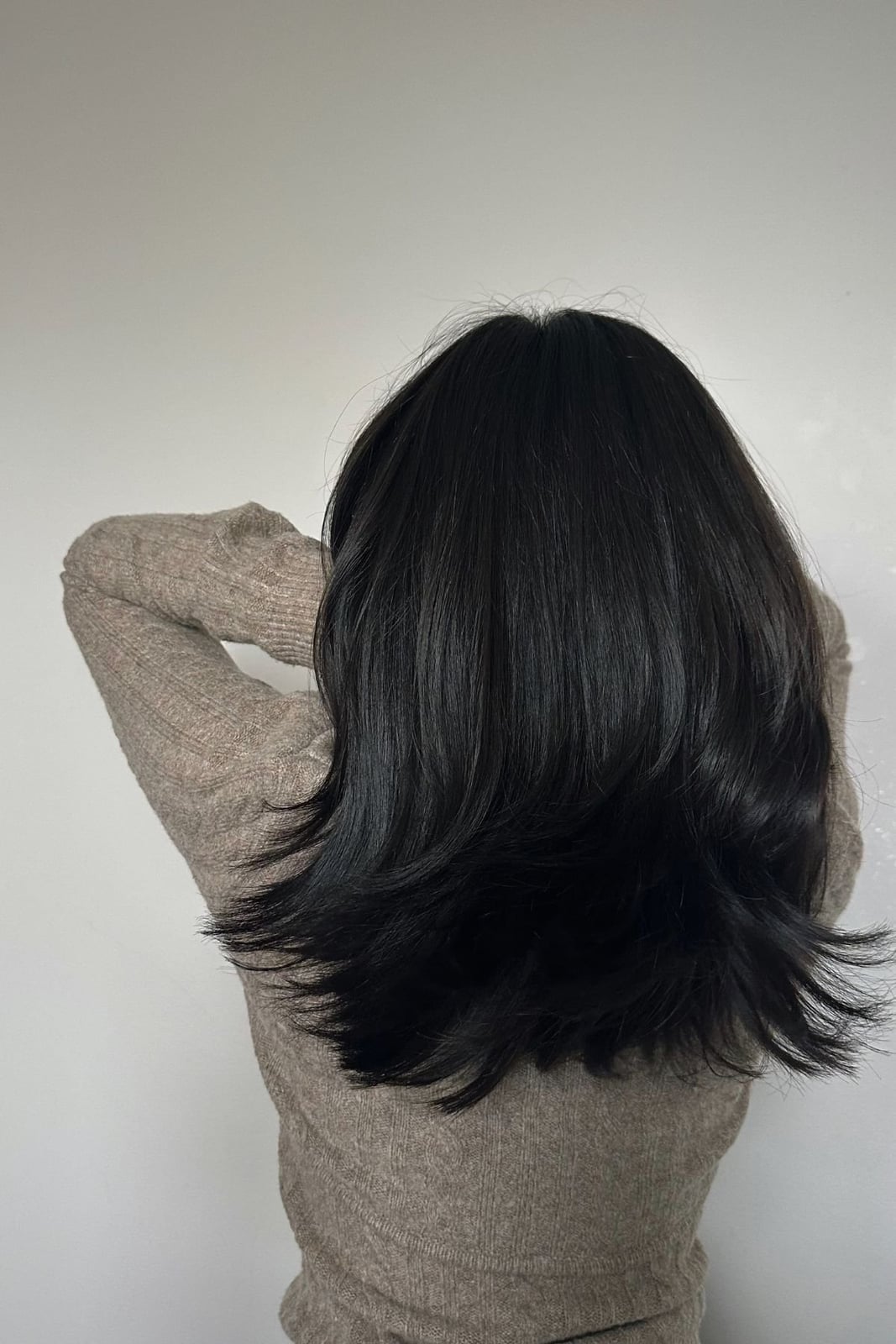
Instead of a blunt one-length cut that sits like a sheet, thick straight hair needs layers that add movement without losing the weight. This cut uses face-framing layers that start at the chin and cascade through the mid-lengths, so the hair swings rather than hangs. The middle part keeps the layering symmetrical from both sides. The smooth blowout seals the ends and stops the texture from puffing at the nape. Tell your stylist: long layers with face-framing pieces, no bangs, a soft blowout finish. The dark brown base stays glossy without highlights, which means less toning and fewer salon visits.
Side-swept fringe and caramel highlights on thick wavy hair
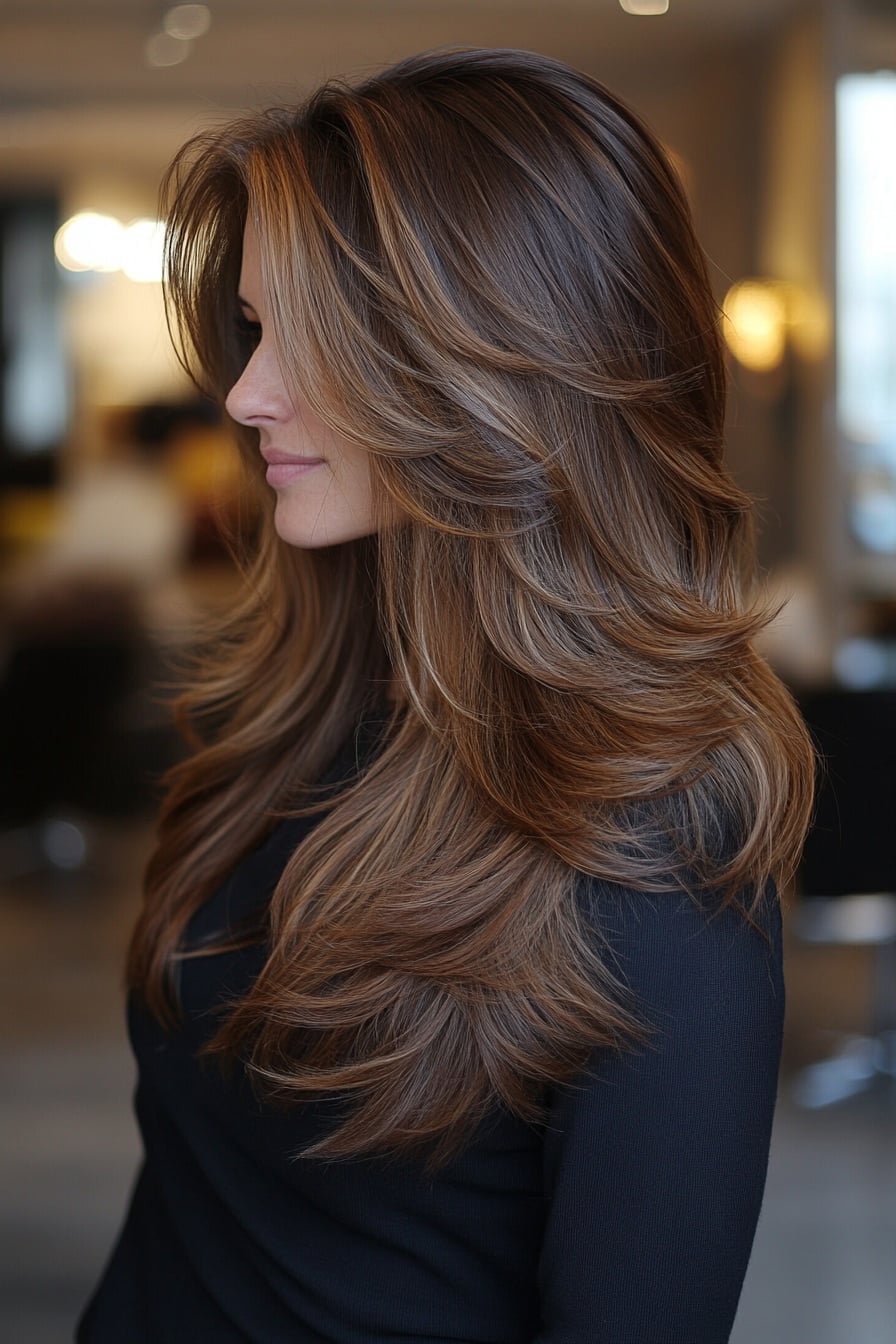
Middle part, caramel highlights sweeping forward, a voluminous blowout that lands between neat and undone. The long layers here keep the thick wavy texture from becoming too wide at the ends, while the fringe breaks the line across the forehead without hiding it. The fringe needs a round brush and a few extra minutes each morning to curve the right way.
Thick hair holds a blowout longer, so the effort pays off. The caramel pieces sit mostly around the face and through the mid-lengths, which means the base grows out without a harsh line. A middle part and a side fringe can coexist.
Air-dried waves with caramel highlights and a full fringe
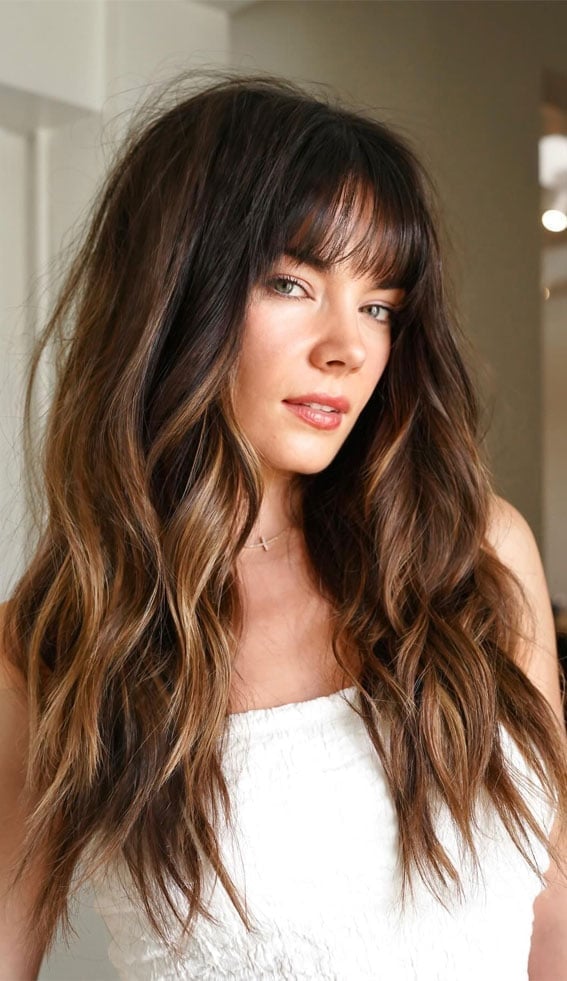
Full fringe, fine wavy texture, caramel highlights that suggest sun rather than salon. The long layers here are cut to stack gently, so the air-dried finish lands soft instead of messy. That fringe requires a dry cut checked against your natural wave pattern, or it will sit wrong. It demands a daily bang routine.
Fine hair benefits from the lack of heat styling here because the natural wave gives volume without a round brush. The caramel highlights are subtle enough to skip a root touch-up between salon visits. A middle part keeps the fringe from falling into the eyes.
Wispy bangs and shag layers on thick wavy hair
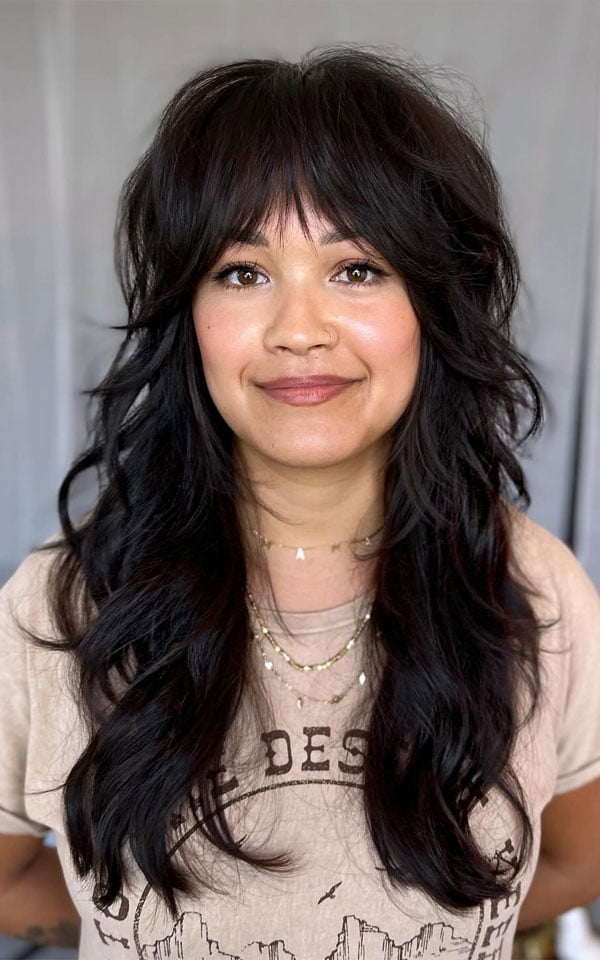
Wispy bangs and a cut that uses shorter front sections to build a soft silhouette without the word shag. Thick wavy texture makes this work because the layers need weight to fall right; fine hair would collapse into a limp triangle. The air-dried finish is a deliberate choice. A blowout would make the shorter pieces look too neat. Pass when you prefer a sleek cut.
Dark brown with no highlights keeps the look grounded, but you trade dimension for a lower-maintenance color line.
Collarbone layers and curtain bangs with a dark brown base
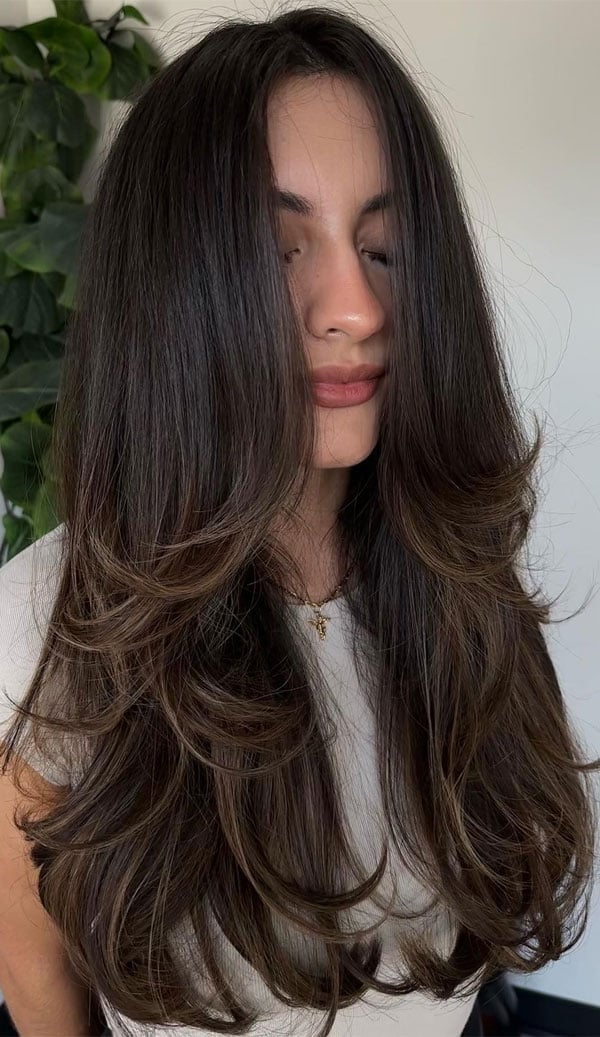
Collarbone, curtain bangs, a bouncy blowout that gives fine wavy hair the volume it rarely gets on its own. The long layers here are cut to start above the shoulder, which means the hair stacks rather than hangs. This works best for fine to medium textures that need the lift; thick hair would push the layers out and lose the shape.
Subtle highlights add a few lighter pieces without committing to a full color change. Tell your stylist: long layers starting at collarbone, curtain bangs, subtle highlights. The middle part keeps the bangs symmetrical. This cut sits firmly above the bra strap.
Dimensional blonde highlights with flowing layers
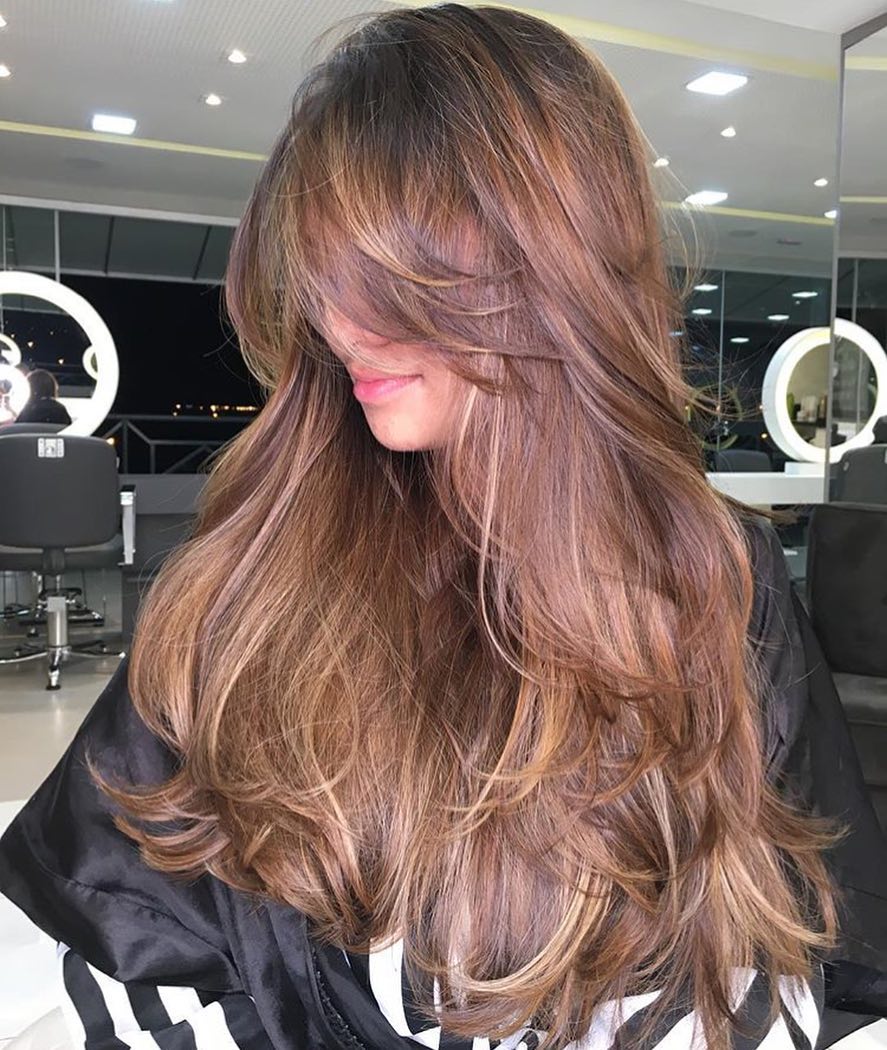
The blonde highlights are subtle enough to grow out gracefully. The warm brown base does the work between salon visits. Curtain bangs need a round brush and a cool shot to curve away from the forehead. One short sentence: this is a low-commitment way to try dimension.
Cascading layers and smooth blowout on thick dark brown hair, wavy
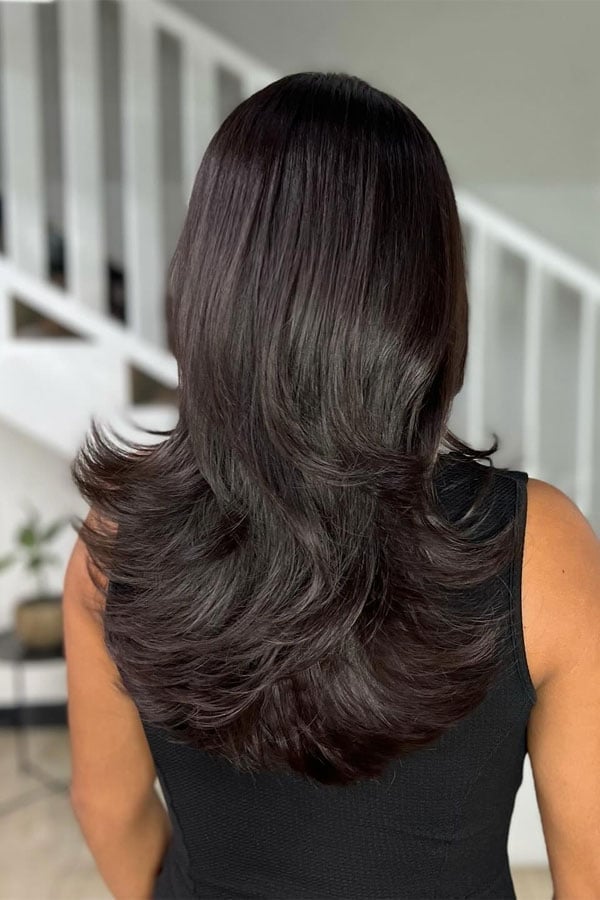
Cascading layers need a solid starting point, and thick hair at collarbone length is exactly that. The cut carves movement into the mass, so the soft blowout actually shows the shape instead of just smoothing everything flat. Because these layers stack down the back, you get volume at the crown and swing at the ends, a neat look that holds for a full workday.
Tell your stylist: long cascading layers starting at collarbone. A smoothing serum and a round brush are required for the blowout. This cut relies on the blow-dry to define the cascades.
Face-framing curtain bangs on thick wavy dark brown hair, middle
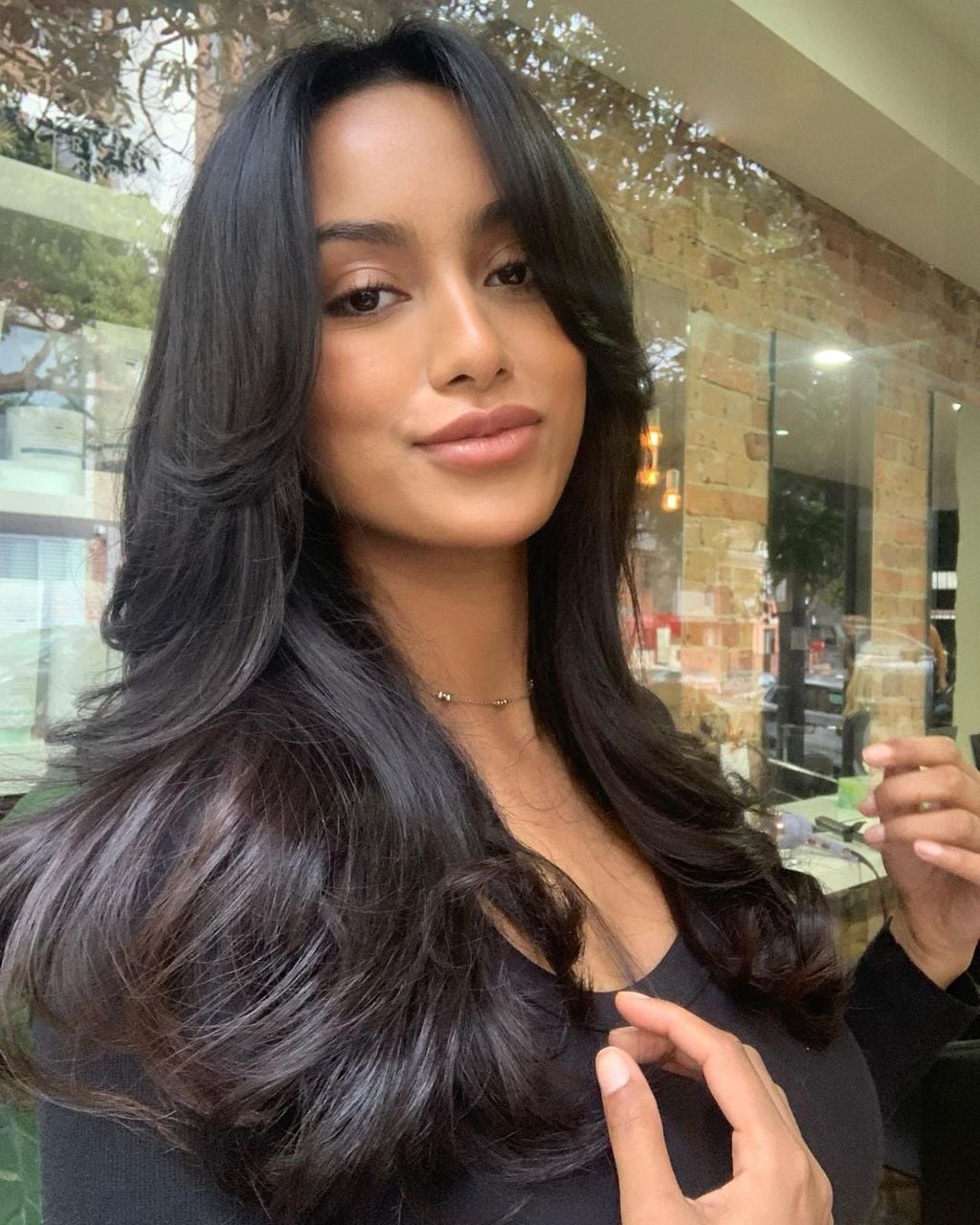
Book it as: long face-framing layers, curtain bangs, dark brown, voluminous blowout. The middle part and curtain bangs are the anchor here. They sweep outward from the center, so the face-framing pieces land near the cheekbone and jaw without needing a curling iron. Thick, wavy texture holds the blowout volume for a full day before the wave pattern starts to relax.
The words for the chair matter. This cut works because the layers are graduated through the interior, not just at the ends. A blunt request for long layers will leave the bangs looking disconnected.
Soft blowout with face-framing layers and curtain bangs
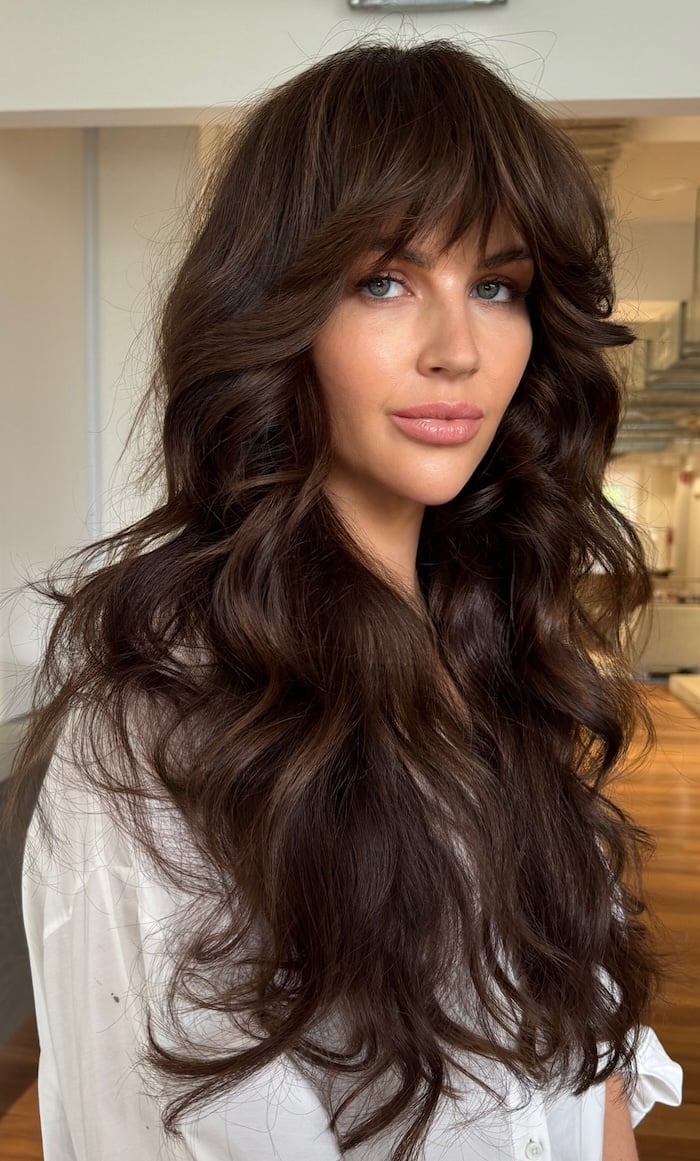
Face-framing layers on thick wavy hair need a specific approach to avoid looking like a grown-out shag. The mistake is letting the stylist cut the front pieces too short, which creates a hard ledge when the wave pattern bends. Long layers with curtain bangs should start past the jaw, blending into the rest of the length without a visible step. A middle part keeps the bangs symmetrical, and the dark brown base does not compete with the cut’s shape. Pass when your hair is fine or naturally straight: the layers will look sparse without the wave density.
Voluminous blowout with curtain bangs and shorter front sections
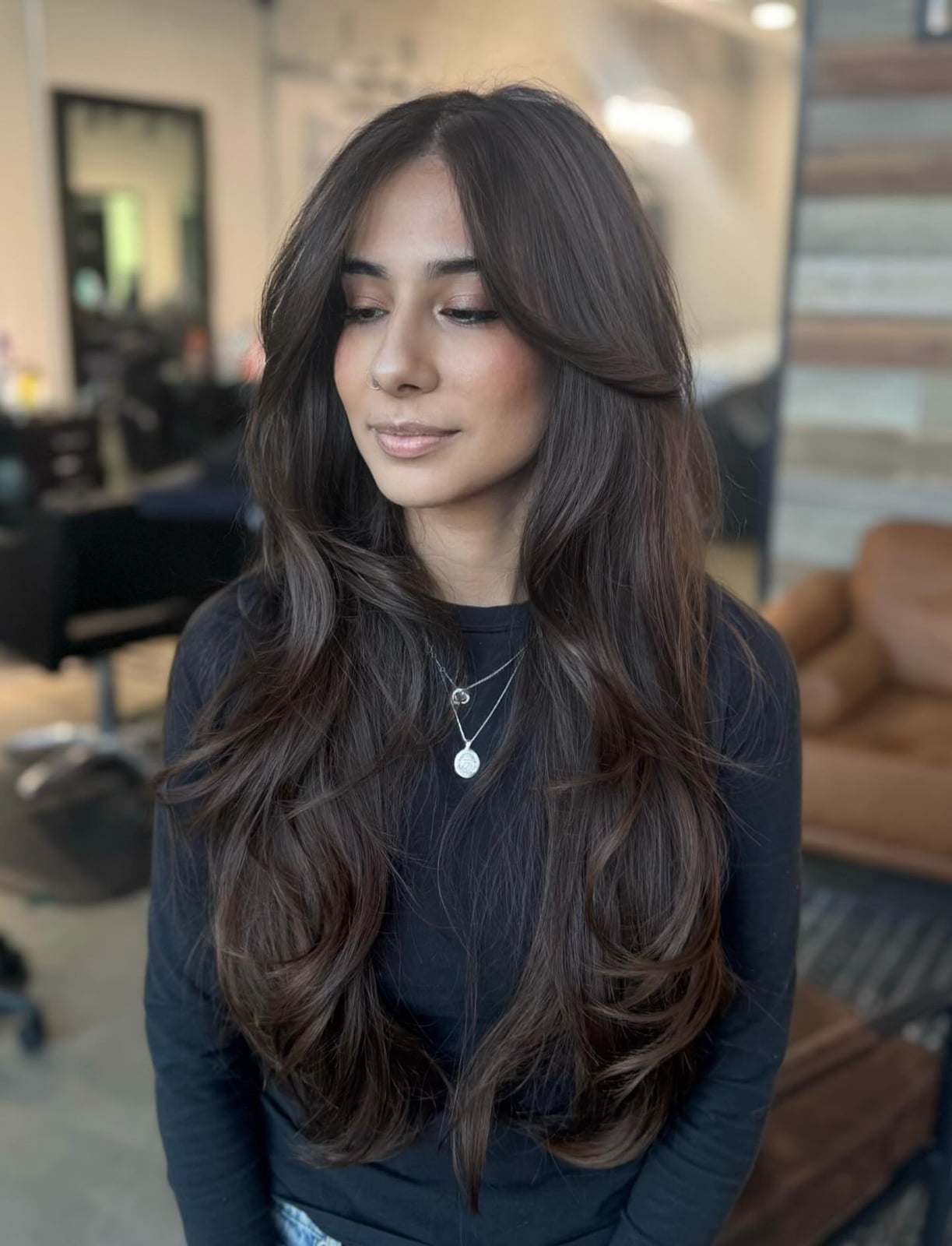
A middle part with curtain bangs reads differently on thick hair than on fine hair. Here the shorter front sections and loose waves build volume at the sides, which suits oval and square face shapes by softening the jaw line. The trade-off: this cut demands a blowout. Air-drying will let the layers collapse into an uneven triangle, and the dark brown color will look heavier than it is. Skip it if you rely on wash-and-go mornings. The precision layering means the shape stays intact for about six weeks before the bangs need a refresh. Tell your stylist: long layers, shorter front sections, curtain bangs, dark brown, voluminous blowout.
Air-dried waves with wispy bangs and face-framing layers
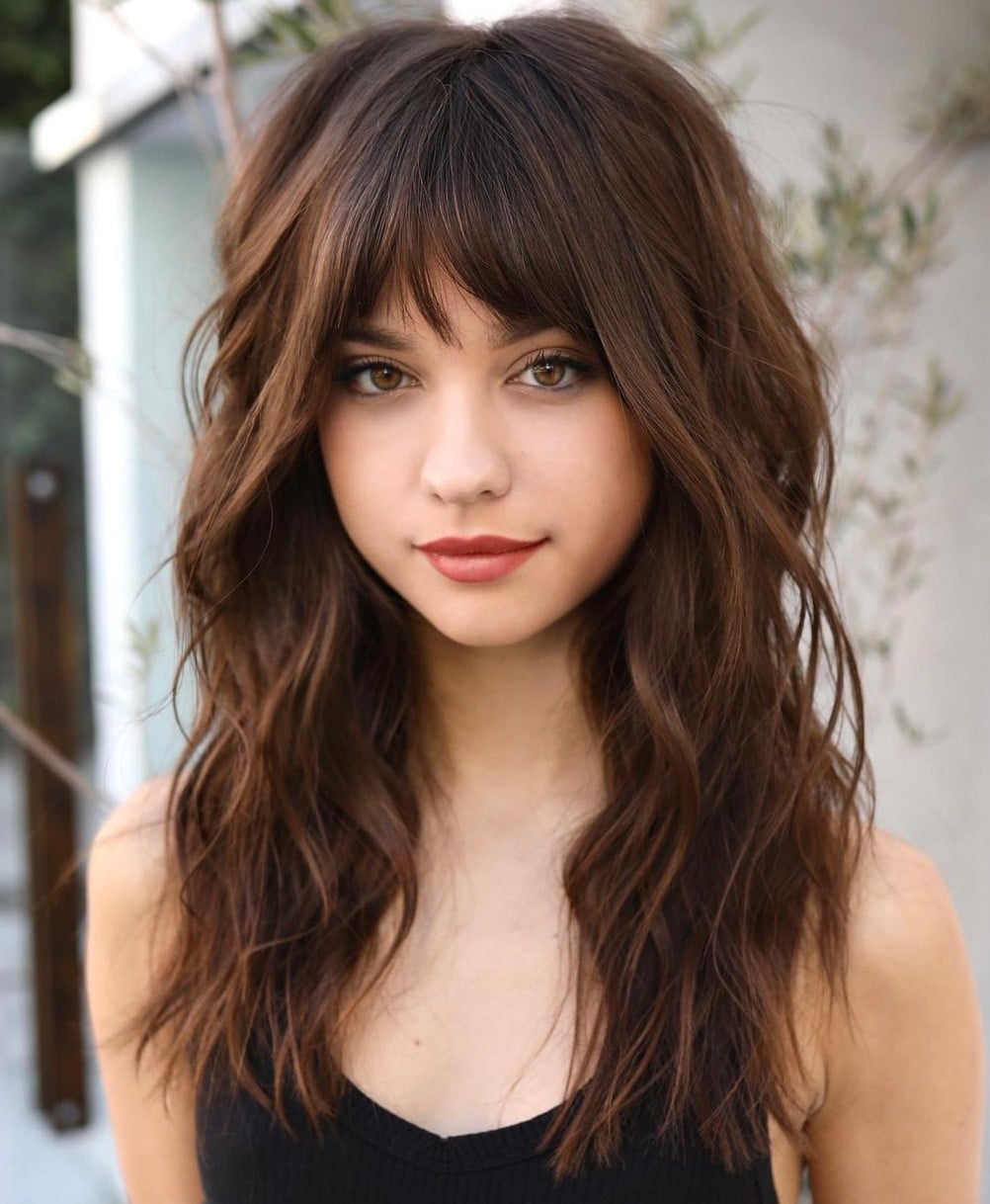
Fine wavy hair builds volume from the cut, not from heat. Long face-framing layers with wispy bangs remove weight at the front, so the wave pattern bends without the ends looking stringy. The middle part lets the bangs fall softly to each side, blending into the longer body. Salon skill matters here: the layers need to stack gradually rather than abruptly, or the cut will look uneven when dry. A centered parting and a dark brown base keep the silhouette clean. It works best for fine to medium textures that air-dry into loose waves; very straight hair will need a texture spray to separate the pieces.
Thick wavy hair with face-framing layers and subtle highlights
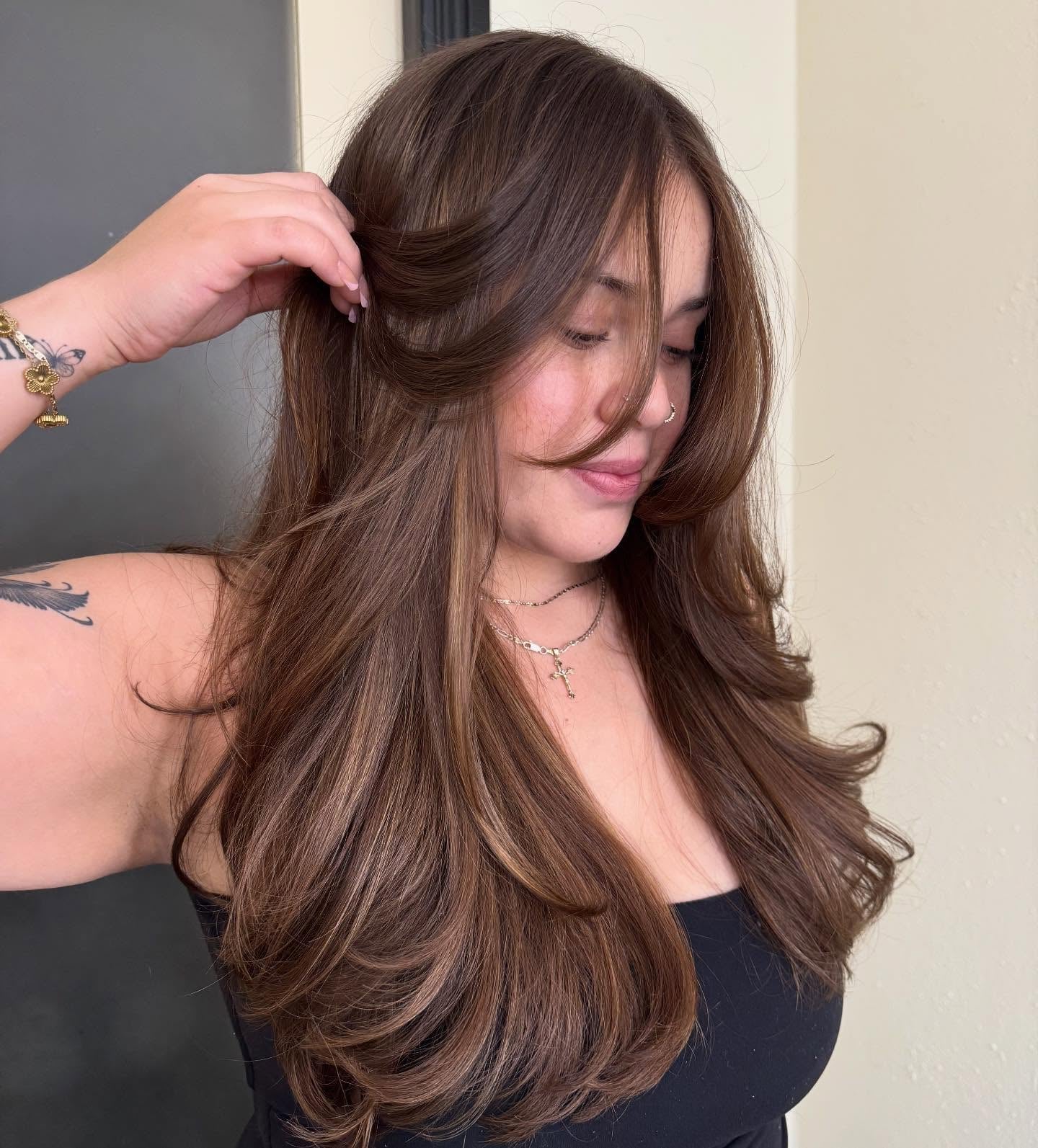
Blowouts land differently on thick, wavy hair. The volume holds longer, the layers separate instead of clumping. Here the face-framing pieces blend into the length with a precision that stops the cut from looking chopped. Curtain bangs sweep toward the cheekbones, softening the whole shape without committing to a heavy fringe. The middle part keeps the weight balanced.
This style requires a blowout. Without it the face-framing layers can fall flat. Thick hair with a natural wave pattern carries this best. Ask your stylist for: long face-framing pieces, curtain bangs, dark brown with subtle highlights. A smoothing balm and a large round brush get the finish you see.
Salon quality layers for dark brown hair
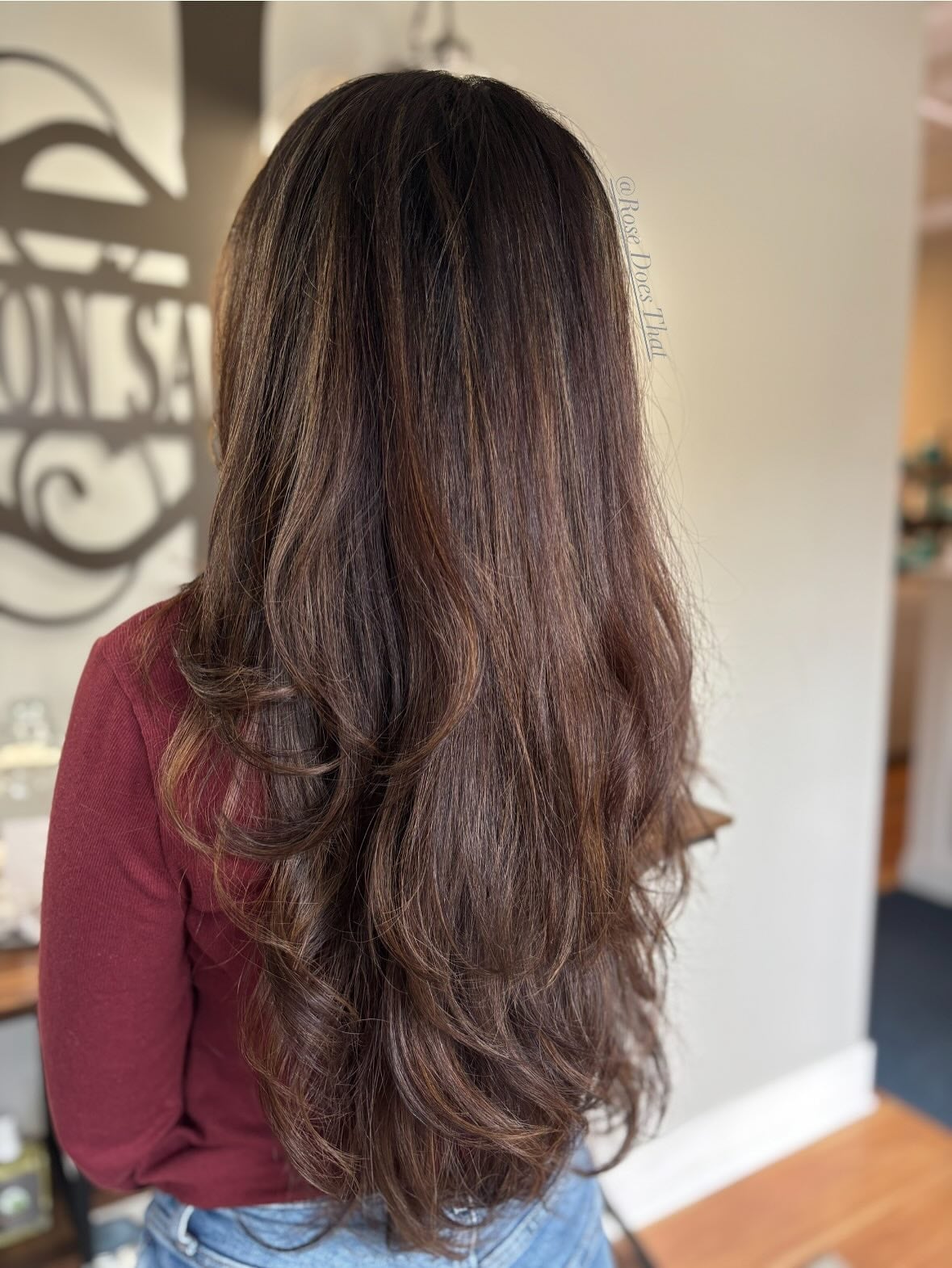
Blunt cuts sit still. Flowing layers move, which is the difference between hair that hangs and hair that lives. This version uses a dark brown base with fine highlights that catch the light without screaming for attention. The layers start lower, preserving length while adding shape. Waves are curled in sections, not scrunched, for a uniform finish that holds through the day.
The trade-off is upkeep. Those soft waves need a curling wand and a minute per section. No bangs here, so the focus stays on the movement through the mid-lengths and ends. Book it for thick hair that can hold a wave without collapsing. A salon does the initial blending better than a friend with scissors.
Sculpted layers and smooth blowout on thick dark brown, close-up take
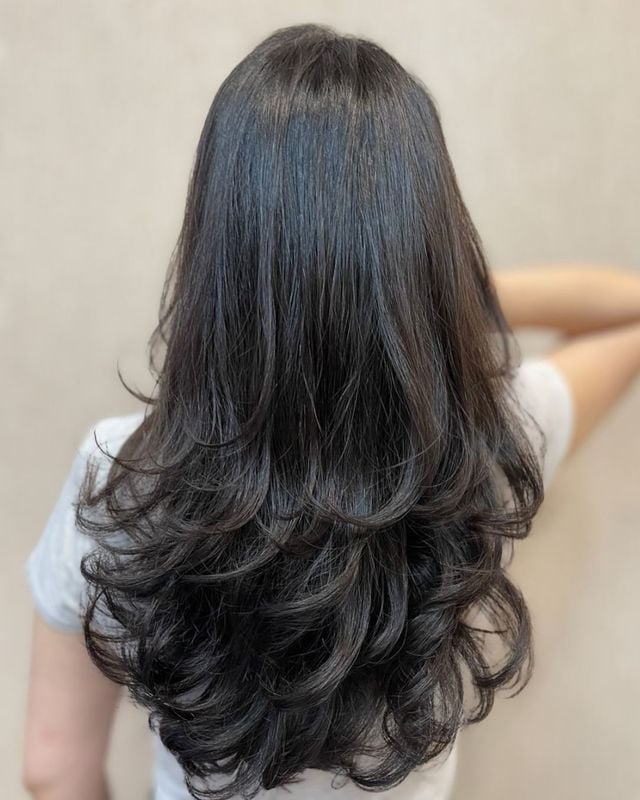
Smooth blowouts on thick hair look deliberate, not accidental. This back view shows layering that carves out shape without removing density. The layers are cut into the interior, so the exterior surface stays sleek. A round brush pulls the hair taut during drying, creating that neat finish.
Salon work gets the precision. At home the risk is over-directing the blow-dry, which flattens the lift at the crown. Tell your stylist: long sculpted layers, thick dark brown hair, soft blowout. The cut works best on hair that holds a bend naturally. Straight hair may need a spritz of texture spray before the blow-dry to keep the layers from looking too blunt.
Blended layers on thick wavy dark brown hair
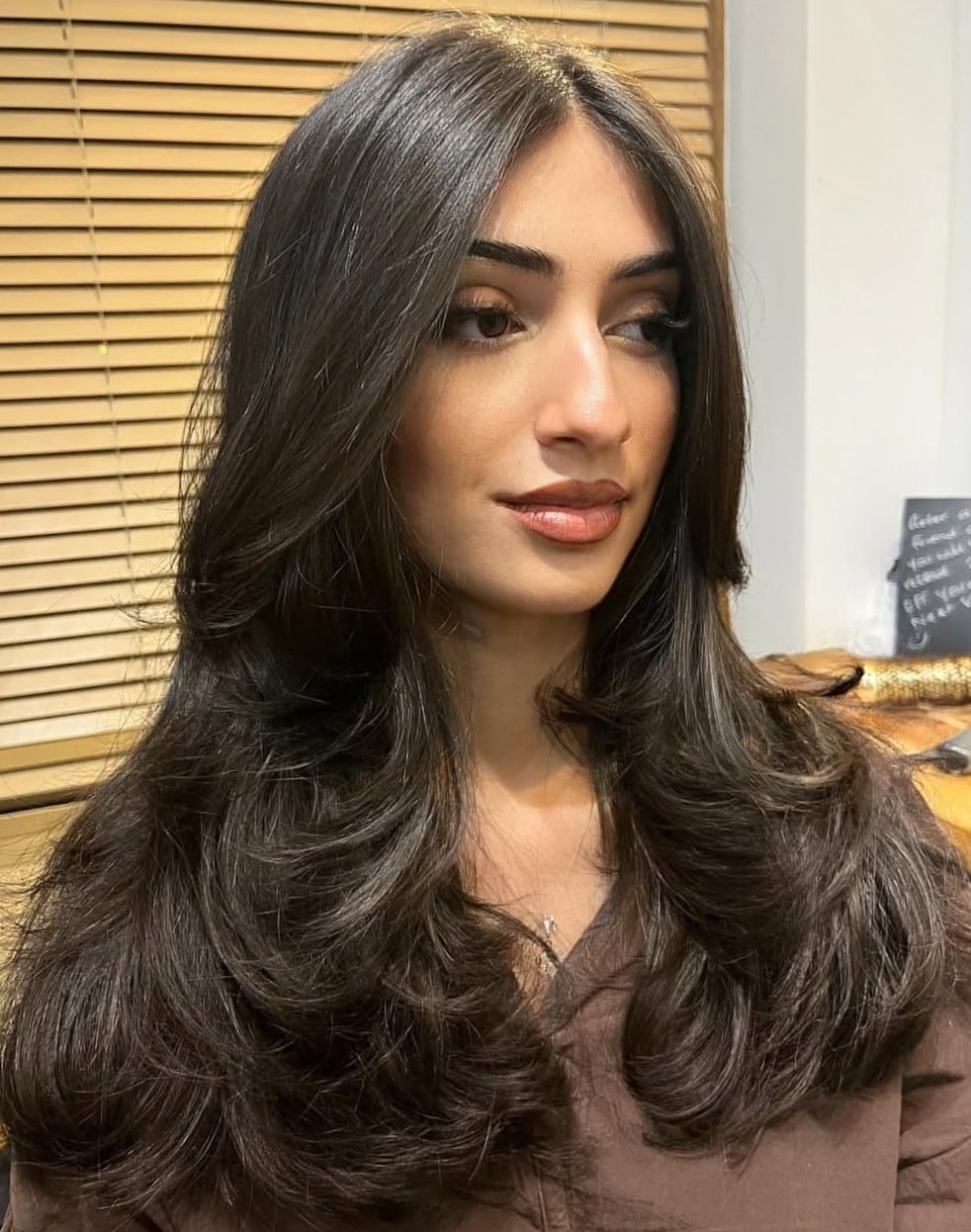
Blended layers take more time in the chair than chunky ones. The payoff is the way the hair falls back into place after a head shake. Here curtain bangs and a middle part frame the face, while the remaining layers flow without a visible step. The dark brown base gets subtle highlights that are thin enough to mimic natural shine.
Thick wavy texture needs this level of blending to avoid triangle head. Obvious graduation or a disconnected look requires a different cut. The voluminous blowout lifts the roots and curves the ends under, which works best on hair that holds a shape for two days. A round brush and a heat protectant are the tools. Every eight weeks the layers need a refresh to keep the blend invisible.
Fine wavy hair with auburn highlights and wispy pieces
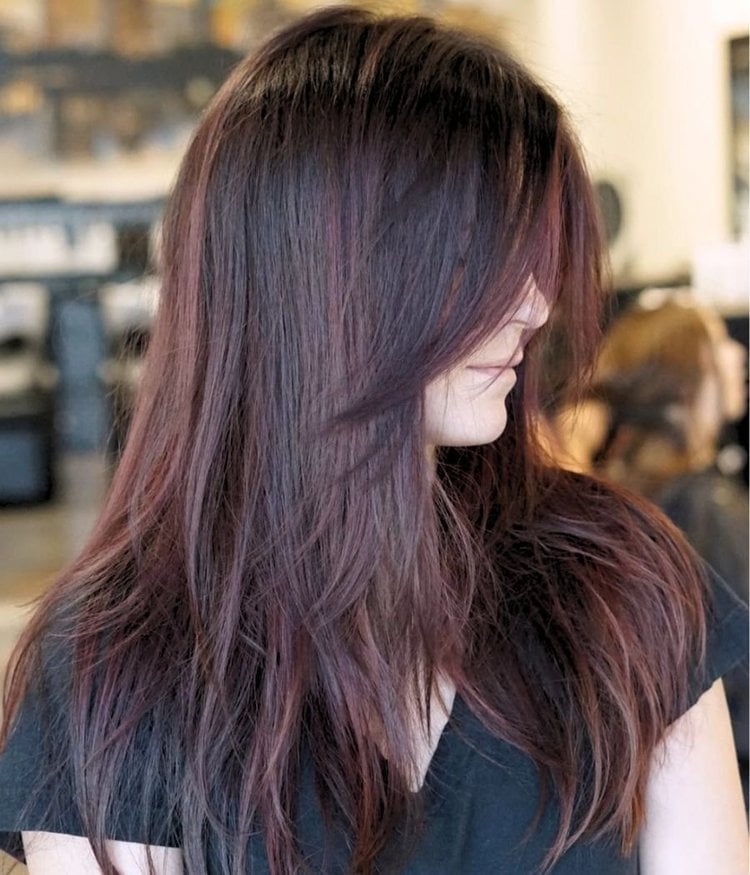
Fine hair looks heavier than it is, and heavy cuts kill volume. Wispy layers solve that by removing weight without sacrificing length. The dark brown base here gets subtle auburn highlights that add warmth without going full copper. Face-framing pieces and a middle part keep the front light. Air-dried texture lets the natural wave do the work.
The catch: wispy layers grow out fast. At week eight the shape starts to look blunt, and fine hair does not hide blunt edges well. Skip it if you want a cut that stays perfect for four months. Tell your stylist: long wispy layers, dark brown with auburn highlights, face-framing pieces. The result is a cut that moves without trying.
Caramel highlights and curtain bangs with shorter front, close-up take
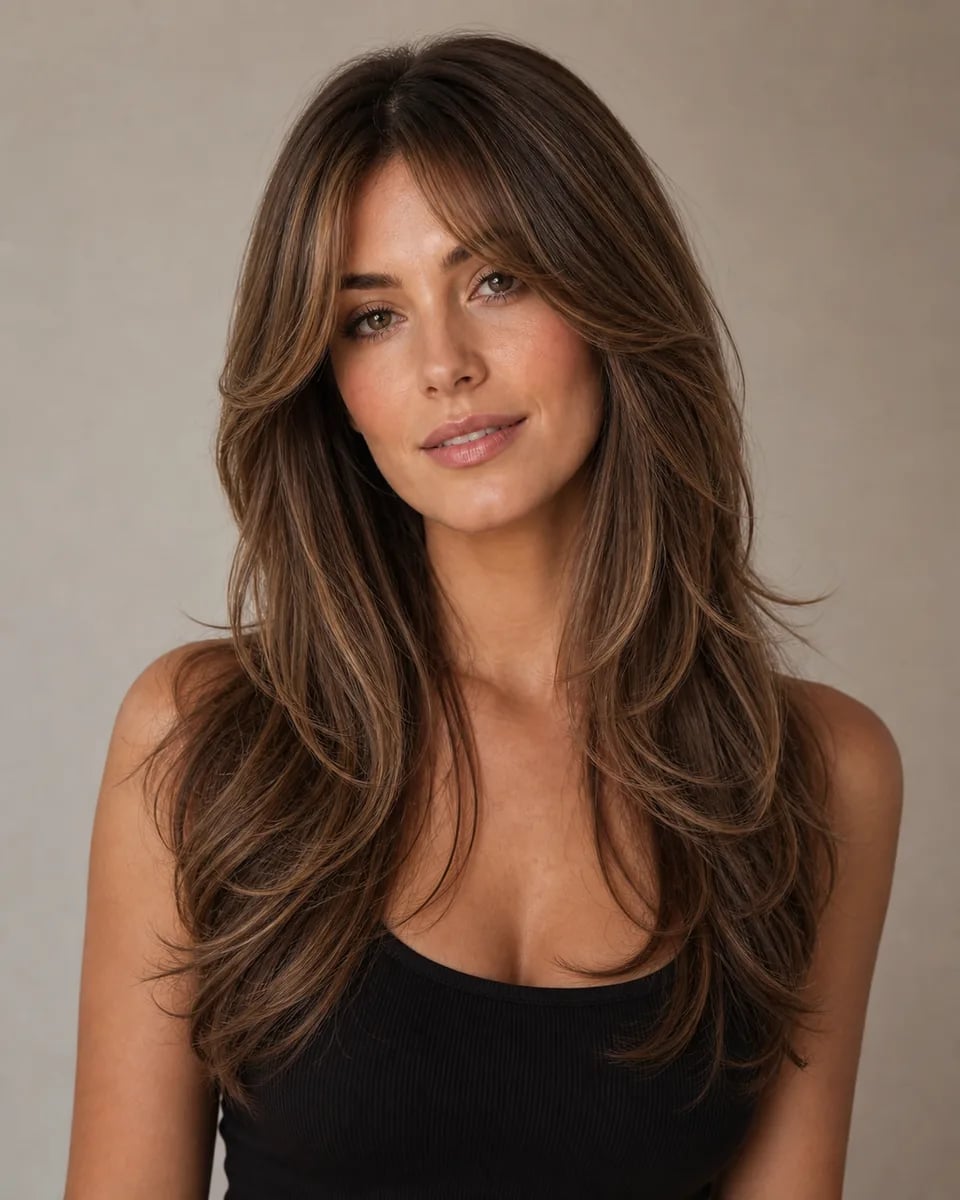
Blowouts lie if the cut does not support them. Here the long layers and curtain bangs are cut so the shorter front sections blend into the body without a visible step, which means the blowout actually lasts past noon. The fine wavy texture takes the curl out just enough to show the caramel dimension, then the middle part lets the bangs fall symmetrically toward the cheekbones. The upkeep is eight weeks between trims and a round brush every wash day. Skip it if you want an air-dried finish; this shape needs heat to look like anything.
Final Thoughts
Now you pick the one that matches your reality.
- Fine hair: ask for softer, blended layers to keep density at the ends.
- Ten minutes in the morning: air-dried waves with curtain bangs.
- Thick hair: request internal layering to remove bulk without losing length.
- Cool base that pulls brassy: tone every six to eight weeks.
Find the long layered cut that makes you feel your best.

