You have been staring at the grow-out line for three weeks, and the fringe you pinned back this morning already feels like a compromise. A set of face-framing layers can pull the whole thing together without a full chop, less styling time, better shape, and a cut that photographs well from any angle.
26 real examples make the decision easier: low-upkeep air-dried textures through high-gloss blowouts, fine hair to thick, chin-length through mid-back. That is why Striking Face Framing Layers 2027 fill so many saved boards. They solve the “what do I do with this” moment without a total reinvention.
Long dark brown hair with soft curtain bangs and face-framing layers
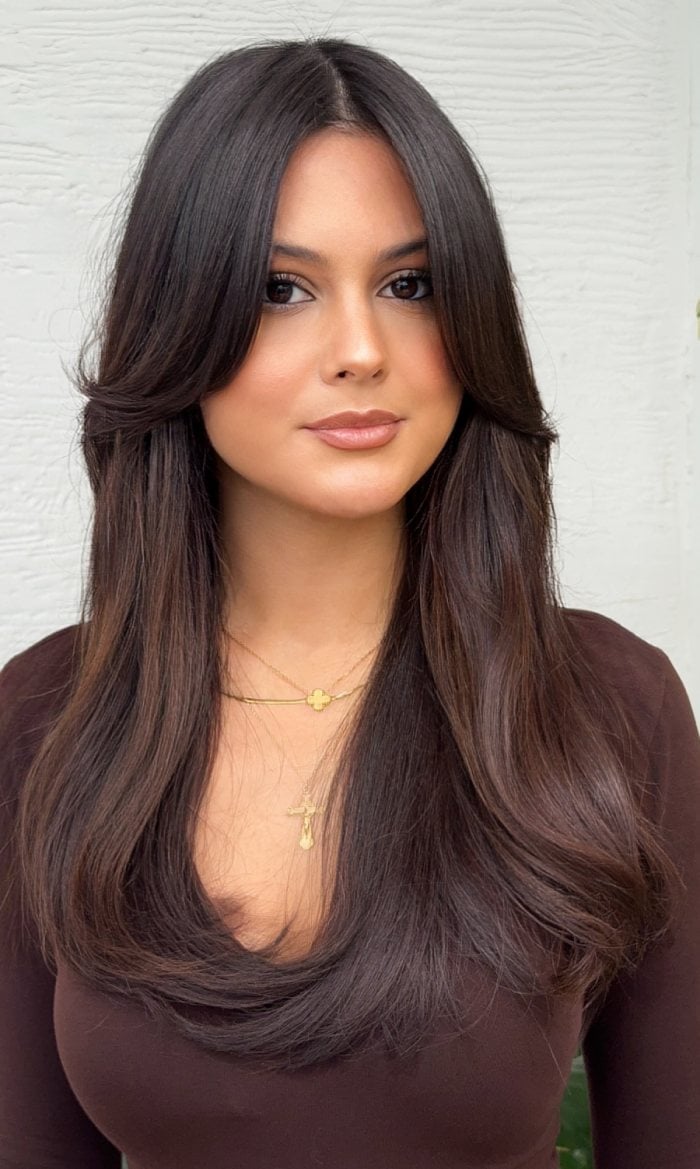
A middle part and waves that start below the ear keep thick, dark brown hair from looking heavy. The curtain bangs sweep outward, not straight across, so they soften the forehead without committing to a full fringe. Gentle waves add volume without fighting the natural texture.
Thick hair starting at collarbone length or longer holds this shape best. Fine hair may find the weight too much. Tell your stylist: long layers, soft curtain bangs, middle part. A large barrel curling iron builds the waves in about fifteen minutes. Trim the layers every six to eight weeks to keep the sweep precise.
Dark brown hair with caramel highlights and face-framing layers
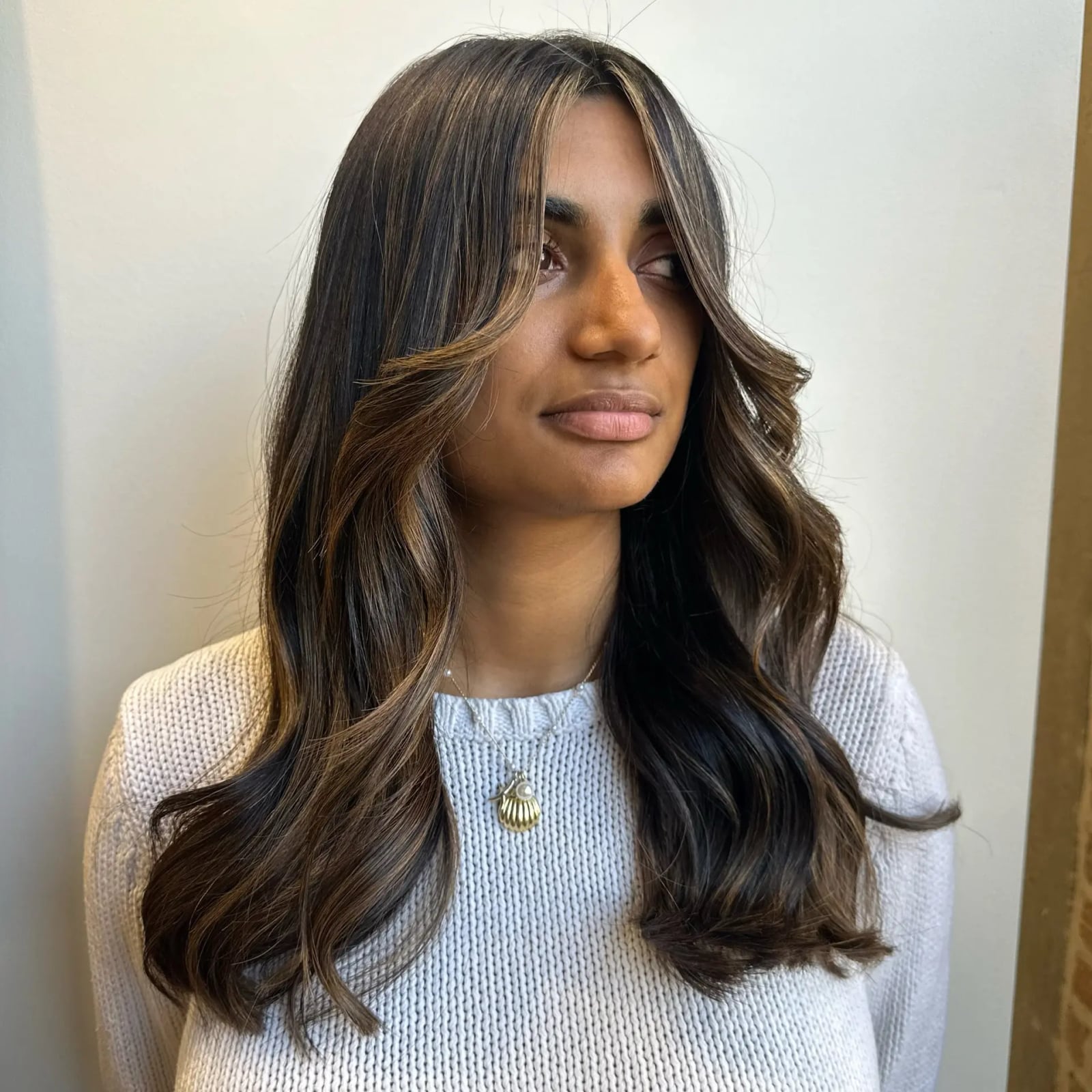
Solid brown can read flat; thin caramel ribbons around the face change that. The parted fringe and loose waves catch the lighter pieces first, so the dimension shows even when the hair is down. A single-process color cannot do this. The highlights need a separate session. This is a salon build, not a box dye weekend. The payoff is a brunette that does not disappear in low light.
Blonde hair with subtle highlights for fine wavy texture

Does fine hair look thinner with layers? Only if the layers are cut too high. Here the face-framing pieces stay long and soft, so the ends feel full while the perimeter moves. The middle part and air-dried finish keep it simple, no heat styling required. The catch: fine hair needs a stylist who cuts dry, not wet, to see where density drops. A sleek, neat finish requires a different approach. The air-dried texture looks undone, not messy, but it relies on a precise cut.
Shag haircut with face-framing fringe and subtle highlights
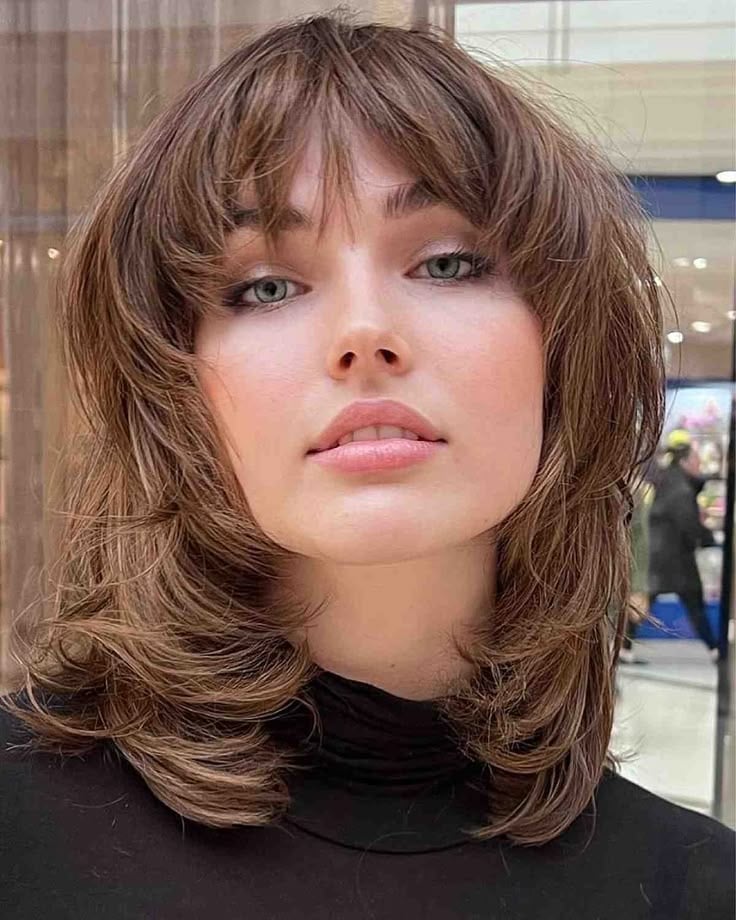
Here the curtain bangs blend into the layers, so nothing looks chopped. The thin lighter strands add depth without a full highlight appointment. Book it as: shag cut, face-framing layers, curtain bangs, subtle lighter strands. The stylist point-cuts the ends for that lived-in texture. A blowout with gentle waves sets the shape; a spritz of texture spray keeps it from falling flat by noon.
Ash blonde layers starting at cheekbones with voluminous blowout
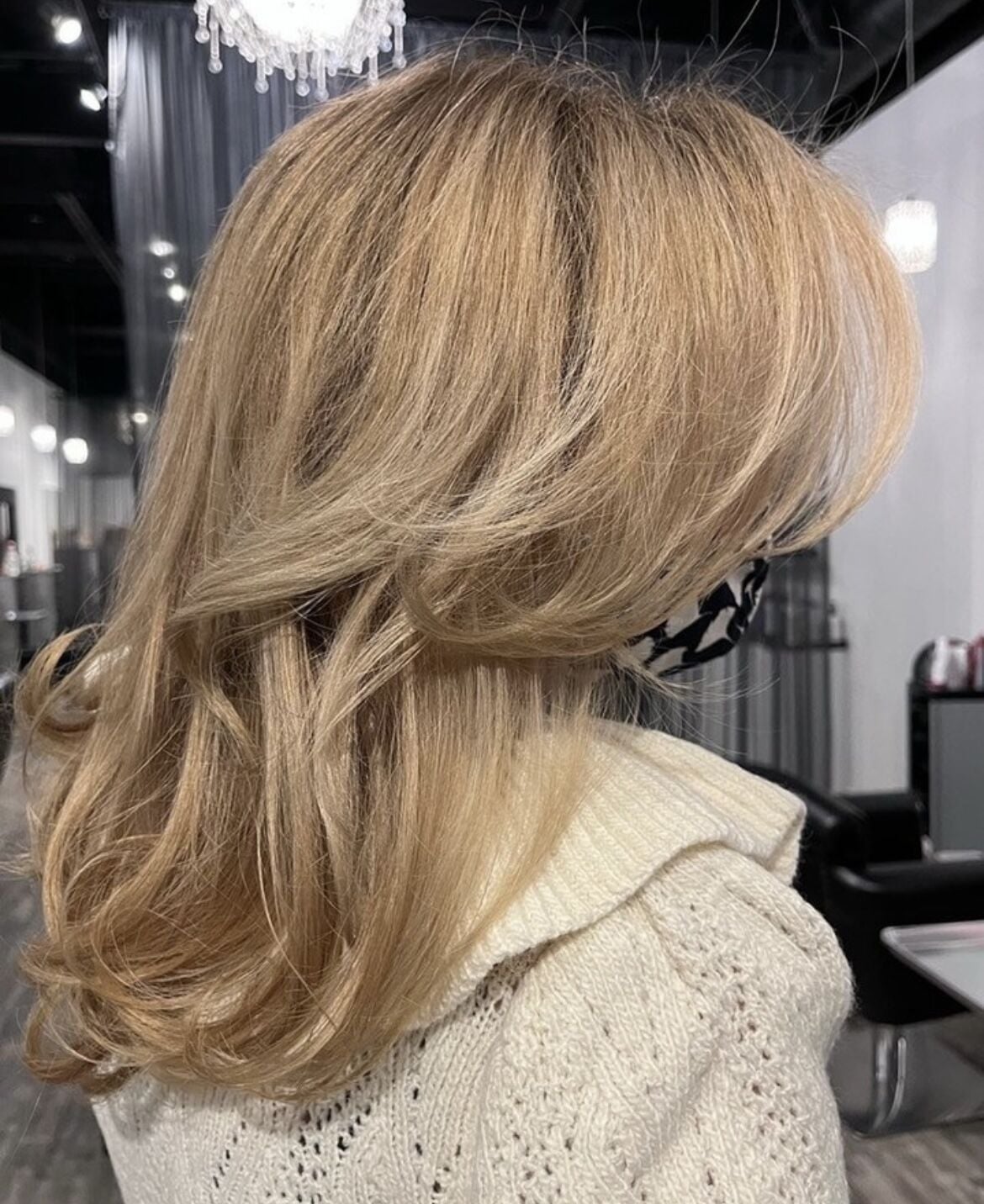
Layers that begin at cheekbone height give the widest part of the face softness without losing length. The ash blonde base stops the color from pulling brassy, and the lighter pieces at the ends keep it from looking flat. A voluminous blowout needs a round brush and a heat protectant, budget ten minutes. Tone every six to eight weeks to keep the ash cool. Choose this when you want volume at the sides, not the crown, which suits long face shapes best.
Curtain bangs blend with dark brown hair and highlights
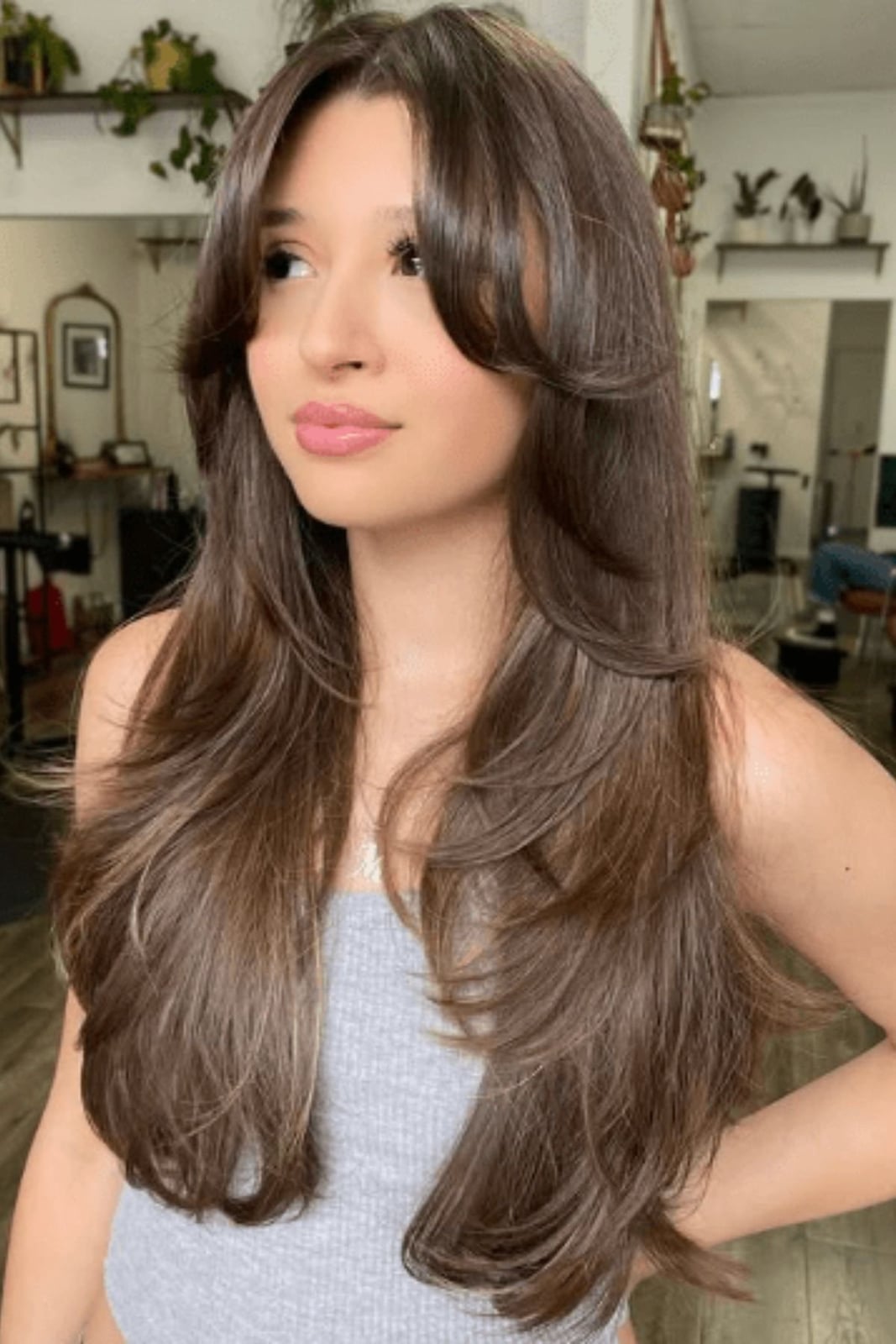
The blend matters more than the cut. Curtain bangs that start long enough to tuck behind the ears and dark brown hair with fine highlights look one piece, not two separate decisions. Thick, wavy texture at collarbone length or longer lets the layers fan outward instead of clumping. A salon does this better than a mirror. Ask your tech for: long face-framing layers, curtain bangs, fine highlights. A soft blowout seals the deal, but the precision of the blend is what keeps the curtain bangs integrated with the haircut.
Smooth blowout for fine straight dark brown hair
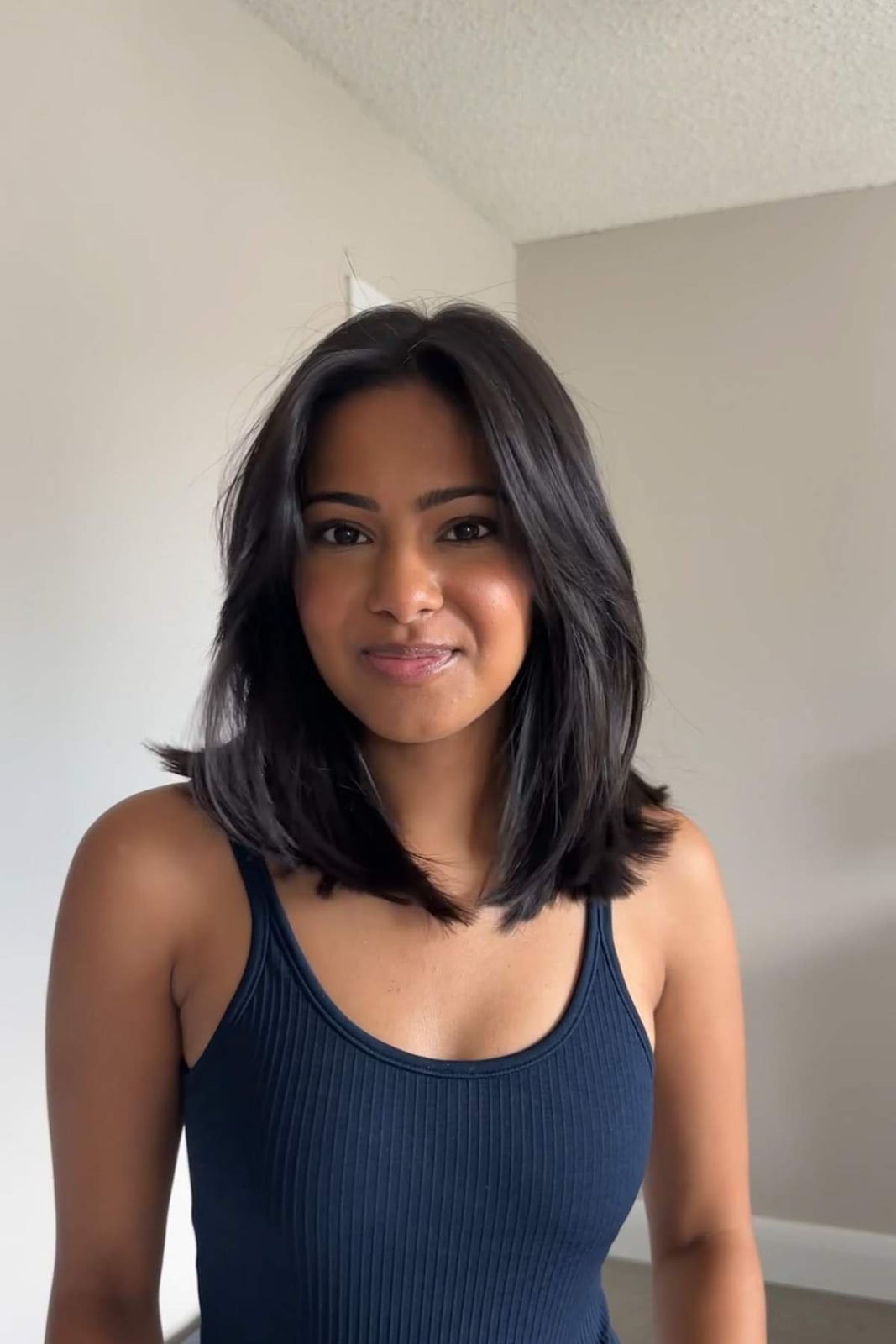
Straight fine hair can look flat in ten minutes. Layers that start around the cheekbones and a centered parting buy you a neat shape that holds past lunch. The catch: a smooth blowout needs a ceramic brush and a heat protectant every wash day, about twenty minutes of work. Monthly trims keep the ends sharp enough that the layers don’t disappear into the length. It works best for straight or fine hair that can hold a smooth blowout.
Honey blonde hair with lighter highlights and curtain bangs
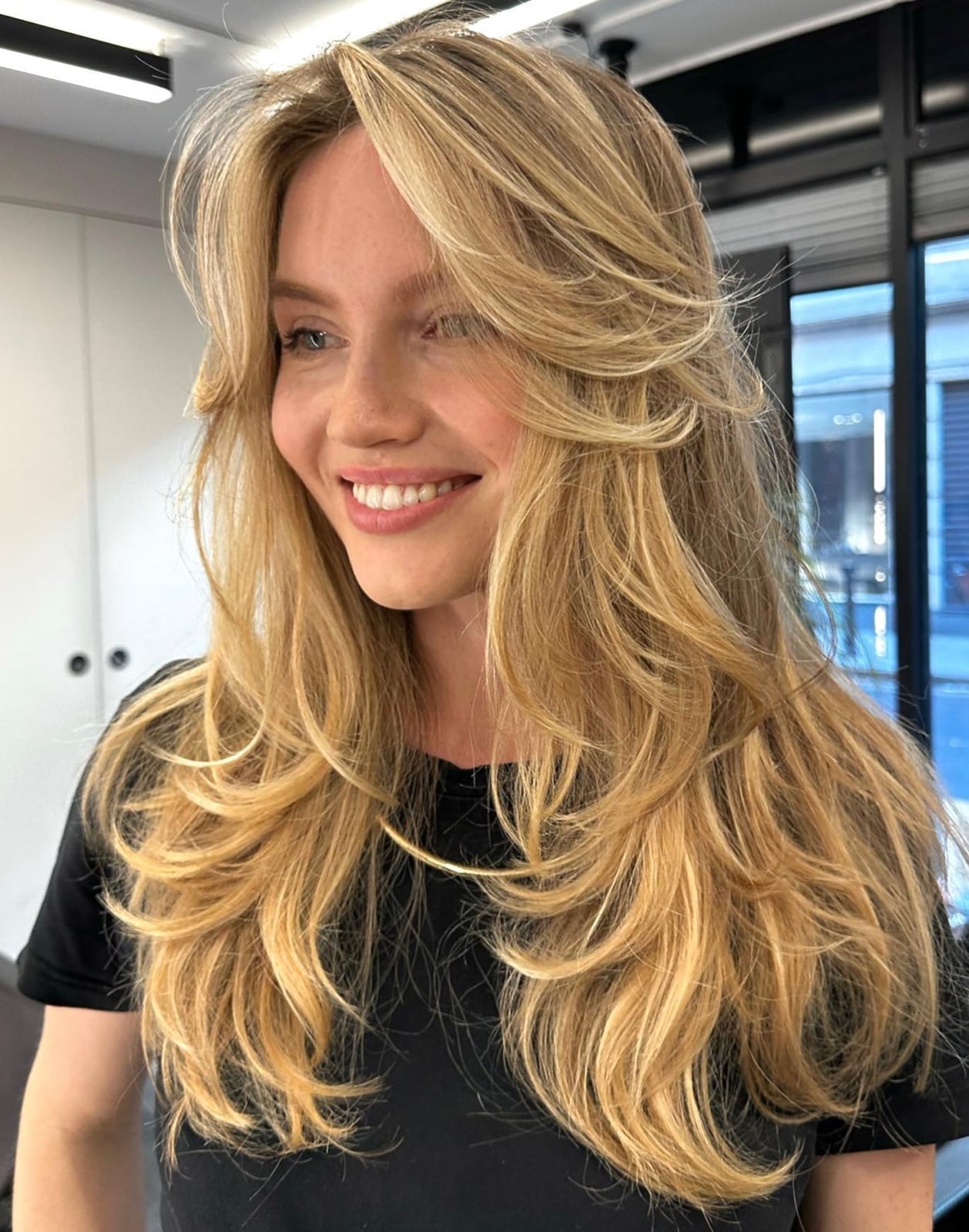
Can fine, wavy hair pull off curtain bangs without looking sparse? Yes, when the bangs are cut with enough weight to sweep, not just float. Honey blonde with lighter highlights gives the illusion of density at the ends, and a soft blowout adds volume where fine texture runs thin. A salon does the precision here, curtain bangs on fine hair need a stylist who knows how much weight to leave. Ask your stylist for: long face-framing layers, curtain bangs, honey blonde with highlights.
Face-framing curtain bangs for thick wavy dark brown hair
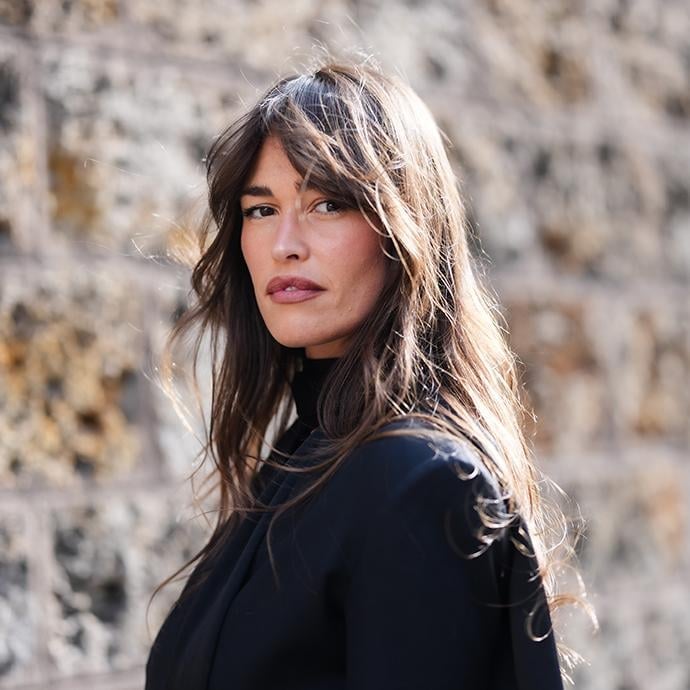
Thick, wavy hair has a way of turning curtain bangs into a solid triangle. The mistake is asking for the bangs first and the layering second. A middle part and a layered cut that starts before the bangs land keeps the weight distributed, so the curtain bangs sit soft, not heavy. Dark brown with subtle highlights adds enough variation to create depth.
Air drying without product can cause thick waves to expand sideways, eating the shape of the bangs. A curl defining cream helps maintain the intended form. The drawback of this look is that it relies on the layering being precise. A blunt cut underneath turns the bangs into a shelf.
Layered cut with soft curtain bangs and straight fine texture
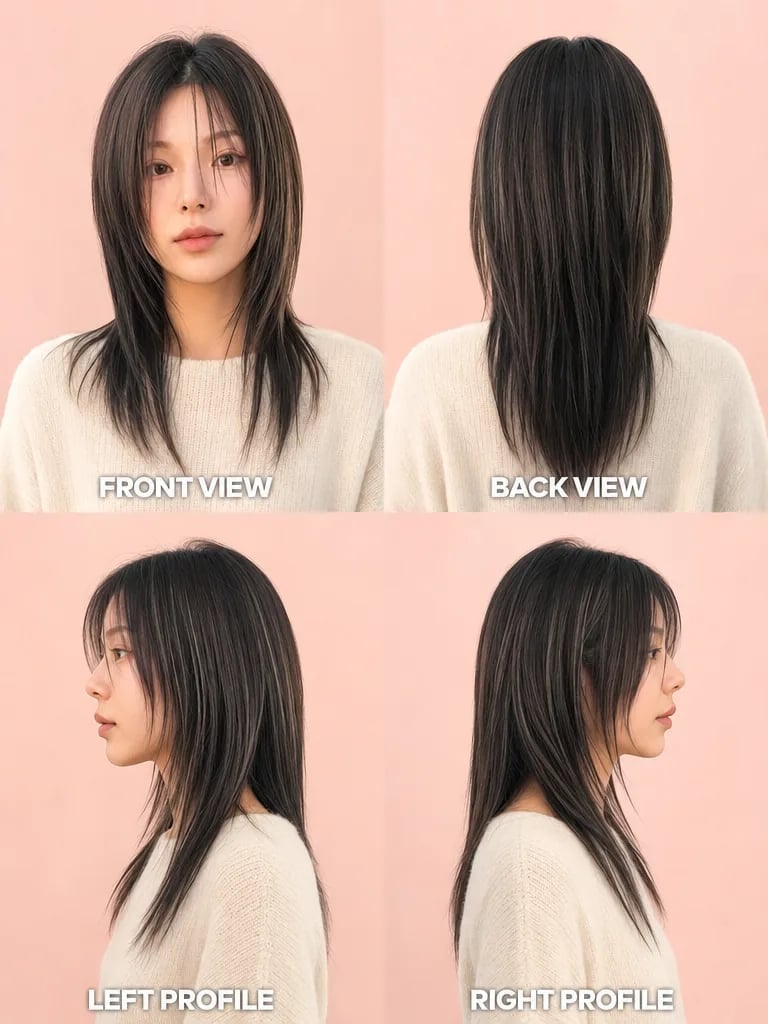
Soft curtain bangs on straight fine hair need a middle part and a cut that angles away from the face, not straight across. The thin lighter strands here do the work. They keep the layers from forming a single flat sheet. Ask your stylist for: layered cut, soft curtain bangs, middle part, thin lighter strands. That phrasing gets you a shape that sweeps cleanly, not a fringe that splits into two sad pieces by noon.
Thick wavy dark brown hair with voluminous blowout
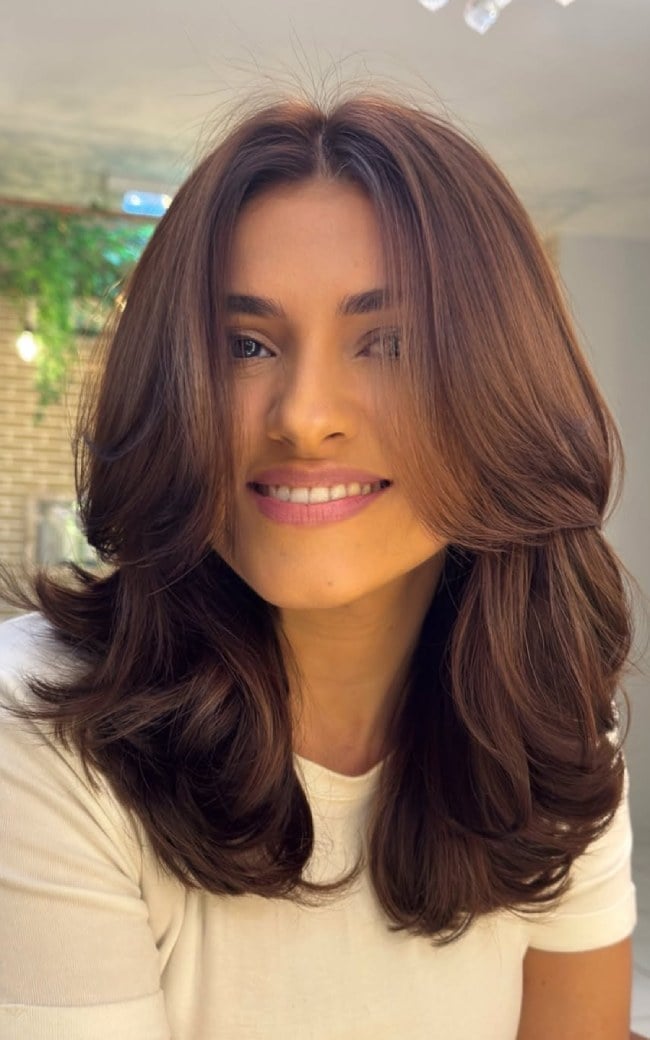
Set this against a blunt cut that lands at the same collarbone length. That one sits still. This one moves. The curtain bangs and face-framing layers are cut into the thick, wavy texture, then blown out with volume at the crown. A middle part keeps the weight balanced. Thick hair can lose its shape fast. A trim every six to eight weeks keeps the blended layers from widening at the bottom. It works best for thick, wavy hair that can hold volume.
Dark blonde hair with ash highlights and a full fringe
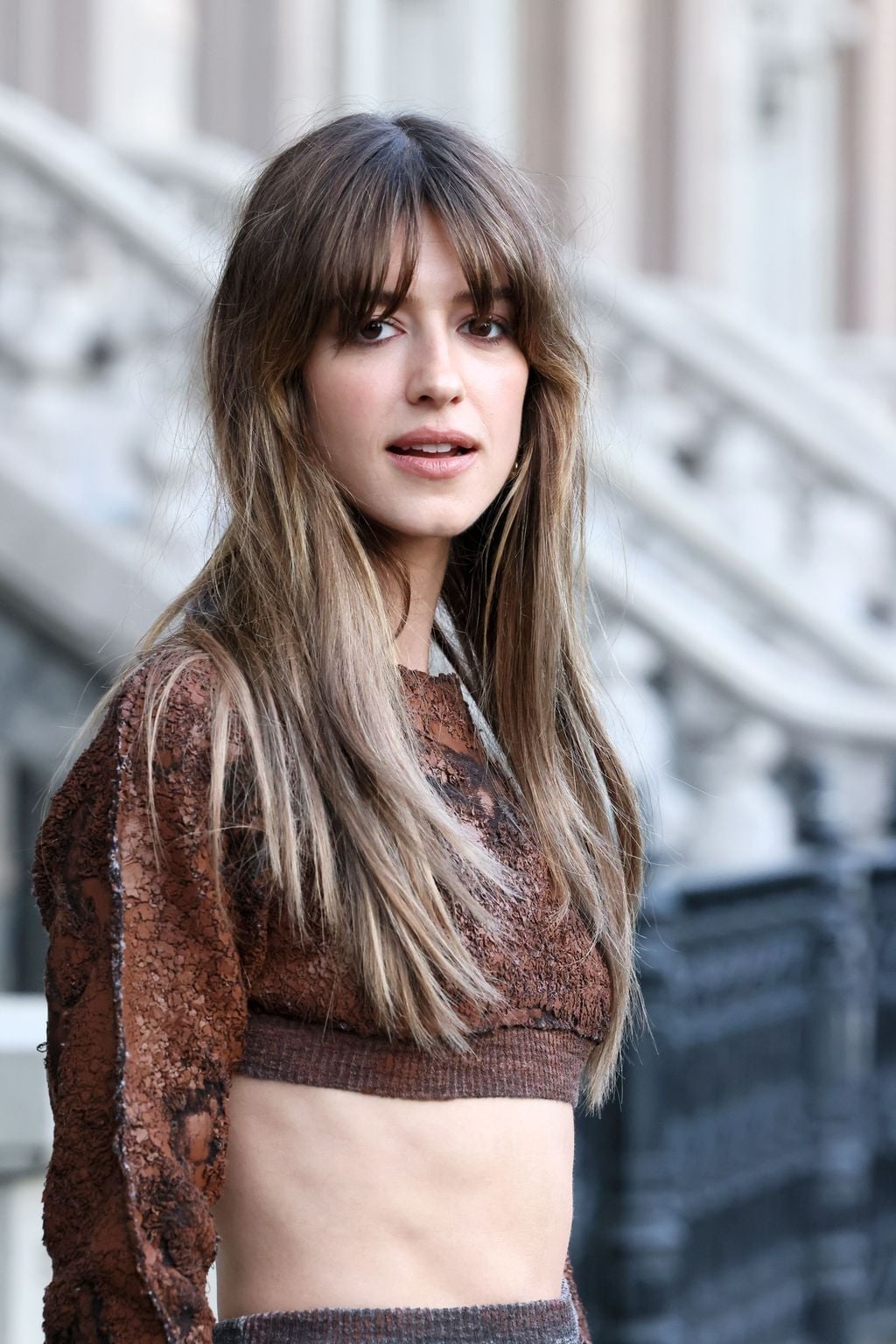
A full fringe sits at brow level while face-framing layers begin around the chin. The dark blonde base carries subtle ash highlights, and the air-dried finish lets the fine, wavy texture show. This suits oval and heart faces. Pass on this when thick hair or a sleek, neat finish is the goal.
Copper red shag cut with wispy bangs and air-dried finish
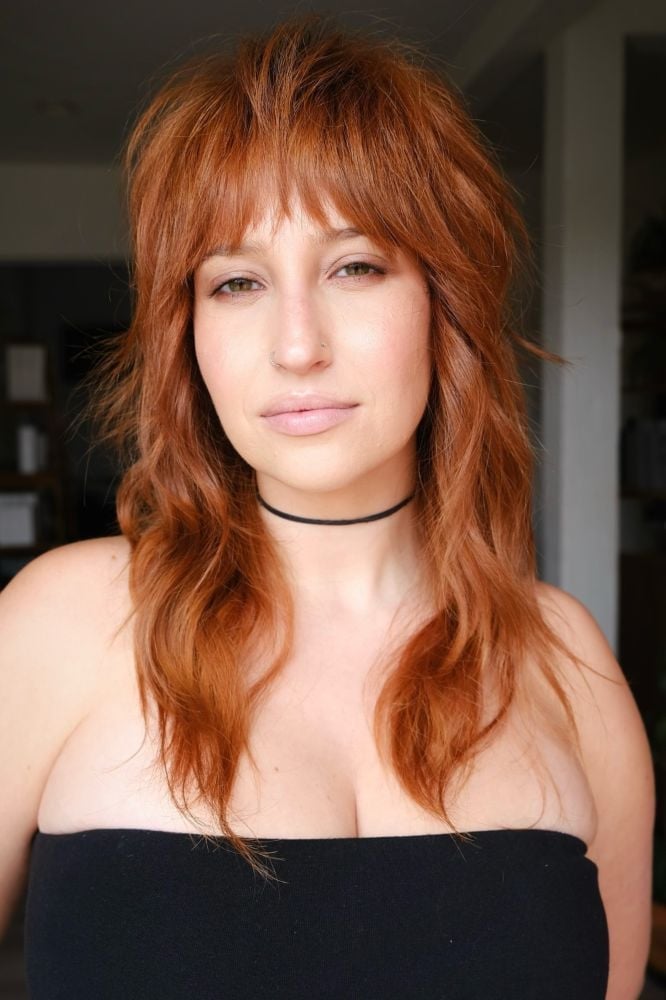
Precision layering builds this copper red shag. Wispy bangs break at the brows, and the face-framing layers are cut into fine, wavy hair. The air-dried finish is the point. DIY upkeep is possible with color-safe products, but the shag structure itself needs a stylist. Copper red fades faster than brown. Book it as: copper red shag cut, wispy bangs, face-framing layers.
Air-dried texture on dark brown hair frames features
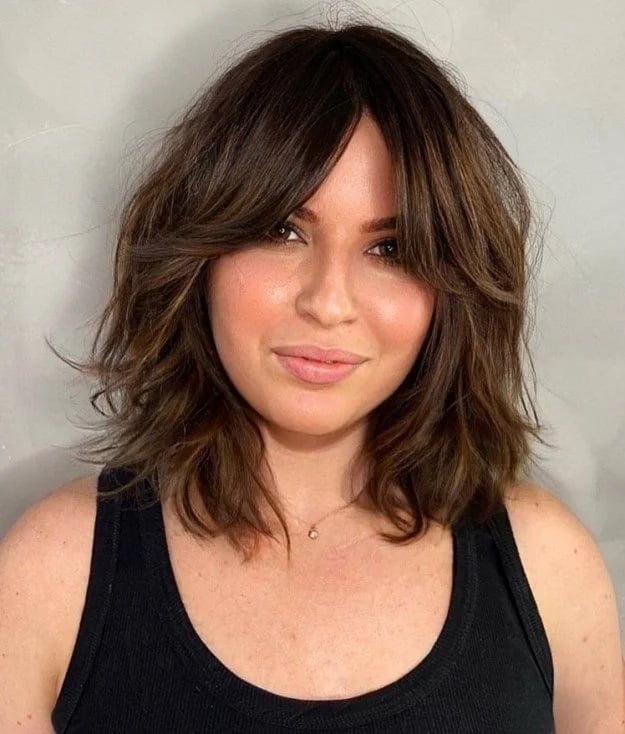
Dark brown face-framing layers and curtain bangs are cut into fine, wavy hair. The middle part and air-dried finish create a relaxed shape. The daily styling effort is low: apply a texturizing spray and let it dry. The drawback is predictability. Air-dried waves can fall flat by midday. A monthly trim keeps the layers from growing past their framing point.
Dark blonde hair with lighter highlights and a smooth blowout
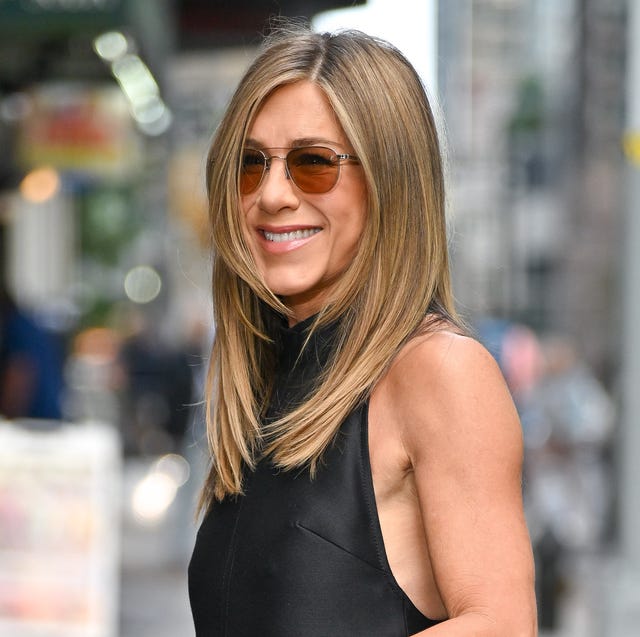
Fine, straight hair takes face-framing layers that contour from the cheekbones down. The dark blonde base has lighter highlights throughout, styled into a smooth blowout with a centered parting. This is a salon-only cut. The precision of the layers is lost with DIY scissors. Tell your stylist: face-framing layers, dark blonde with lighter highlights, centered parting, smooth blowout.
Long straight hair with ash blonde highlights and curtain bangs
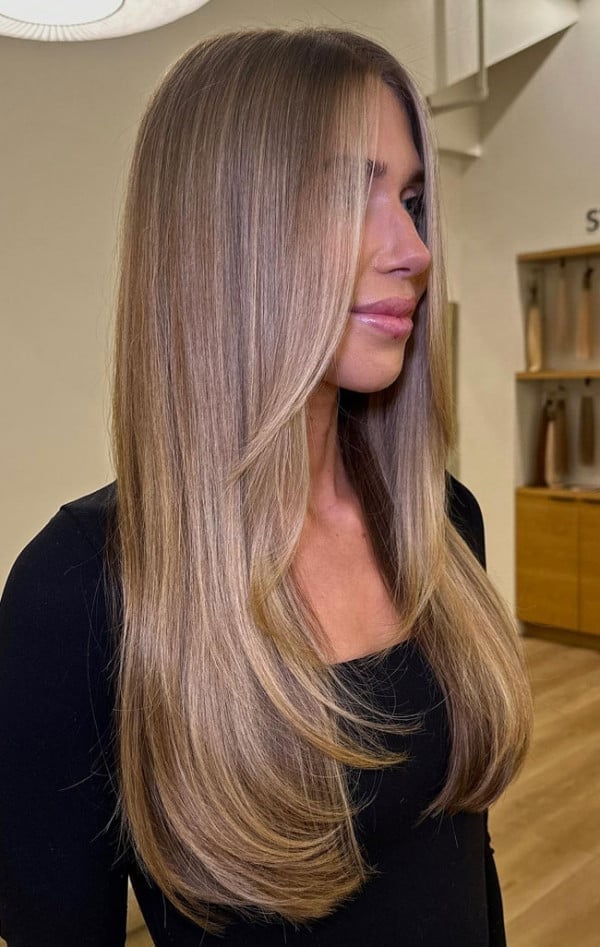
Blowouts on straight hair read more neat than their wavy cousins, but the difference here is the ash blonde highlights. They land on the middle parting and curtain bangs, not the whole head. The layers start at the chin, so the light catches the face first. Fine hair at collarbone length or longer holds this the longest. Curtain bangs sweep toward the cheekbones without a hard line. Oval and heart faces get the most out of the balance.
Pass when your texture is wavy or curly.
Soft face-framing layers with wispy bangs and subtle highlights

Wispy bangs read like a lower-maintenance cousin of the blunt fringe, but only if you accept the trim rhythm. The face-framing layers blend into the medium brown base, and the fine highlights add a sheen that full solid color cannot. Waves soften the transition from bang to length. Collarbone-length fine wavy hair holds the bend naturally. Square faces benefit from the soft edges around the jaw. A texturizing spray sets the waves without a heat tool.
Blunt bangs and face-framing layers on dark brown fine hair
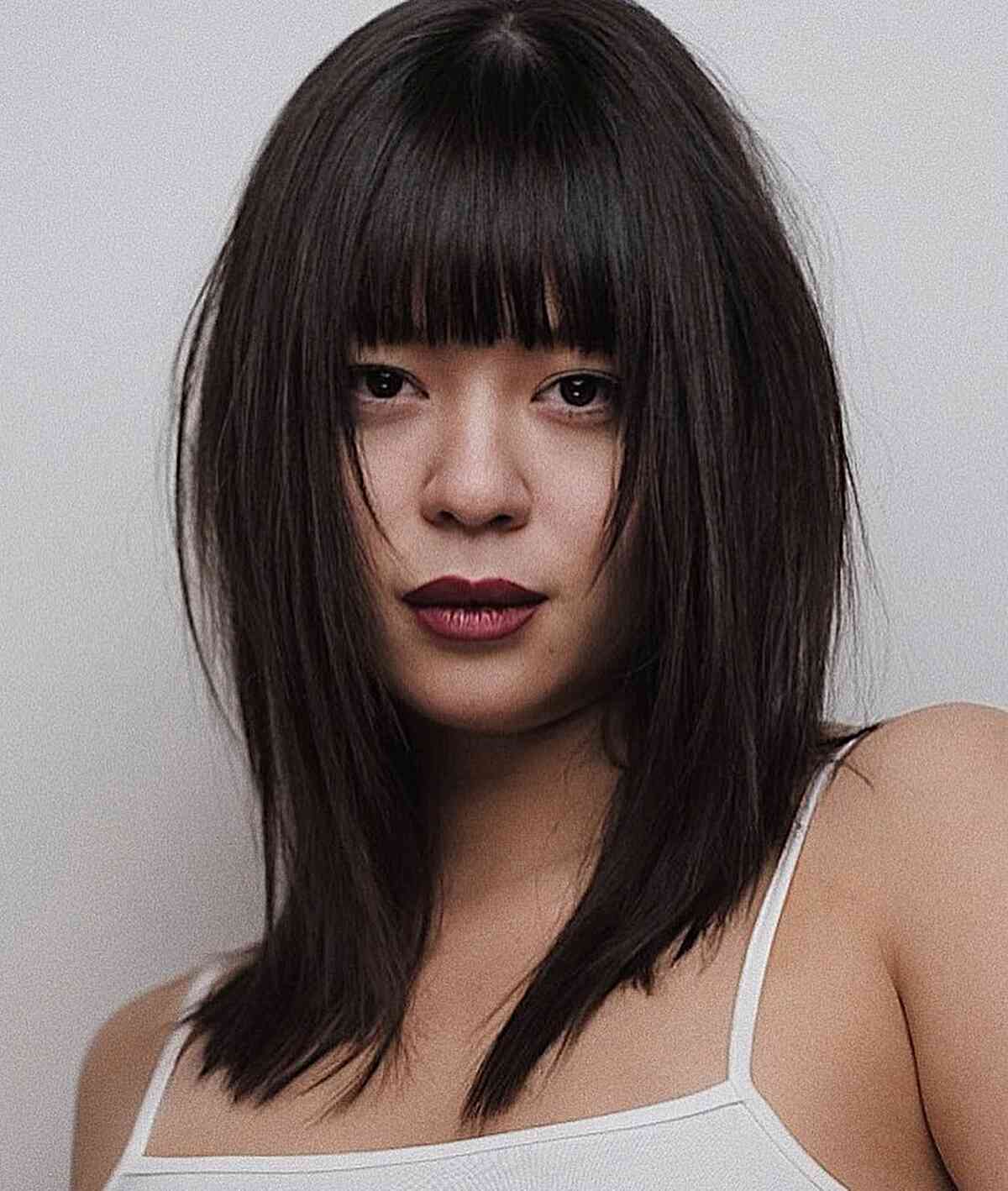
Blunt bangs on fine straight hair are a deliberate choice, not a grow-out stage. The face-framing layers are subtle here, so the bangs carry the look. Dark brown with an air-dried finish means no heat styling on the length, but the bangs still need a flat iron each morning. Collarbone length or longer gives the layers room to land. Round faces get a vertical line from the blunt edge. Air-drying everything or sleeping on wet hair does not suit this cut. The precision line means a salon visit every three to four weeks, no DIY trims. The drawback: one humid day and the bangs separate.
Blonde hair with highlights and soft curtain bangs
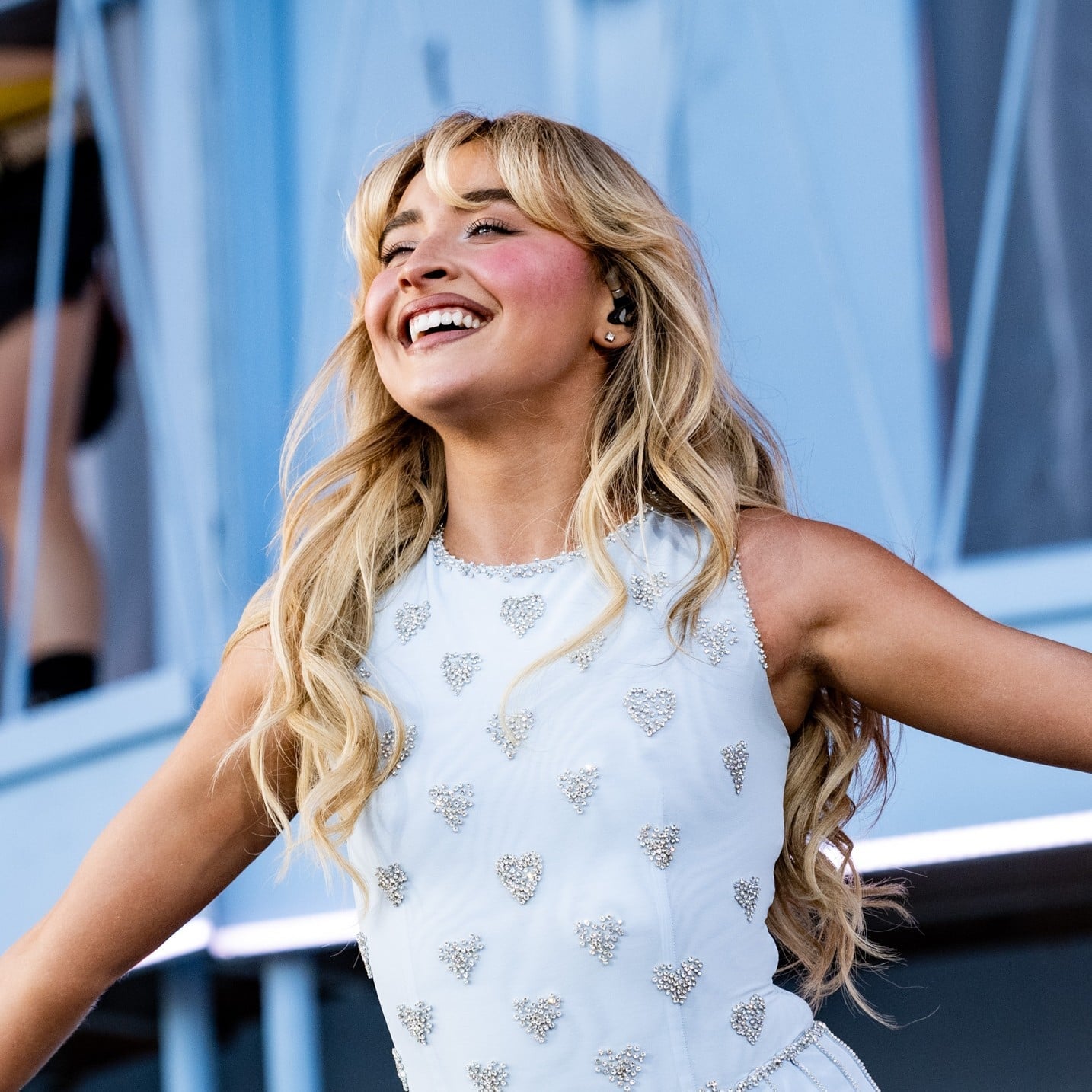
Curtain bangs on fine wavy blonde hair work because the layers are cut to move with the wave pattern, not against it. The highlights sit subtly through the mid-lengths, so the face-framing pieces catch light without a heavy contrast. Loose waves are set with a blowout and a large round brush, then broken up with fingers. Collarbone length fine hair holds this shape for two days. Most face shapes suit the soft sweep. Tell your stylist: face-framing layers, soft curtain bangs, blonde with highlights. The precision is in the graduation from bang to length, not in the density.
Side-swept bangs on dark blonde hair when you want dimension
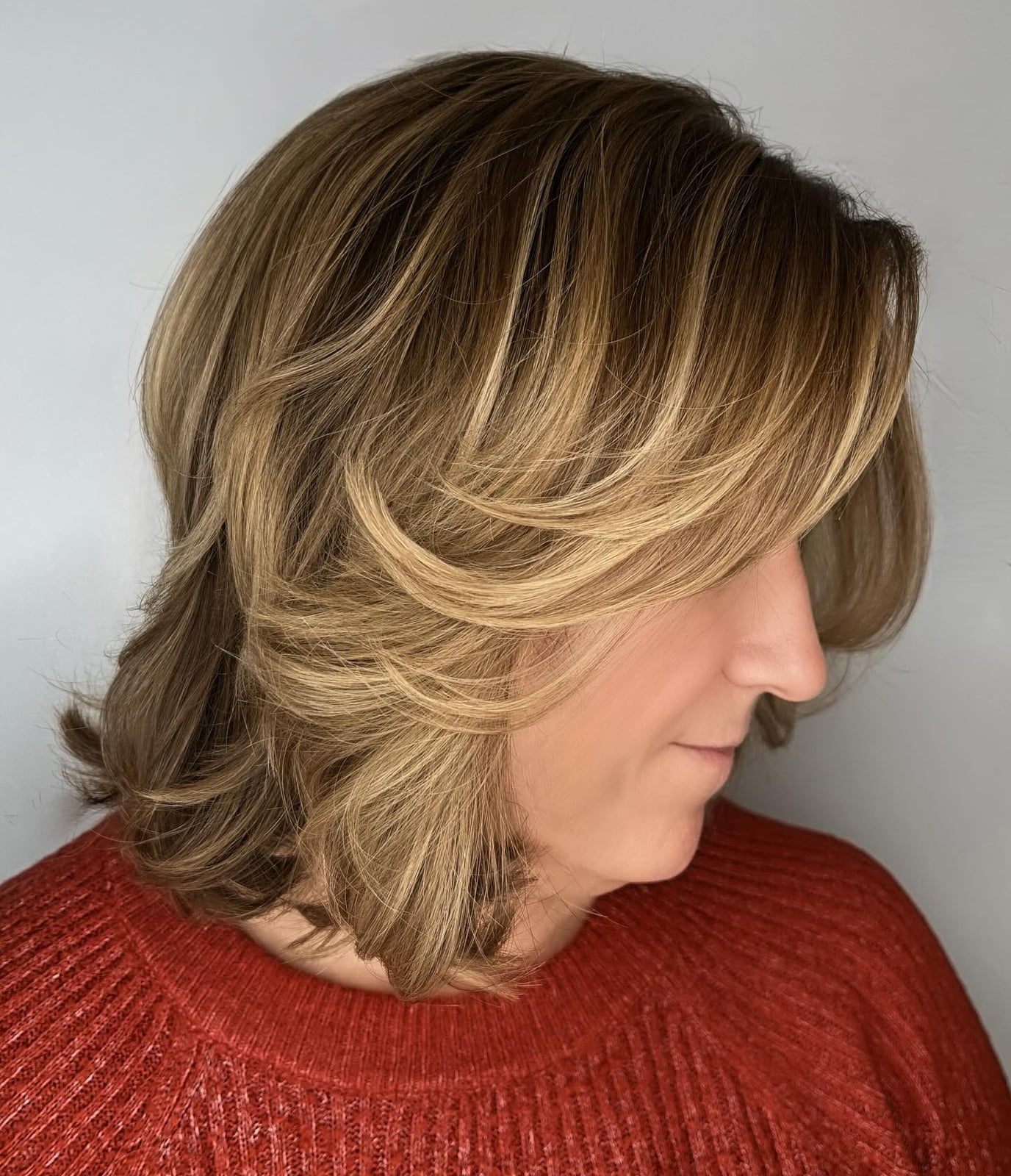
Side-swept bangs on a side part read differently than their center-part counterpart. The honey highlights here run through the face-framing layers, so the sweep catches color as it moves. Fine wavy texture at collarbone length holds the blowout shape. Round and square faces benefit from the diagonal line across the forehead. The daily reality: side-swept bangs need a blow-dryer and a round brush every morning to land correctly. One humid day and they shift toward center. A monthly trim keeps the angle sharp. This style requires styling tools for daily wear.
Dark brown hair with blonde highlights and curtain, close-up take
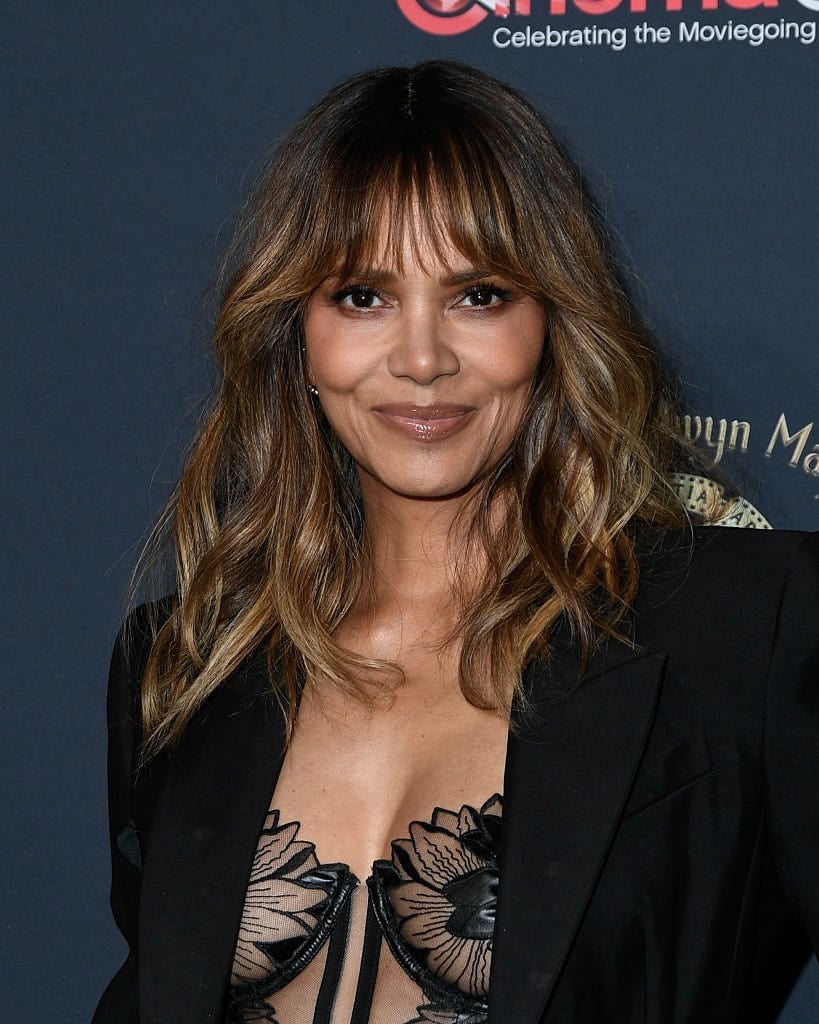
Curtain bangs here do not stop at the cheekbones. They keep going, blending into the layers. The dark brown base with blonde highlights makes the transition feel built-in, not tacked on. Thick, wavy hair suits this best because the weight helps the bangs swing open rather than sit flat. A stylist needs to cut the bangs as part of the layer structure, not as an add-on, and the color work requires a hand-painted technique around the face. That combination is why this is a salon-only design. Ask your stylist for: face-framing curtain bangs with blended highlights. Fine hair that struggles to hold a wave will look stringy by midday.
Long face-framing layers with honey highlights
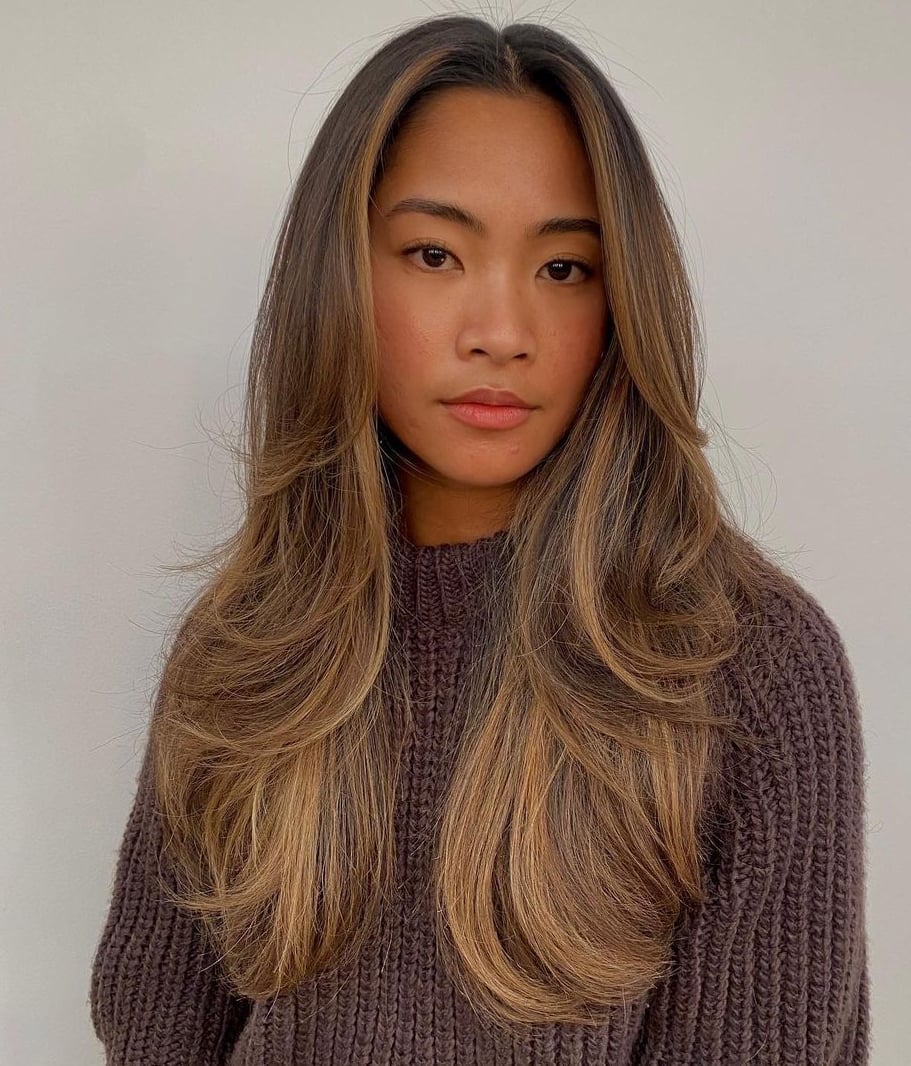
Compare this to a one-length cut with the same dark brown base and honey highlights. The one-length version will sit heavier and show less of the color variation. Long face-framing layers that start around the collarbone and cascade down to mid-back let the honey tones catch light at different points. Fine, wavy texture works well here because the layers add volume without bulk. The centered parting keeps the shape symmetrical. Upkeep is mostly about the color: honey highlights lose their warmth in about six weeks. A color-depositing conditioner once a week keeps the tone from turning brassy.
Blonde hair with highlights and curtain bangs and adding dimension
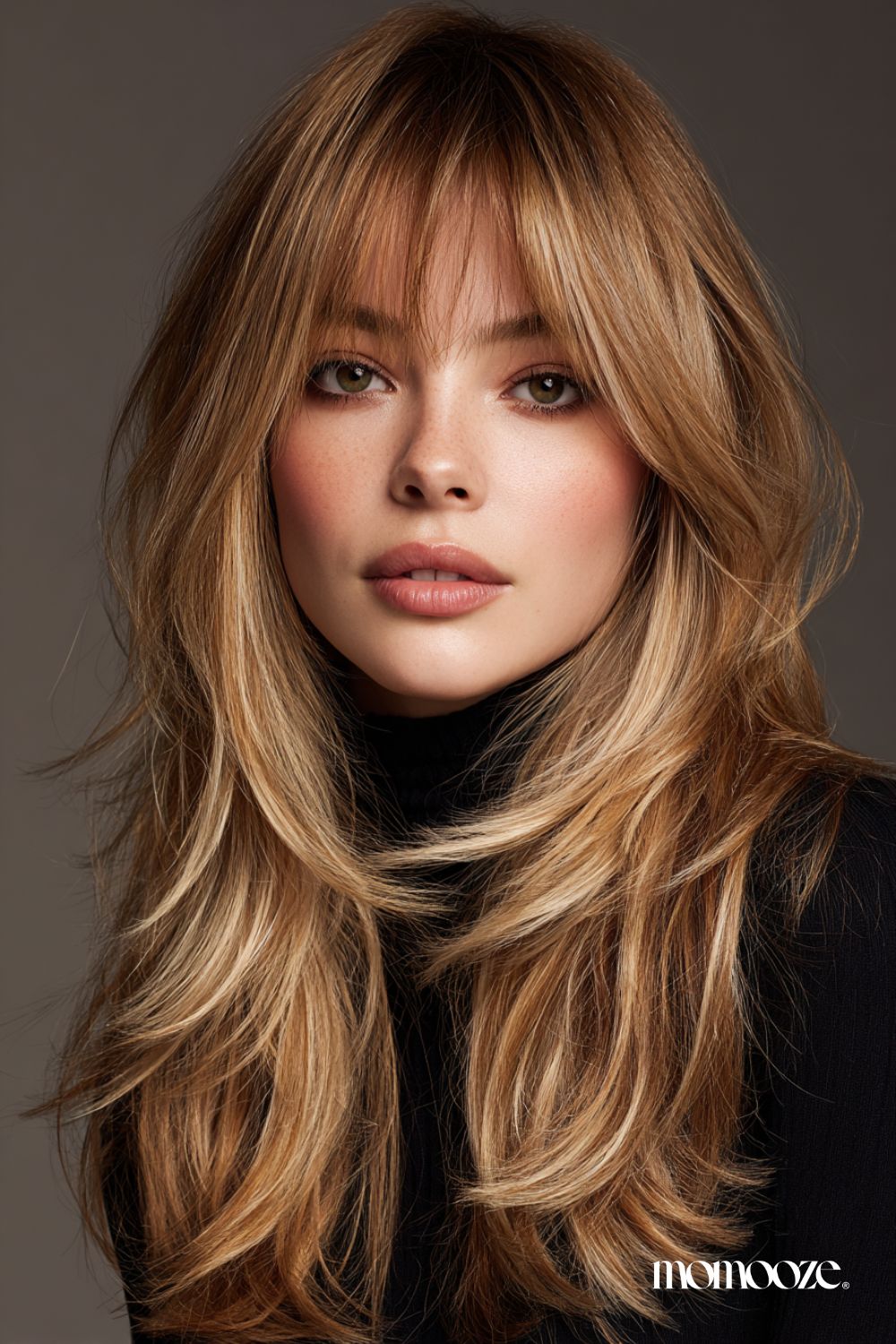
Blonde with highlights and curtain bangs works best on fine, wavy hair that needs a shape without losing length. The face-framing layers add movement, and the parted fringe softens the hairline. One drawback: on very fine hair, these layers can look heavy if cut too short. The weight pulls the wave out. Stick-straight hair that is not styled daily will cause the bangs to separate into two flat curtains. The real test is regular blow-drying of the fringe with a round brush on wash days. If yes, this is a solid everyday cut. If no, pick a style with no bangs instead.
Collarbone layers with curtain bangs and subtle highlights
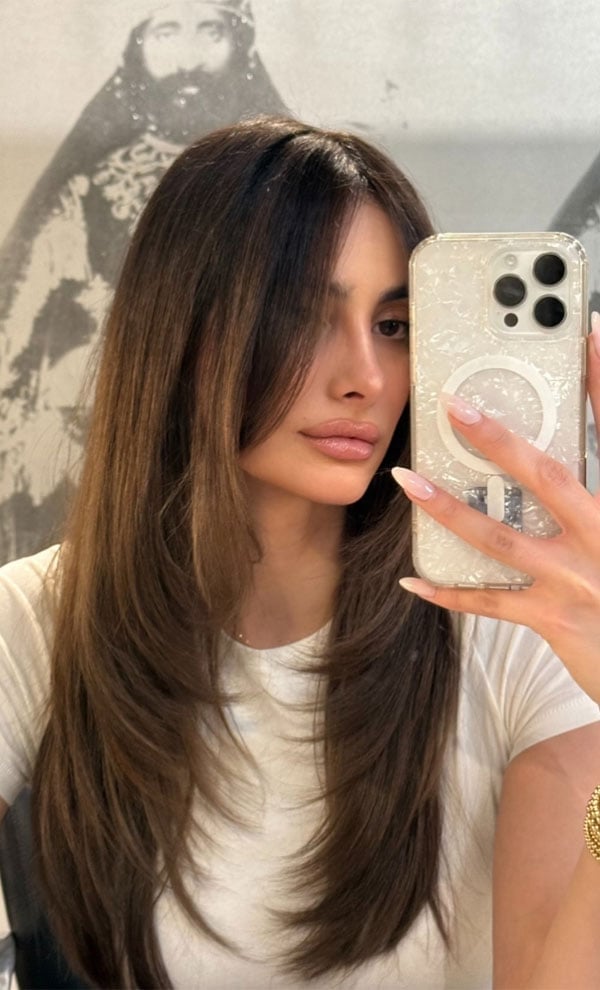
Long layers that start at the collarbone let the curtain bangs blend into the cut without a visible seam. Dark brown base with subtle highlights keeps the dimension low-key, more texture than contrast. Fine, straight hair holds a smooth blowout well here because the layers are long enough to avoid flipping at the ends. A stylist cuts the bangs as part of the front section, then feathers them into the layers below. That precision requires a salon visit. DIY trimming of the bangs almost always removes the feathered transition and leaves a blunt edge. Book it as: long face-framing layers with curtain bangs and a smooth blowout.
Dark brown hair with curtain bangs and a smooth blowout
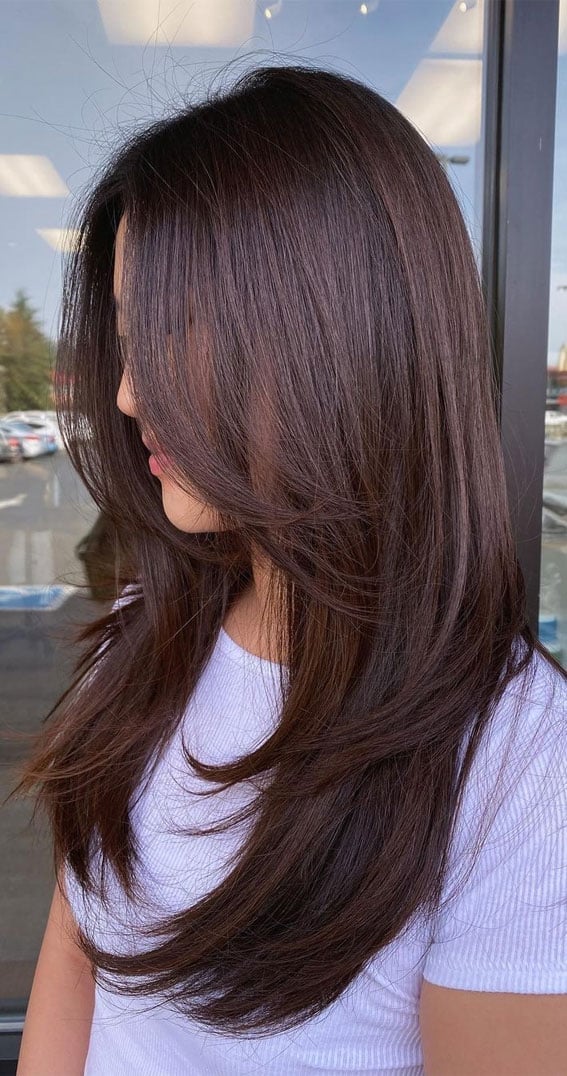
Fine, straight hair holds a blowout for about half a day before it starts to droop. A smoothing serum and a round brush buy you a few more hours, but the real solution is a monthly trim. Those collarbone-grazing layers lose their precision fast. Book it as: long face-framing layers, curtain bangs, dark brown, blowout. Skip it if your hair has any wave or curl. You will fight it every morning.
Brown hair with blonde highlights and face-framing layers
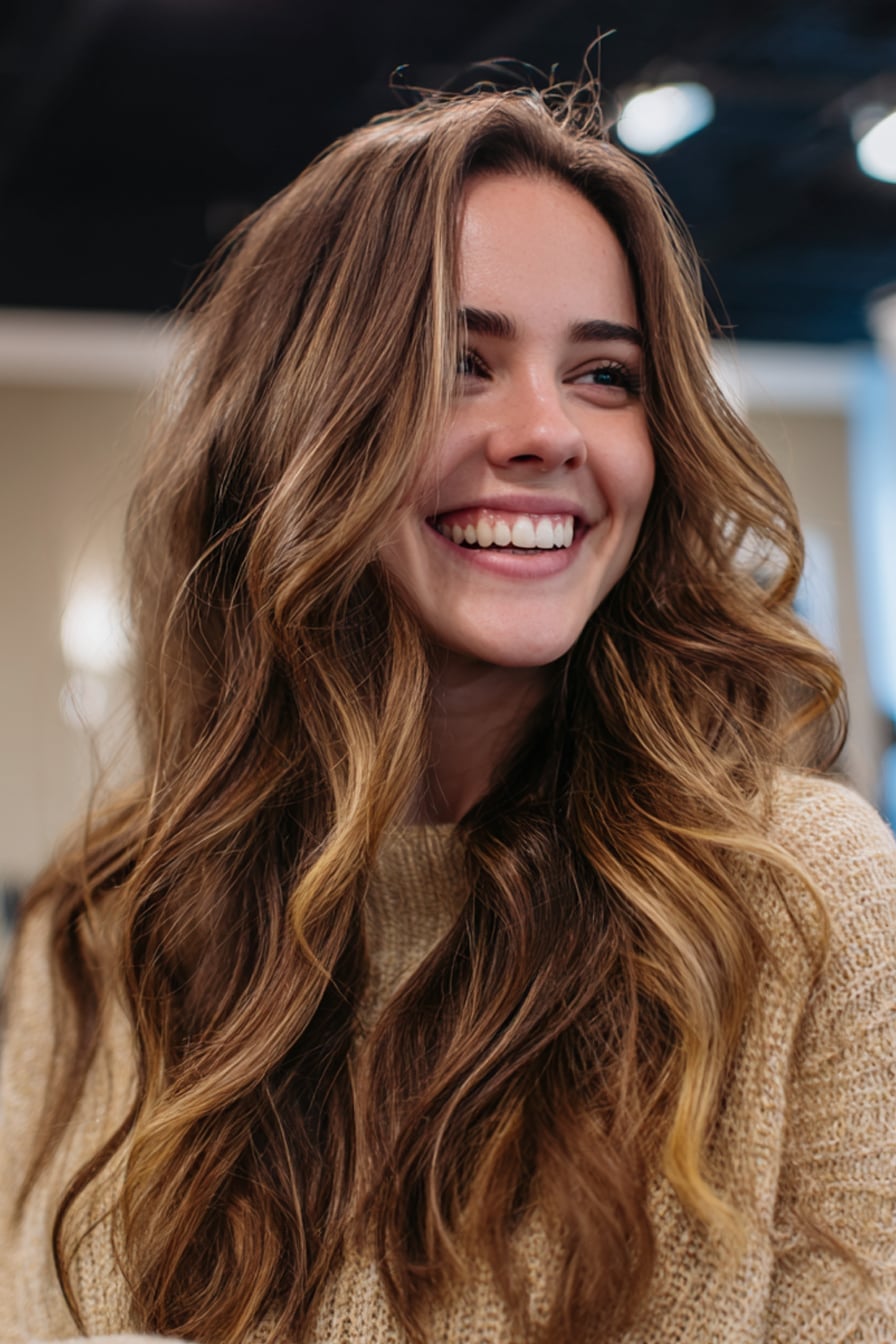
This is a salon request, not a bathroom-mirror job. The key is precision: those long face-framing layers need to hit at exactly the right points around your cheekbones and jaw to create movement and shape. Tell your stylist: long face-framing layers, waves, brown with blonde highlights. A DIY attempt at the layers will leave you with jagged ends and a lopsided frame. The subtle blonde highlights are what give the brown base its dimension, so let the colorist place those, too.
Final Thoughts
Pick the version that matches your morning routine and natural texture.
- Ten minutes or less: air-dried shag or curtain bangs on wavy hair.
- Fine hair: soft layers with a round-brush blowout for lift.
- Thick, wavy hair: long layers with a voluminous blowout to control the weight.
- Cool base that pulls brassy: ash or honey highlights toned every eight weeks.
Face-framing layers give you adaptable shape without a full commitment.

