You are three months in, and the in-between stage is real. The ends are a little fuzzy, the pattern is settling, and every mirror check asks the same question: what now. This collection of 25 styles treats starter locs like the architectural phase they are, worth the patience, worth the right shape.
Which is why Pretty Starter Locs 2027 fill so many saved boards. The spread runs from five-minute air-dries to intricate geometric partings, built for fine to medium density and any face shape. The struggle this solves: making new locs look deliberate, not transitional.
Ombré starter locs styled into a dramatic high bun
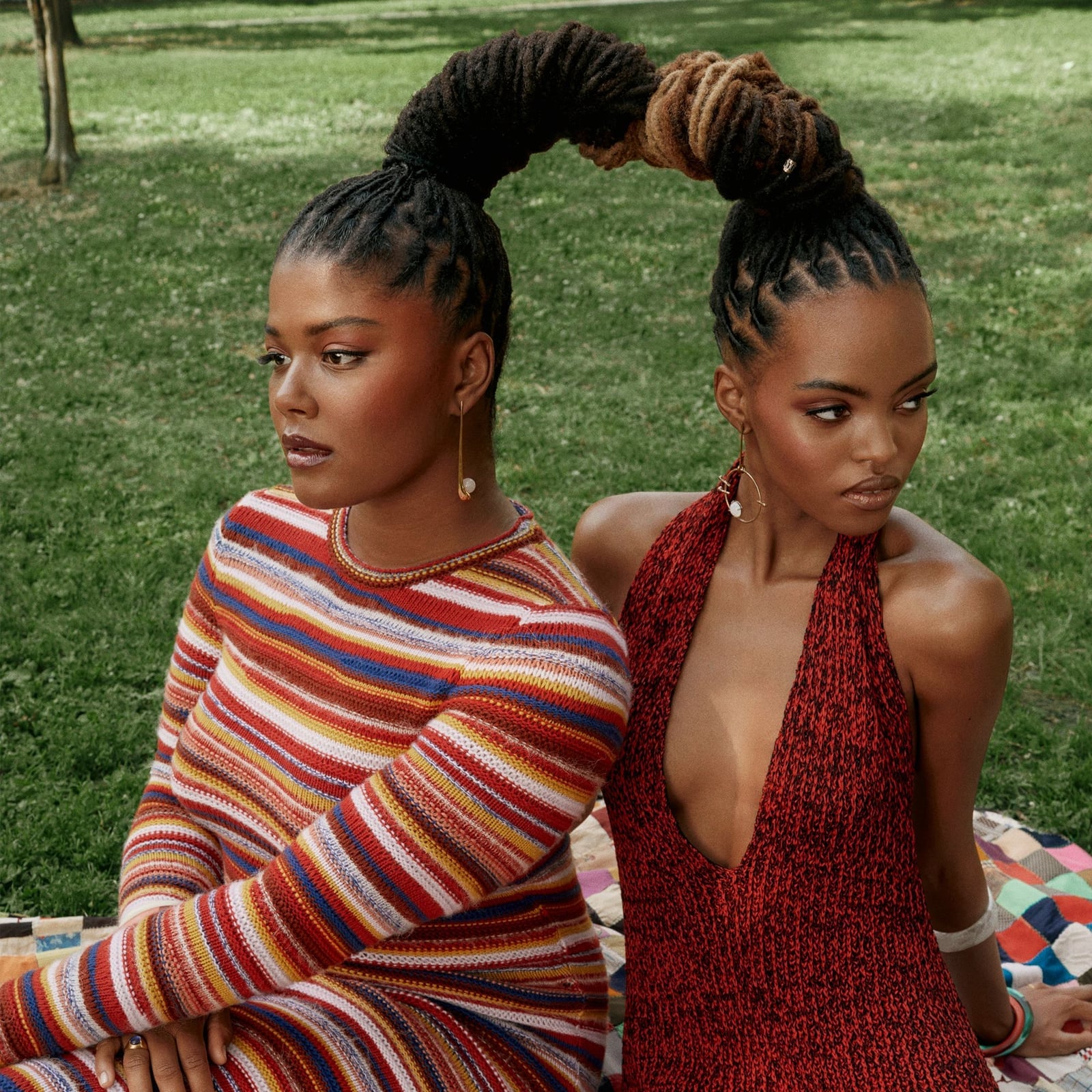
Two tones in one style, and the line between them is deliberate. The dark brown roots graduate into a blonde that hits the ends, so the ombré looks planned rather than grown out. Pulling all of that length into a high bun means the color shift stacks visibly, lighter strands sit on top of darker ones, which gives the bun a layered look even before you add texture. The coily, thick texture holds the shape well, but the real work is in the wrap. A high bun this dense needs a solid base and enough pins to feel secure for hours. The catch: the color boundary will need maintenance every six to eight weeks to keep the contrast clean.
Air-dried dark brown locs showcasing natural texture
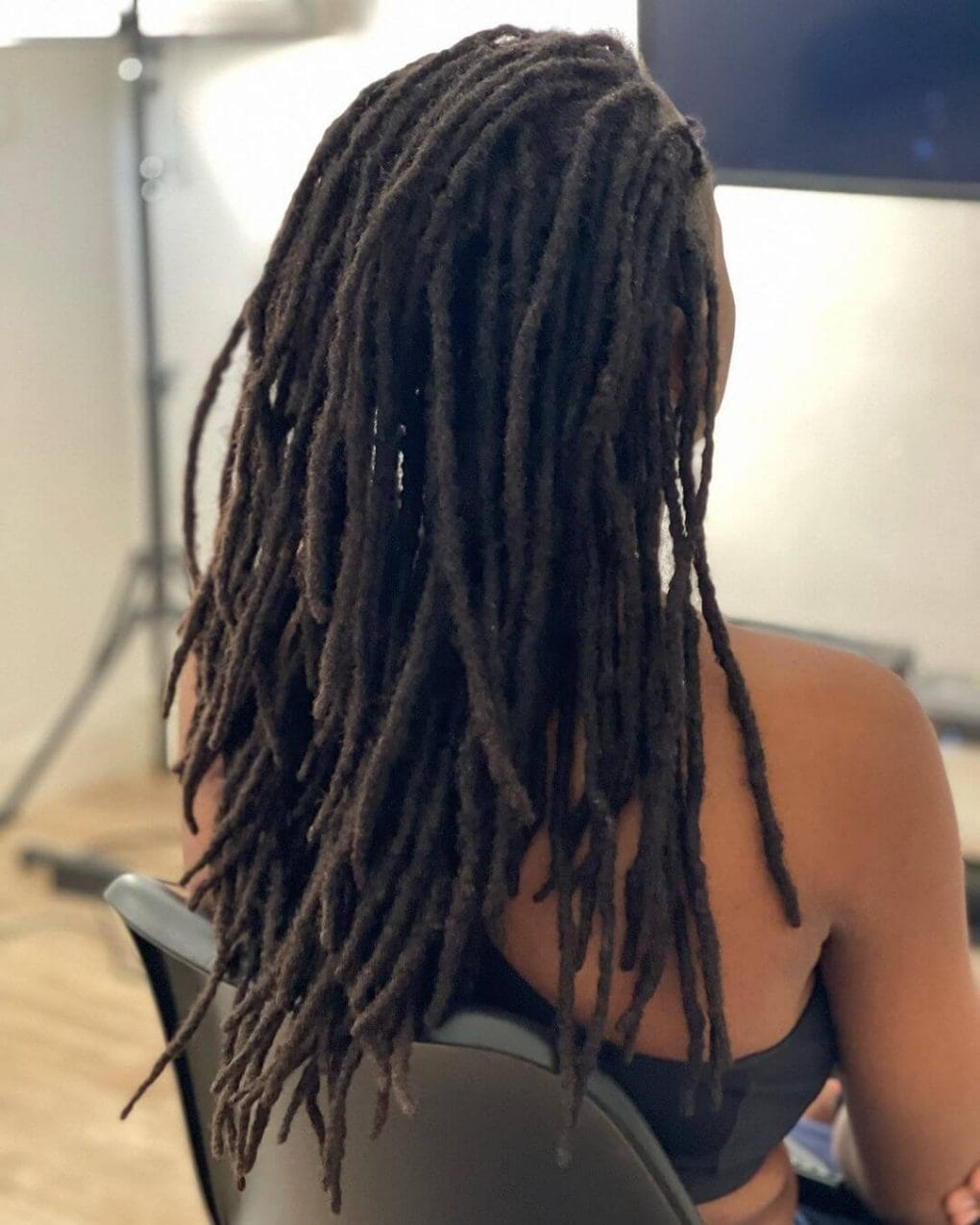
Dark brown locs that have never met a blow-dryer. The middle part splits them evenly, and the air-dried finish lets every coil sit exactly as it formed. Thick, coily hair is the natural candidate here. The density gives the locs body even without product or tension. A leave-in conditioner on damp locs before air drying keeps the texture defined and the ends from feeling dry. It suits a routine that takes less than ten minutes of active effort. Hair that is fine or prone to frizzing without intervention may not hold the volume needed for this air-dried look.
Auburn starter locs with defined coil pattern
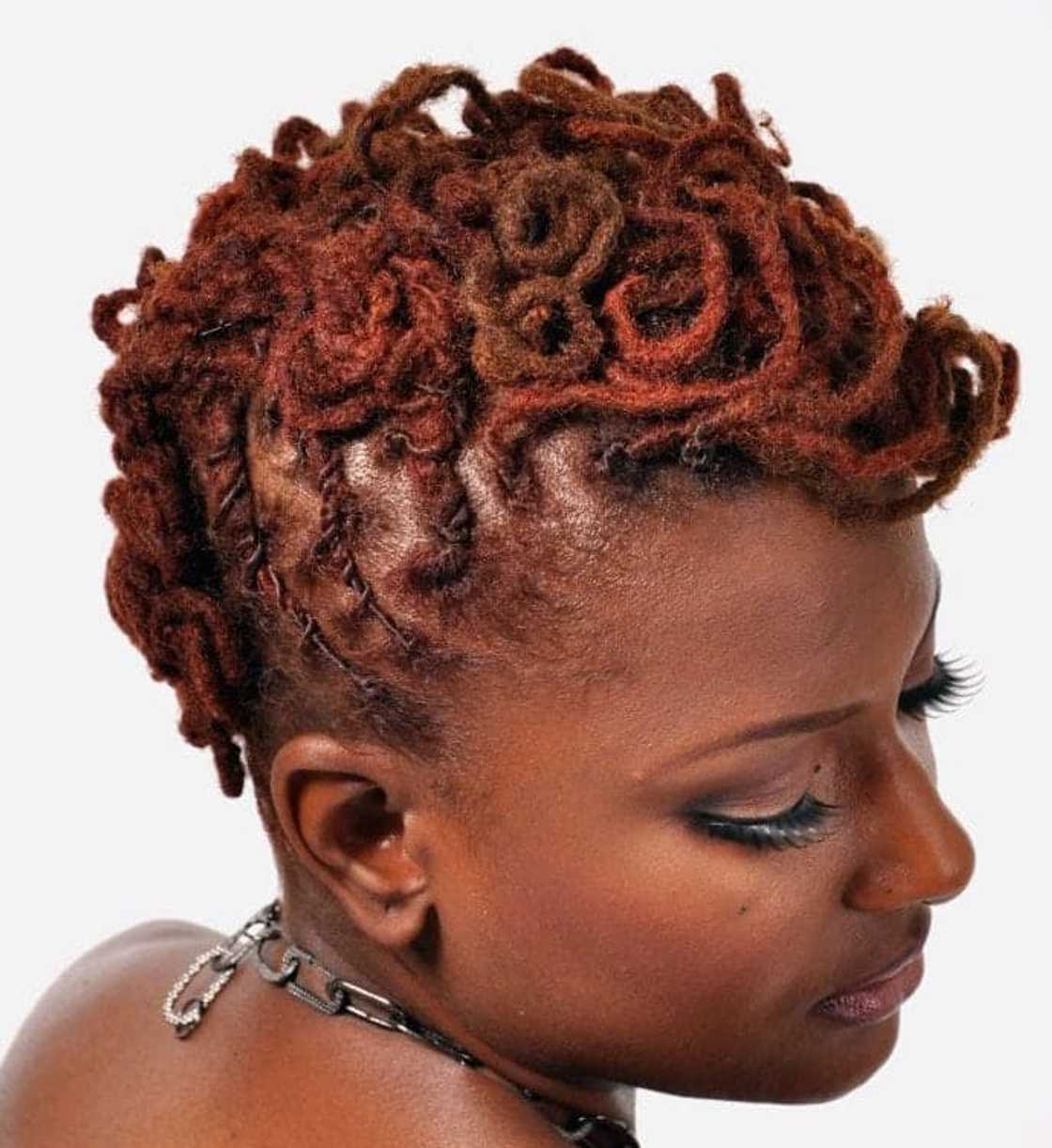
Auburn with darker roots creates a deliberate color gradient that avoids looking like a faded dye job. The defined coil pattern means each loc spirals evenly from root to tip, which gives the whole set a uniform rhythm. This color requires maintenance to stay warm. Ask your colorist for: a gloss or toner every four to six weeks to prevent brassiness. The darker roots allow for some grow-out grace, while the vibrancy stays concentrated in the ends. A salon-leaning look for those who like visible texture and a color that stands out.
Dark brown locs with geometric parting
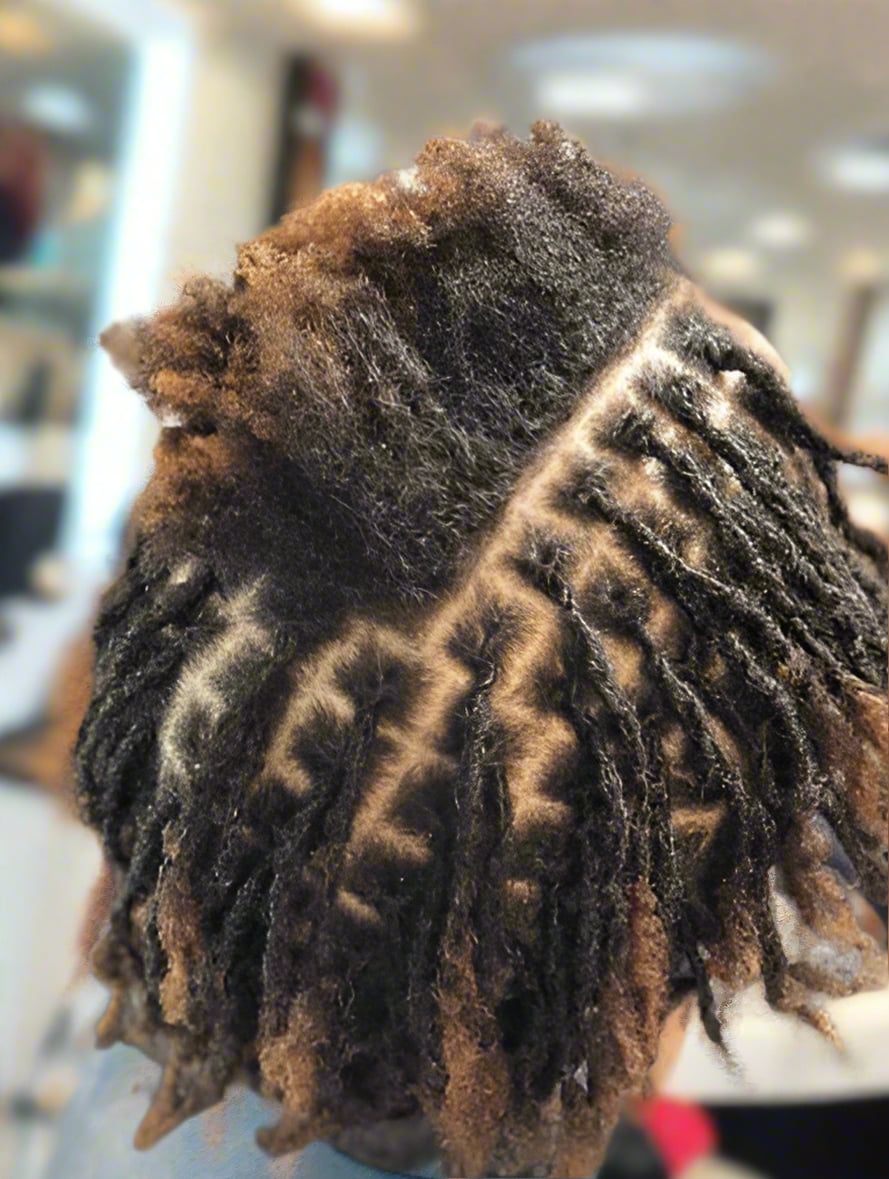
How do you ask for a scalp pattern that looks like architecture? The lines are sharp and precise, dividing the scalp into clean sections that frame the locs. The dark brown base keeps the overall look grounded, while the lighter brown ends add a subtle fade that stops the parting from feeling harsh. This is a design that relies on the parting staying crisp, regrowth will blur the lines, so schedule a refresh every four weeks if the geometry matters to you. The coily, thick texture fills each section fully, making the pattern read clearly.
Braided black locs with honey blonde highlights
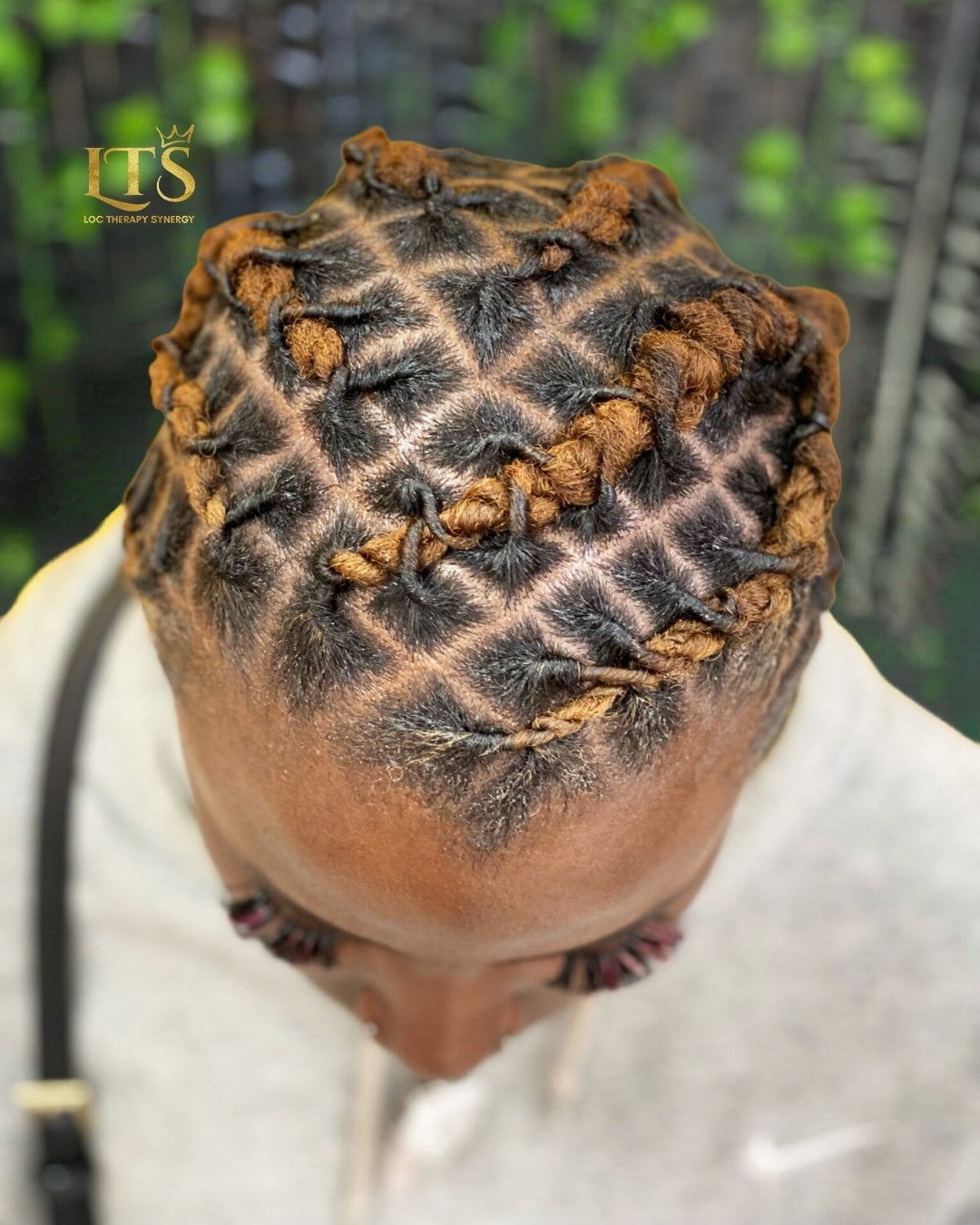
Black locs with honey blonde highlights woven through, then braided. The diamond-shaped parting on the scalp adds a second layer of design. Braided locs hold their shape longer than loose ones, which makes this a practical choice for someone who wants the style to last a full week without redoing it. The highlights are spaced enough that they act as accent color, so the black base still dominates. Compare this to a solid black braided style: the honey blonde adds dimension but also requires a toner visit every six weeks to keep the blonde from pulling warm. Unravel the braids carefully to preserve the loc structure underneath.
Twisted starter locs with subtle end curls
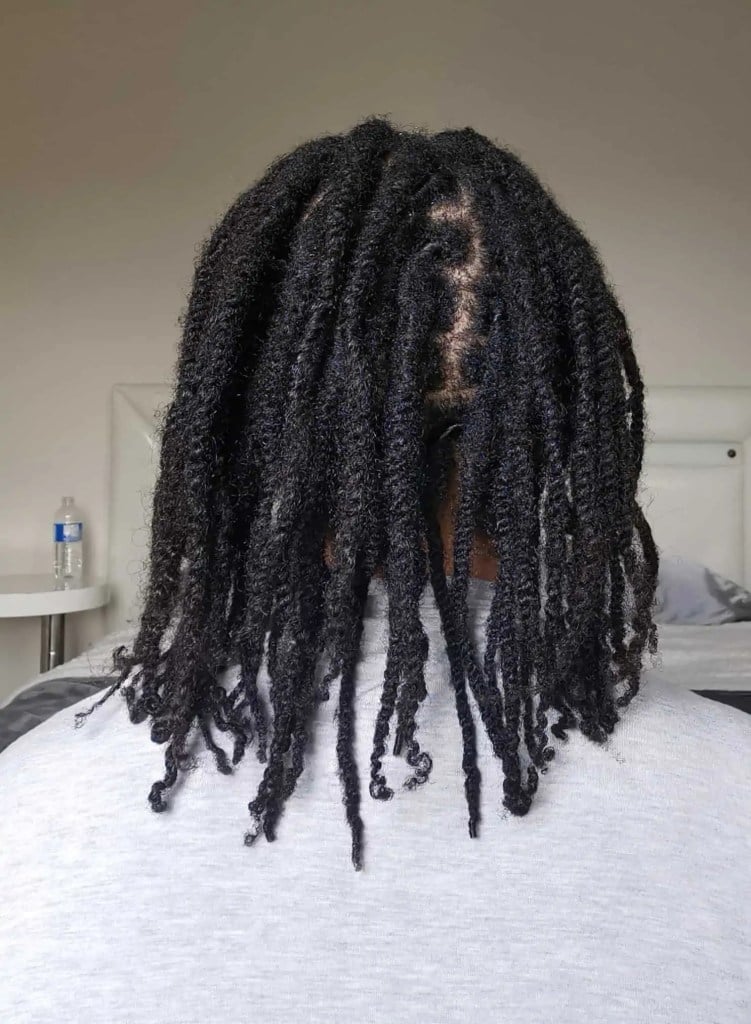
Thick, coily hair takes to defined twists better than most textures. The middle part keeps the look grounded while the subtle curls at the ends add a softer finish. Black color holds the shape without needing a toner. The hold is solid for about two weeks before the roots need attention.
You need enough length to show the curl pattern. Skip it if a smooth, untwisted finish is your preference. The words for the chair: starter locs, defined twists, middle part. A light oil on the ends keeps them from drying out between retwists.
Interlocking black locs with a gold heart charm
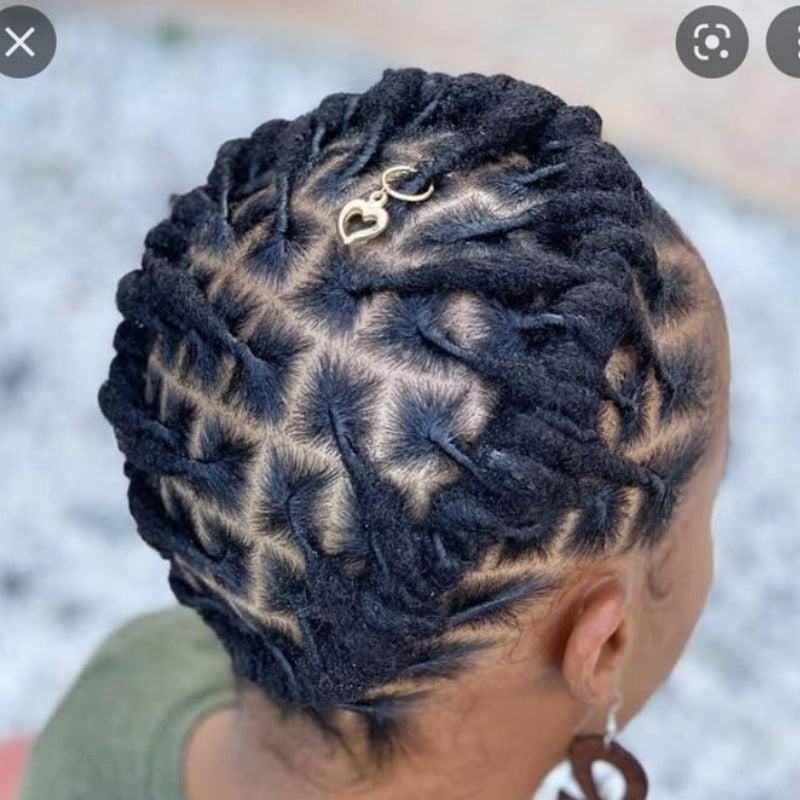
A diamond grid parting requires precision, and interlocking is the technique that keeps it sharp. The thick, coily black locs sit in neat squares, each one a deliberate placement. The gold heart charm is a single accent, not a cluster. The hold is firm, the grid stays visible for weeks.
This is a salon-only request. The charm needs to be secured properly, not just pinned in. Tell your stylist: starter locs, diamond grid parting, interlocking, with charm. This style is not adjustable at home.
Voluminous updo for protective starter locs
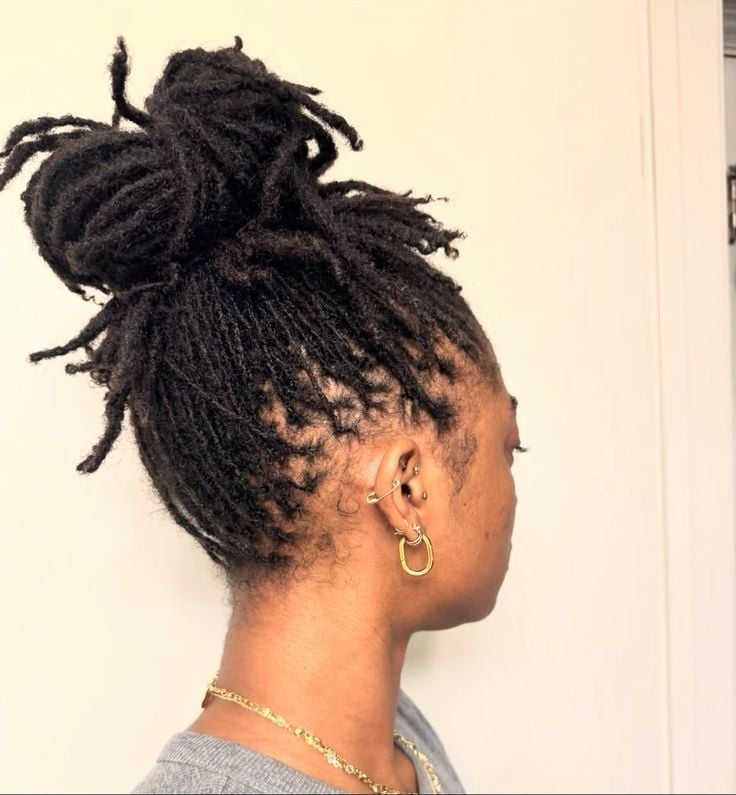
A high messy bun is the closest thing to a ponytail that actually protects the ends. The thick, coily locs are gathered up, with strands left out around the face and nape. Black color keeps the focus on the volume. The hold is good for a full day, but the loose pieces need a pin check by midday.
The trade-off is that this style works best on locs with some length. Skip it if your locs are too short to reach the crown without tension. The catch: the messier it looks, the longer it takes to get right. Hairpins are the only tool you need for touch-ups.
Short ear-length locs air-dried naturally
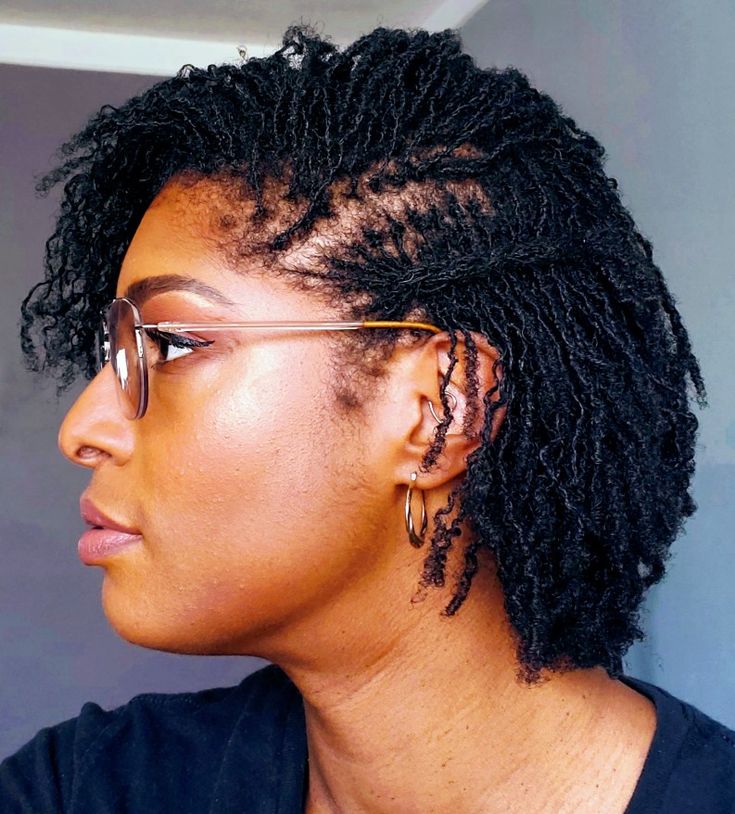
Ear-length locs rely on the cut, not the styling. The dense, coily texture is the whole show here, with a side parting breaking up the shape. Black color looks a single block. The hold is natural, meaning zero product and zero effort. A trim every six weeks keeps the line clean.
Bold highlights and scalp design for locs
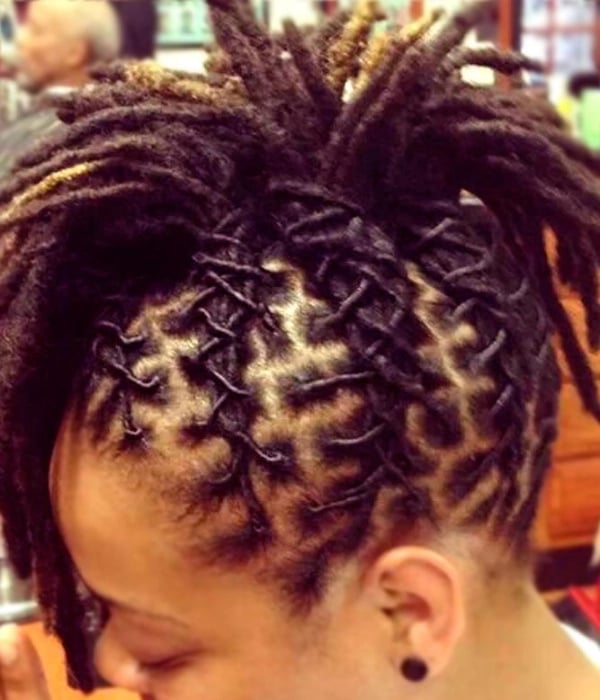
Want a geometric scalp pattern and blonde highlights in the same look? The dark brown base provides the contrast, with lighter pieces placed to follow the design. The locs are styled up to show the parting. The hold is about a week before the pattern softens at the roots.
This is a statement for a specific season or event. The geometric scalp pattern needs a fresh retwist to stay sharp. A single color or a simpler part is a different choice. A satin scarf at night keeps the blonde from dulling.
Neat squares begin forming locs for growth
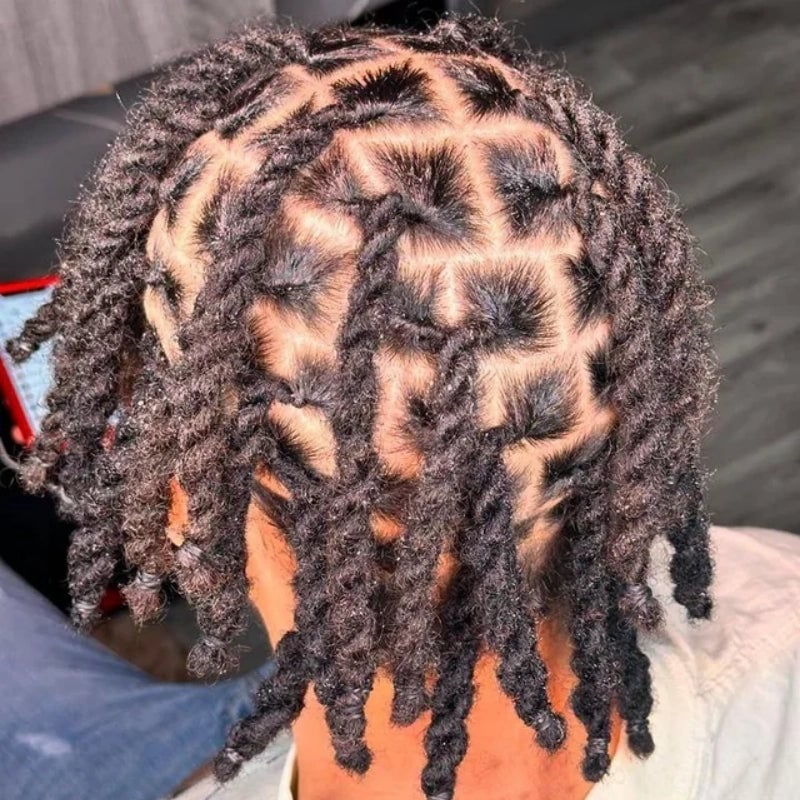
Geometric grid parting turns the scalp into a blueprint. The coily, thick hair is sectioned into precise squares, each one beginning its loc journey. You can attempt the pattern at home with a rat-tail comb and a mirror, but a salon will get the lines straighter. Skip it if you prefer a more organic, freeform approach to locking. Ask your stylist for: starter locs, grid parting, black hair. The parting holds the shape until your next retwist, so keep the scalp clean and moisturized in between.
High ponytail for manageable dark brown locs
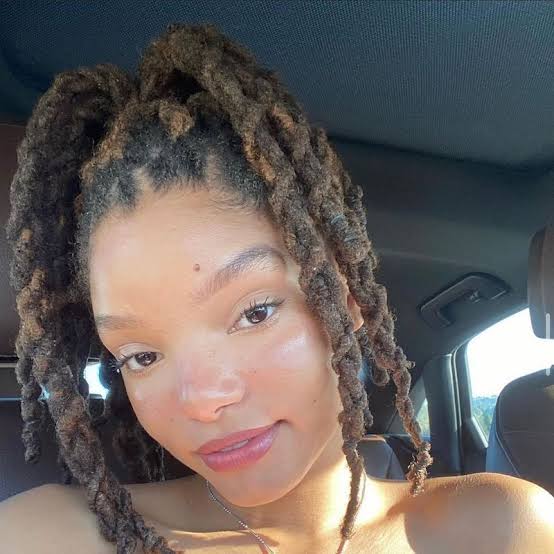
A high ponytail keeps thick, coily locs off your neck and out of your face. The dark brown base gets a subtle lift from lighter brown highlights woven through the twisted strands. It suits anyone with enough length to gather at the crown. Skip it if you prefer your locs worn down or simply do not like ponytails. Use a smooth hair tie to avoid snagging, and check the tension at your hairline before you walk out the door.
Undercut with a high top knot bun

Consider a full undercut versus a tapered nape. The undercut shaves the sides clean, leaving the thick, coily locs to pile into a high top knot bun. The contrast is deliberate and modern. The catch: the shaved sides need a trim every two to three weeks to stay sharp. Skip it if you are not ready to commit to that maintenance cycle or prefer to keep your sides full. Ask your stylist for: starter locs, high top knot bun, undercut sides.
Short locs with bangs framing the face
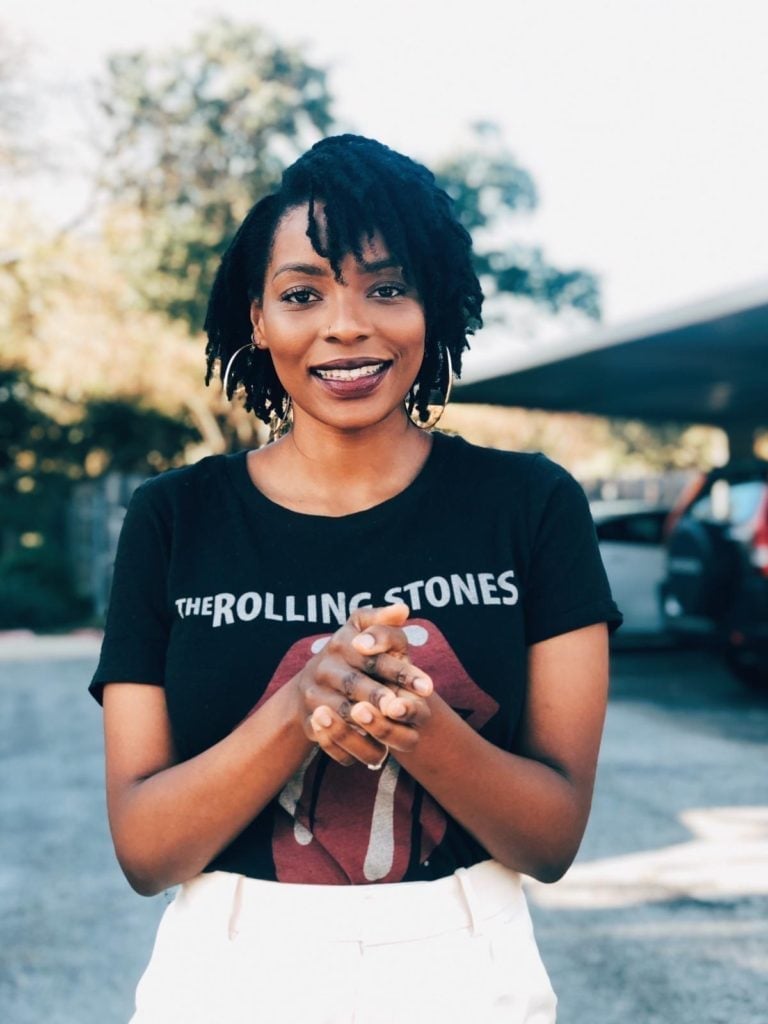
Short bangs cut straight across the forehead change the proportions of a short loc style. The dense, coily texture air-dries into a soft, casual finish that does not need much fuss. A center part keeps the bangs balanced on both sides. Not for you if you prefer longer locs or dislike a fringe brushing your eyebrows.
Neatly formed black locs from the back
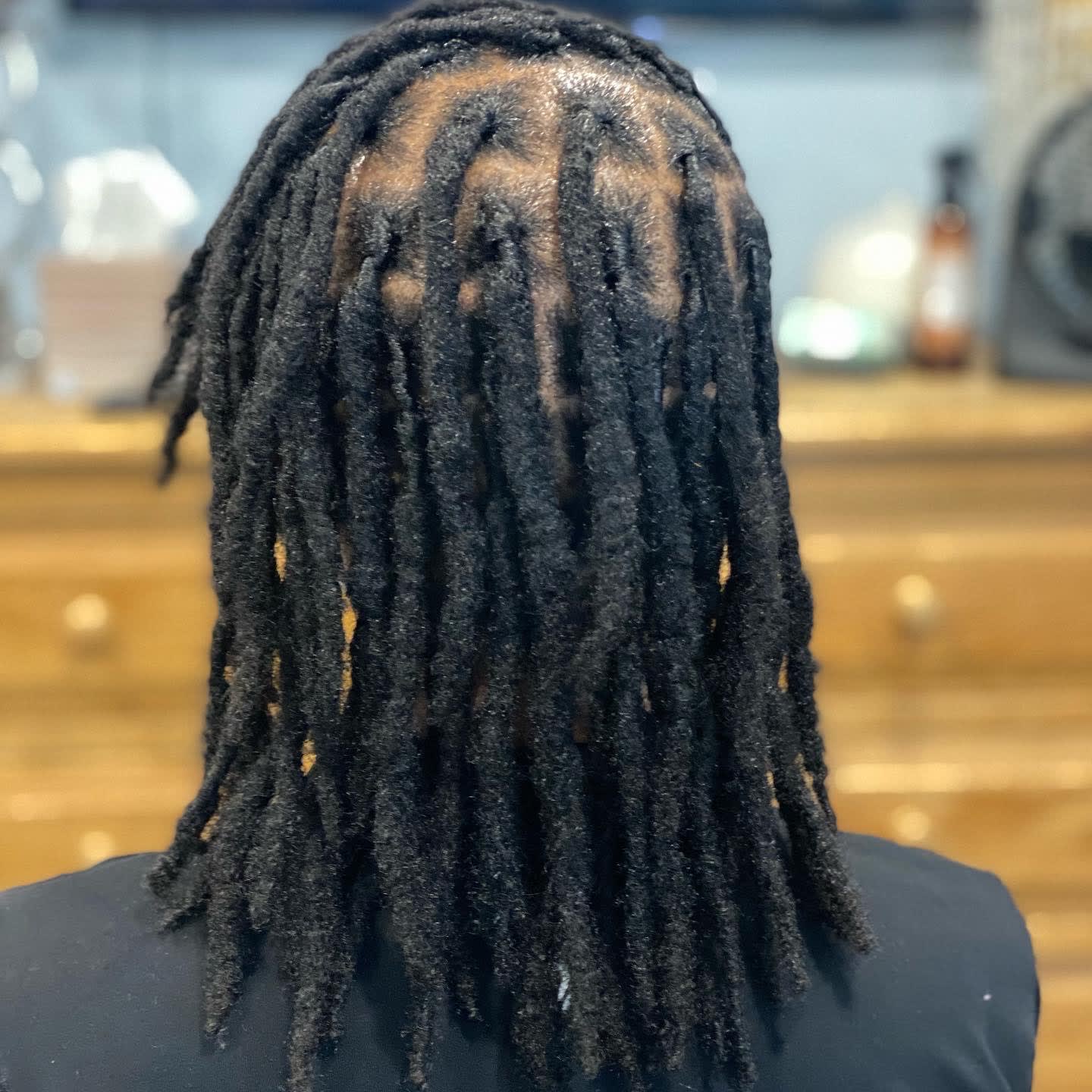
From the back, evenly distributed locs in a deep black color look deliberate and neat. The dense, coily texture is uniform, each loc formed with the same tension. This is a salon-leaning look that requires regular retwisting to maintain the neat lines. Between appointments, keep the locs clean and dry to prevent buildup at the roots. It suits those who want a structured appearance in their starter locs.
Ponytail for neat starter locs, black
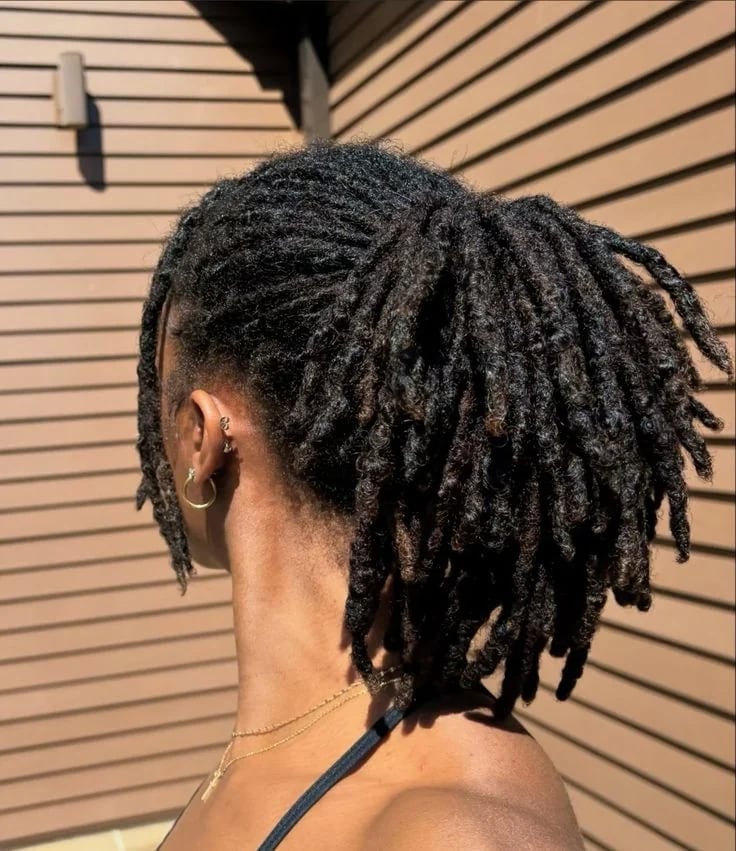
A ponytail is the practical sibling of a high bun, less drama, more function. The thick, coily black locs gather at the crown, held by a fabric-covered elastic that won’t snag the new growth. A center parting keeps the front neat and symmetrical. This is a salon-leaning style because the tension and placement matter for even distribution. The hold is solid for a full day of activity, though the roots will soften by morning. Ask your stylist for: starter locs, high ponytail, center part. Skip it if you dislike ponytails or prefer your locs worn down.
Small uniform locs air-dried
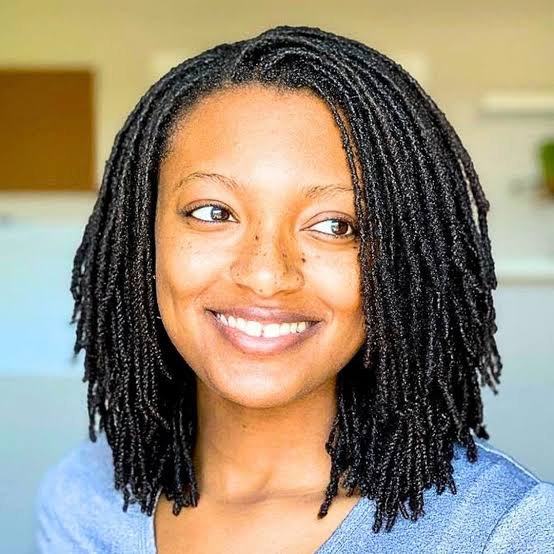
Small and uniform means every loc gets equal attention. The dense, coily texture air-dries into a consistent shape that does not need much fussing. A center part keeps the symmetry intact. Pass when you prefer larger locs or styles that rely on extra volume. Air drying is best for maintaining the shape of small locs; mist with water to refresh.
Two high buns with a blunt cut
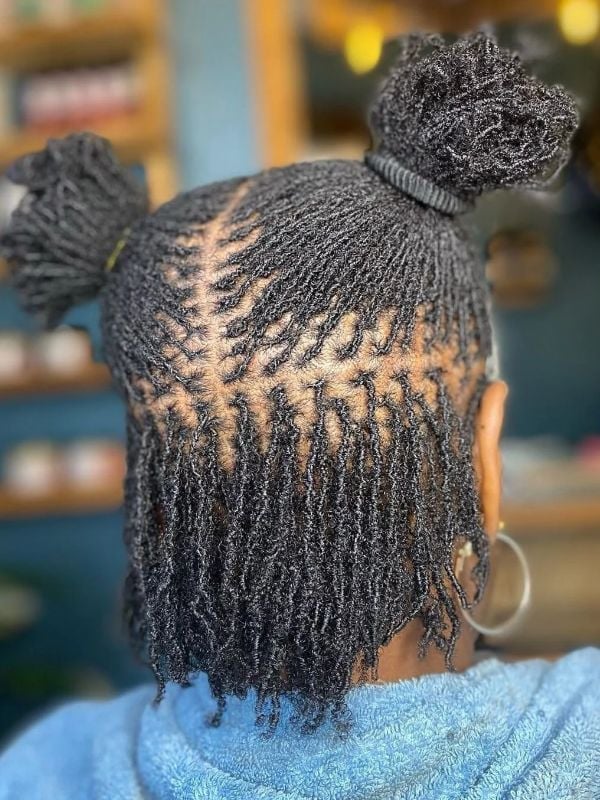
Two buns read playful, but the blunt cut at the ends adds a sharp finish that keeps the look deliberate. The center part splits the dense, coily locs evenly. It suits those who like updos with a defined edge. Secure buns with strong pins; the blunt cut provides a clean finish to the locs.
Playful two buns with neat sections
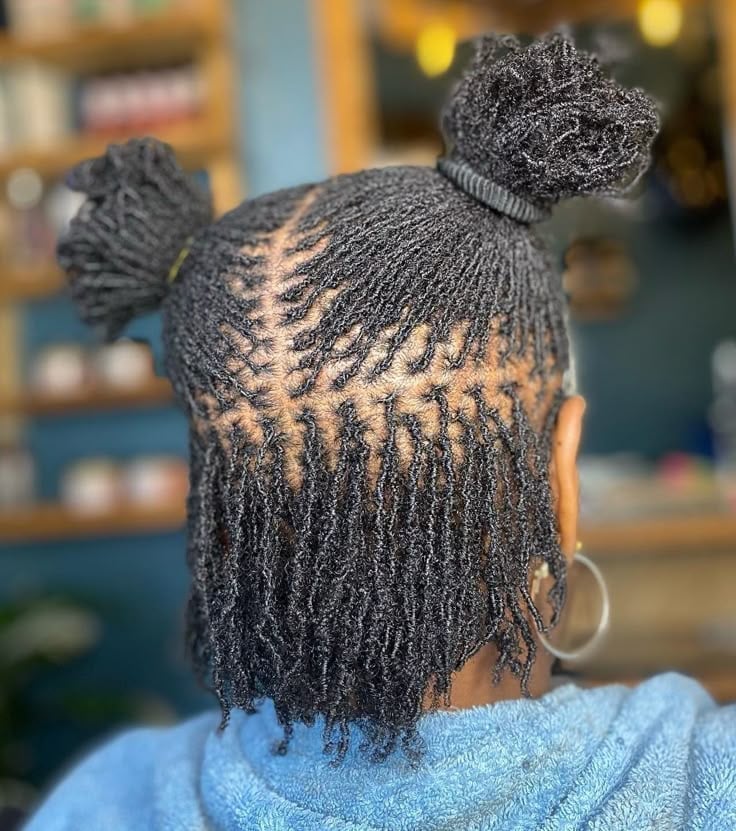
Neatly parted sections turn two buns into a deliberate design. The dense, coily texture is divided into clean quadrants, each one pulled into its own bun. A center part anchors the symmetry. Ideal for a cute and tidy style with defined sections. Use a tail comb for precise sectioning; ensure buns are evenly sized for balance.
When you want structured starter locs
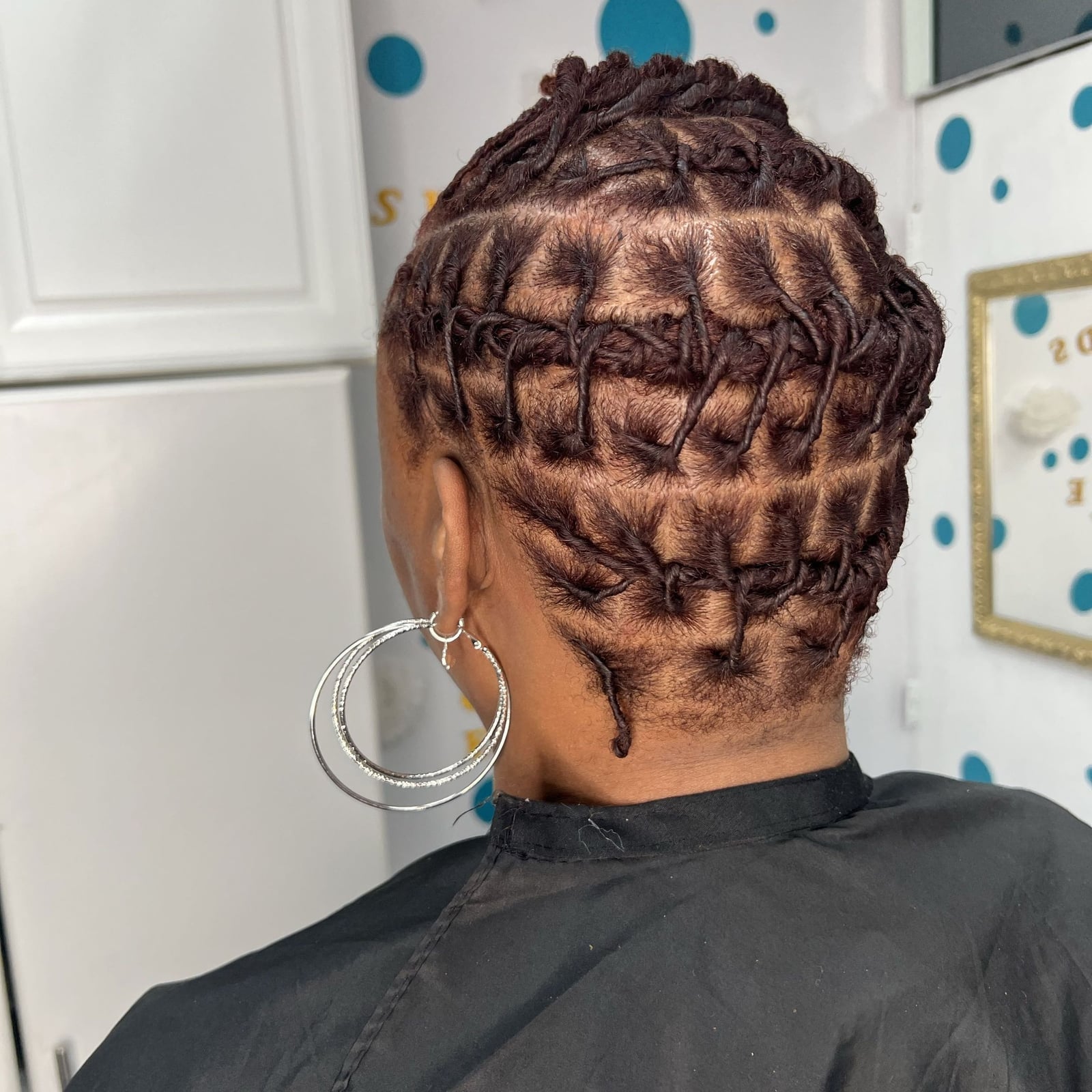
A grid parting is not subtle. The short, ear-length locs follow the lines precisely, and the dense, coily texture fills each square evenly. This style requires regular salon visits to maintain the parting. Keep the scalp clean and moisturized. Not for anyone who prefers longer locs or a less defined parting.
Geometric parting in a starter loc ponytail
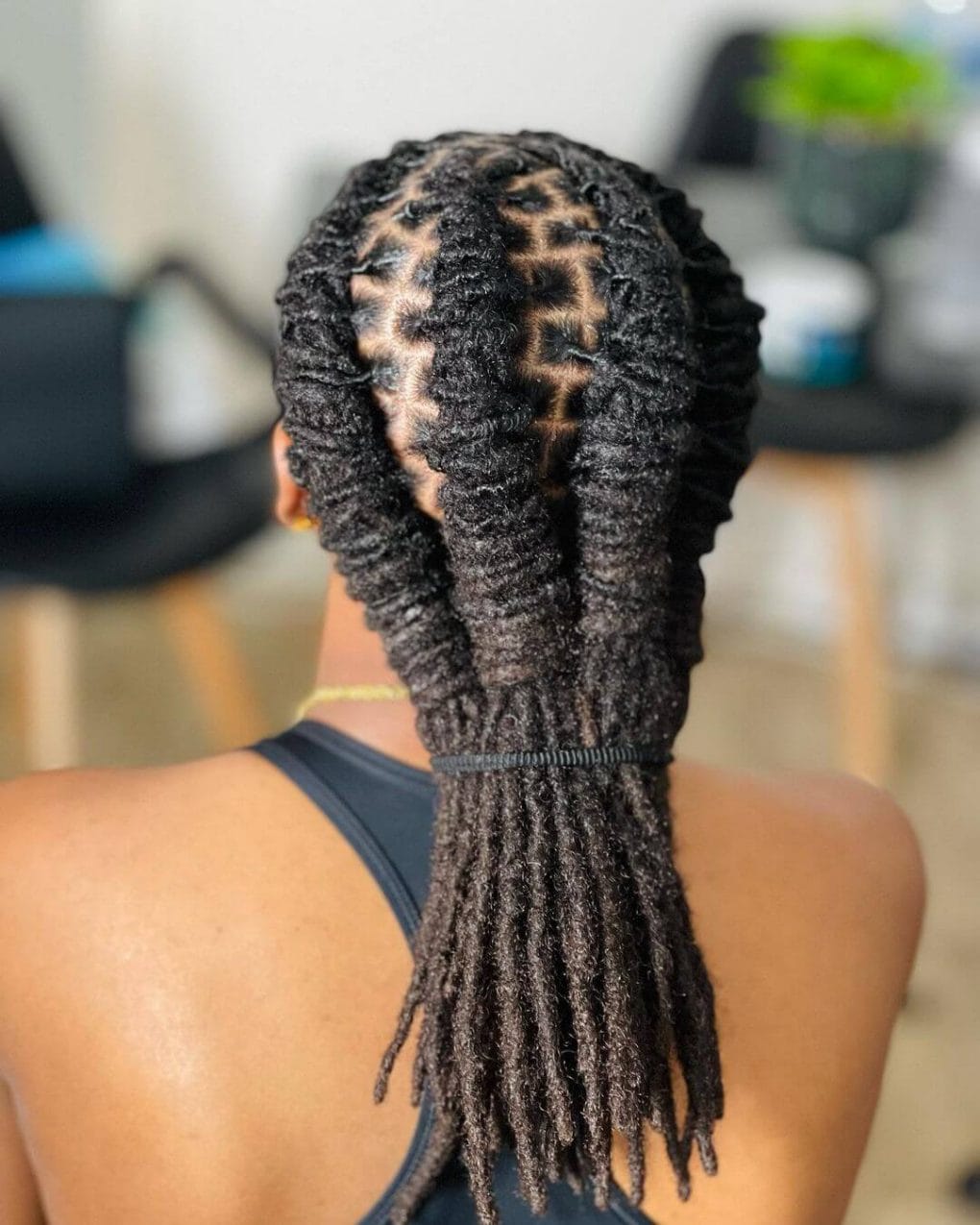
A geometric parting works best when the hair is thick enough to hold the lines visible. The grid pattern on top is the detail that makes this ponytail deliberate. Dense, coily texture keeps each section defined and the ponytail full. The center part runs straight down the center. Ask your stylist for: starter locs, geometric parting, ponytail. This style is for those who like a precise, pulled back look.
Grown-up twists and square parts
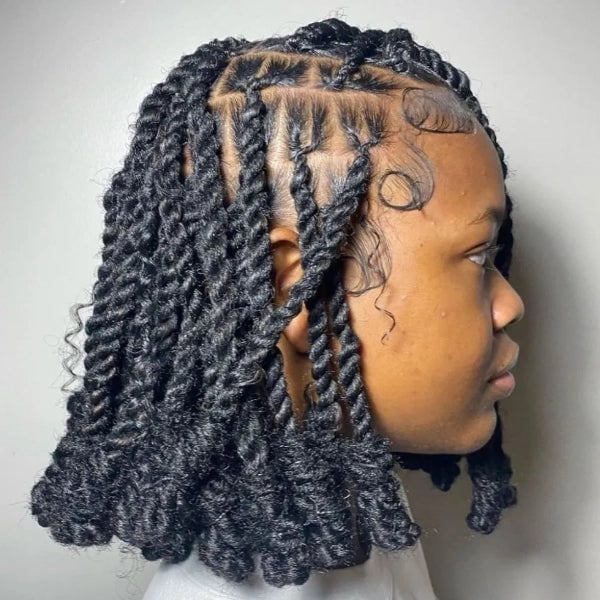
Twisted locs and defined square parts sit close to each other but serve different purposes. The twists add texture; the squares create structure. Black, dense, coily hair holds both details without losing definition. The center part anchors the whole layout. Baby hairs frame the face without pulling attention from the crown.
Half-up half-down for textured locs
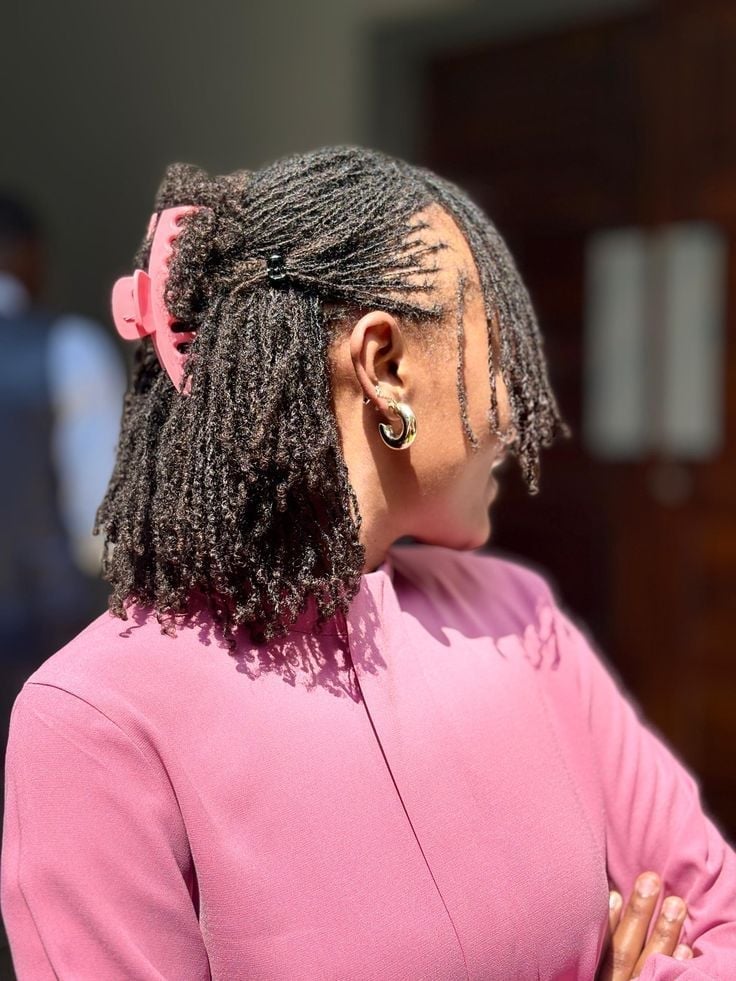
A pink claw clip at the crown changes the shape of thick, coily starter locs in seconds. The center part keeps both sections balanced. This is a salon-leaning style you can replicate at home with a strong enough clip. Ask your stylist for: starter locs, half up half down, pink claw clip. Skip it if you prefer all updos or styles worn fully down.
Black locs with honey blonde tips
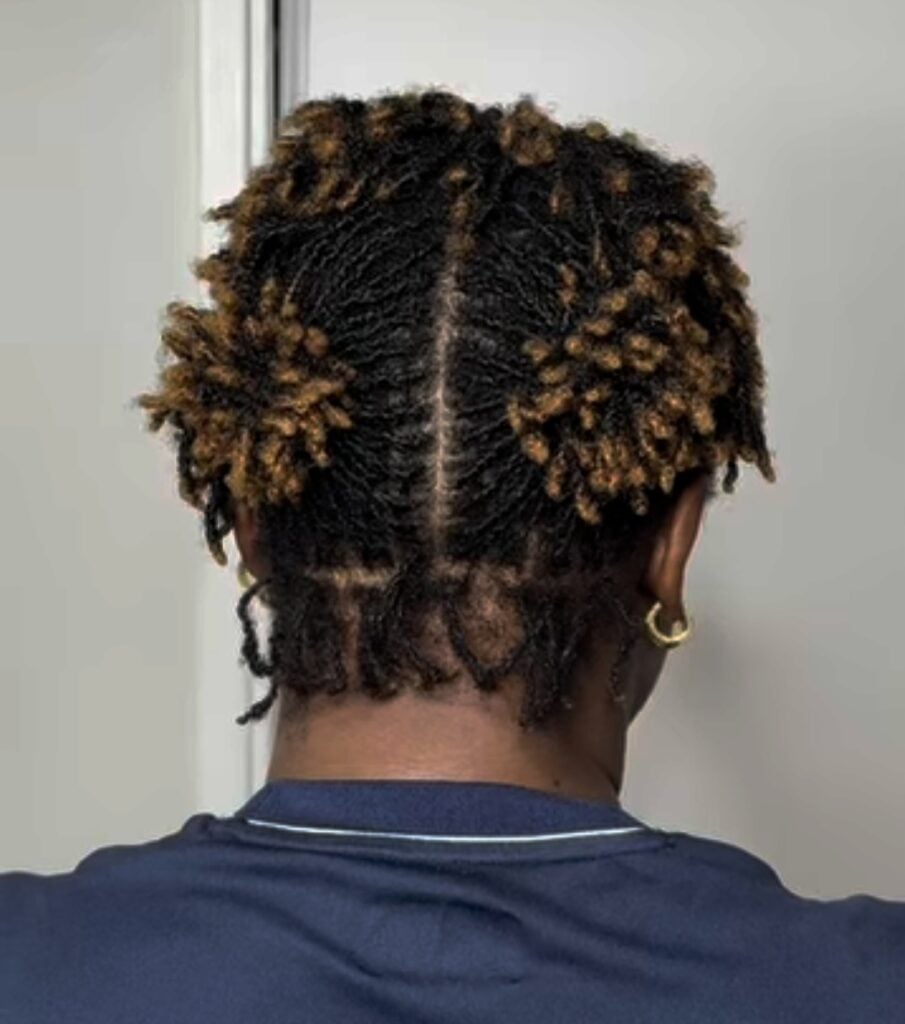
Black with honey blonde highlights at the tips gives a natural fade that does not look grown out. The center part lets the color sit evenly on both sides. Dense, coily texture adds volume, so the blonde looks accent rather than all-over. The catch: highlights at the tips require more frequent toning to keep the shade from pulling warm.
High ponytail with geometric parting, coily
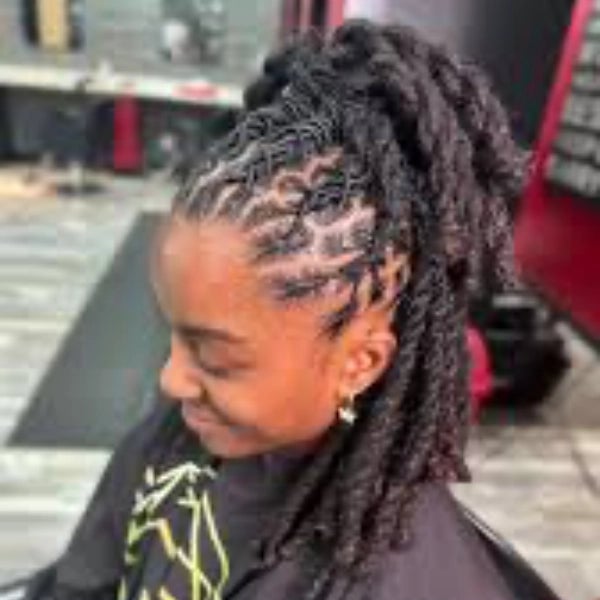
A high ponytail built on a geometric parting at the crown relies on precise sectioning to stay neat. The center part is the base line. Dense, coily texture gives the ponytail weight and shape without extra product.
Ask your stylist for: starter locs, high ponytail, geometric parting. A natural parting or styles not pulled back are alternatives.
Final Thoughts
Choose your next style by the time you have and the look you want to hold.
- Five minutes in the morning: air-dried natural texture, no tools needed.
- Complex parting you want to last: interlocking or retwist every four to six weeks.
- Updo for a work week: high bun or two buns, holds three to four days.
- Short locs, long days: ear-length styles with bangs need a trim every eight weeks.
Embrace your loc journey with creative and protective styling.

