You are sitting in the chair, a few inches of silver at the roots, wondering if the grow-out line is a statement or a problem. A good cut makes it a choice, not a compromise, and the right shape turns that gray into the focal point rather than the thing you are hiding.
29 haircuts that prove the point, from five-minute pixies to wash-and-wear layers, each one built for real mornings and real texture. Which is why Pretty Gray Hair 2027 fill so many saved boards: the struggle is not finding the color, it is finding the cut that does not fight it. This collection solves for that exact gap.
Voluminous layered bob with side-swept bangs in gray
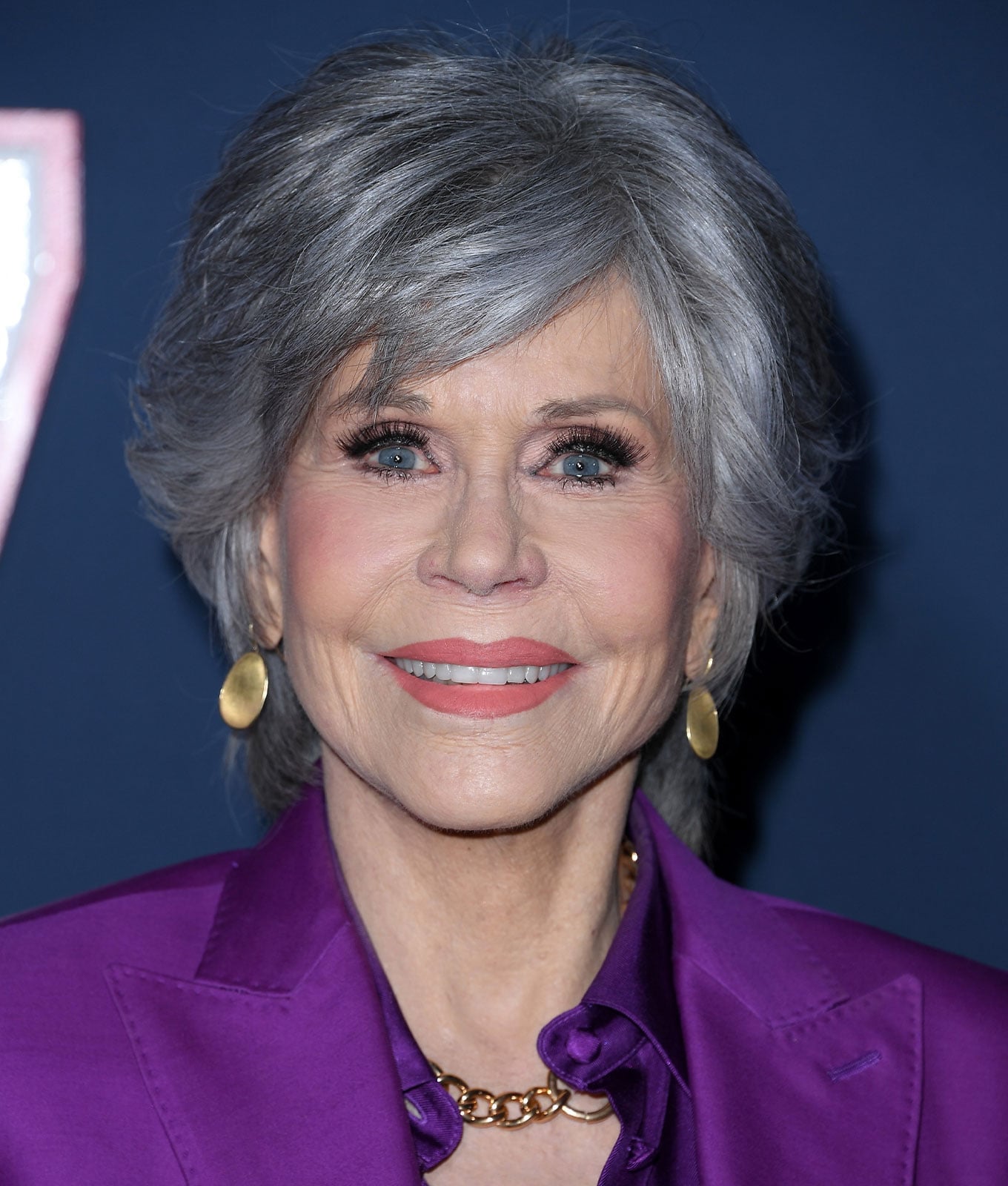
Silver highlights catch the light along the curve of each layer, so the gray never looks flat. Side-swept bangs soften the line where the bob meets the jaw, which makes this cut good for round and heart face shapes. Fine hair holds a blowout best when the stylist builds the volume at the crown first, then works the layers downward. Tell your stylist: layered bob, face-framing layers, side-swept bangs. A round brush and a heat protectant are the tools; you need about ten minutes of lifting at the roots.
Textured gray pixie with side-swept bangs
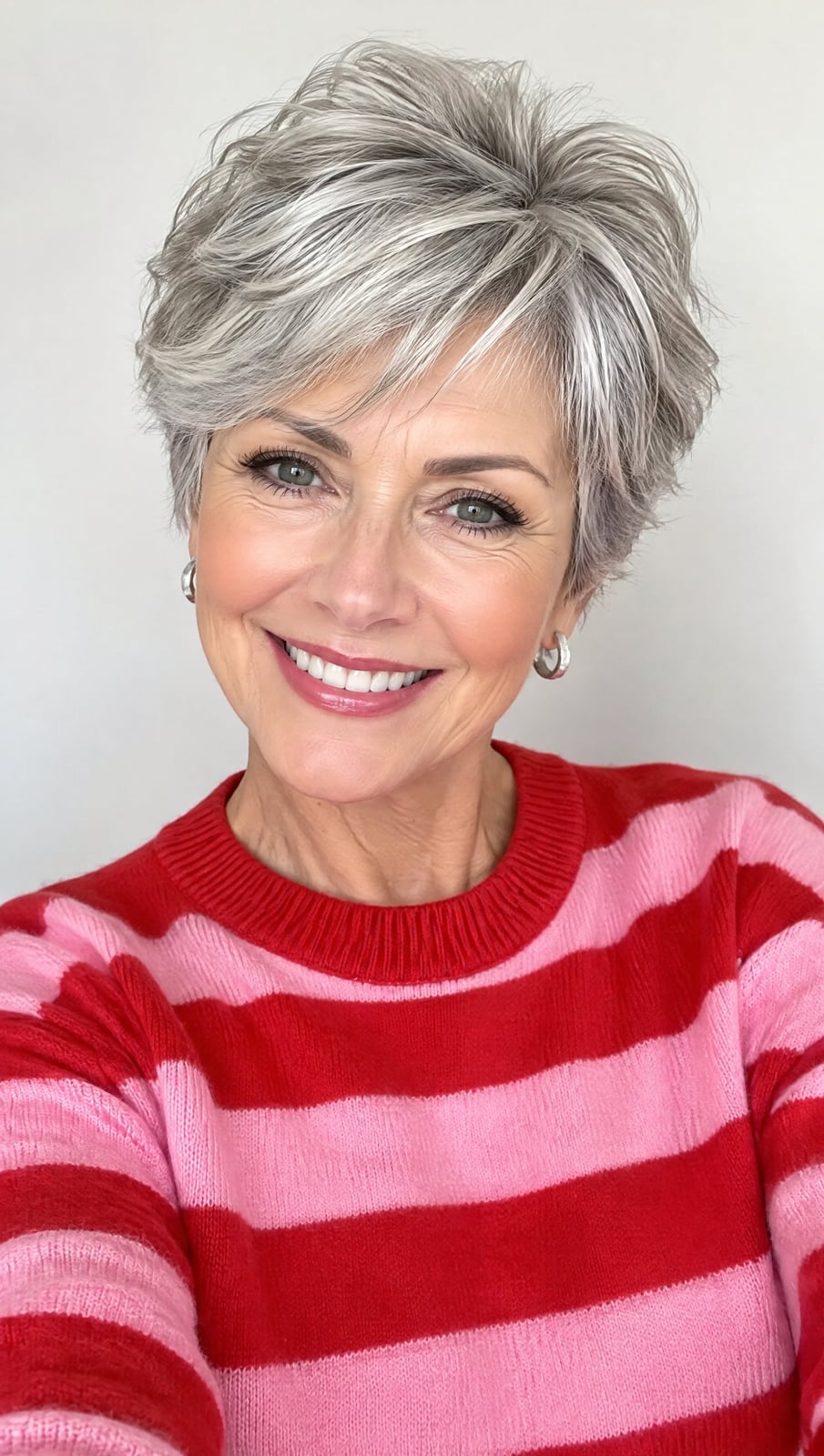
What do you say when you want the texture without the helmet look? Choppy layers. A pixie cut with visible, separated pieces keeps the gray from sitting as one solid block. Side-swept bangs pull the eye diagonally across the face, which balances a longer forehead or a stronger jaw. The wavy texture here is natural, not curled. A smooth, uniform finish is a different look. A texturizing paste defines the layers; a trim every four weeks keeps the shape precise.
Voluminous undercut pixie with darker roots
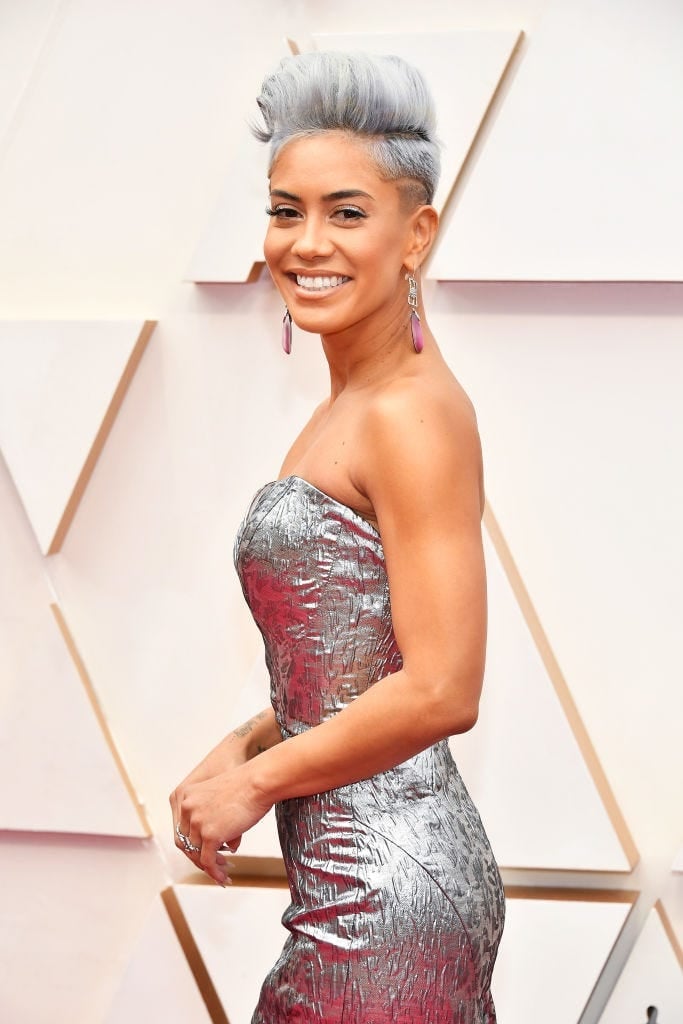
An undercut pixie versus a standard pixie: the difference is maintenance. The shaved sides here require a clipper pass every two weeks, while the top stays longer and is swept upward for height. Darker roots against silver gray add depth that a single-process shade lacks. Fine, straight hair works best because the contrast between the shaved and voluminous sections reads clearly. Not for anyone who wants a soft, blended grow-out. A volumizing product at the roots before drying upward is the only way to keep the top from falling flat by midday.
Ash blonde pixie with a textured blowout
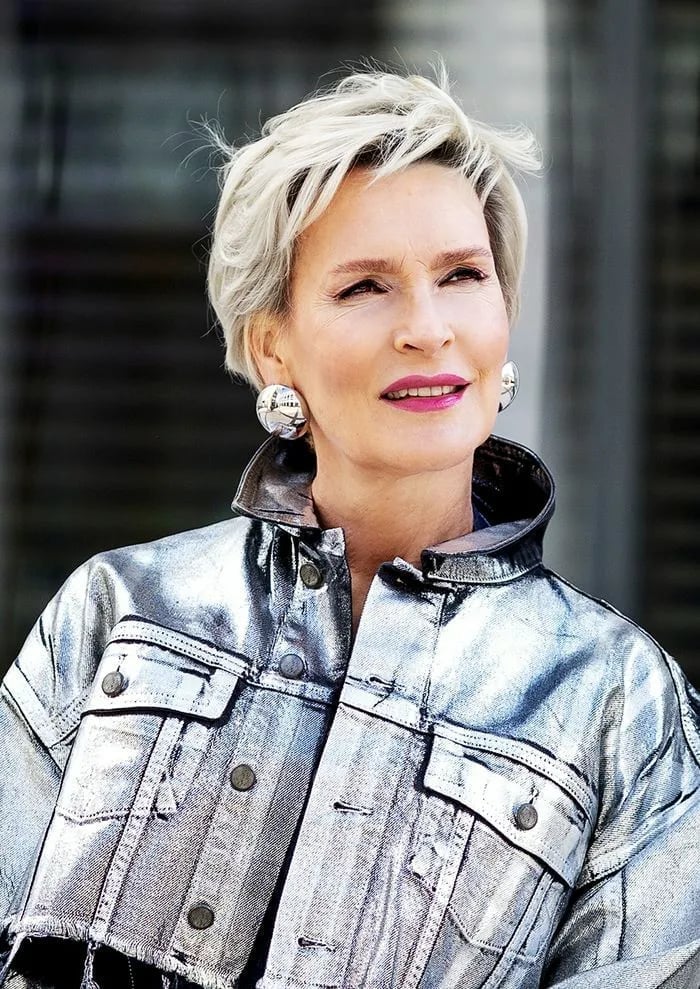
Ash blonde looks gray once the tone settles, which makes it a bridge shade for those transitioning from color to natural silver. Volume at the crown is the anchor of this cut; the textured blowout pushes the hair up and back from the face, elongating a rounder shape. A side parting breaks the symmetry. Straight hair that holds a bend from a round brush is the ideal starting texture. Pass when you prefer warmer gold tones. Dry shampoo at the roots between washes keeps the lift going.
Silver gray pixie with short, textured layers
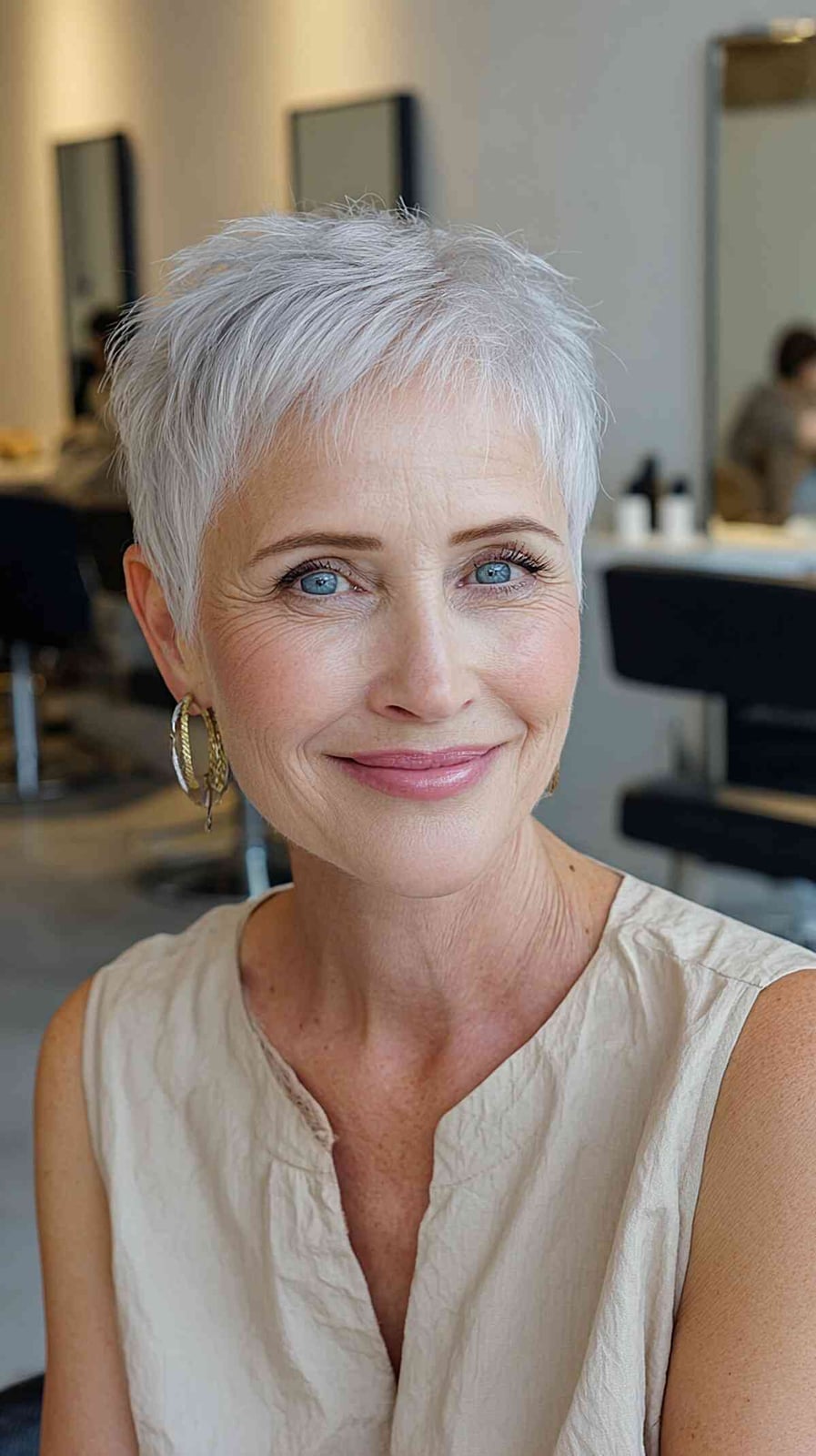
Short layers cut close to the crown create a stacked effect that adds density where fine hair often goes flat. The sweep to one side gives the silver gray a directional flow, so the cut looks deliberate rather than grown out. No bangs here means the forehead stays visible, which suits oval and long face shapes. A light styling cream rubbed between the palms and pressed onto the layers defines each piece. Four weeks between trims is the rhythm; at six weeks the silhouette starts to blur.
Spiky silver gray pixie cut
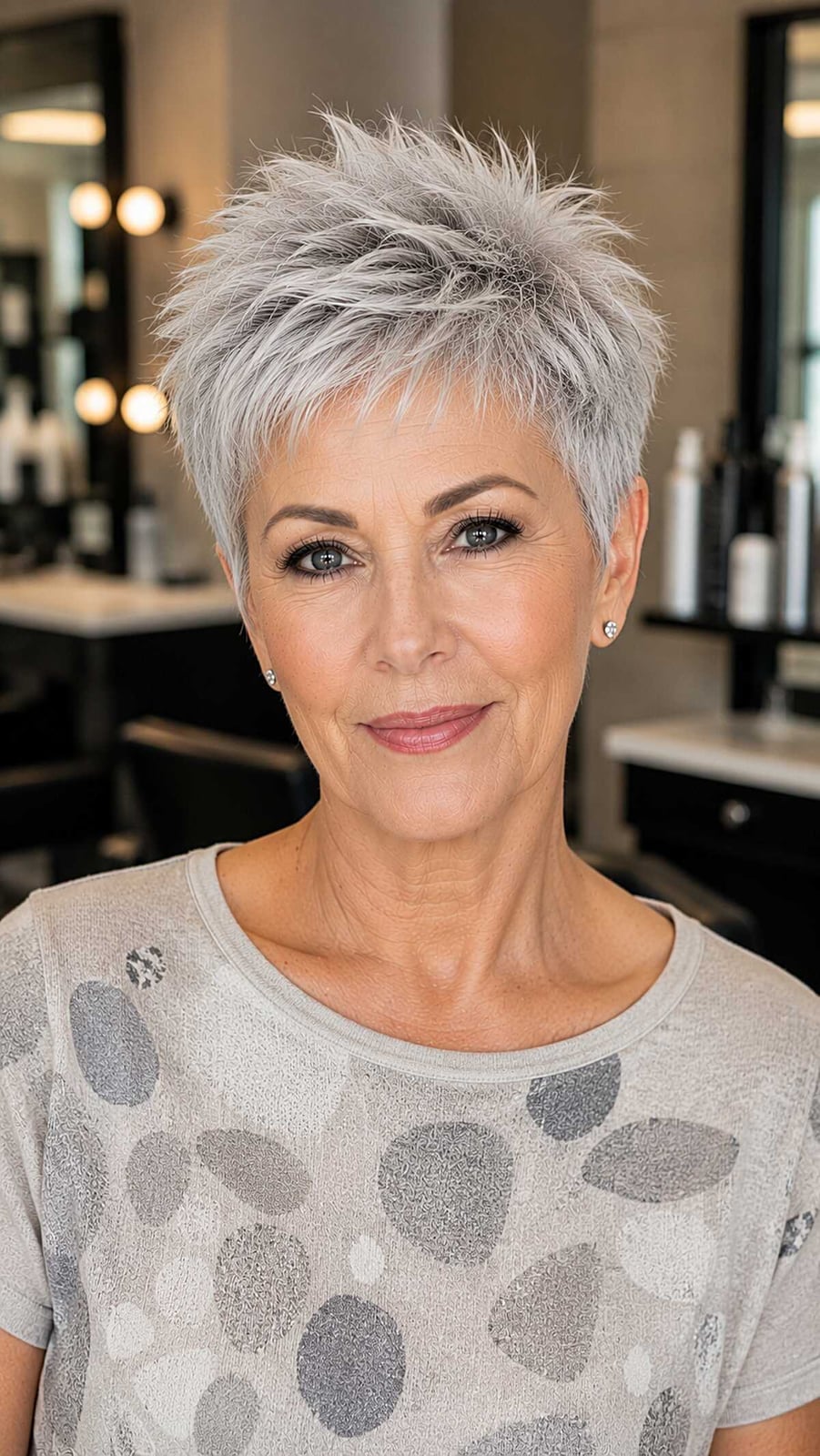
Sharp, upward-pointing spikes turn fine, straight hair into architecture. A spiky pixie cut relies on precise layering that removes weight from the interior while leaving the ends dense enough to stand. The silver-gray hue is a single flat tone, which makes the texture the whole point. No bangs means the shape lives entirely at the crown and hairline. Two minutes with a wax and fingertips rebuilds the spikes after sleep.
Pixie cut with textured sides and white highlights
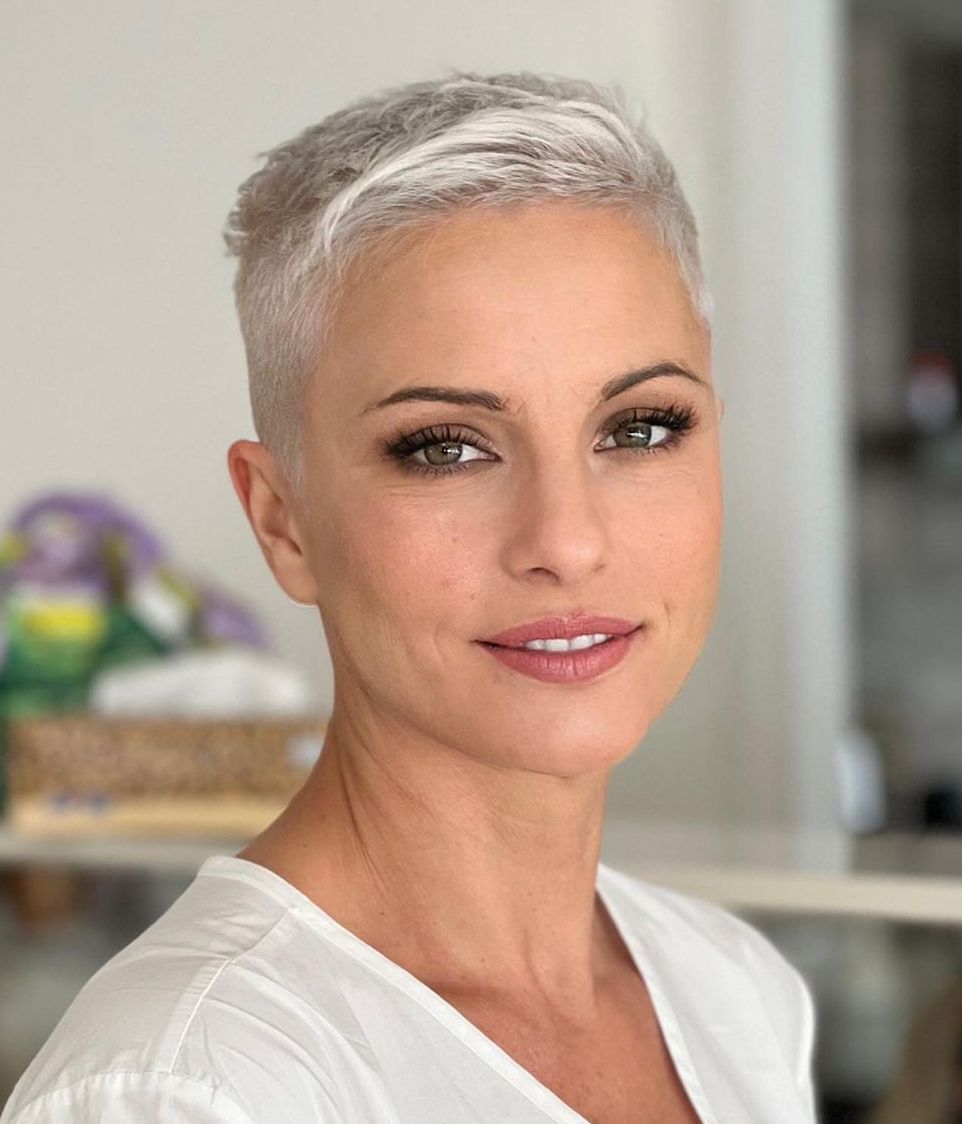
What do you say to get a pixie that does not look like a helmet? The answer is in the side texture. Short, textured sides that lengthen toward the crown create a tapered silhouette that fine hair can actually fill. White highlights threaded through gray keep the surface from looking flat. Tell your stylist: pixie cut, textured sides, subtle white highlights. The side part is not decorative; it lets the shorter side sit closer to the head while the longer side holds shape. A texturizing spray refreshes the finish between trims.
Layered ash gray cut with blue undertones
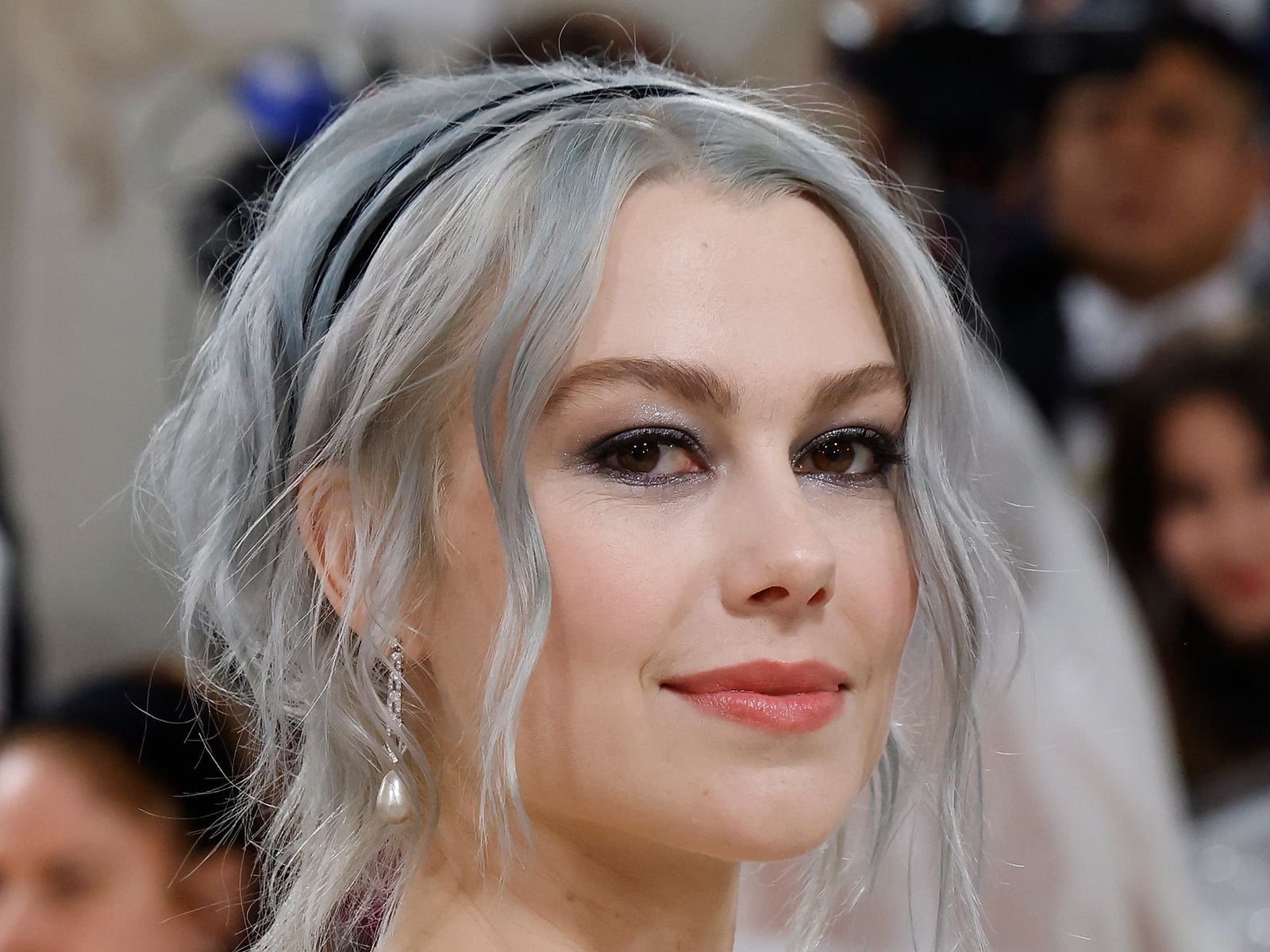
Layers here do not add volume so much as they scatter it. The ash gray tone carries a blue undertone that is cool without tipping into violet. Fine hair cut in loose waves around the ear keeps the silhouette compact while the layers prevent it from looking dense. No bangs means the eye travels straight to the color. The blue note is the detail that makes a salon-leaning cut feel intentional. A sea salt spray encourages the wave pattern without adding weight.
Edgy undercut with platinum blonde layers
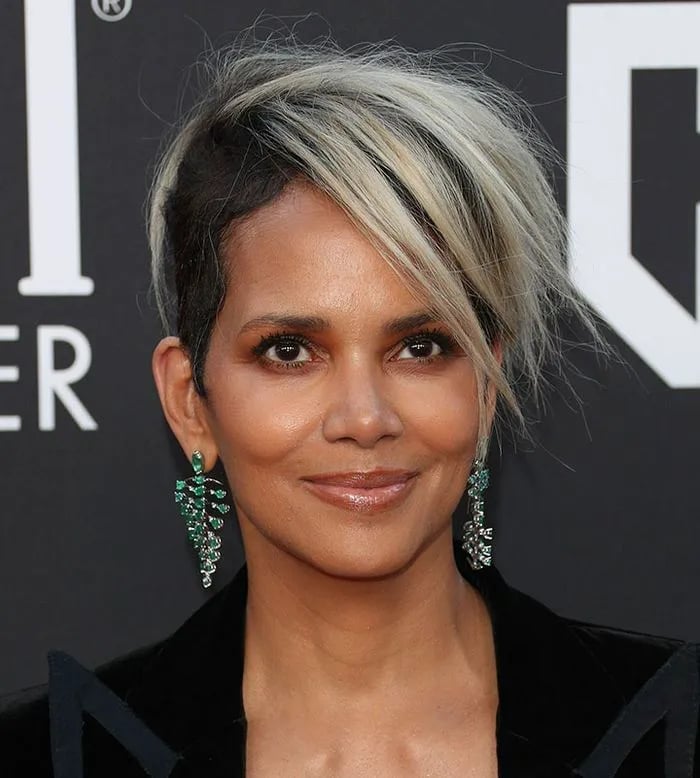
An undercut on one side sets this apart from a standard pixie. The longer platinum blonde layers sweep to the opposite side, creating a weight imbalance that fine hair handles better than thick hair. Dark roots anchor the contrast so the blonde does not look faded. Side swept bangs soften the hard line where the undercut begins. Ask your stylist for: dramatic undercut, long platinum blonde layers, blended dark roots. The catch is the grow out; the undercut needs a trim every three weeks to keep the edge sharp.
Bob with volume at the crown for a neat look

Crown volume changes a bob from a simple shape to a structured one. A side part and gentle blowout lift the hair at the crown while the bob stays close to the jaw. The wavy pattern in fine hair holds that lift longer than straight hair would. No bangs keeps the focus on the silhouette. Blow-dry with a round brush, directing the roots upward.
Angled bob with voluminous waves
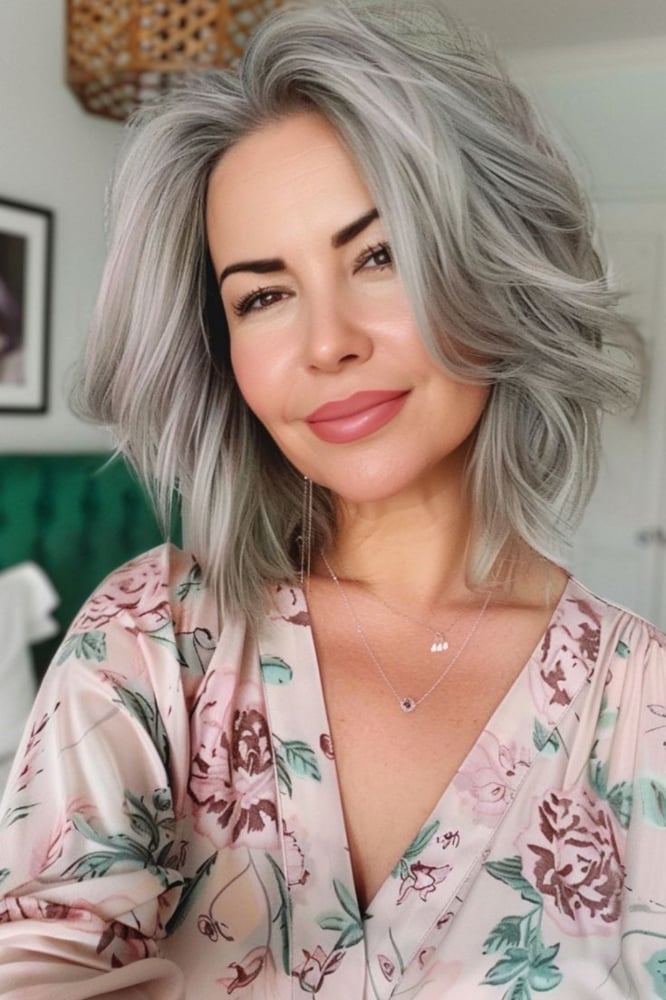
That forward angle catches light on the silver-gray surface while darker roots keep the color from reading flat. The side parting and loose waves add lift where fine hair tends to drop. A blunt, uniform cut won’t work here, the angle relies on that graduated length to do its work. Tell your stylist: angled bob, voluminous waves, side parting.
Fine hair wanting soft waves without drying
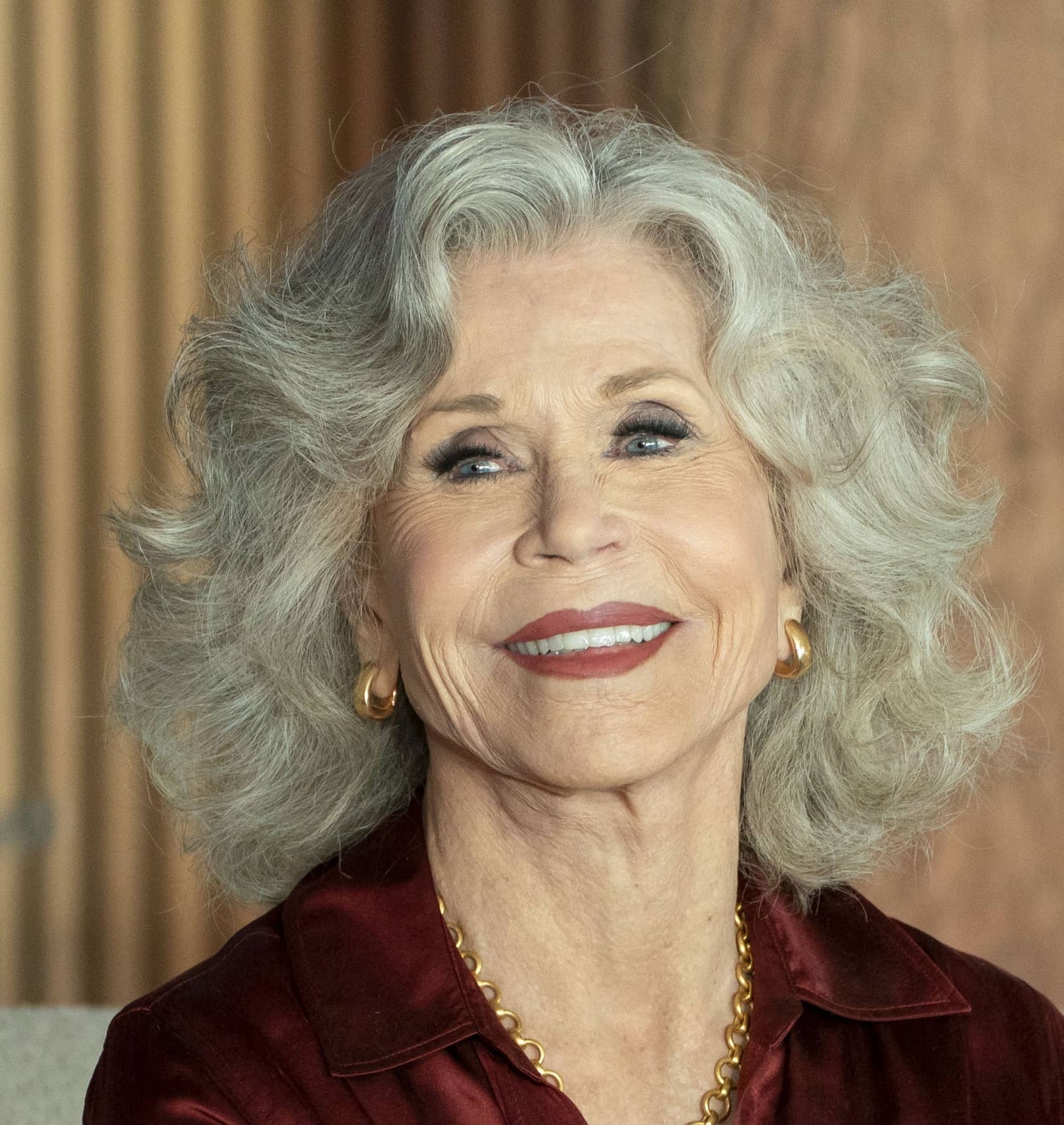
A layered bob in silver gray depends on those face-framing layers to create movement where fine texture offers none. The side parting and blowout shape add the illusion of density. Pass when you prefer straight hair or a blunt cut. This style lives in the wave. The catch: achieving this volume requires professional technique, not a quick round brush.
Sharp layered bob with face-framing bangs
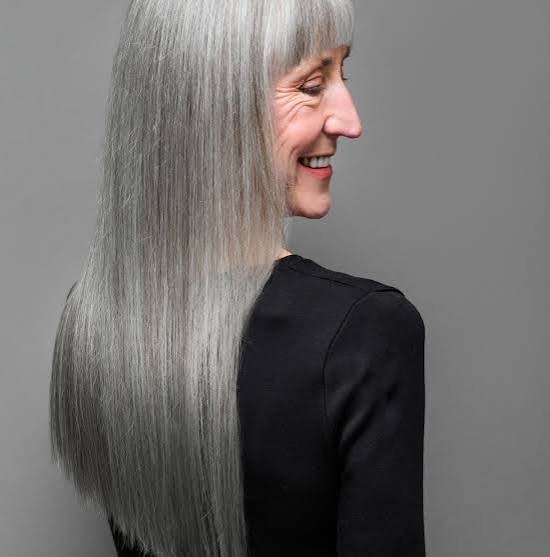
Long, straight silver-gray hair with blunt bangs suits those who want a clean line without losing length. The layers frame the face from the side, keeping fine hair from hanging flat. Not for anyone who prefers a shorter cut or very structured bangs, blunt bangs need a precise cut every four weeks to stay sharp. Tell your stylist: long layers, blunt bangs, air-dried finish. A lightweight serum on dry ends controls flyaways without weighing the hair down.
Choppy layers framing face with air-dried texture
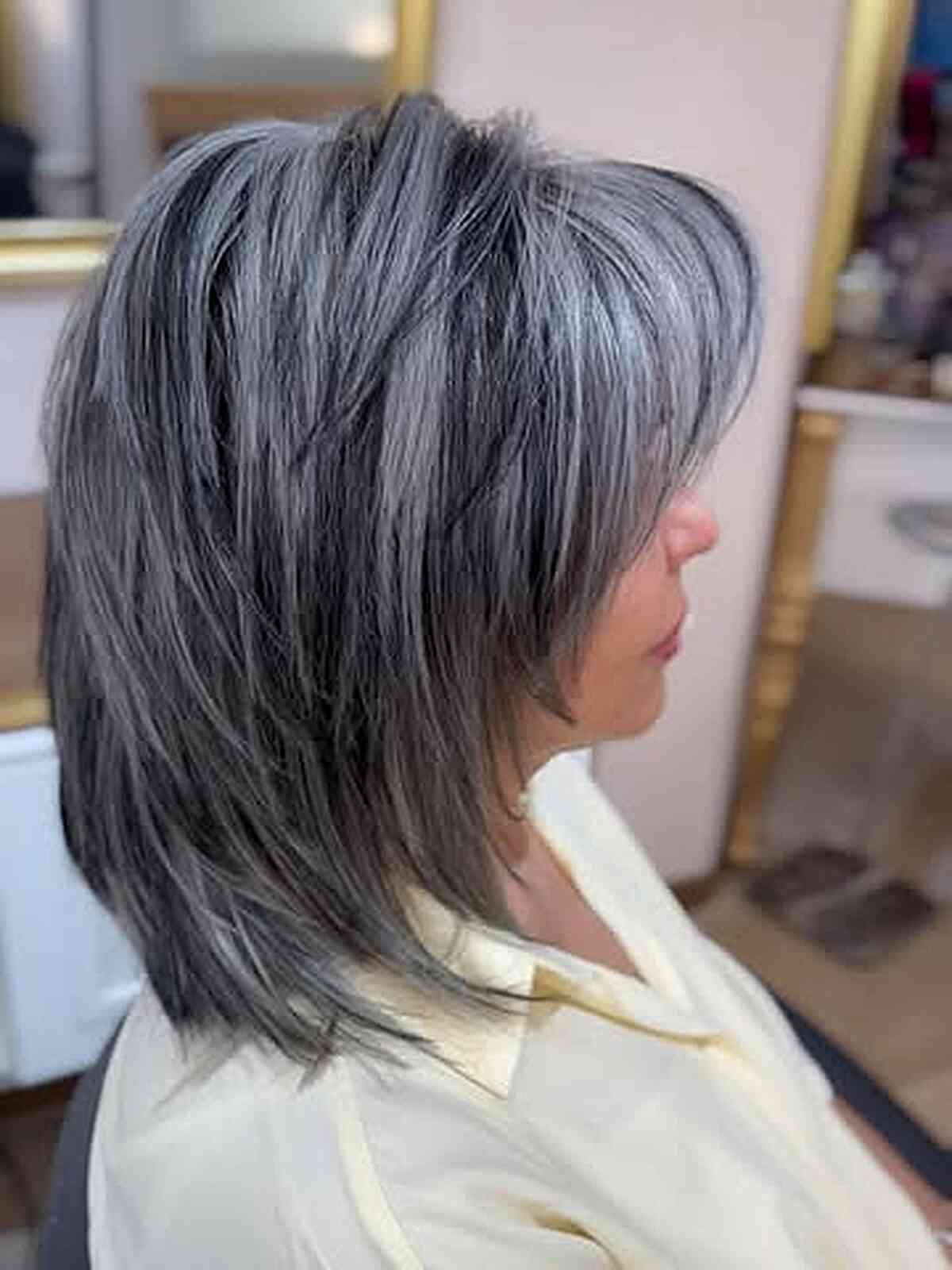
Choppy face-framing layers in a salt and pepper gray work because the uneven ends catch air rather than lying flat. The side-swept bangs and side parting keep the shape soft without needing heat. This cut is built for air-dried texture, not a flat iron.
Long fine silver-gray hair with wispy bangs

Fine silver-gray hair at a longer length works when the cut relies on wispy bangs and a middle part to frame the face without bulk. The air-dried texture keeps the silhouette soft rather than stringy. Not for short hair or very structured bangs, wispy bangs need a light hand to avoid looking sparse. Tell your stylist: long layers, wispy bangs, middle part.
When you want low-maintenance long layers with natural color
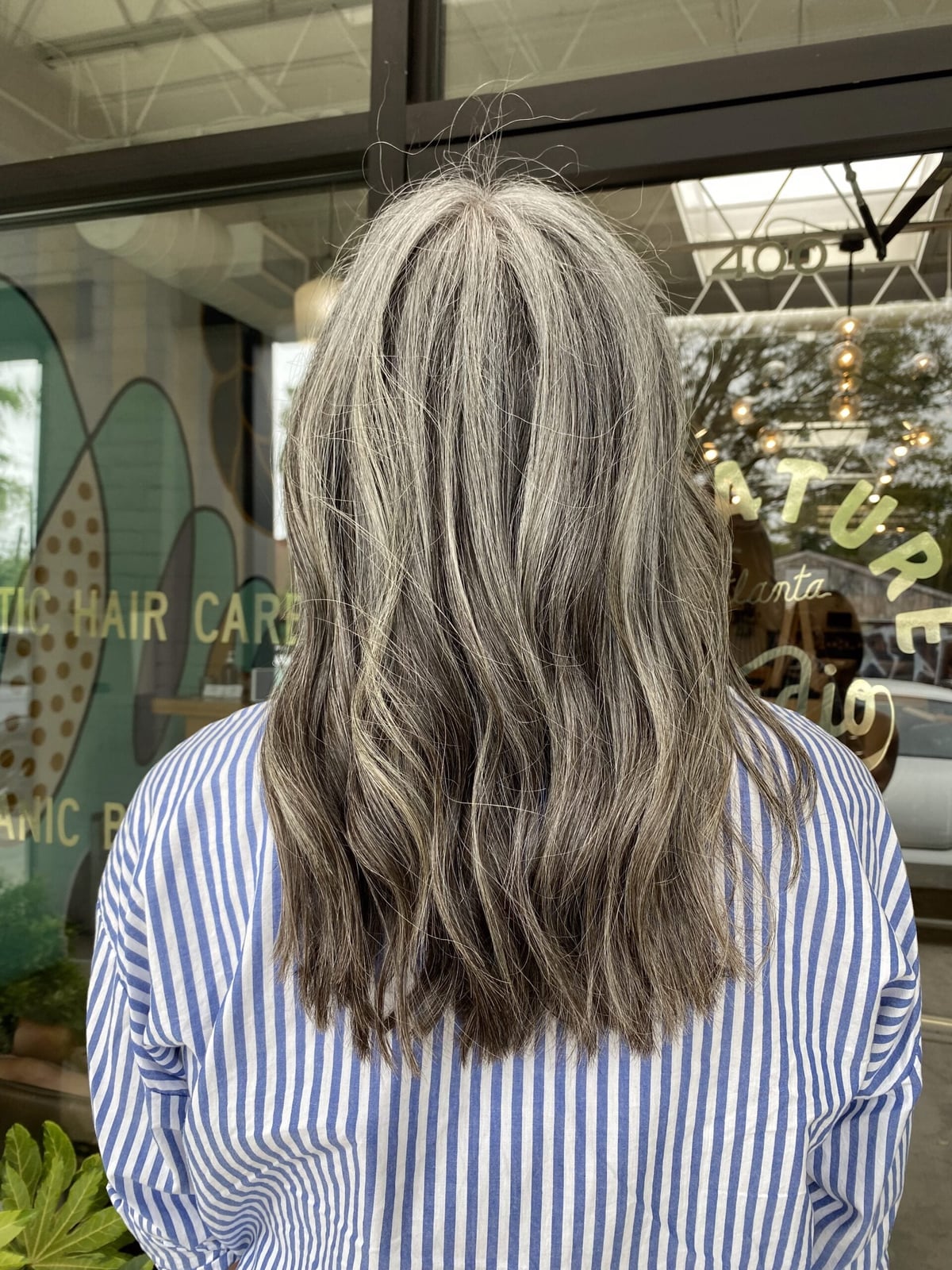
Long layers and a middle part let a gray-and-blonde blend look deliberate, not grown-out. The fine, wavy texture air-dries into loose waves that hold their shape without a heat tool. No bangs here means you push it back or leave it forward; the part does the dividing. The salon-leaning part is the initial blend. You want the gray and blonde to shift gradually, not in stripes.
Skip it if you prefer a shorter, more structured cut or need more visual weight at the crown. For fine hair that holds length well, this is about as hands-off as salon color gets.
Wavy long layers with contrasting blonde highlights
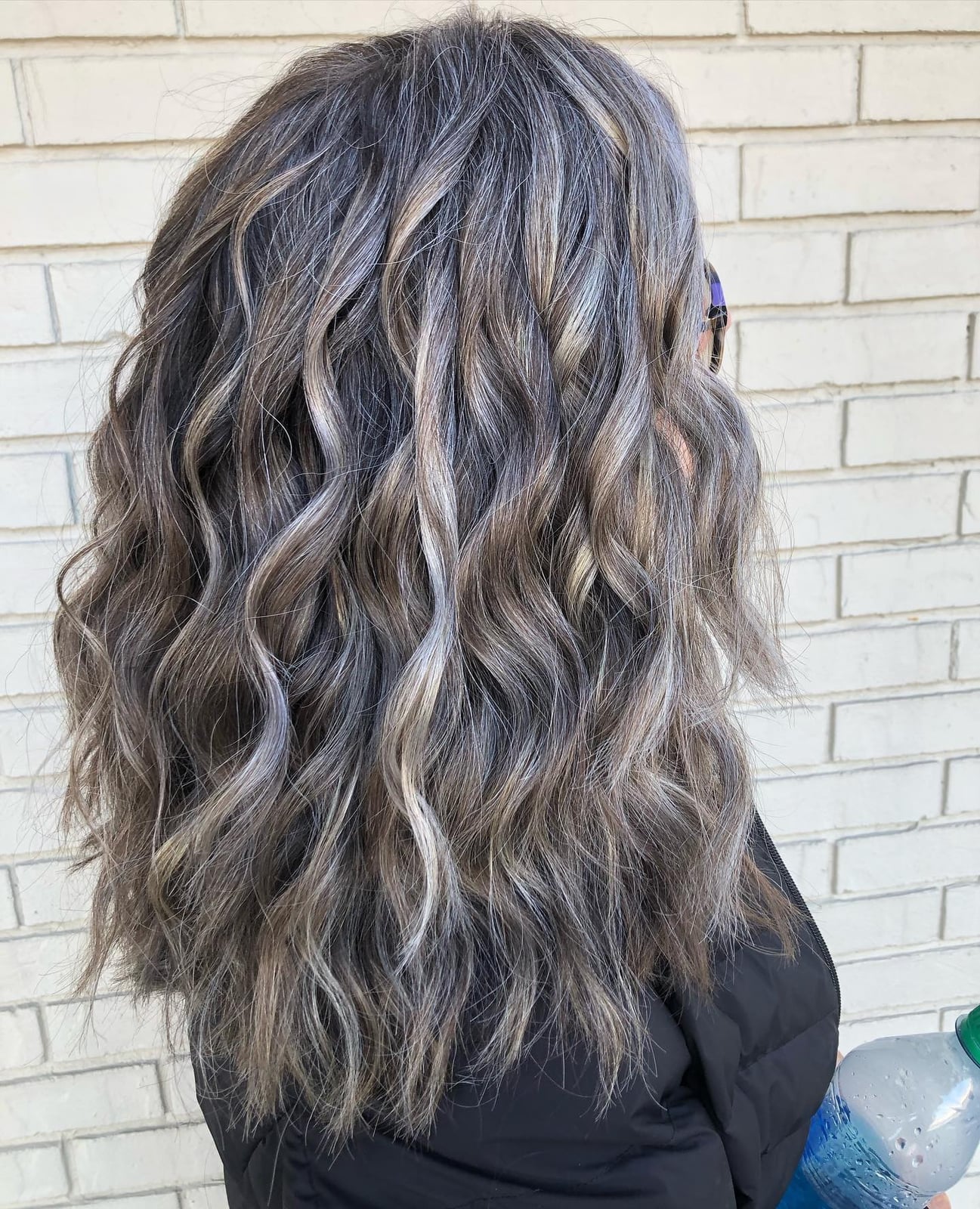
Blonde highlights cut across thick gray waves here, and the contrast is the point. The middle part lets the layers fall forward on both sides, so the lighter pieces catch the eye without needing to be swept to one side. Air-dried texture keeps it from looking overworked. The wave pattern does the shaping. What makes this design work is the placement: the highlights sit mostly on the surface layers, so the gray underneath keeps the overall tone cool. A thick texture like this holds the separation well.
The catch is that the same thickness that gives the waves their body can also make the layers look heavy if they are cut too blunt. A stylist who understands how to point-cut through dense hair is non-negotiable here.
Layers with a gray and dark lowlight contrast
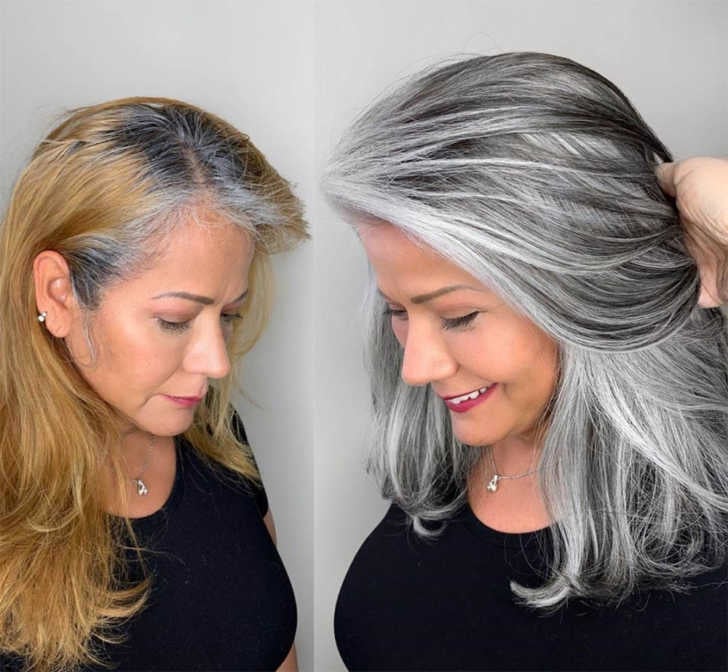
Dark lowlights woven through gray layers create a depth that a single silver tone cannot reach. The middle part and subtle blowout waves let the darker pieces sit underneath, so the contrast looks texture, not stripes. Achieving this blend requires a stylist who can place the lowlights at the root and through the mid-lengths without the gray disappearing. No bangs means the front layers frame the face on their own.
Soft waves with fringe creating soft look
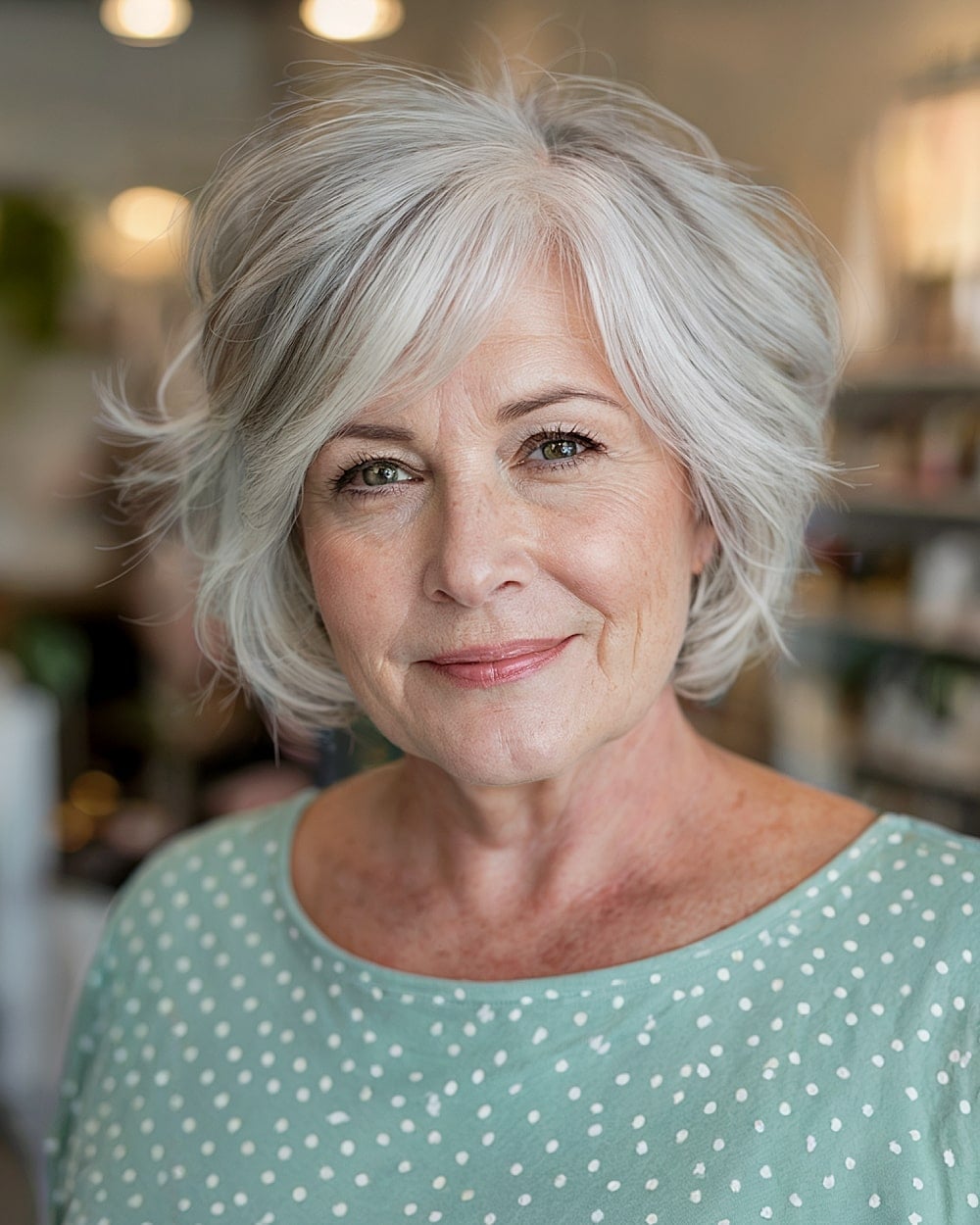
Side-swept bangs and a voluminous blowout make this cut look softer than a blunt fringe ever could. The fine, wavy texture responds well to a round brush at the roots, and the silver highlights catch the light through the layers. The trade-off is that the same softness that makes it pretty also makes it high-maintenance. A side part and blow-dried volume last about a day before the bangs start falling flat. You will be washing and restyling more often than you would with an air-dried cut. Pass when you rely on second-day hair, because this one needs a reset.
Abundant natural curls needing salon styling
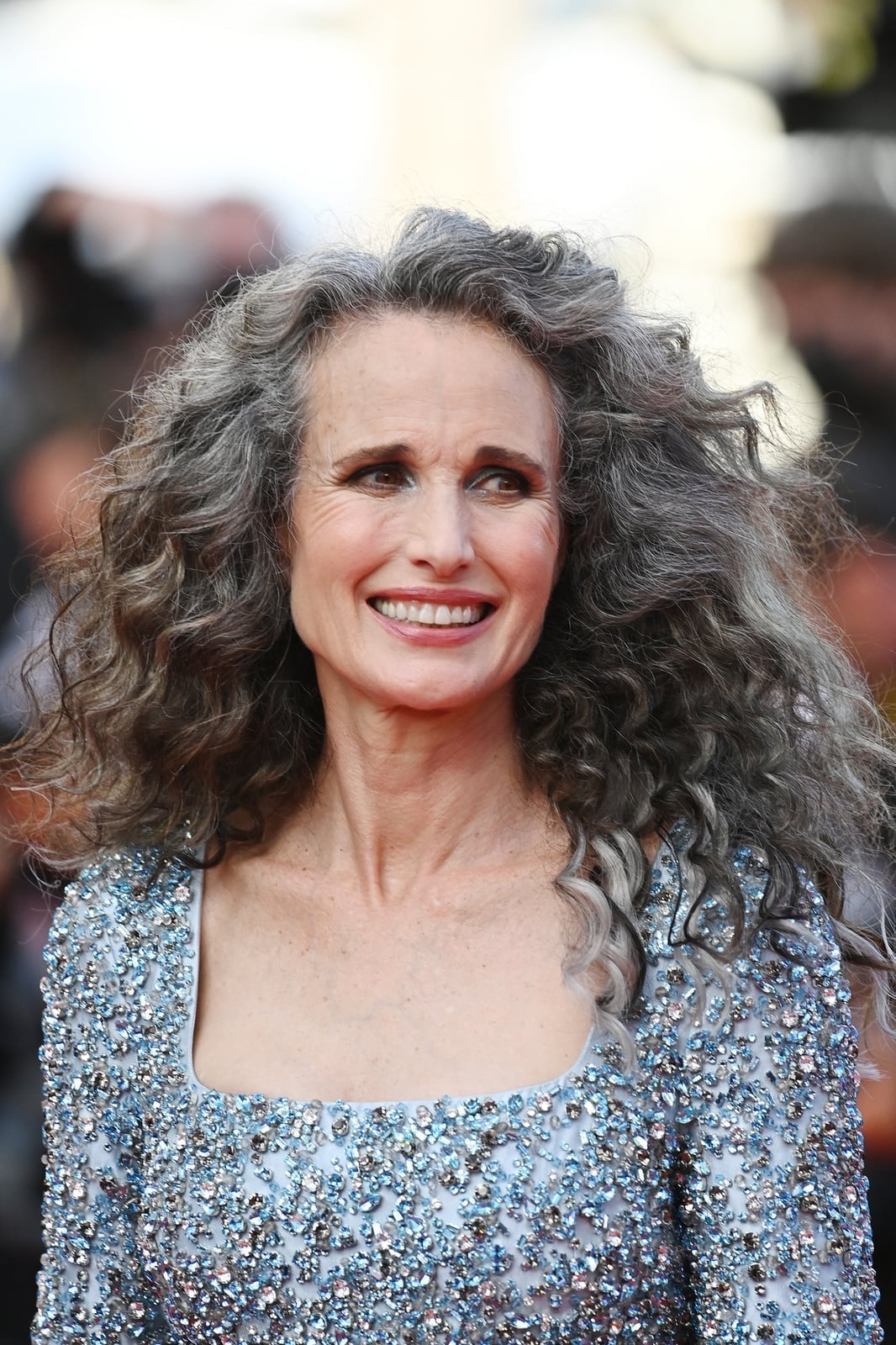
Layers cut into thick, wavy gray hair let the natural curl pattern expand instead of weighing it down. The air-dried finish shows the full range of gray and silver tones, with no blowout smoothing out the texture. This genuinely flatters anyone with enough wave to hold its own volume, the layers remove bulk without losing shape. The upkeep is straightforward: a curl-defining cream or mousse on damp hair, then no further touching. Skip it if your hair is straight or fine; the same layers that give curls lift will look sparse on a straighter texture.
When you want voluminous gray hair pulled back
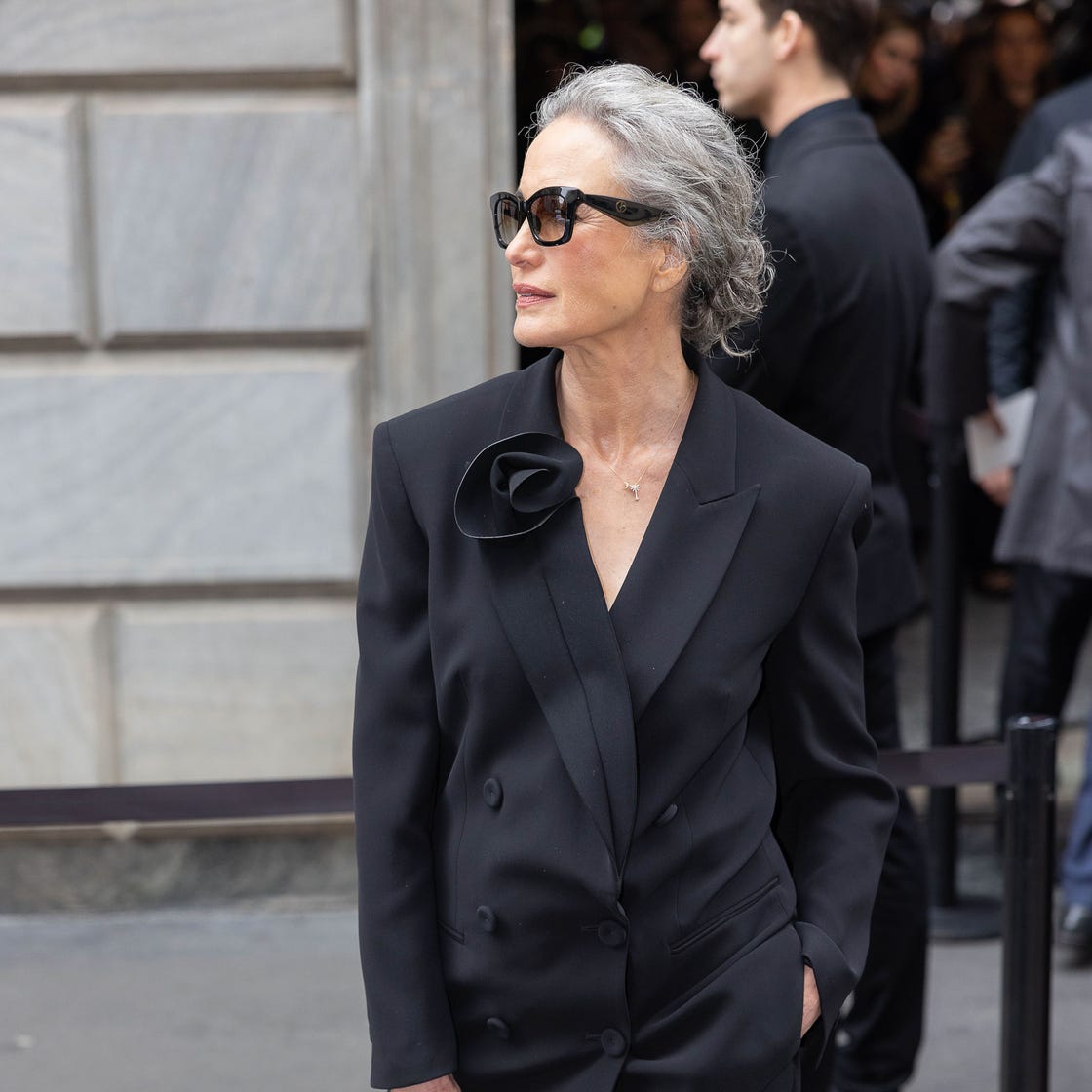
Wearing it down versus pulling it back changes the whole shape. Fine wavy gray hair gains a softer silhouette when the layers stack at the nape. The side profile shows the volume sitting high, not flat. Skip it if your hair is very straight. It needs that wave to hold the shape. Request: layers cut for a pulled-back style, not a down style. A texturizing spray before you pull it back gives the grip a blowout alone won’t.
Gray bob with purple undertones and side-swept bangs
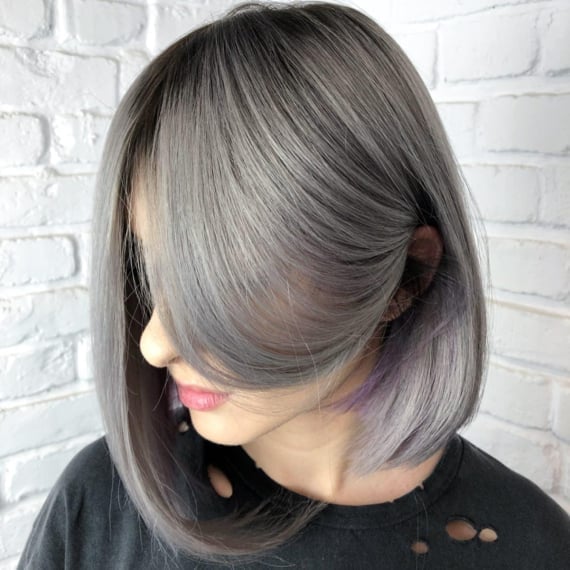
A gray bob with purple undertones reads cool without going icy. The middle part and straight fine texture keep the line clean, while the side-swept bangs add a soft break. Not for warm-toned preferences. The purple needs a cool base to register. Ask your stylist for: a blunt bob with subtle purple undertones and side-swept bangs.
Blunt bob with a sharp cut in silver gray
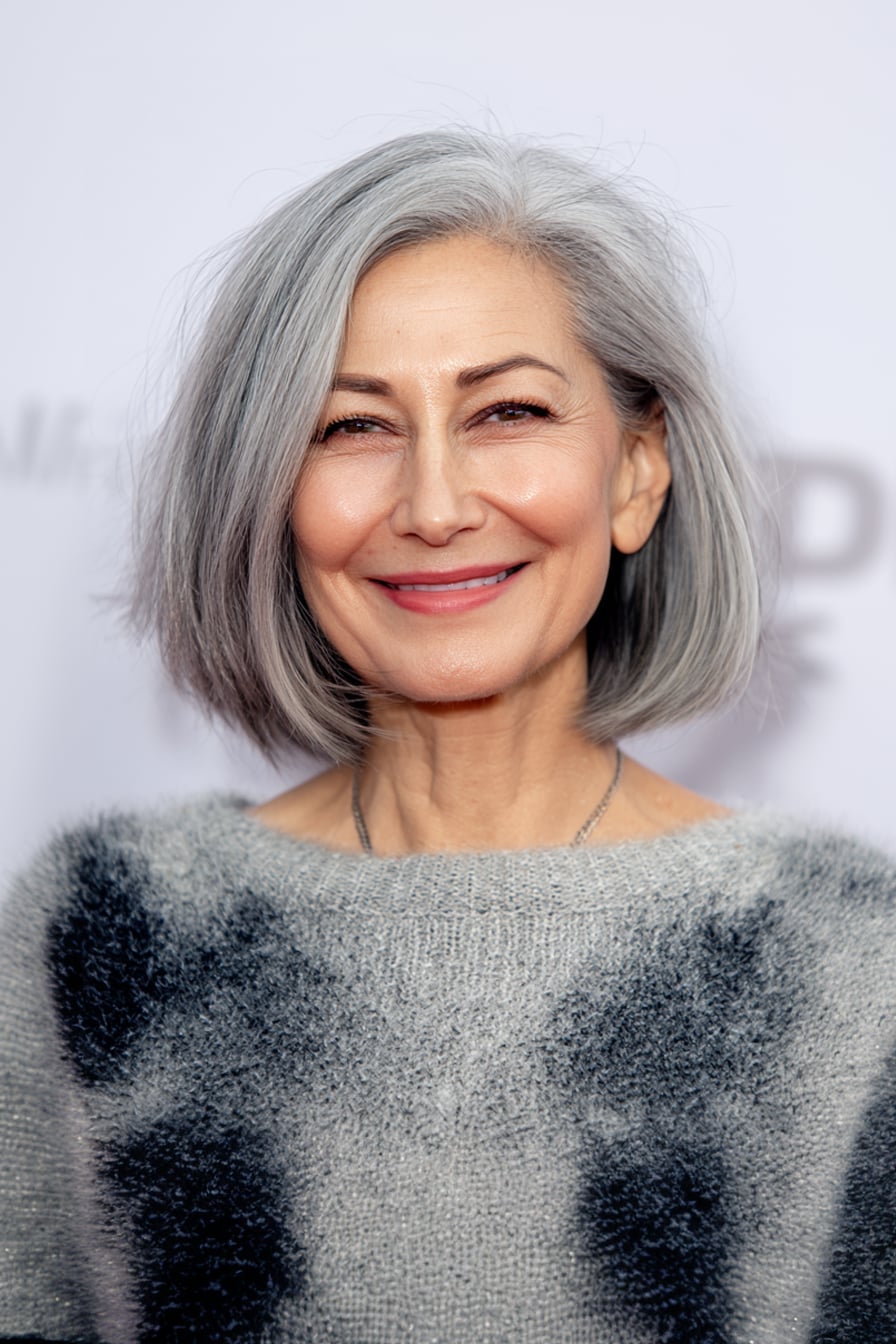
A blunt bob with layers is a different creature. This one has no layers at all. The sharp baseline does the work. The side part and smooth blowout on fine straight silver-gray hair create a neat line that lands just above the jaw. Pass when your hair has strong wave or curl; the blunt edge fights it. The words for the chair: blunt bob, sharp baseline, side part. The trim schedule is strict, six weeks, no exceptions.
Short silver gray bob with crown volume
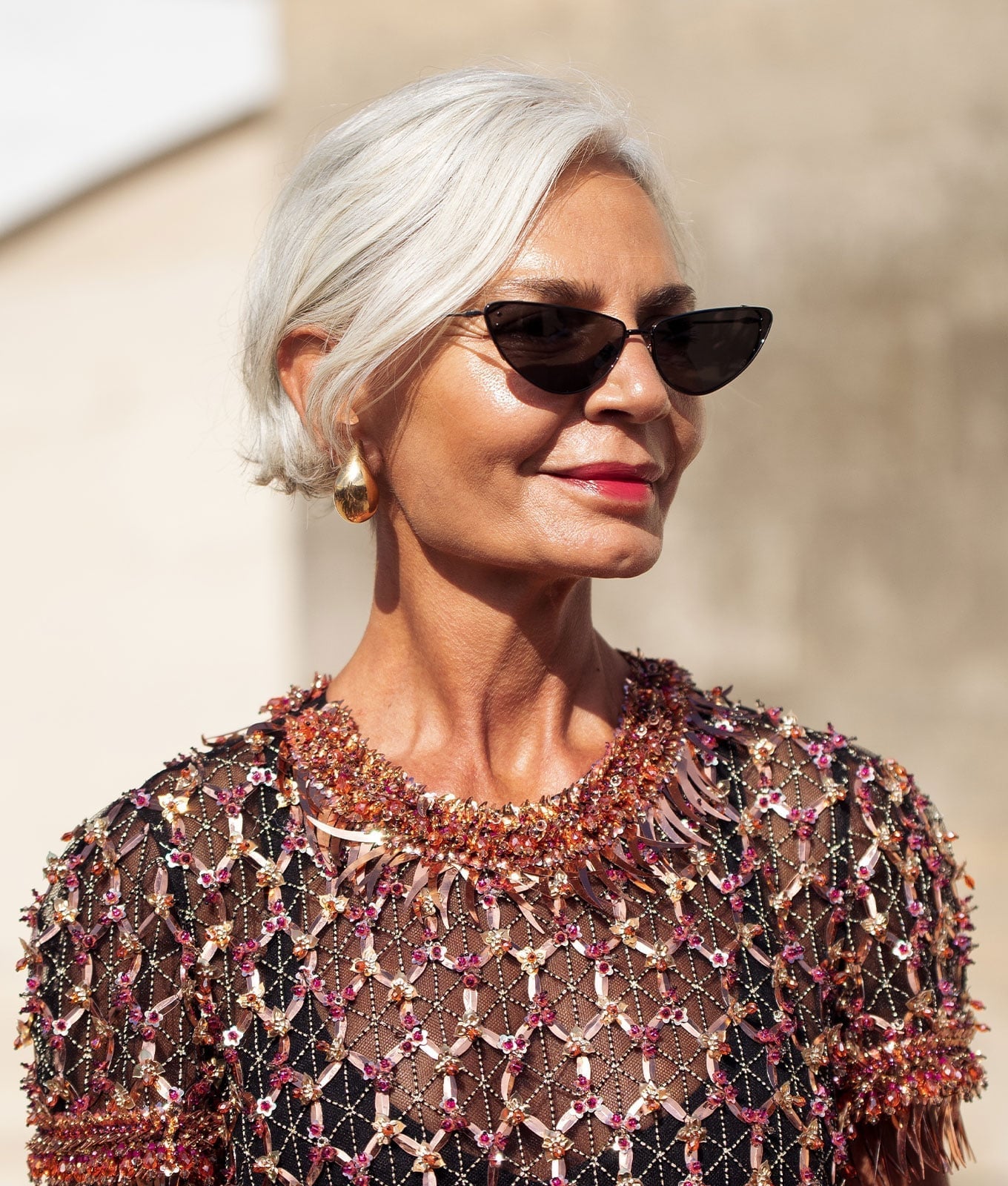
Volume at the crown changes a short bob from neat to lifted. The fine straight silver-gray hair ends at the ear, with the side part pushing the height to one side. A blowout with a round brush, lifting at the roots, builds that shape. This cut needs the dryer.
Sleek straight hair with blonde highlights
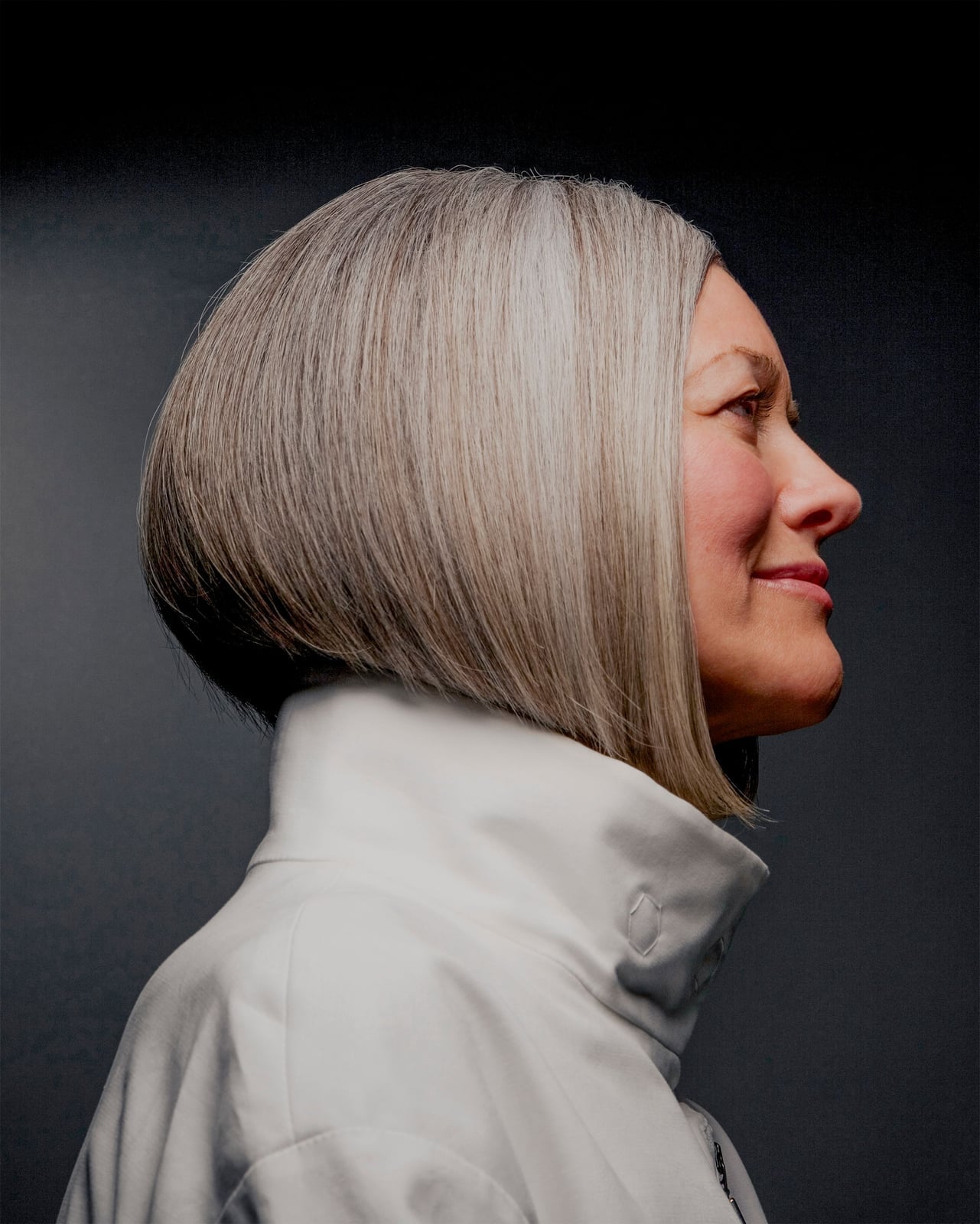
An angled bob works best when the line is severe. The middle part and sleek straight gray hair with subtle blonde highlights create a sharp silhouette that elongates a round face. Not for a wavy texture. The angle needs straight hair to read. Request: angled bob, sleek finish, middle part, subtle blonde highlights.
Salt and pepper gray bob with contrasting streaks
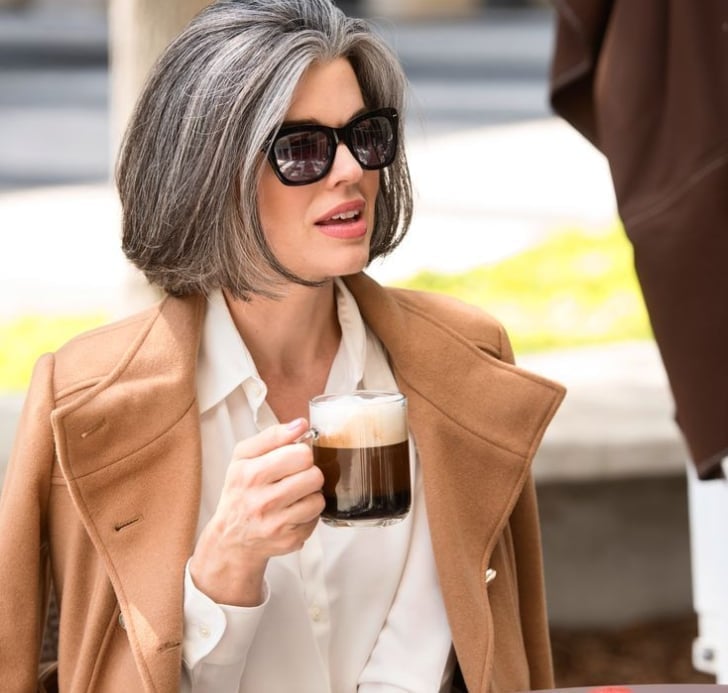
Not every gray wants to be a uniform silver. A salt and pepper bob with a middle parting and a smooth blowout keeps the fine, straight texture clean while the contrasting gray streaks do the interesting work. Request: bob, salt and pepper gray, contrasting streaks, middle parting. The shape stays precise because there are no bangs to soften the line. A single tone color or very wavy hair would fight the straight finish.
Dark roots transitioning to silver bob
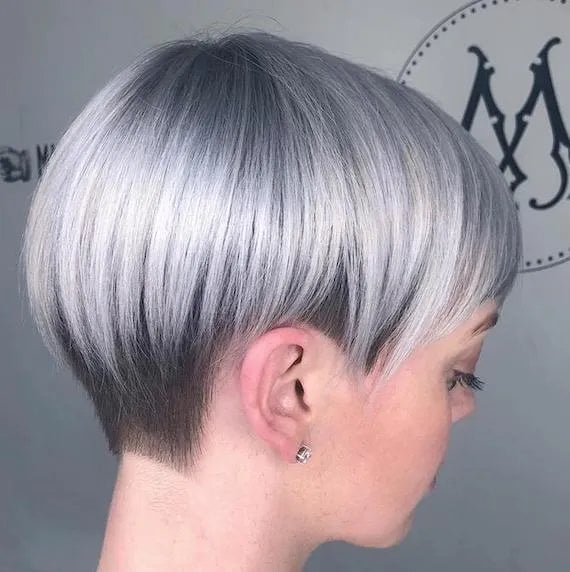
Let the roots grow in before you book the cut. A pixie bob with a side part and side-swept bangs pairs darker roots with a bright silver gray through the rest. The undercut at the nape keeps the shape clean. Request: pixie bob, side-swept bangs, undercut nape. This style works for those who want a bold contrast, not a soft blend.
Stacked bob with layers and silver highlights
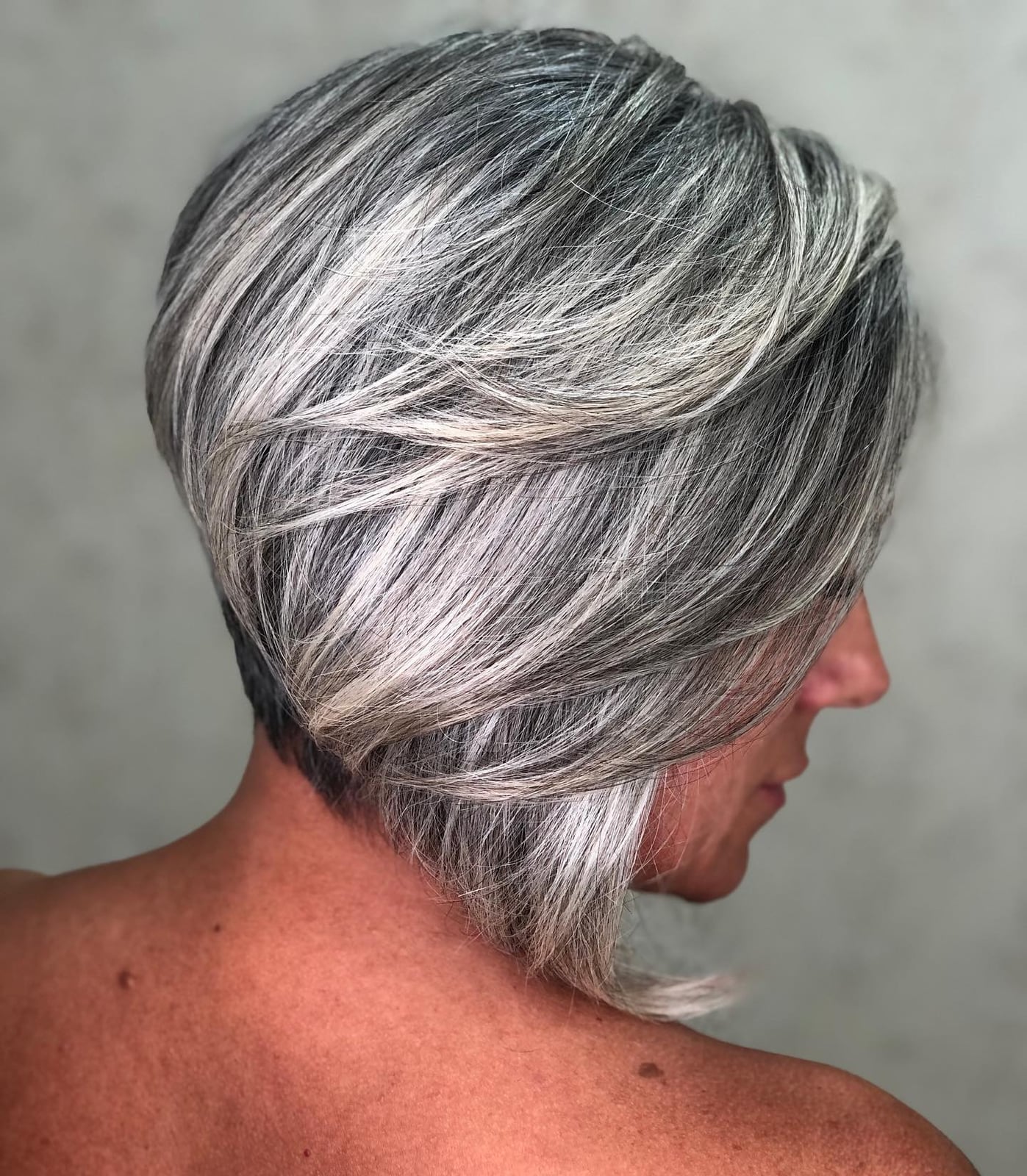
A stacked bob with subtle layers behaves differently from a blunt cut. The shorter back builds volume on fine, straight hair while the longer front keeps a clean line. Silver highlights add brightness to the gray without needing full color. Request: stacked bob, subtle layers, silver highlights.
Thick gray dreadlocks showing wavy texture
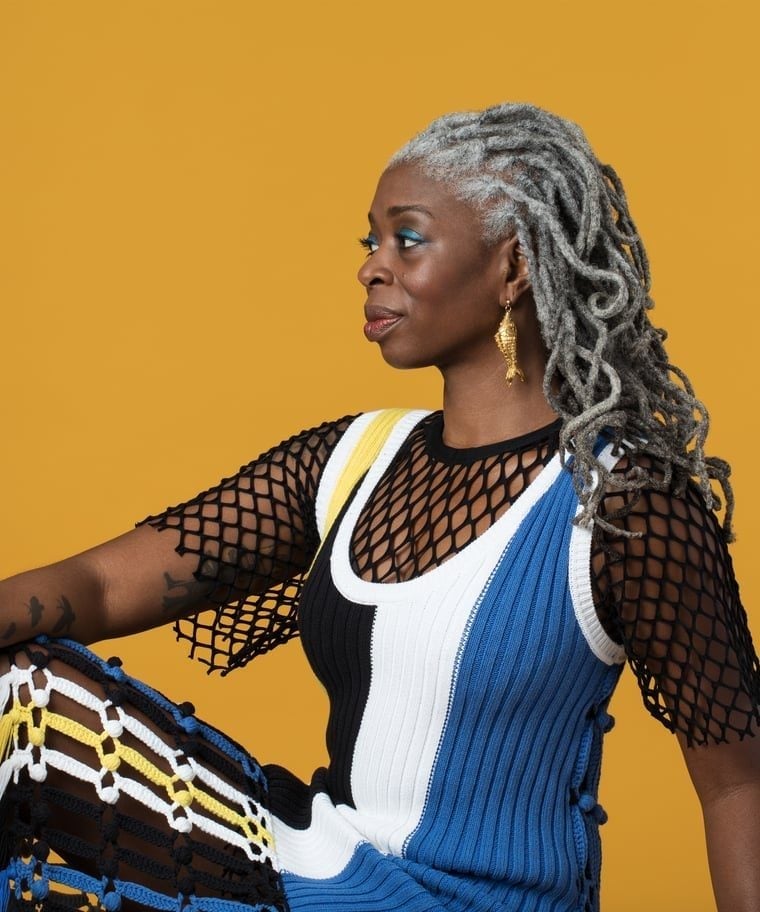
Dreadlocks offer a different path through gray hair. The thick, wavy texture locks into place without daily styling, and the gray appears as a natural part of the pattern. No bangs, no layers: the length and texture carry the look.
This style requires a commitment to the locking process rather than a daily routine. It works best for hair that can form stable locks.
Final Thoughts
Pick the cut that matches your morning, not the one that looks best on a mannequin.
- Ten minutes or less for styling: pixies and short bobs with texture built in.
- Want to stretch trims past eight weeks: longer layers with face-framing pieces.
- Fine hair that falls flat by noon: stacked layers or crown volume bobs.
- Cool base that pulls brassy: a blunt cut or a short crop shows the tone cleanly.
Find the gray haircut that suits your lifestyle and makes you feel fabulous.

