You are scrolling saved photos, trying to decide if blue is a commitment or a phase. The right cut makes the difference between a color that wears you and one you actually live with. A sharp line or a soft layer changes how the blue lands, how it fades, how it looks on a Tuesday.
Which is why Dreamy Blue Hair Ideas 2027 fill so many saved boards, 15 options that move from bold to subtle, short to long, high-maintenance to manageable. The hard part is not picking a shade. It is finding the shape that keeps you happy between toning sessions.
Deep blue sharp bob with clean, straight lines
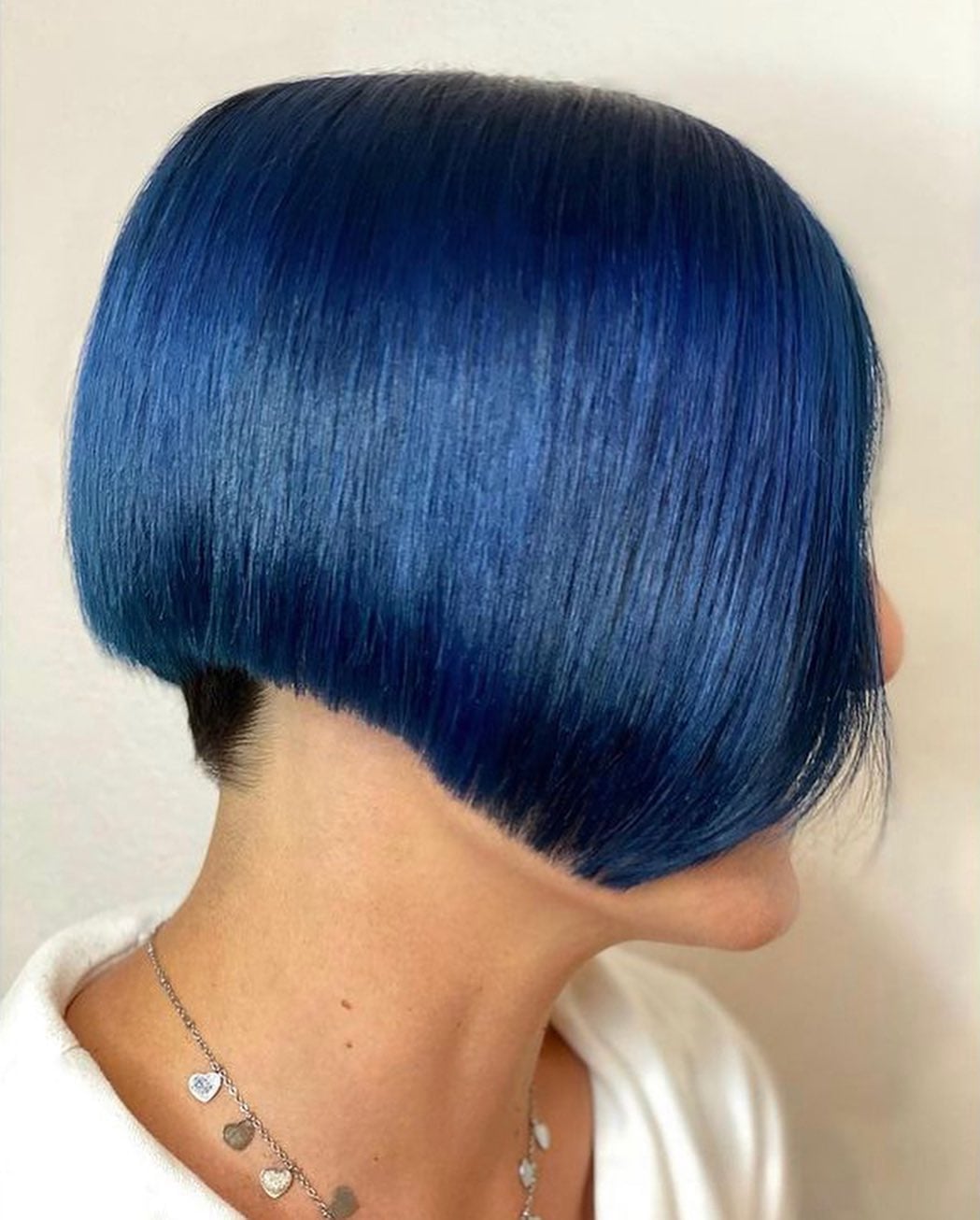
Straight lines and a precise angle define this bob. The cut is built from a single, unbroken perimeter that hits just below the jaw, with no layers to soften the edge. Fine, straight texture keeps the silhouette clean. The deep blue hue is applied all over. Tell your stylist: sharp, angled bob, deep blue all over. A trim every six to eight weeks maintains the line. Air-dry or use a flat iron for the same finish.
Silver to blue Ombré on a sharp blunt bob
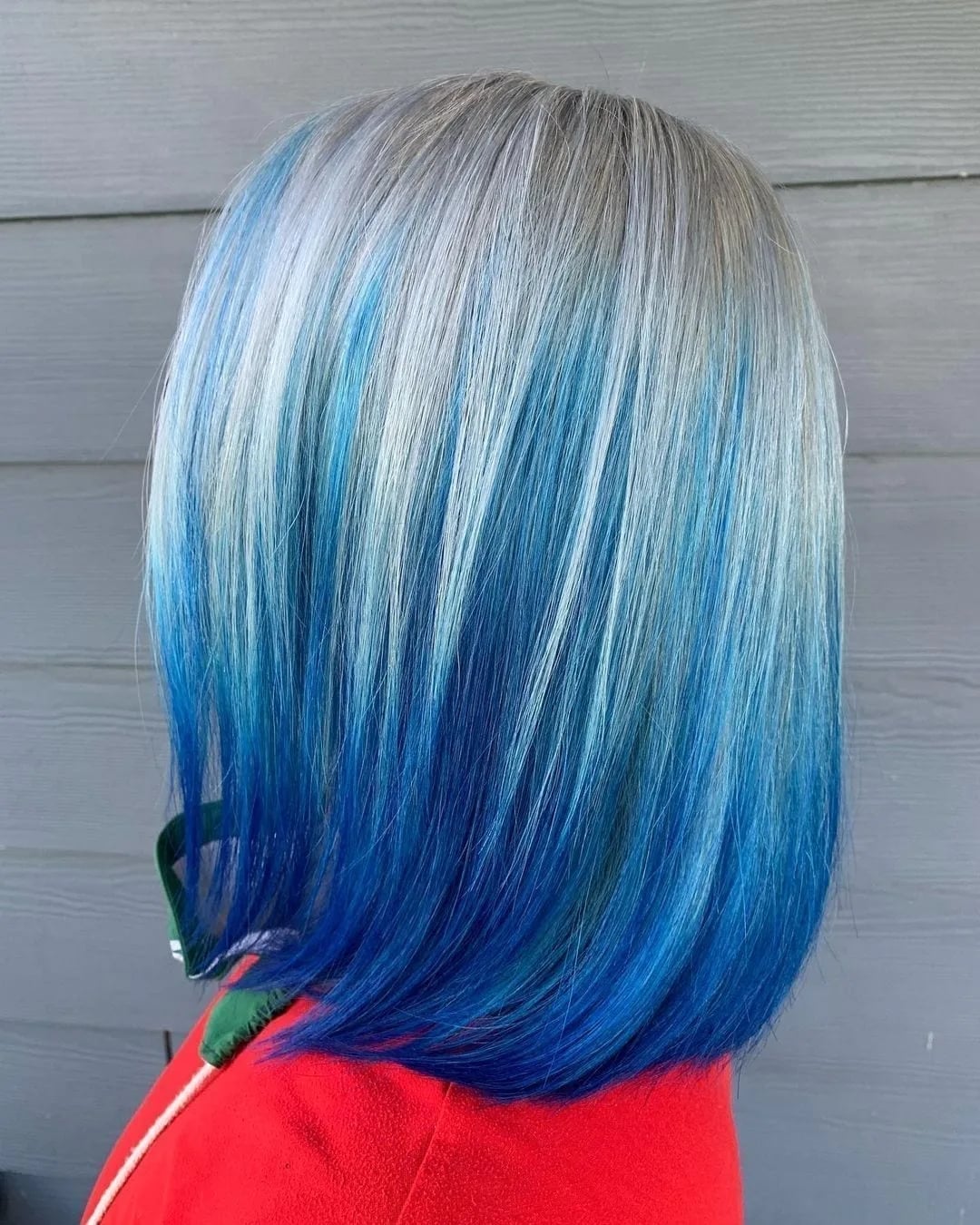
A blunt bob with a silver root and a blue ombré sits opposite a solid-color bob. This one trades uniformity for contrast. The silver base lifts to a cool white, then the blue takes over on the lower half. Fine hair that starts at the collarbone works well. Dark natural hair that is difficult to lift to silver requires careful planning. Air-dry with a smoothing cream for a neat finish. Trim the baseline every eight weeks.
Ash blonde to vibrant blue Ombre on layered hair
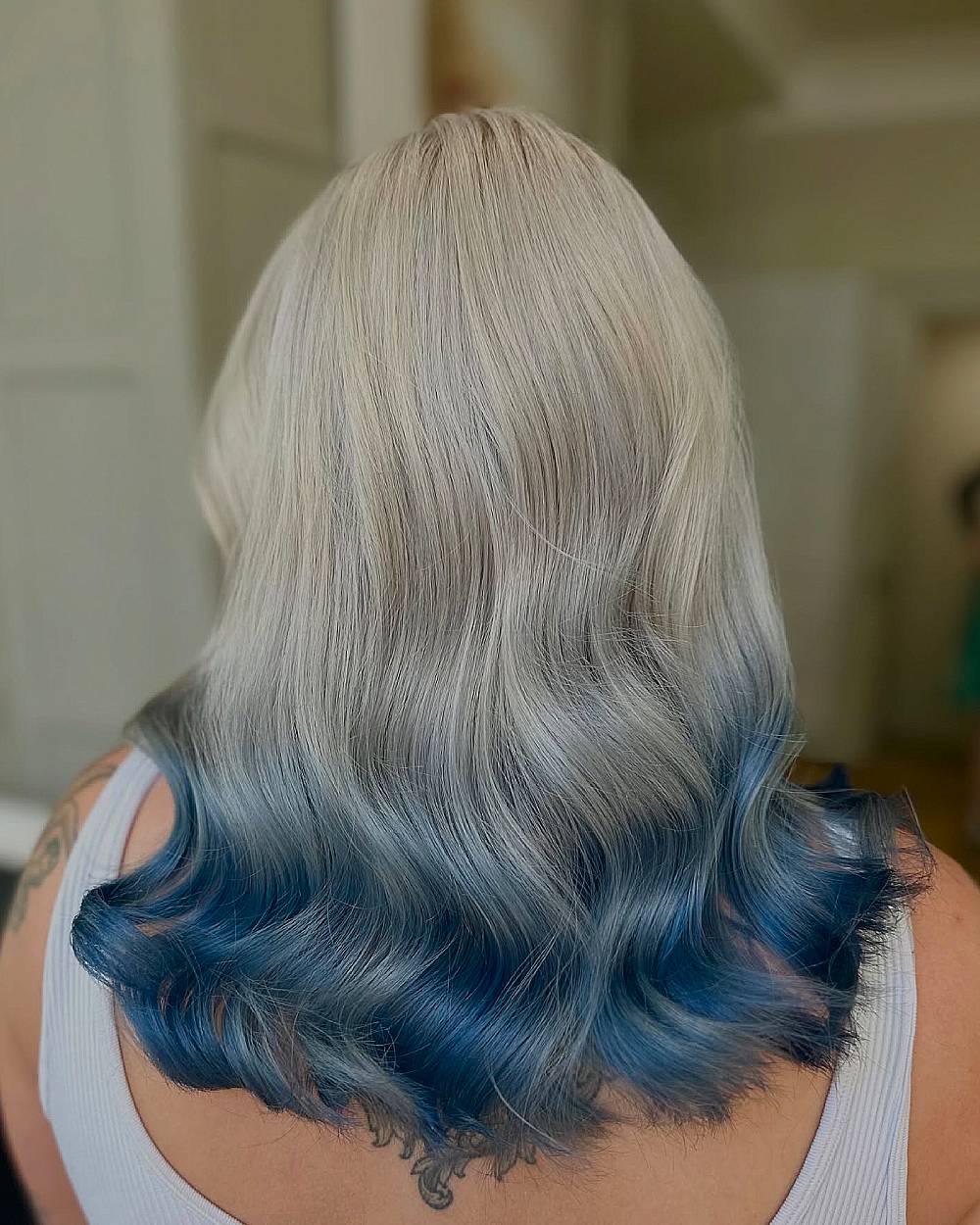
Does a two-tone color need a layered cut to show it off? Yes, because the soft waves in this ombré need room to move. The ash blonde root fades into a vibrant blue at the ends. Fine hair starting at the collarbone suits oval and long faces. A solid color application without blending is a different look. Tell your colorist: ash blonde root, blue ombre ends, soft layers. Use a wide-tooth comb on damp hair to style waves.
Platinum blonde with blue Ombre dip-dye
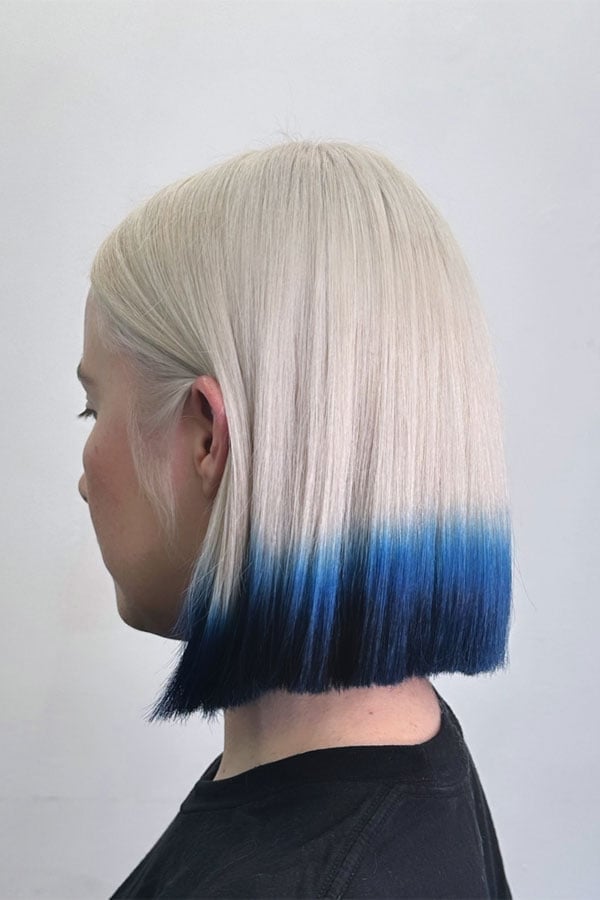
A platinum blonde base and a blue ombré dip-dye create a sharp contrast. The blunt bob keeps the color separation clean. This is a salon-only project. Achieving a clean ombré requires skill, and the bleach process for platinum is significant. This is a high-maintenance color that involves significant bleaching. The fine, straight texture is air-dried. Apply a heat protectant before air-drying.
Dark base with vibrant blue balayage
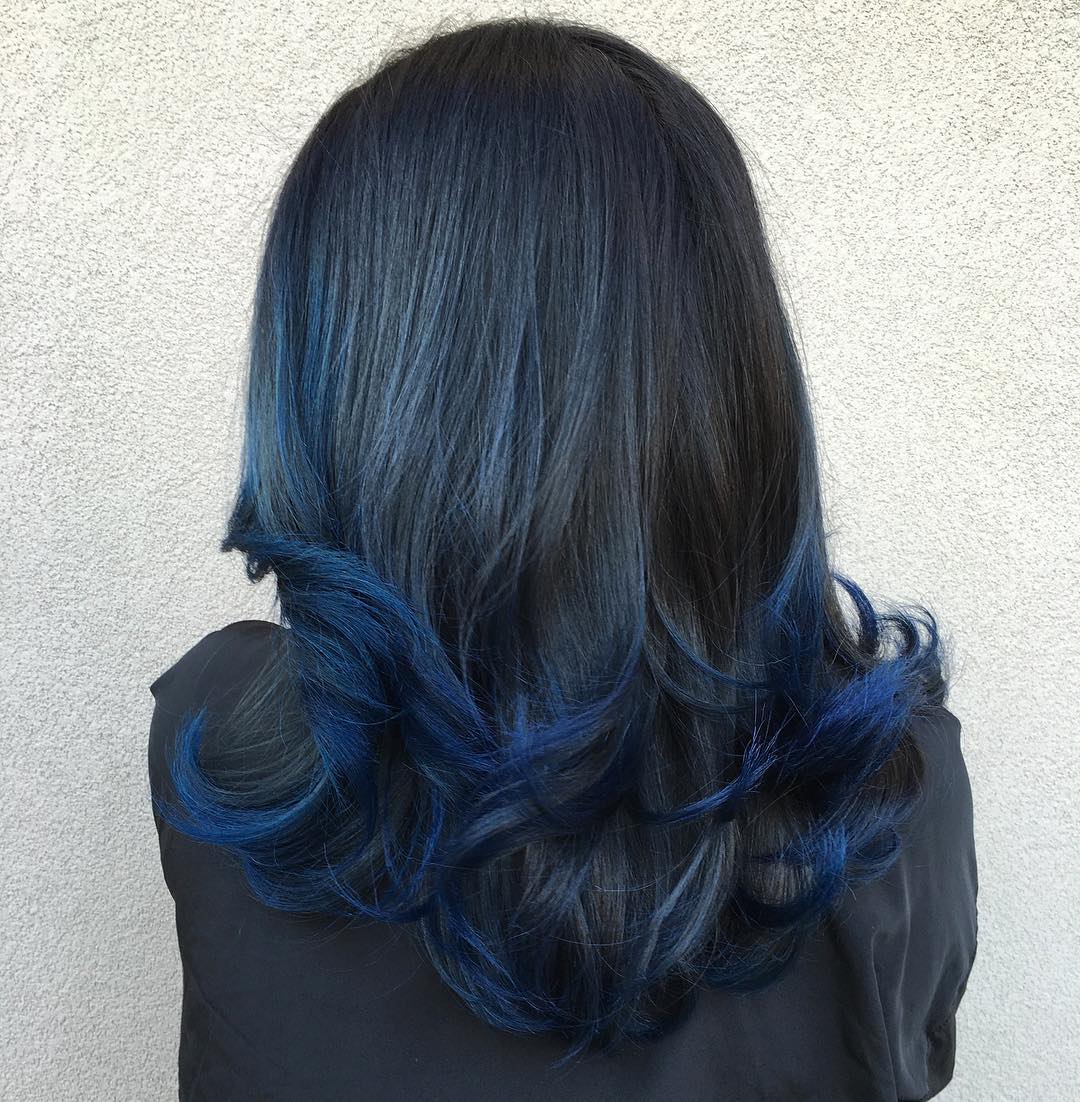
A dark base with a vibrant blue balayage places the color through the mid-lengths and ends. The layered cut and a middle part let the blue show evenly. Fine, wavy texture keeps the finish soft. Oval and diamond faces suit this balance of dark and bright. Ask your colorist for: layered cut, dark base, blue balayage through ends. Use a texturizing spray for waves.
Layered hair with lighter blue woven throughout
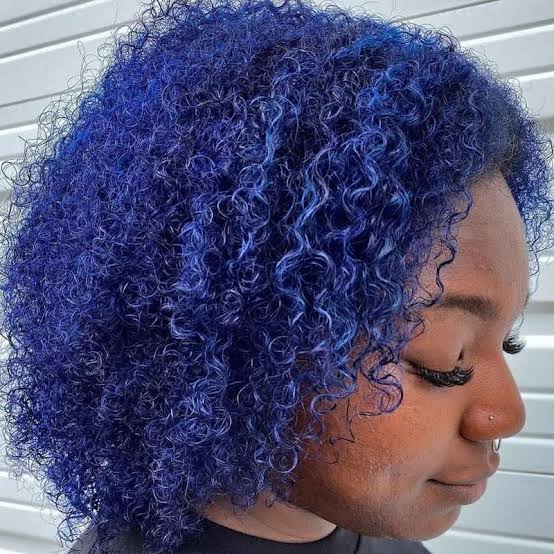
Air-dried texture cuts the maintenance time in half. This layered shape wears the deep blue base with lighter blue highlights woven through it, so the color lands softly rather than in stripes. Fine hair at least collarbone length works best here; the layers add volume without losing density. This style is not for high-contrast placement. A leave-in conditioner helps define the natural wave pattern.
Deep blue base with striking teal highlights
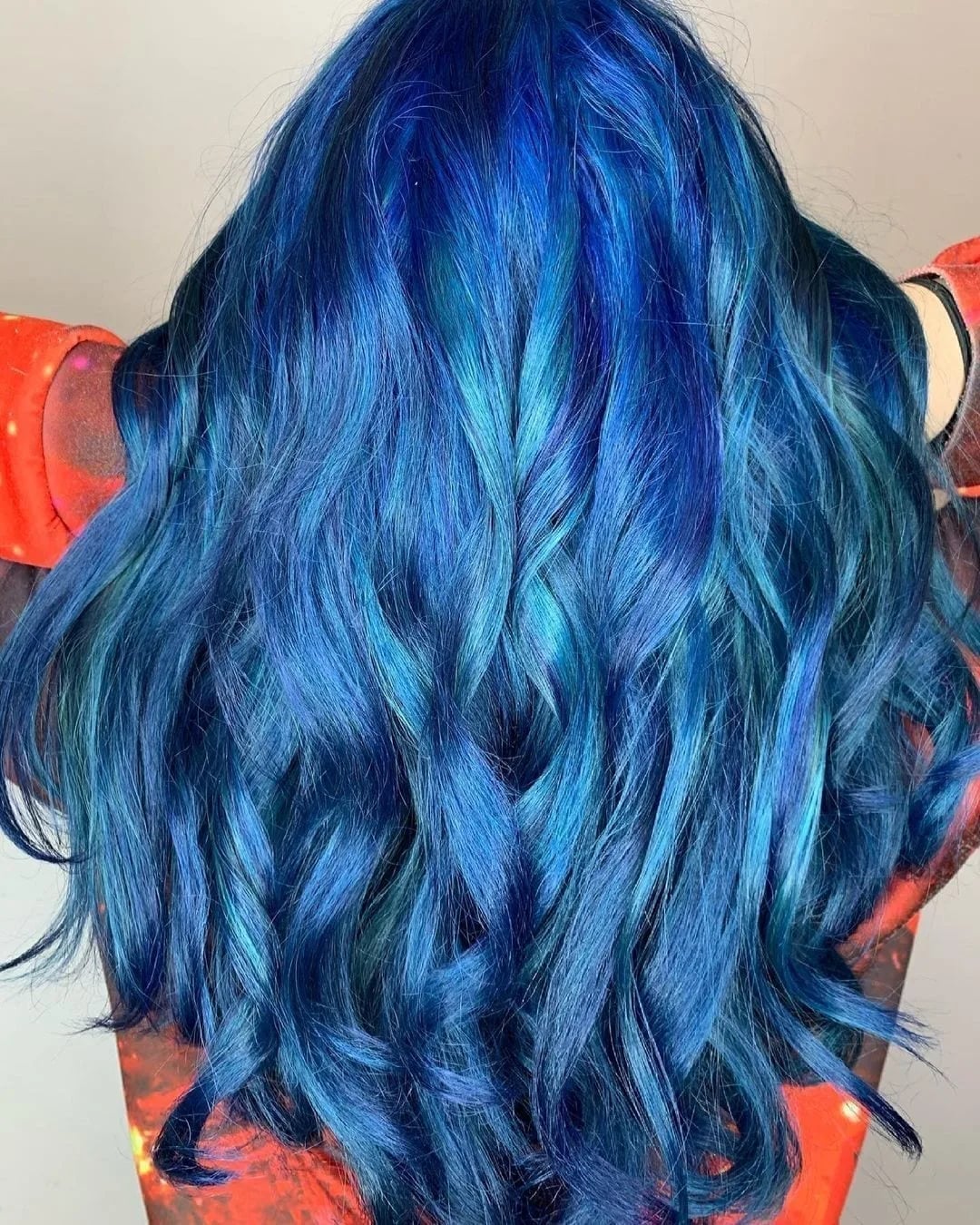
Teal reads more alive than a straight navy. The deep blue base keeps it grounded while the teal pieces show at different angles. This layered cut suits thick hair at the collarbone, and the loose waves let the two tones separate rather than blend into one flat shade. The teal fades faster than the base, so a gloss every six weeks is realistic. Square and oval faces get the most lift from the wave placement. Tell your colorist: layered cut, deep blue base, teal highlights.
A diffuser on low heat sets the wave pattern without disturbing the color. This color requires bleaching.
Blue hair with lighter streaks and soft waves
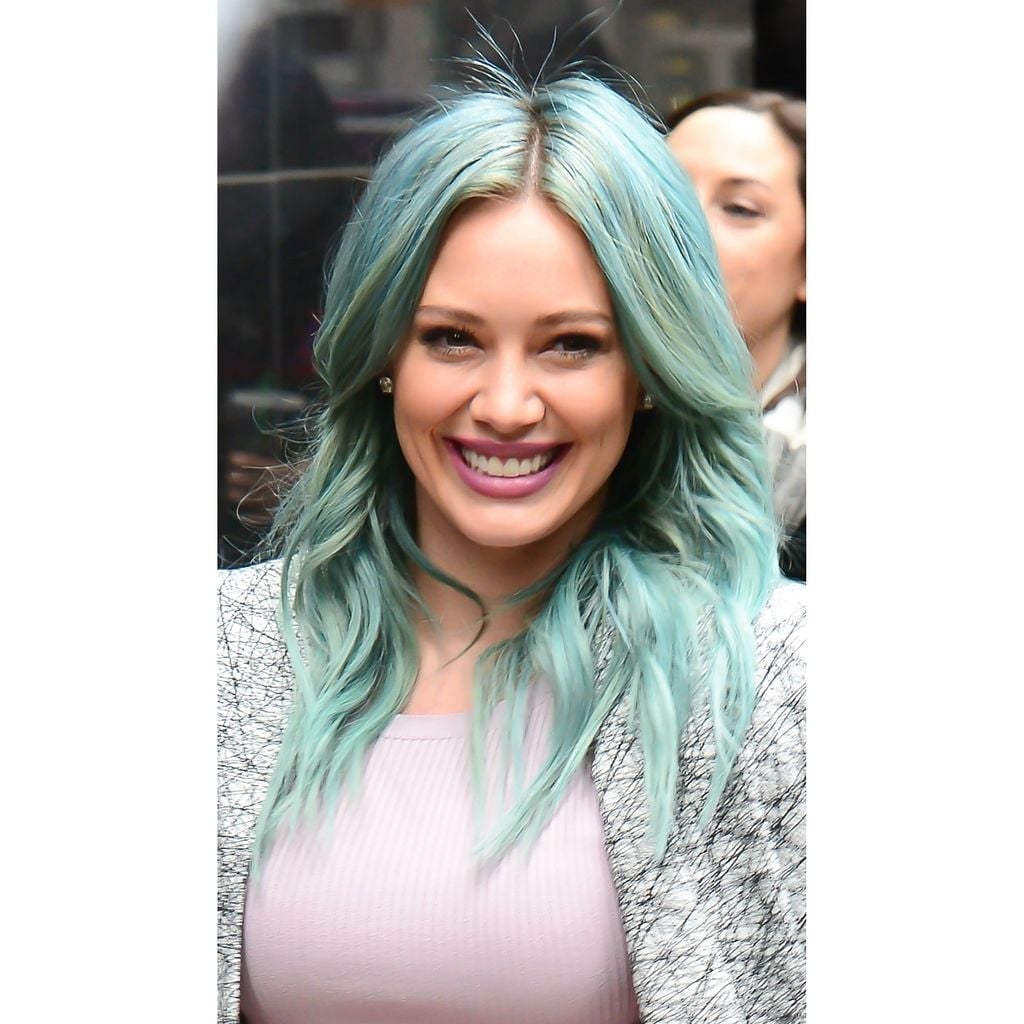
The mistake people make with this design is over-layering the streaks. The lighter pieces here stay fine and spaced apart, so the blue base looks the main color. A gentle blowout with a round brush creates the smooth finish. Start the blow-dry at the roots for lift, then wrap sections around the brush to set the bend. Fine hair at collarbone length holds the shape well. Oval and round faces get balance from the middle part.
Dark blue base with subtle lighter blue highlights
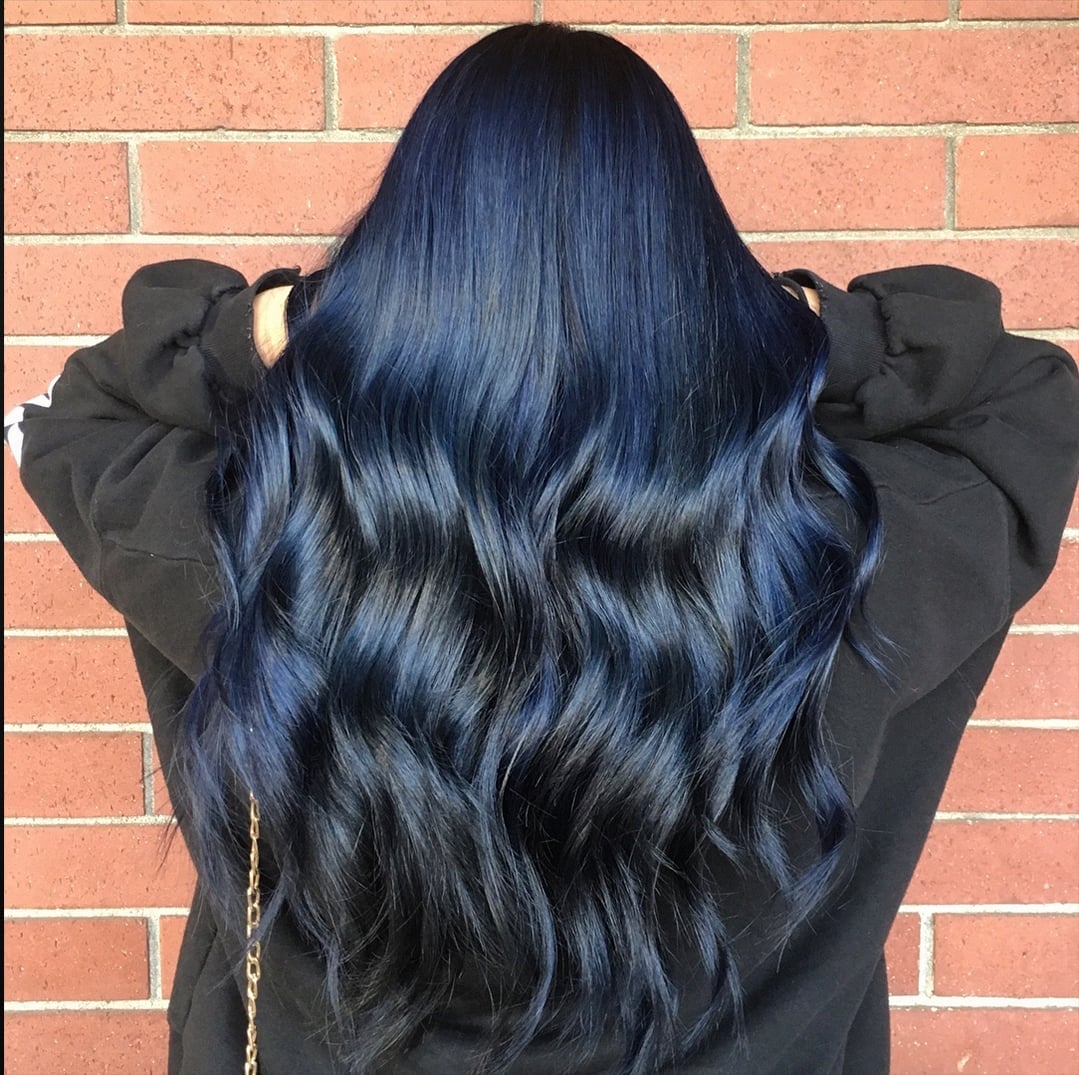
How do you get a color that shifts in the light without looking busy? A dark base with lighter highlights spaced wide apart. The deep tone stays dominant, and the lighter pieces emerge only when the hair moves. Thick hair at least collarbone length carries the dimension best. Long faces benefit from the wave volume at the sides. Tell your colorist: long layers, dark blue base, lighter blue highlights. A large round brush sets the wavy blowout.
Icy blue color with silver highlights on layered hair
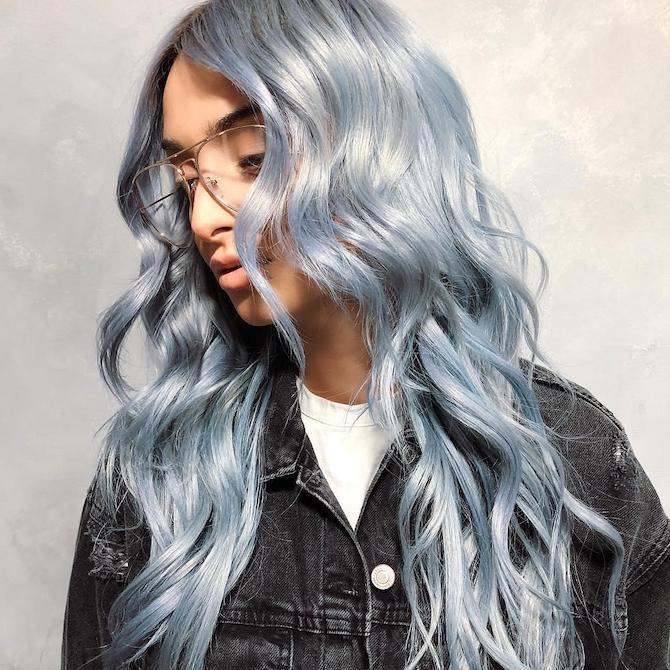
The icy blue sits just shy of white, and the silver highlights thread through the long layers without competing. Fine hair at collarbone length or longer lets the lightness read clearly. The loose waves are set with a curling wand on medium heat, then broken apart with fingers. Heart and oval faces get a soft frame from the middle part and the wave placement. A purple shampoo once a week keeps the tone from warming up.
Dark blue to teal Ombre on a straight bob
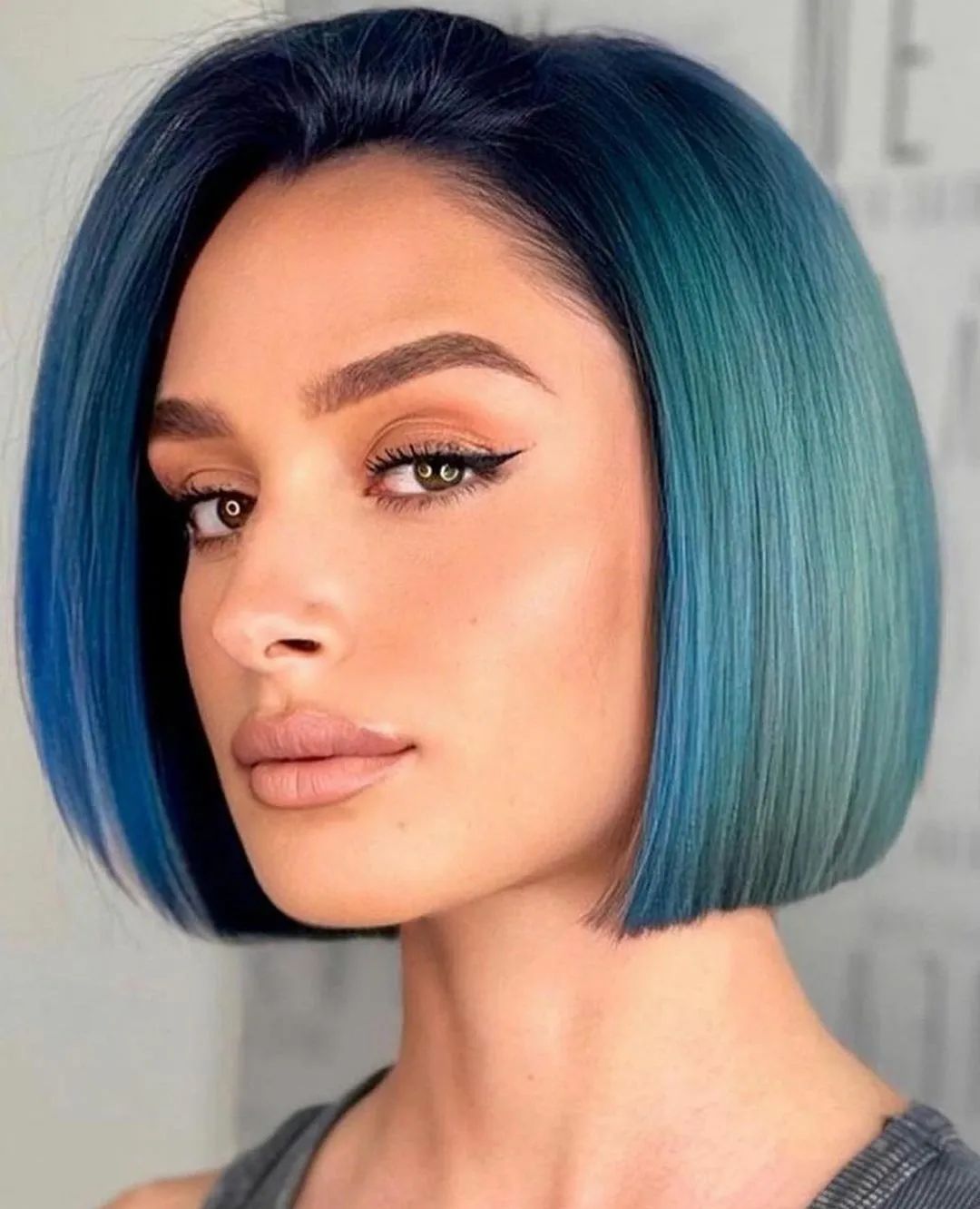
A bob cut with a middle part, no bangs, and a straight blowout makes the dark blue to teal ombre look like graphic design. The color transition is sharp, the ends are blunt. The catch: this is a salon-only project. A DIY box ombre will not land the same clean line. Ask your colorist for: teal placed exactly at the jaw or below. Then use a flat iron at home to keep the shine flat. The cut itself suits fine hair at the jawline.
A dreamier icy blue with blonde highlights
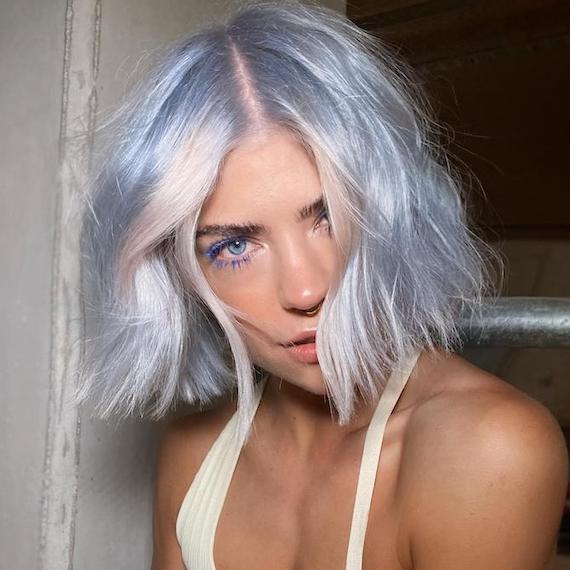
An icy blue base with blonde highlights reads like a frost filter applied to a standard blonde bob. The contrast is high, the effect is cool, and the undone wavy texture keeps it from feeling like a costume. One real drawback: that icy blue is a salon-only color. Achieving the pale base requires bleaching to a level nine or ten, then toning to a cool pastel. At home you will see brass within two weeks. The bob itself is a standard chin-length cut with a middle part and no bangs, but the texture shifts the shape. Fine hair works best here because the waves hold and the highlights read clearly.
Dark base with vibrant blue streaks and wispy bangs
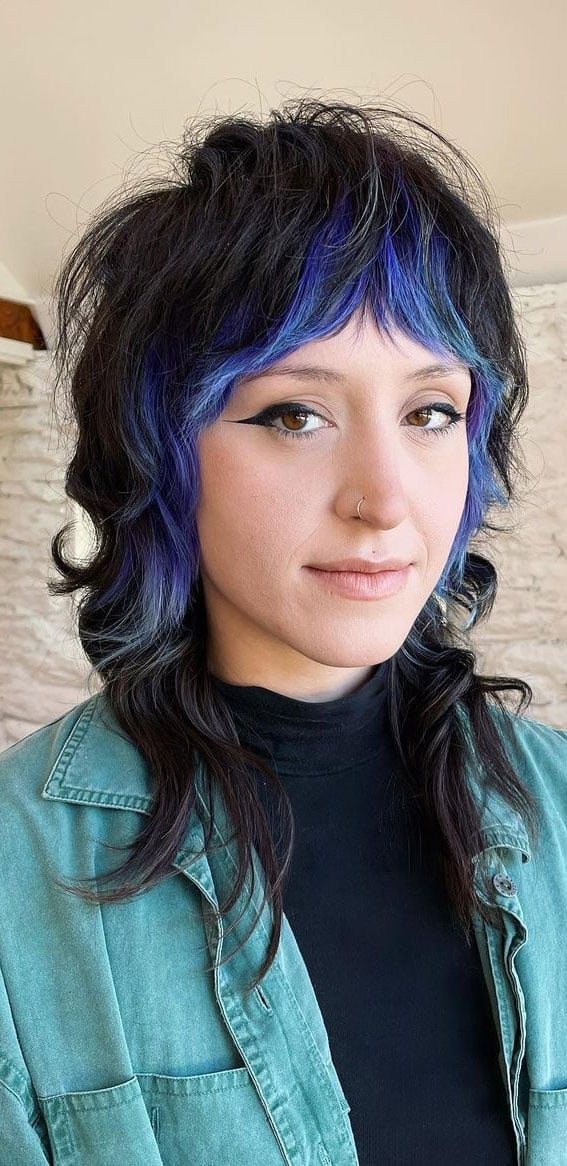
A shag cut with layers and wispy bangs, built on a dark base with vibrant blue streaks placed through the mids and ends. The streaks are not highlights in the traditional sense. They are thicker, more like painted sections that land on the surface of the layers. The air-dried texture matters because it lets the streaks sit on top of the wave rather than blending into the base. Ask your stylist for: shag cut, wispy bangs, dark base with blue streaks. The layers should start around the cheekbone to frame the face. It suits fine hair that reaches at least the collarbone. Oval and square faces handle the wispy bangs best.
Edgy pixie cut with micro bangs and blue highlights
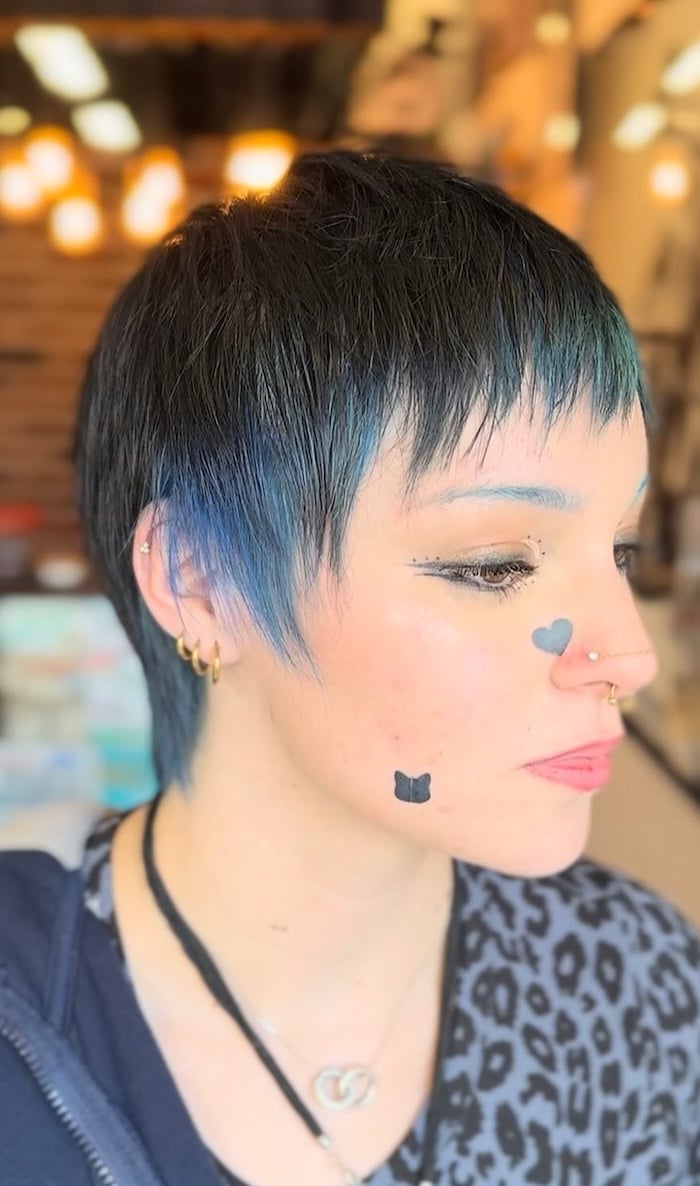
A pixie cut with choppy micro bangs and a side part, built on a dark base with blue highlights placed through the crown and temple. The highlights are not solid streaks; they read more like a color wash on the surface of the cut. The texture is key here. A styling paste at the roots lifts the crown, and the micro bangs sit straight across the forehead. This is a salon-only project because the cut requires precision and the highlights need a clean sectioning pattern. Skip it if you plan to grow your hair out in the next six months.
Electric blue and fiery orange split dye on lob
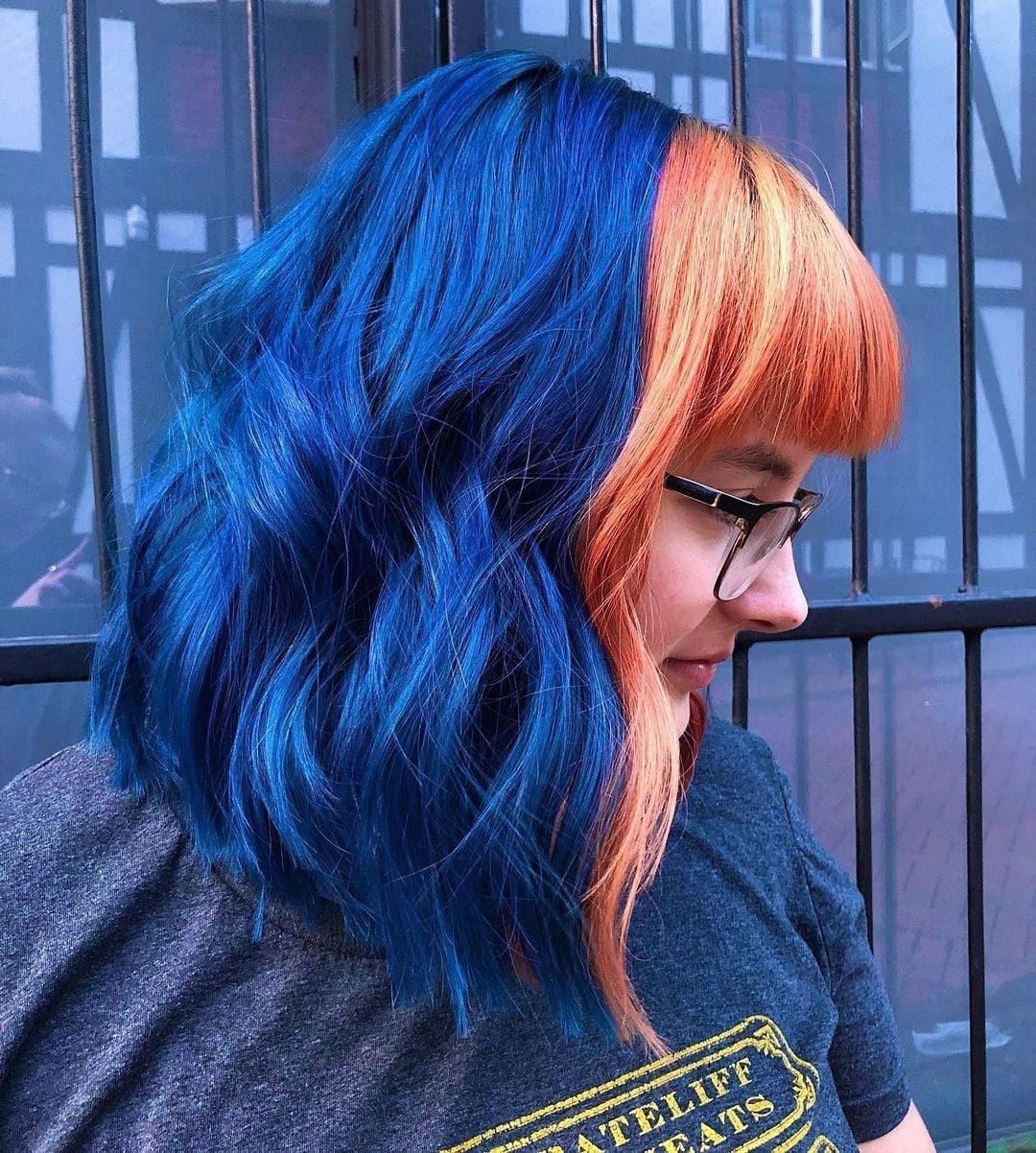
Set this against a full-head color where the shade is uniform. The split dye on this lob puts electric blue on one side and fiery orange on the other, divided by a clean middle part. Blunt bangs cut straight across the forehead anchor the look. The drawback: the two colors fade at different rates. The orange will dull to a peach while the blue holds longer, so you will see asymmetry at week four. Fine hair works best here because the color reads clearly through the ends.
Final Thoughts
Choosing comes down to how much chair time you want and how you like your mornings to go.
- Ten minutes in the morning: reach for the silver-to-blue ombré bob or the dark base with balayage.
- Fine hair: the blunt bob or the icy blue with highlights adds density without bulk.
- Cool base that pulls brassy: the darker blues and teal ombres hide fading better than pastels.
- Committed to weekly toning: the platinum dip-dye and the split dye reward the effort.
Find the blue that speaks to your style and personality.

