You have a consultation booked, the chair is waiting, and the Pinterest board is a mess of screenshots that all look slightly different. Brown balayage keeps showing up because it grows out soft, photographs well in any light, and doesn’t demand a root-touch calendar taped to the fridge.
That is why Cute Brown Balayage Ideas 2027 fill so many saved boards, 33 real examples that skip the filtered studio shots and show what the color actually does on textured hair. Some need a blow-dry, some air-dry fine, a few ask for more toner than you expect. This collection solves the scroll-and-forget loop with a clear next step for the chair.
Loose waves with subtle blonde balayage highlights
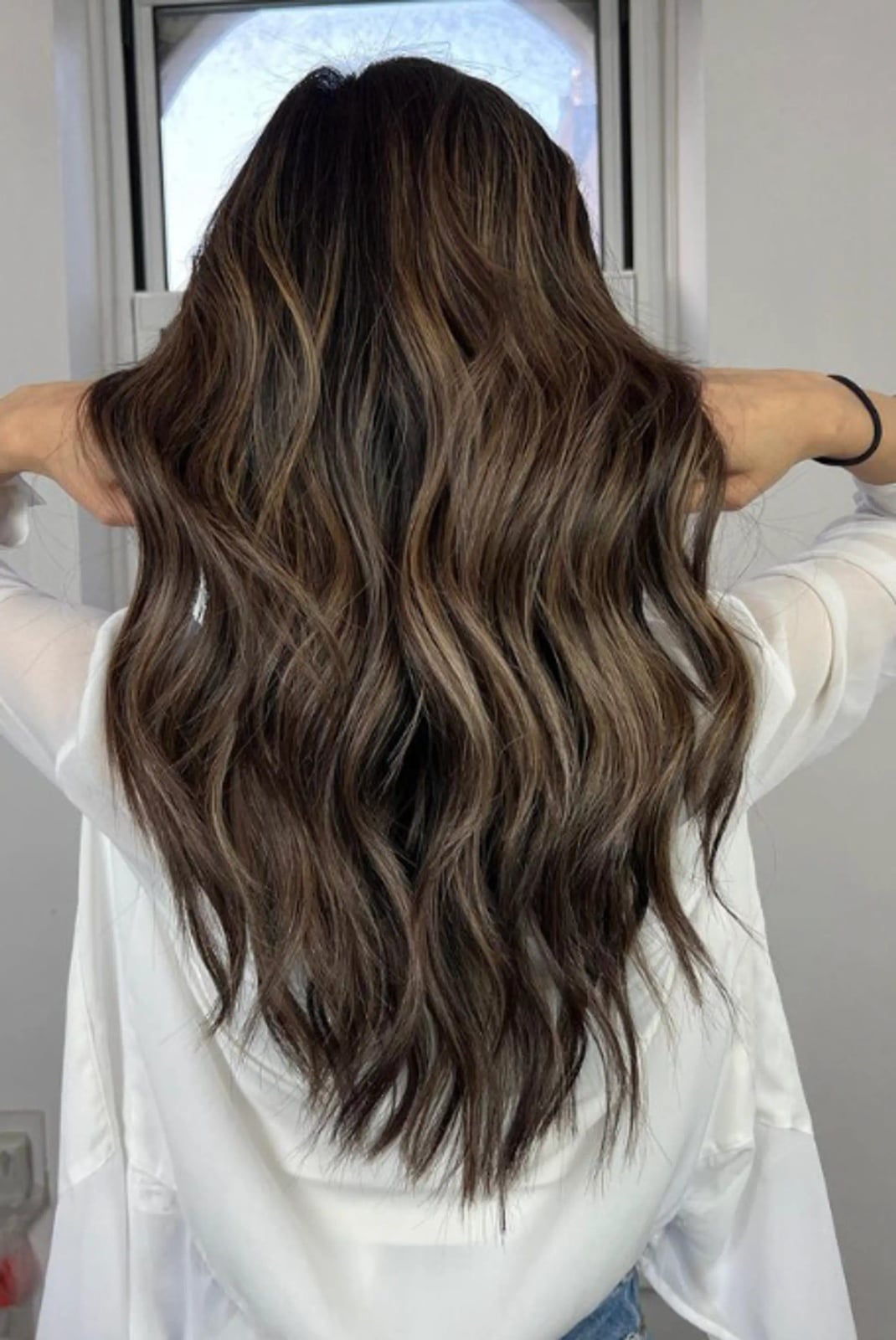
Foils at the crown and a hand-painted sweep through the mid-lengths. That is how you get a brown base that reads lighter without going full blonde. The cut runs on long layers stacked to keep the weight moving, so those loose waves hold their shape from root to tip. No bangs here; the face is left bare, and the back view shows the color falls heaviest below the ears.
Ask your colorist for: long layers with subtle blonde balayage, air-dried finish. The decision favors thick, wavy hair that is at least collarbone length, and it suits most face shapes. Pass when you prefer a sleek, straight finish or have very fine hair that won’t hold waves. Upkeep is a trim every eight weeks and a diffuser on low heat to keep the texture soft.
Dimension added with caramel balayage and soft waves
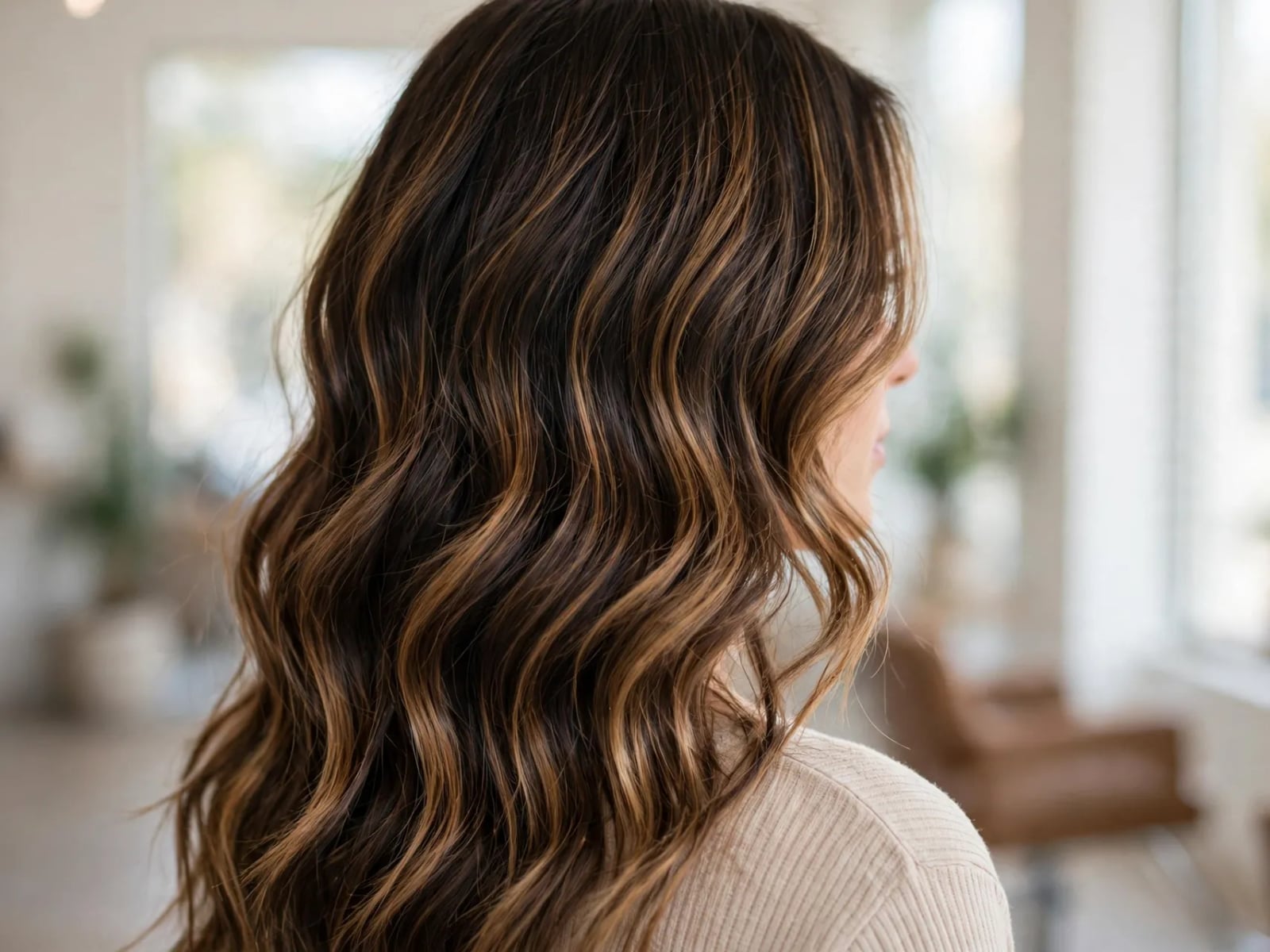
Set this against a solid dark brown and the difference shows: a side-part with caramel balayage warms the whole silhouette without needing a full head of highlights. The layers are cut to stack gently, so the soft waves fall in a continuous curve rather than a sharp bend. No bangs interrupt the line. It suits thick, wavy hair at least collarbone length and most face shapes. Skip it if you prefer a blunt cut or have very fine hair that struggles to hold shape. A large barrel curling iron builds the wave, and a trim every six to eight weeks keeps the shape clean.
Subtle dark brown balayage on thick wavy hair
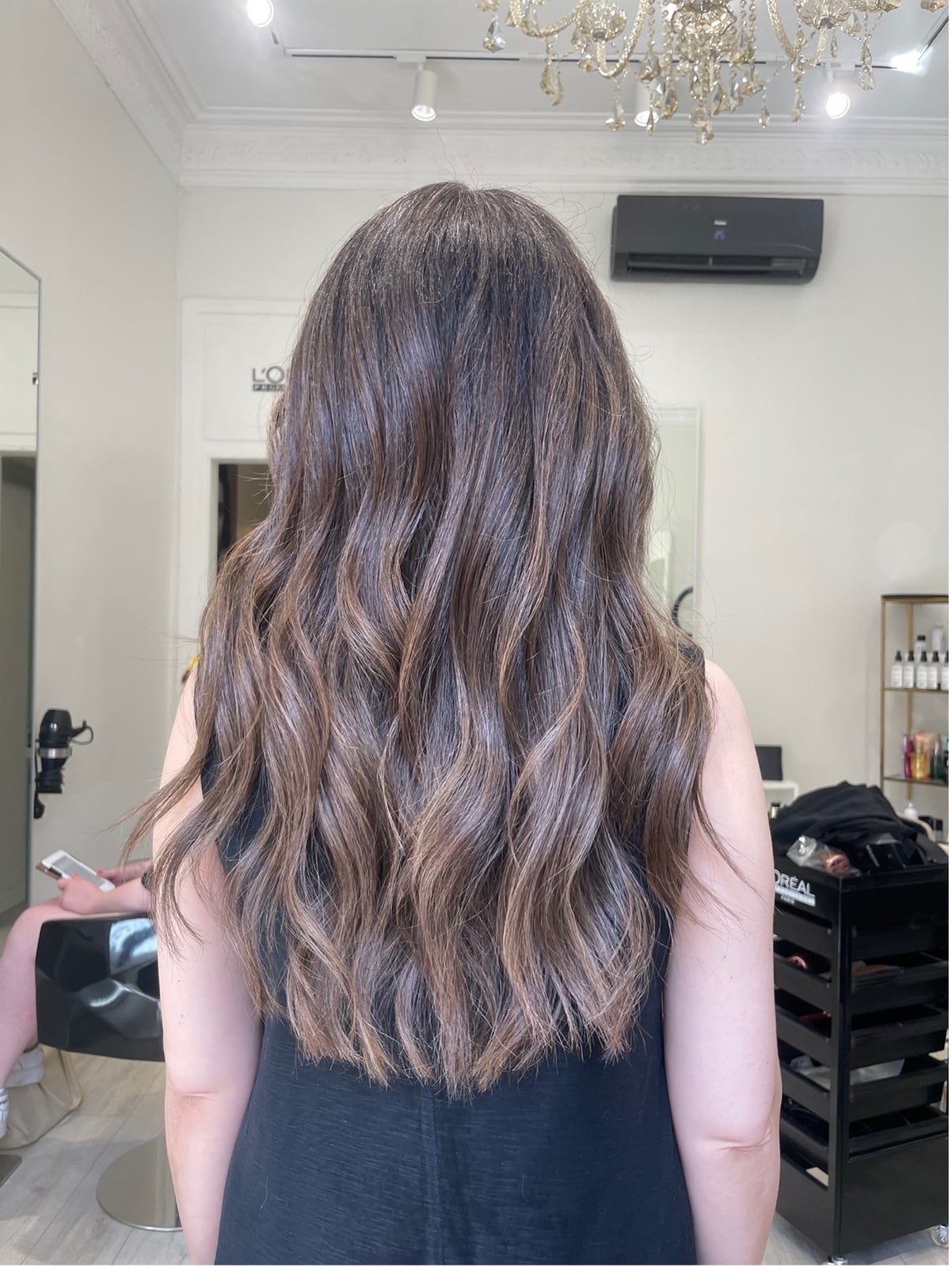
A blowout reveals what subtle balayage can do: the dark brown base holds its depth, while lighter pieces near the ends give the hair a lived-in lift. Long layers are cut to move with the wave pattern, so the color lands where the hair bends naturally. No bangs. The back view shows the balayage concentrated from the mid-lengths to the tips, keeping the roots solid.
Thick, wavy hair at least collarbone length gets the most out of this. It works for most face shapes. Not for anyone with fine hair or a taste for dramatic contrast.
Face-framing layers add softness with caramel balayage
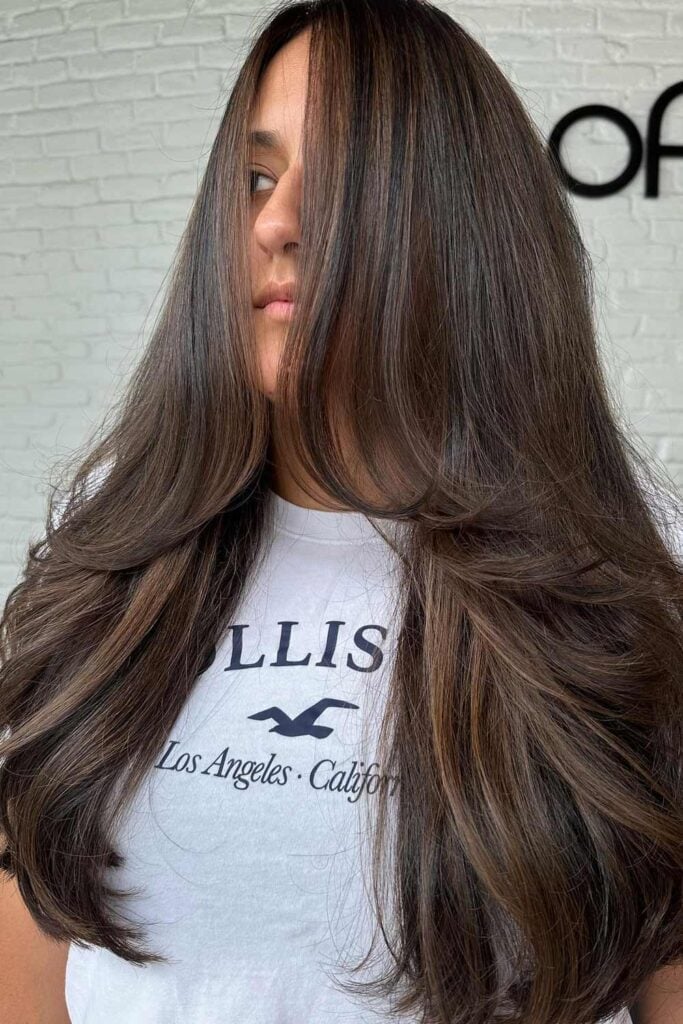
A middle part and face-framing layers that start around the jaw, paired with subtle caramel balayage concentrated at the front, add warmth without a full highlight. The long layers behind keep the length and volume, so the color looks natural dimension rather than an applied stripe. No bangs; the front pieces do the framing. A voluminous blowout sets the shape.
Thick, wavy hair at least collarbone length carries this best, and the soft layers around the jaw work well to soften that area. Ask your colorist for: subtle caramel balayage concentrated at the front. Ask your tech for: long layers with face-framing pieces, middle part.
A bolder contrast with blonde balayage on fine hair
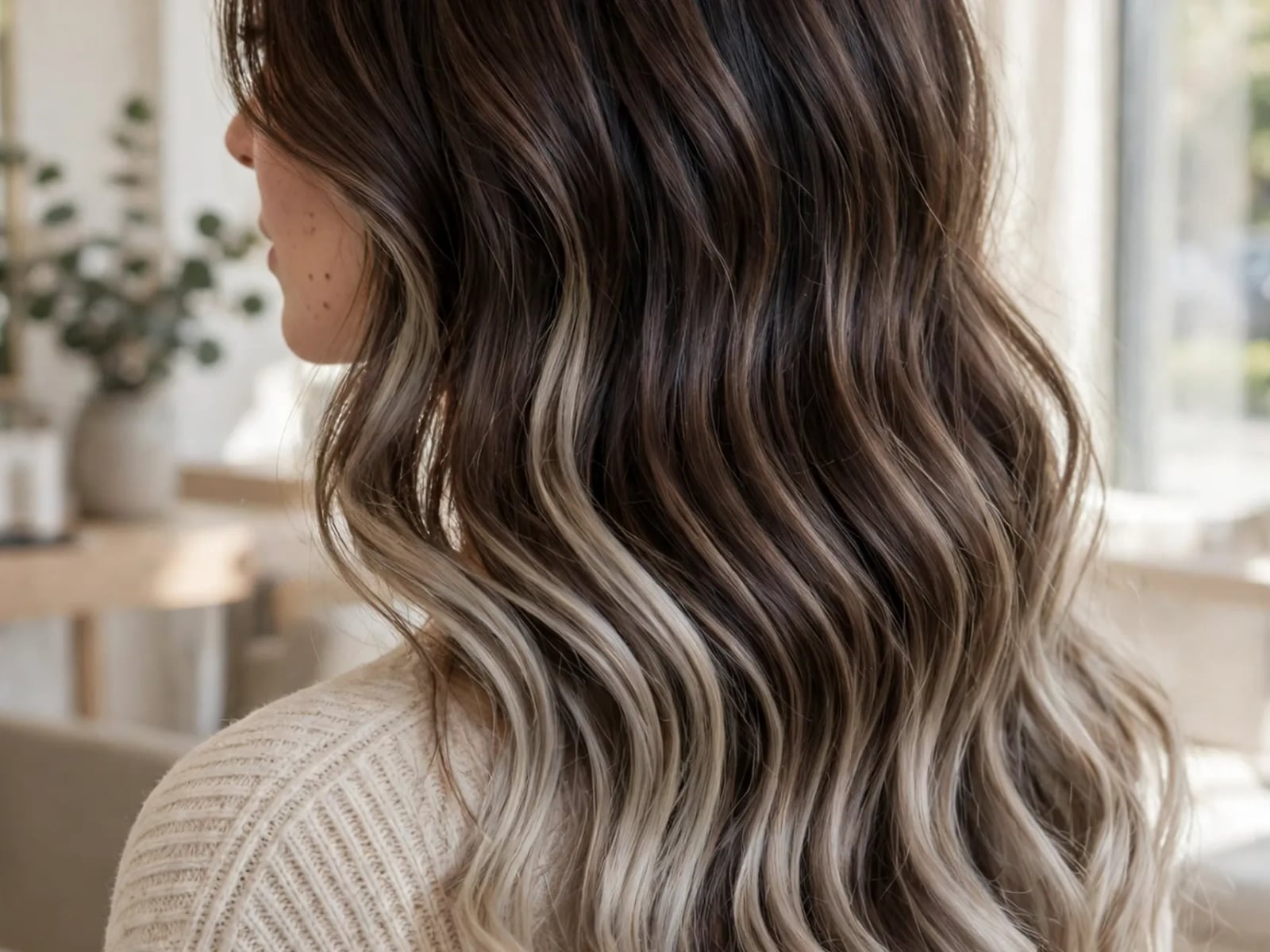
Fine hair needs contrast to look like it has more going on, and this delivers: a dark brown base with striking blonde balayage that starts higher than usual, catching the side part. The layers are subtle, just enough to stop the hair from lying flat, and the waves add a touch of volume without needing much product. No bangs. It suits fine, wavy hair at least collarbone length and most face shapes. Pass when you prefer a very subtle color blend or have thick hair that may overwhelm the highlights.
Caramel balayage for warm dimension on waves
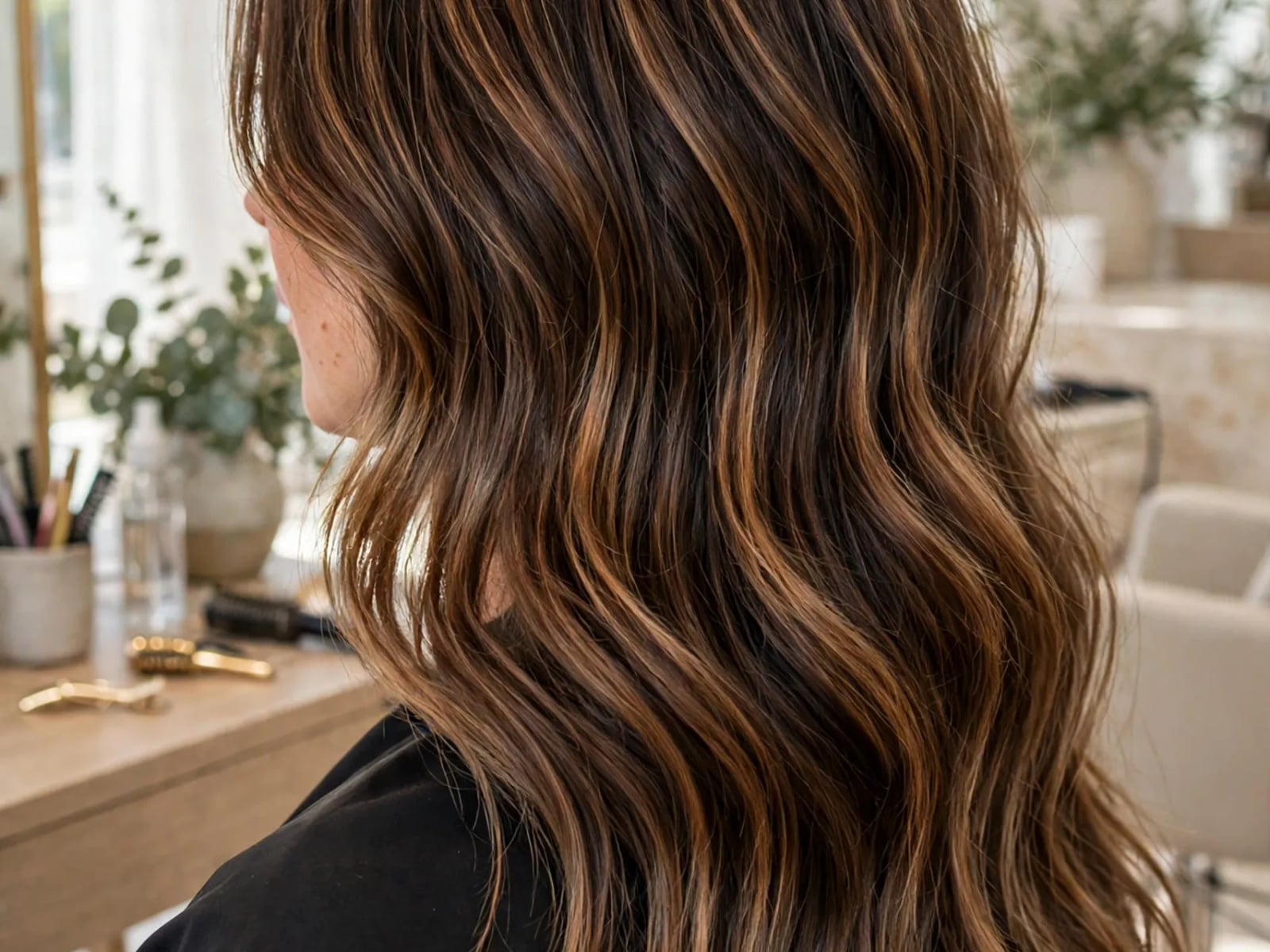
A layered cut with a side part shifts the weight of the caramel balayage, concentrating the warmth where the hair falls forward. Dark brown at the roots keeps the contrast grounded while the lighter pieces catch the wave bends. Fine, wavy hair at collarbone length or longer takes this best, the layers prevent the color from pooling at the ends. Skip it if your hair runs thick, because the caramel can spread too wide and lose its subtlety. A texturizing spray on damp strands gives the waves enough grip to show the dimension.
Soft blonde balayage adds dimension to thick wavy hair
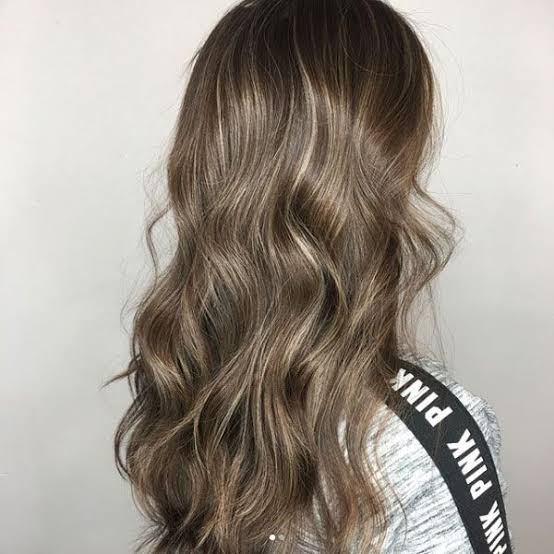
Blonde balayage on a rich brown base reads differently on thick hair than on fine. The extra density absorbs the lighter pieces, so the result is a general lift rather than distinct streaks. This cut uses subtle layers to keep the weight from pulling the waves flat. A middle part lets the color balance fall evenly on both sides. The catch: thick hair shows regrowth less than fine, but it also needs more product to hold its wave pattern. A sea salt spray applied to damp hair and air-dried gives the texture room to breathe. Trims at eight to ten weeks keep the ends healthy enough to wave without frizzing. No bangs here, so the face-framing comes entirely from the front layers.
Lighter blonde balayage on long layered hair
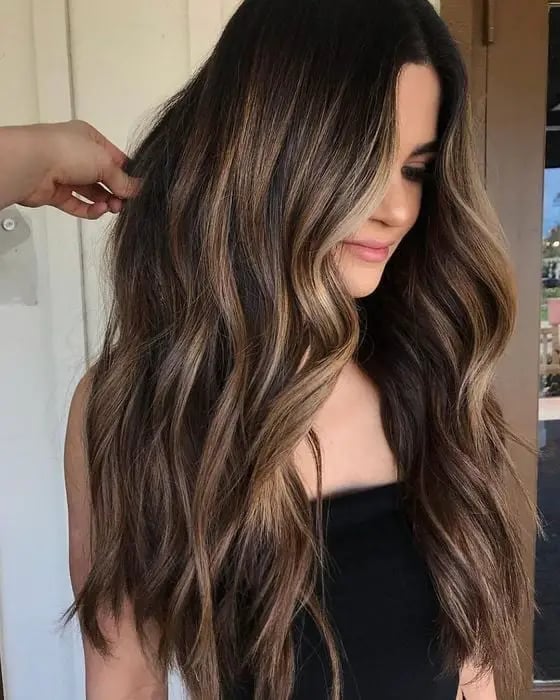
A side parting and long layers do the work here. The blonde balayage starts lower, leaving the dark brown base visible at the root, so the grow-out feels baked into the design rather than accidental. Loose waves spread the lighter pieces across the surface instead of letting them sit in one stripe. Thick, wavy hair at collarbone length or longer holds this shape without fighting it. The side part creates an asymmetrical weight that keeps the layers from stacking evenly, that is the point. A volumizing spray at the roots lifts the crown, which makes the lighter effect read from the front.
Dimensional ash blonde balayage on dark brown waves
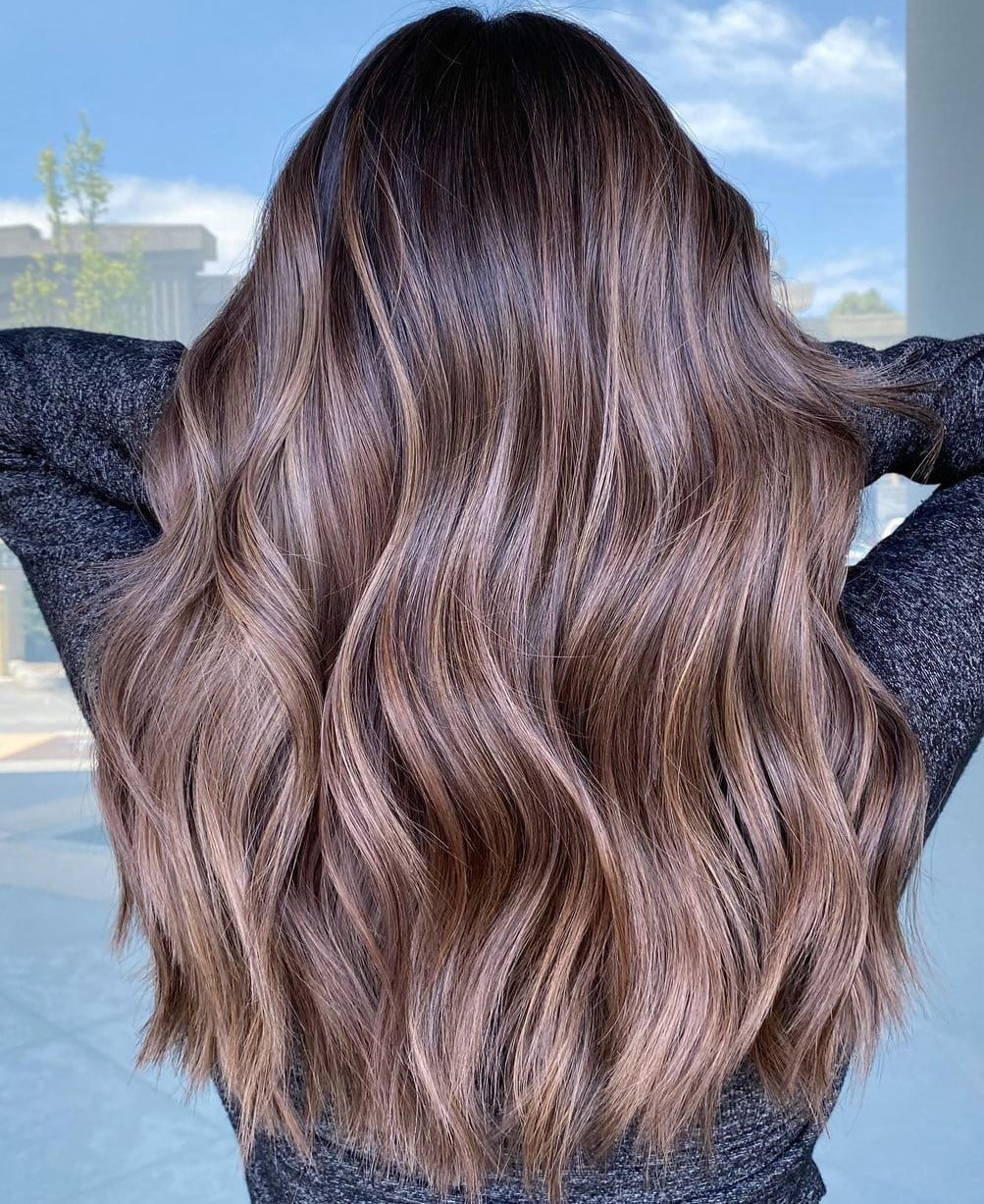
How do you get ash tones to register on a dark brown base without turning muddy? The trick is subtle layers throughout the length and a balayage that stays fine and vertical. The ash blonde sits on the surface of the waves rather than saturating the whole strand, so the dark brown reads through. Thick, wavy hair at collarbone length or longer gives the color enough surface to scatter. A curl-defining cream applied to damp hair keeps the wave pattern consistent without crunch. Skip it if you lean warm-toned in your everyday coloring, ash can pull flat on a base that has no cool notes to meet it.
Blonde balayage blending on thick wavy hair
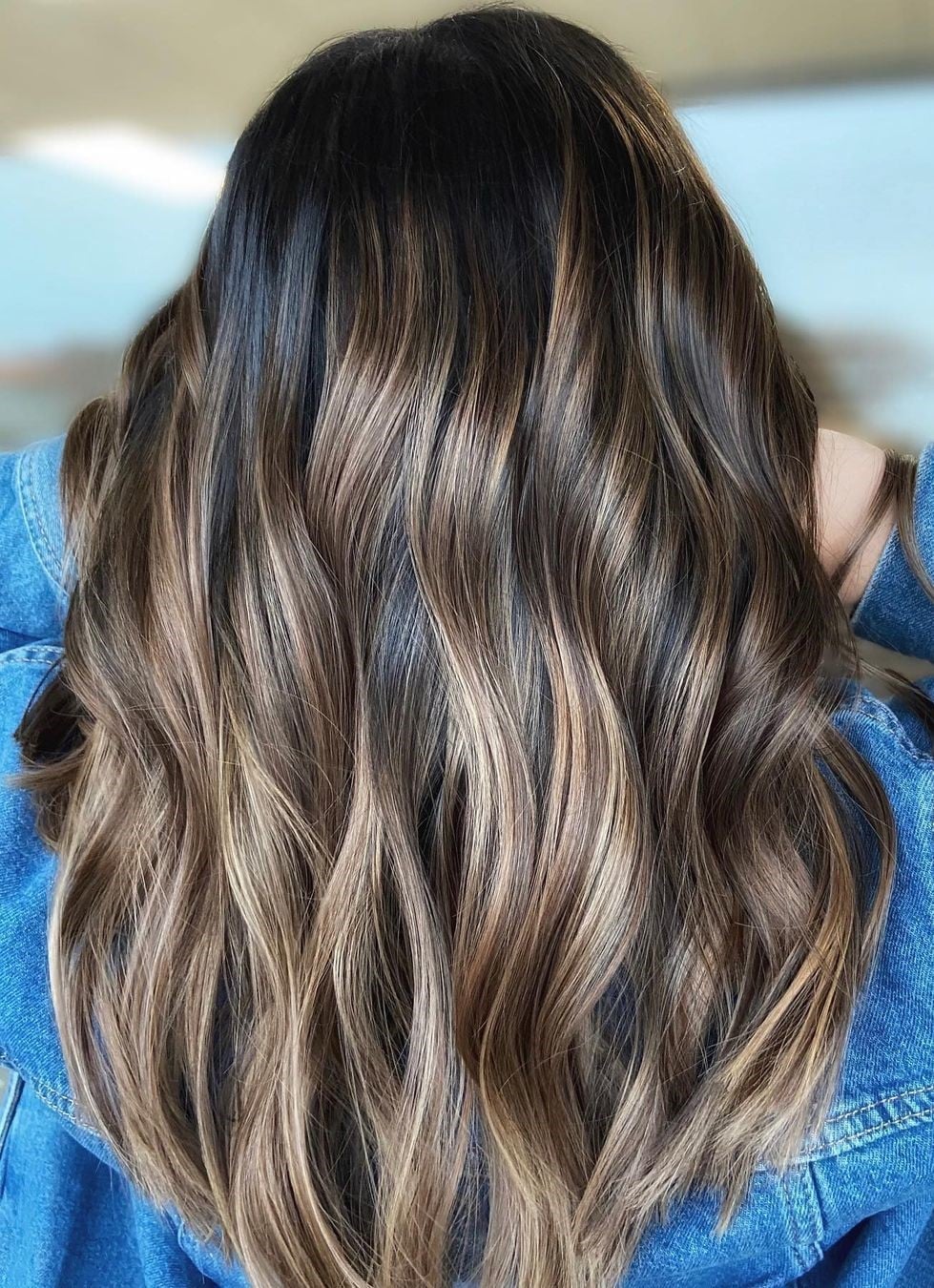
Loose waves and a long layered cut let the blonde balayage blend in a way that a straight style cannot. The wave bends scatter the lighter pieces, so the transition between dark brown base and blonde looks a general glow rather than a line. Thick hair at collarbone length or longer handles the weight of the layers without collapsing the shape. The alternative, a more distinct contrast, suits finer textures better, because the color sits closer to the surface. Here, the blend is the point. A texturizing spray on dry waves defines the layers without stiffening them.
Warm dimension from caramel balayage and waves, wavy
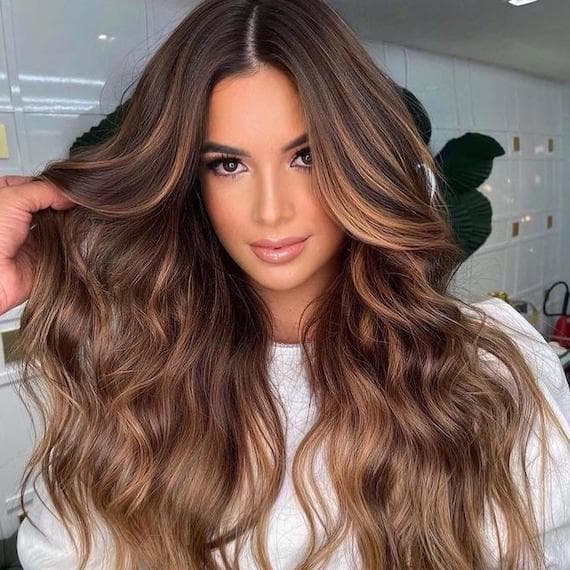
Middle part and long layers give the caramel balayage room to fan out. The dark brown base keeps the contrast subtle. The warmth looks a glow, not a stripe. Thick, wavy hair holds the shape of a wavy blowout without fighting it all day. No bangs means the color does the work at the front, lightening around the face.
Suits most face shapes as long as the hair hits collarbone or longer. Skip it if you prefer a cool tone or if fine hair tends to go flat under its own weight. The waves need a heat protectant and a round brush; the caramel needs a toning visit at week six to keep the warmth from turning brassy.
When you want a lighter effect without highlights
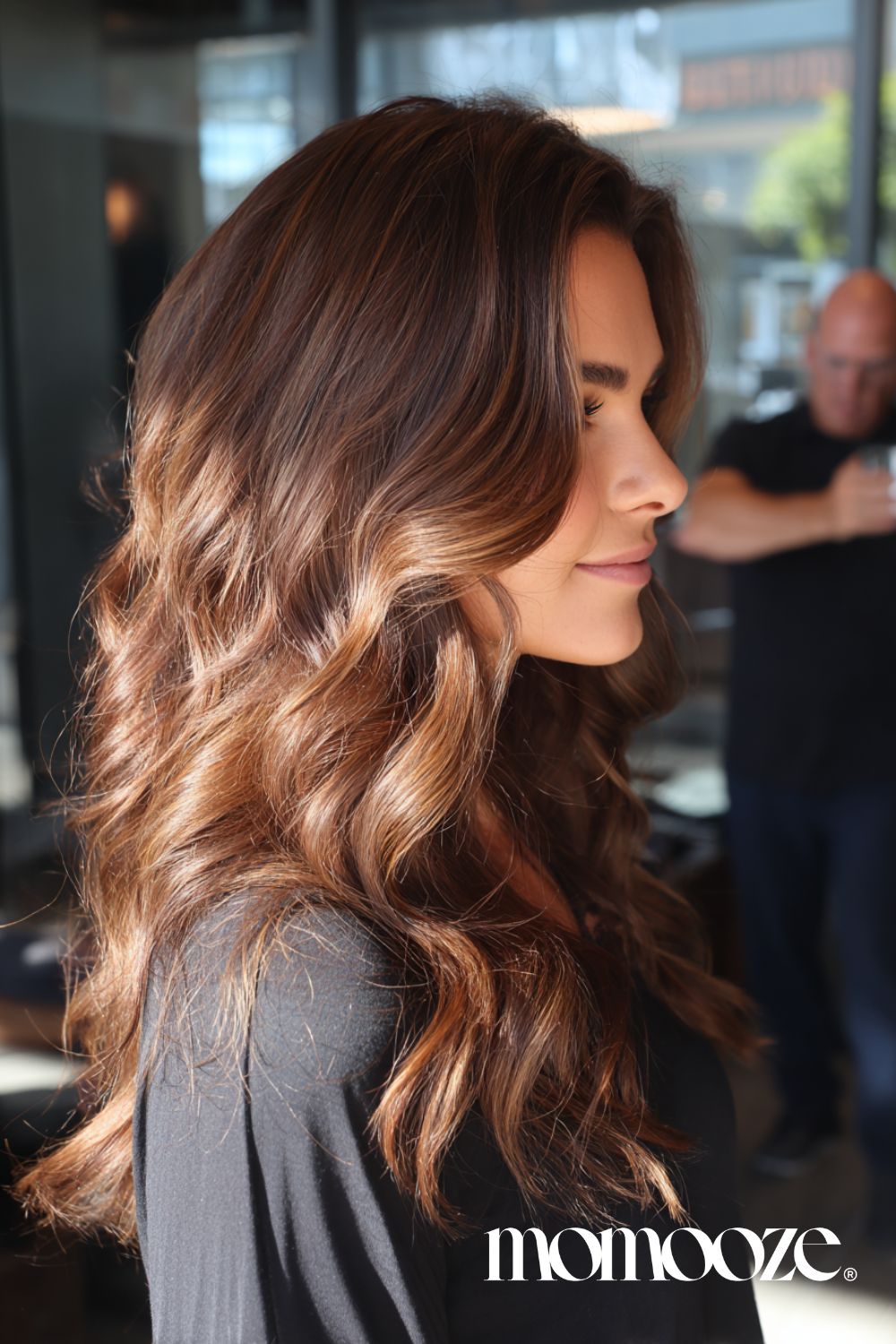
A side part shifts the weight, letting the warm balayage wrap around the front and fall into loose waves behind. The long layers keep the silhouette soft rather than heavy. Thick, wavy texture grabs the color in a way that mimics natural sun exposure, no uniform lift, just lighter pieces where the light would hit. No bangs, so the face-framing section becomes the focal point.
Works best on hair that is at least collarbone length and has some natural wave to it. Pass when you want a cool, ashy tone instead. Balayage on thick hair takes skill to place well, so the appointment runs closer to three hours. The payoff: a grow-out line that stays soft for months.
A low-maintenance option with air-dried blonde balayage
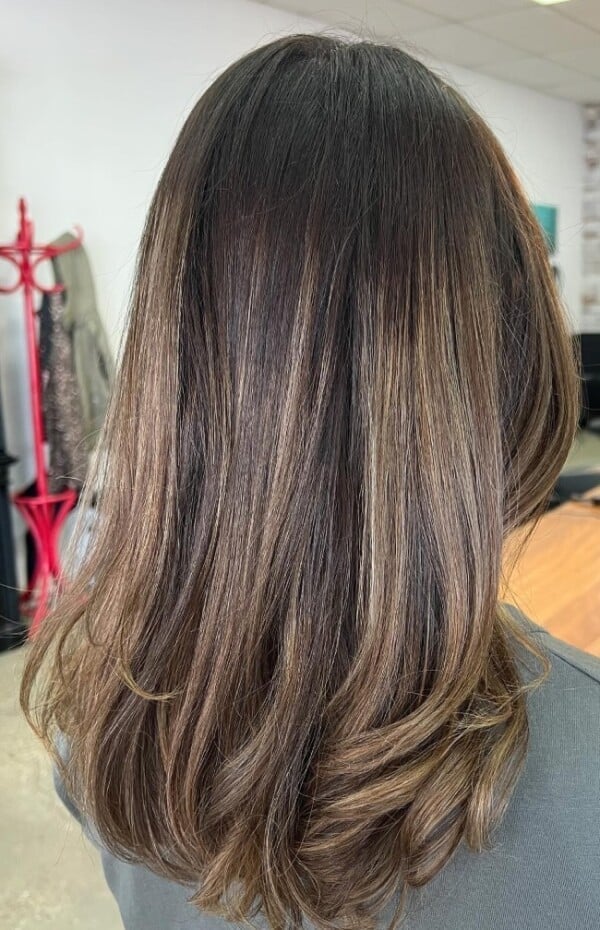
Fine, wavy hair benefits from a layered cut that lets the air-dried texture do the shaping. The dark brown base keeps the blonde balayage from feeling overdone, just a few lighter pieces lifting the overall tone. No bangs means zero morning fuss with a fringe that wants to kink. This option works best for those who embrace a natural texture, as air-dried fine hair can appear unpolished when a sleek finish is the goal. The cut needs a stylist who understands how layers behave when there is no heat styling involved.
A sharp dark brown lob with subtle caramel balayage
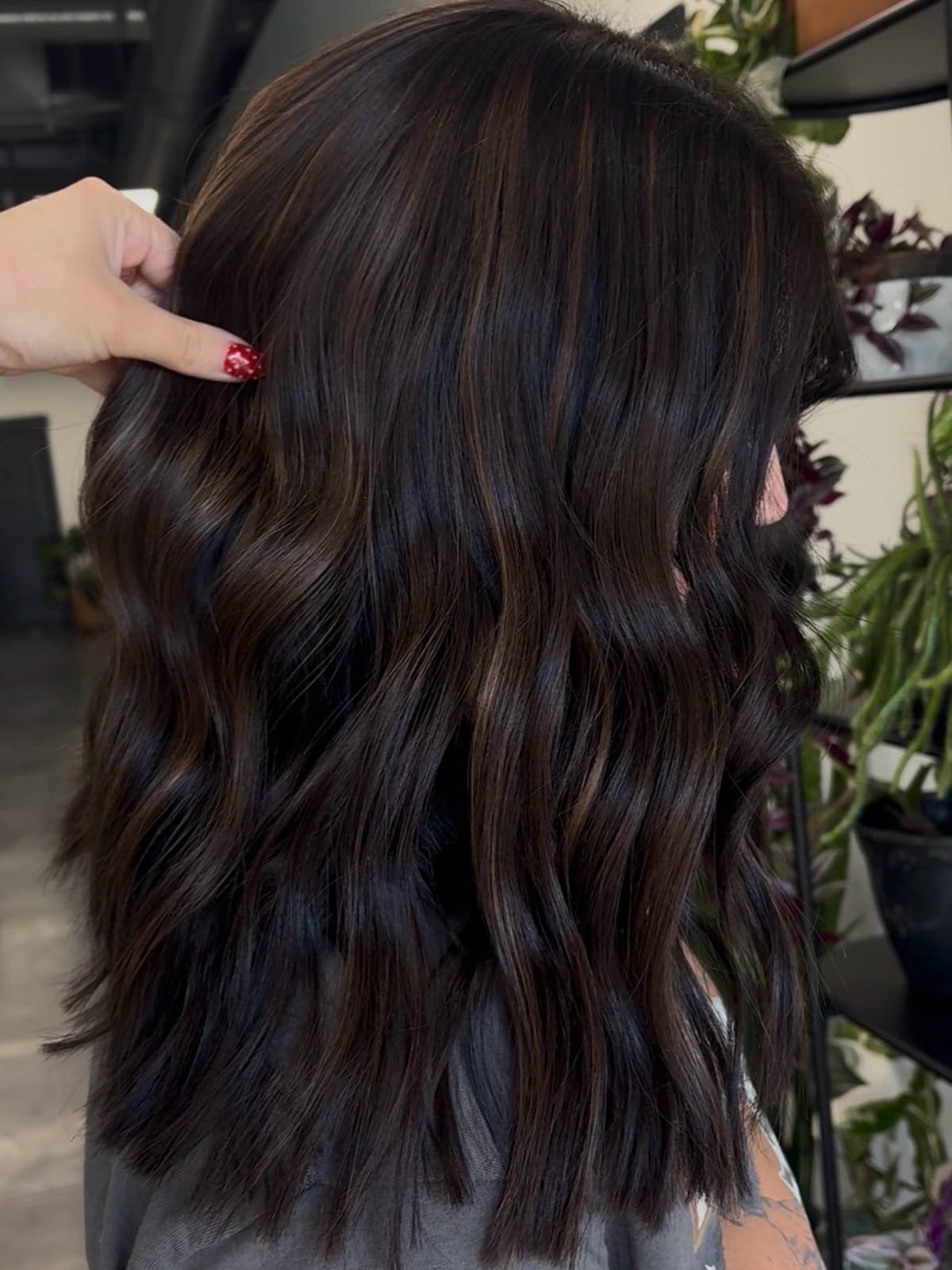
The lob lands at a length where the subtle caramel balayage reads clearly without needing a full head of color. A side part and wavy blowout add volume at the crown, balancing the weight of thicker hair. No bangs keeps the line clean and the grow-out easy. Suits fine to medium hair that is at least jaw length; skip it if you prefer long hair or a very dramatic color shift. A round brush during the blowout gives the waves enough structure to last the day.
Smooth ash blonde balayage transition on fine hair
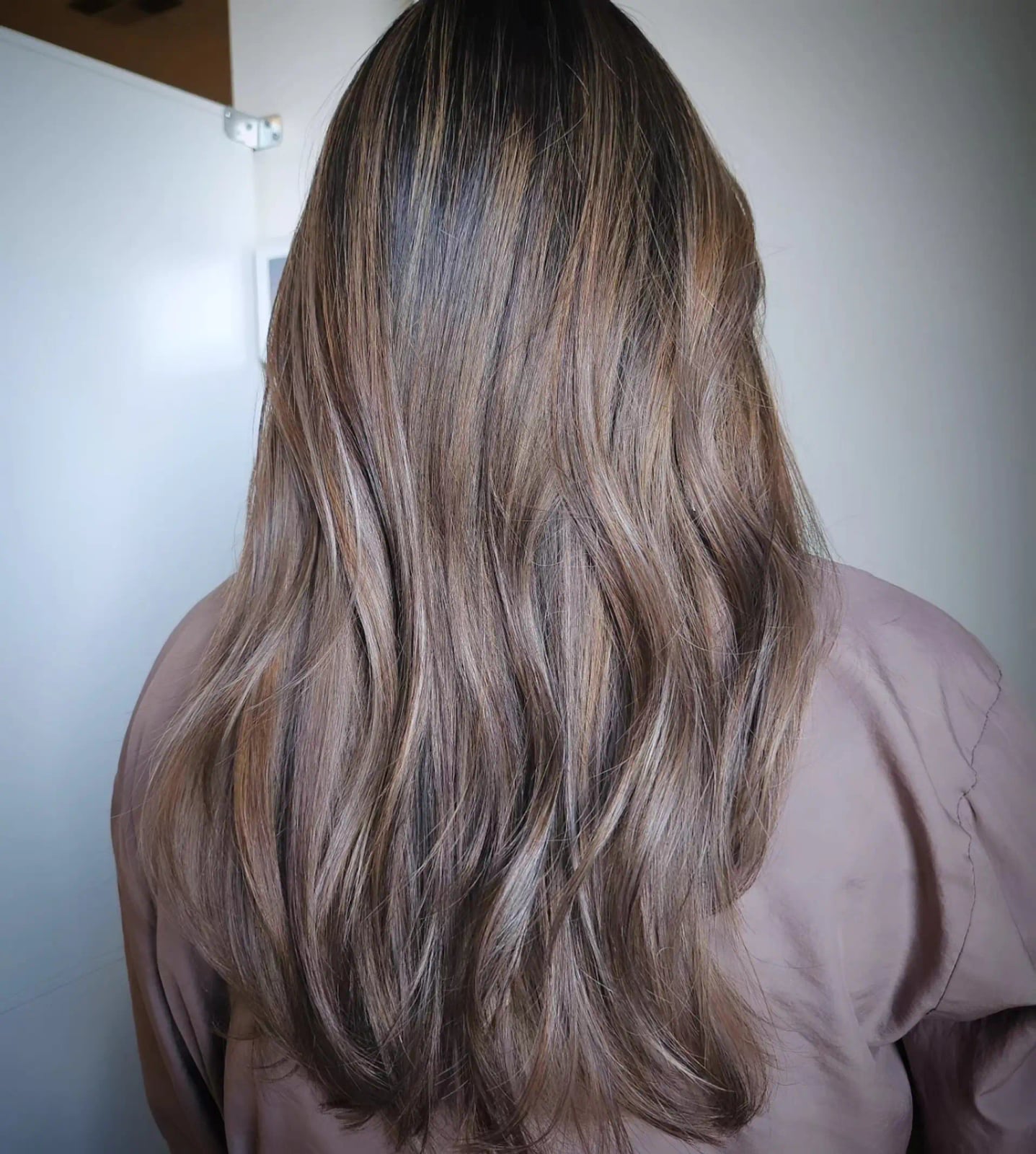
A dark brown base with ash blonde balayage requires a smooth transition so the contrast does not look harsh on fine hair. Soft layers cut through the weight, letting the air-dried texture move without falling flat. No bangs means the ash tone can sit evenly through the lengths. Tell your colorist: soft layers with smooth ash blonde balayage, air-dried finish. Works for fine, wavy hair at collarbone length or longer. It suits cool tones; warm tones or thick hair may appear heavy with ash shades. The balayage application takes precision to avoid a stripe effect, so budget for a skilled colorist and a toning visit at week four.
Smooth blonde balayage on long layered hair
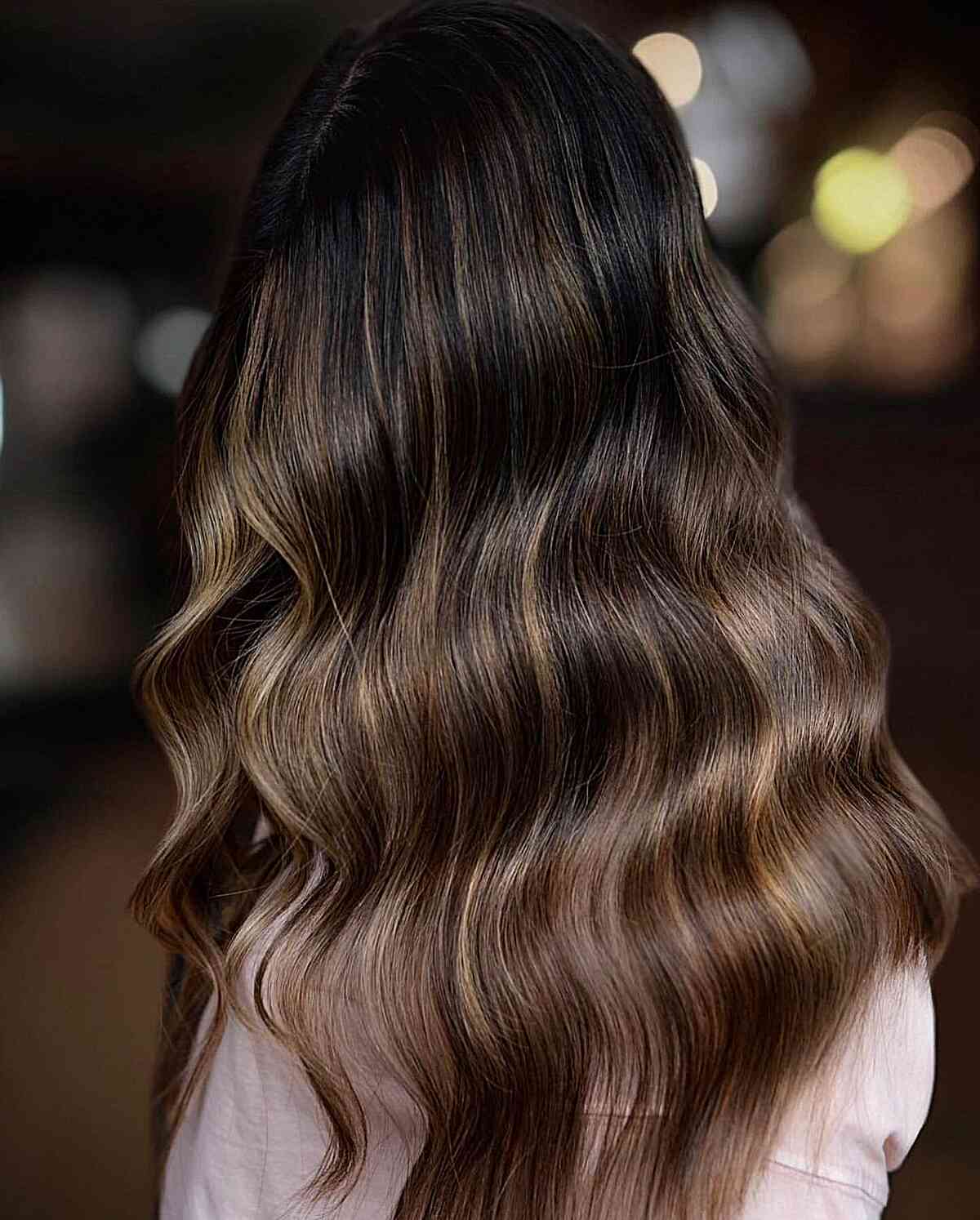
A smooth blonde balayage reads differently than a chunky highlight. Against a dark brown base, the transition looks almost airbrushed, no hard line where the color starts. Long layers keep the weight distributed so the wave has somewhere to go. A middle parting lets the lighter pieces fall evenly on both sides, which matters more than you think when the color is this deliberate. Thick, wavy texture holds the shape without fighting it. The catch: this only works if you have the density to support the layers. Fine hair will lose the wave by mid-day and the layers can look scraggly.
Dimensional blonde balayage on long wavy hair
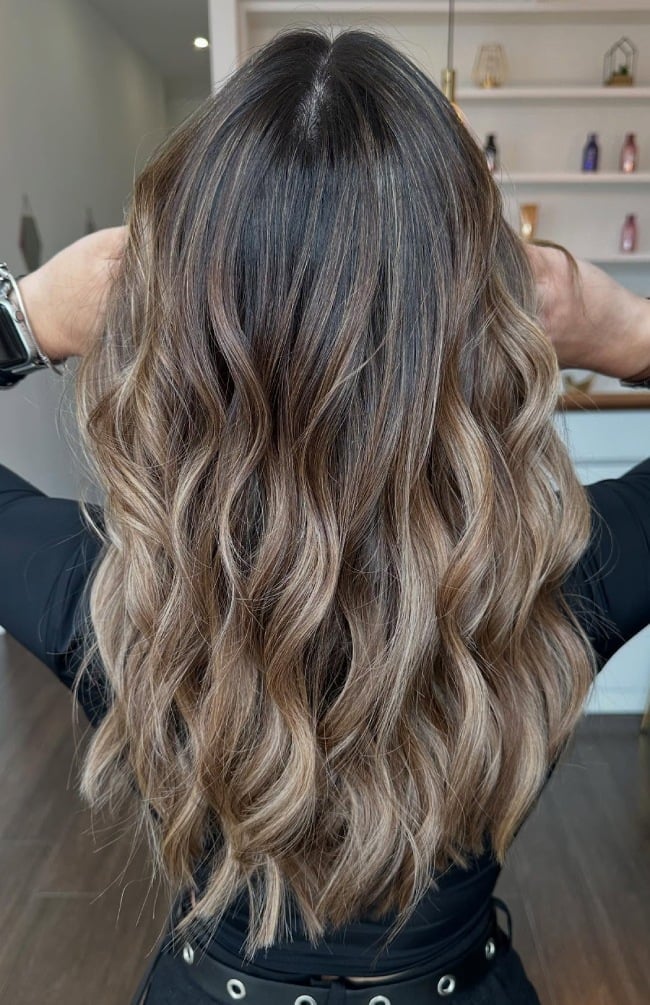
What makes this design work is the spacing. The blonde balayage pieces are placed far enough apart that the dark brown base looks the main event, not an afterthought. Subtle layers cut into long, thick hair keep the wave from turning into one solid triangle of volume. A middle part gives the lighter strands room to fall forward without crowding the face. The texture does the rest, wavy hair catches the lighter pieces at different angles, so the dimension shifts as you move. Skip it if your hair is fine. The layers will thin the ends too much and the color will look sparse instead of intentional.
Beachy waves with blonde balayage highlights
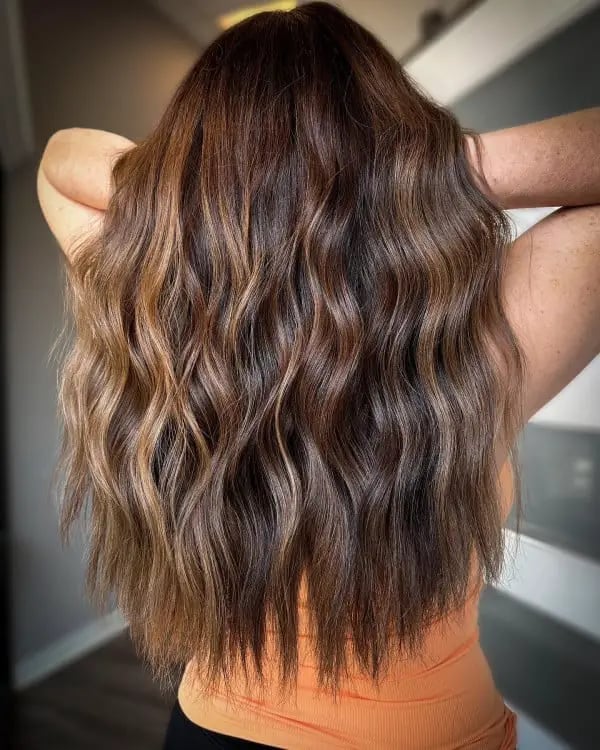
Blonde balayage woven through a dark brown base lands differently when the hair is styled into beachy waves. The lighter strands wrap around the curve of each wave instead of sitting flat on the surface. Long layers are the technical reason this works. They remove enough weight that the wave has a natural S-shape, not a bend. Thick hair is almost a requirement here; the color needs enough density to look like highlights, not a single wash of blonde.
Natural dimension with ash brown balayage on thick hair
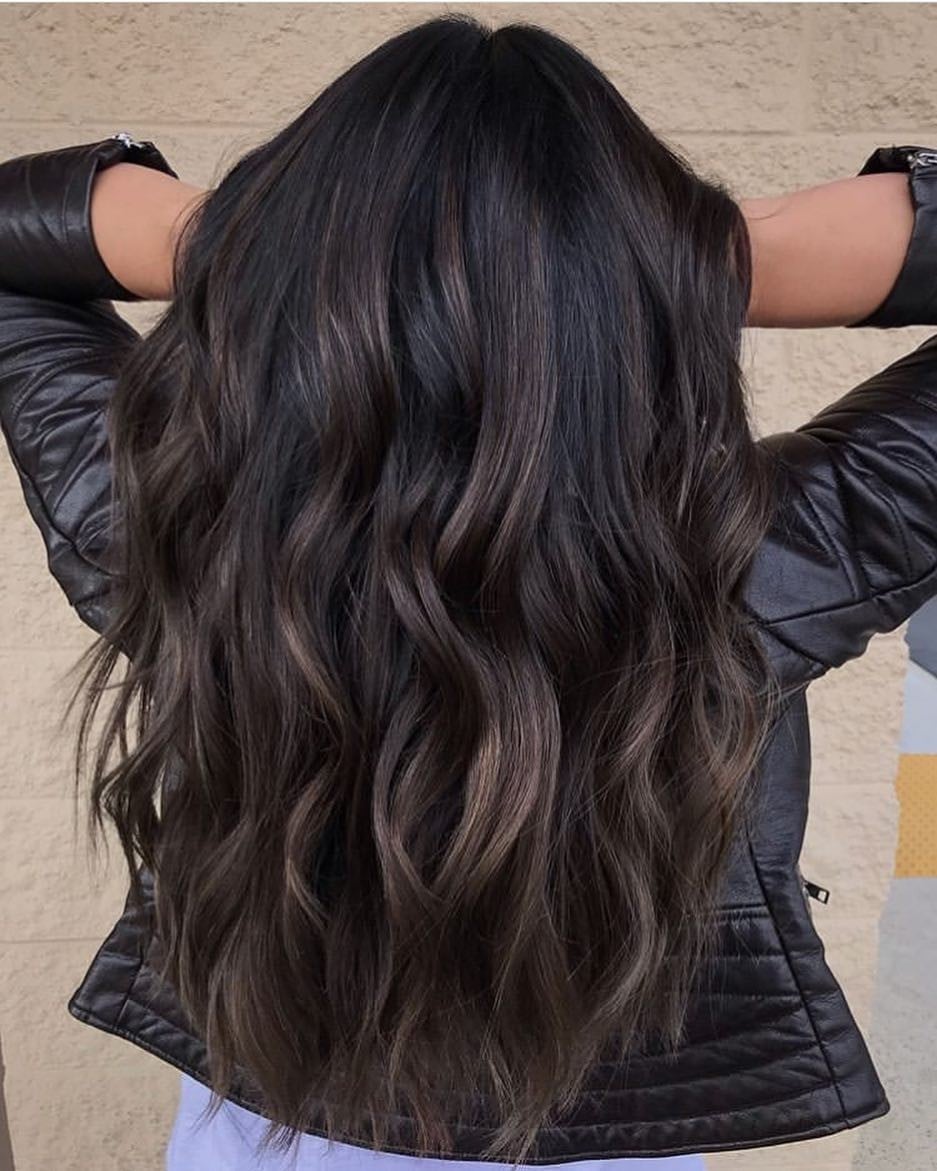
An ash brown balayage on a dark brown base is the quietest version of dimension you can get. No contrast that announces itself, the color shifts about a shade and a half down the length, just enough to keep the hair from looking like one flat block of brown. Long, thick hair styled in loose waves shows the transition best because the wave bends the color line. The cut stays simple: layers that start below the chin so the thick texture doesn’t get poofy at the ends. Not for anyone who wants their color to read from across the room. This one waits until you’re closer.
Face-framing blonde highlights on long layered hair
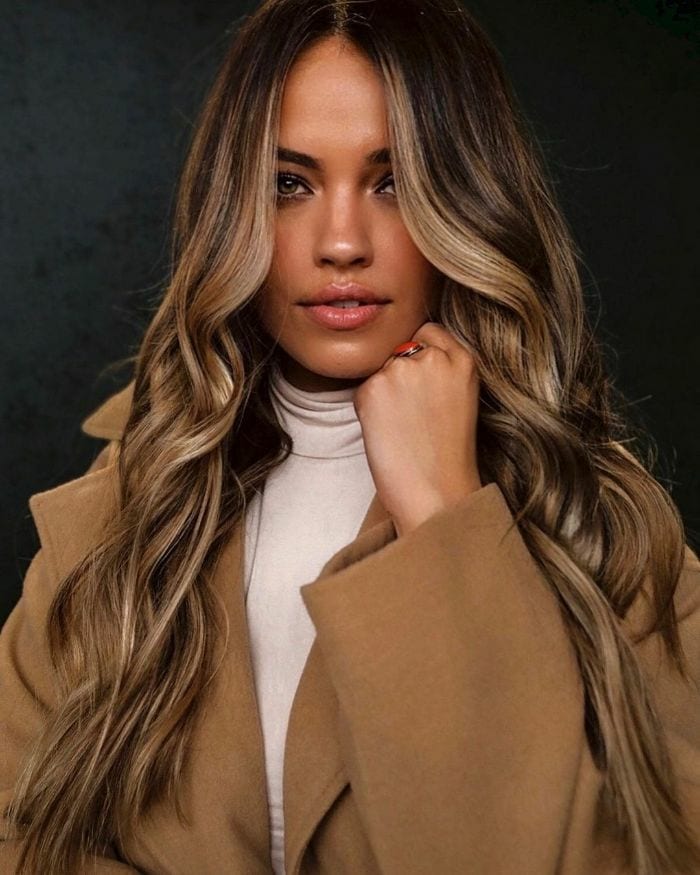
Face-framing highlights change the shape of the haircut without scissors. On a dark brown base, the blonde balayage is concentrated around the front pieces, so the lighter strands hit at cheekbone level and taper down through the layers. A middle parting keeps the placement symmetrical, both sides get the same lift around the face. Long layers support the loose waves that make the highlights catch the light instead of disappearing into the rest of the color. Thick, wavy texture helps the front pieces hold their shape. Pass when you prefer a uniform color all over. The front will always read lighter.
Brown balayage adds depth to layered waves
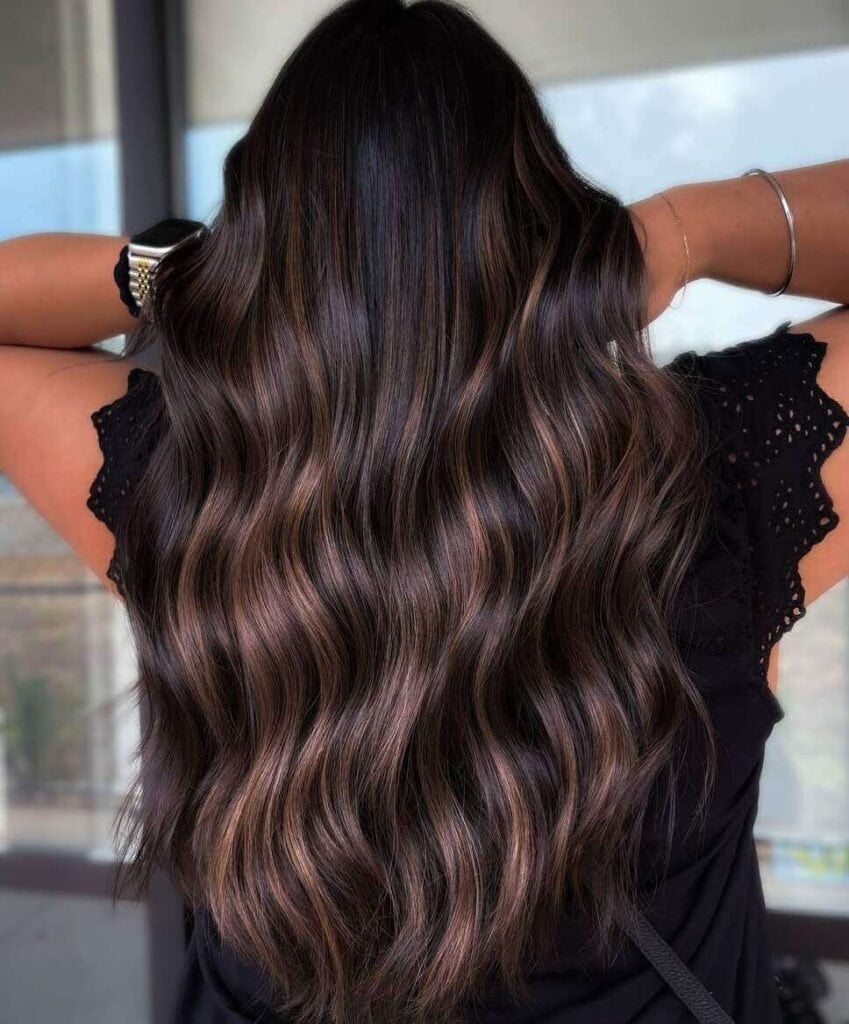
Thick wavy hair needs layers that keep it from getting too heavy. Long layers with a middle part let the dark brown base show through while the lighter brown balayage adds depth without looking busy. The wavy blowout gives it volume that actually lasts. It works best with a warm brown balayage. Tell your stylist: long layers with lighter brown balayage, wavy styling. Texturizing spray on damp hair cuts styling time in half.
Caramel balayage transition on thick wavy hair
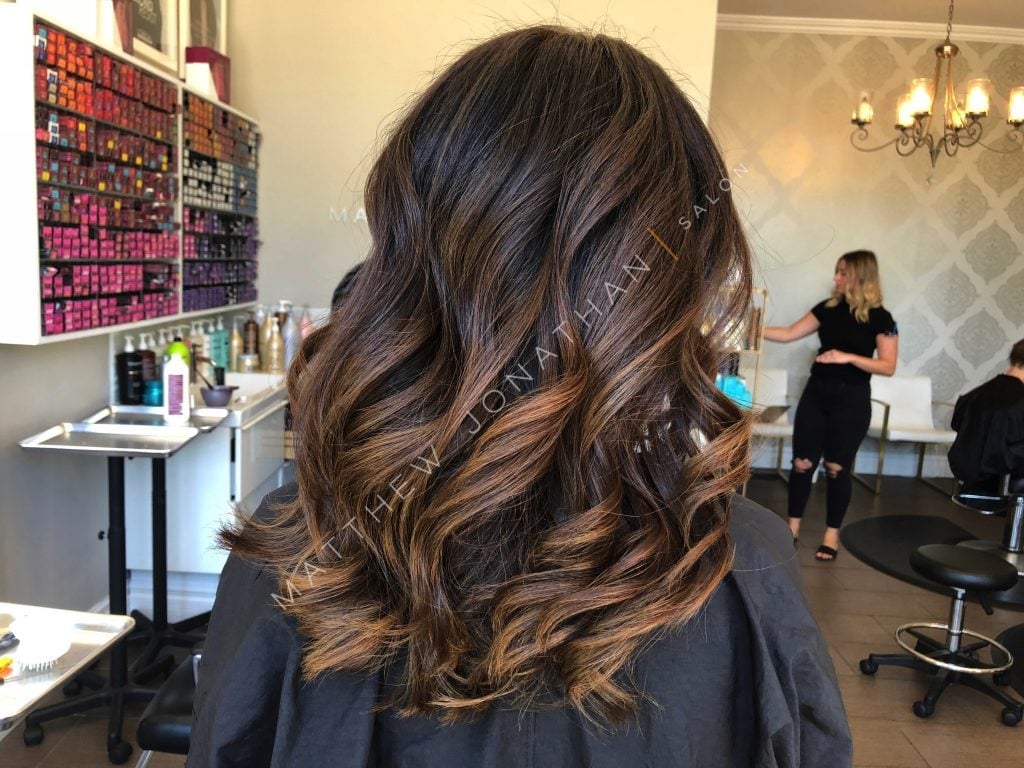
A subtle caramel balayage on thick wavy hair reads warmer than a full blonde highlight. The dark brown base at the roots keeps regrowth less obvious while the caramel pieces catch light around the face. It works best on hair that already has some wave. A blunt cut or fine hair may look weighed down. The contrast comes from a graduated transition, not a hard line. A smoothing serum at the ends controls any frizz from the layers.
A long layered cut with subtle brown balayage
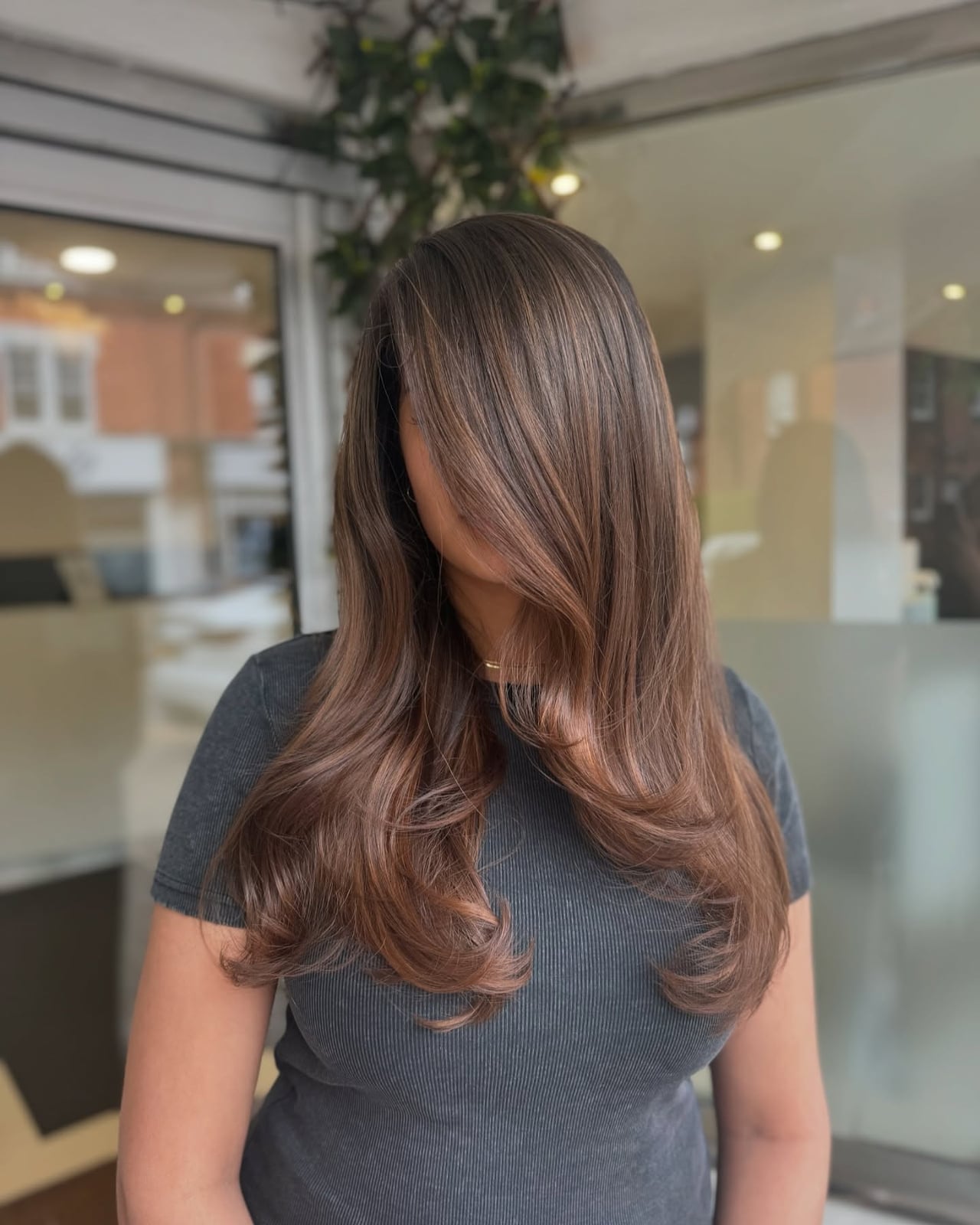
Subtle brown balayage on long layers is a low-signal approach to color. The dark brown base stays dominant while the lighter pieces add just enough variation to keep it from going flat. A side part shifts the weight and creates a natural face-framing effect that works for most face shapes. Skip it if you prefer high contrast or a blunt hemline. Tell your stylist: long layers with subtle brown balayage, soft waves, side part. A texturizing spray on dry hair gives the blowout some grip.
Caramel balayage framing the face with waves
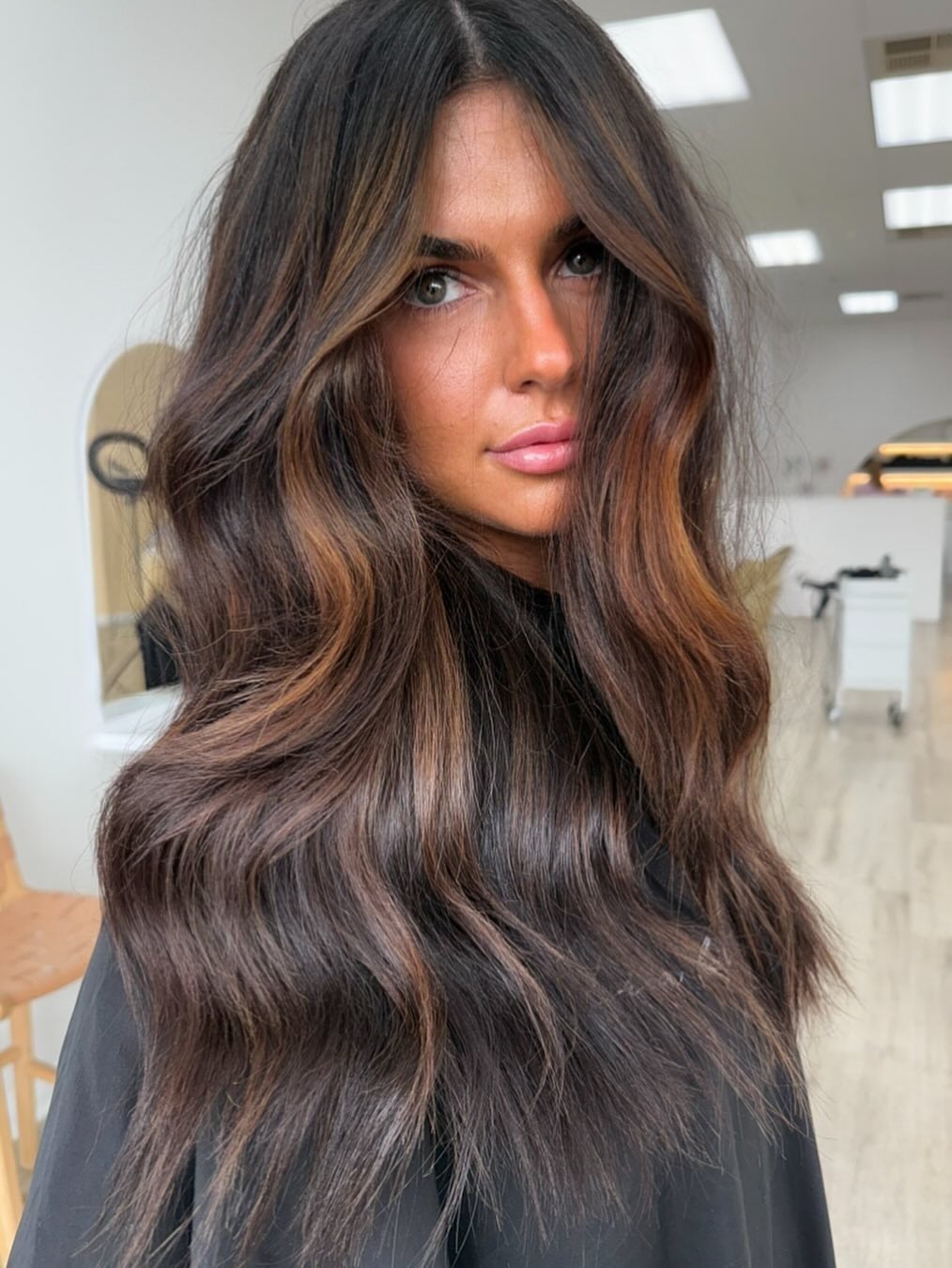
Caramel balayage placed around the face draws attention without needing heavy highlights throughout. The middle part and long layers let the color sit right where it matters most. Thick wavy hair holds the shape of a wavy blowout longer than straight hair does. It works best with warm tones and medium to thick hair. A heat protectant and round brush before the blowout keep the waves defined for two days.
Dimensional ash blonde balayage on fine wavy hair
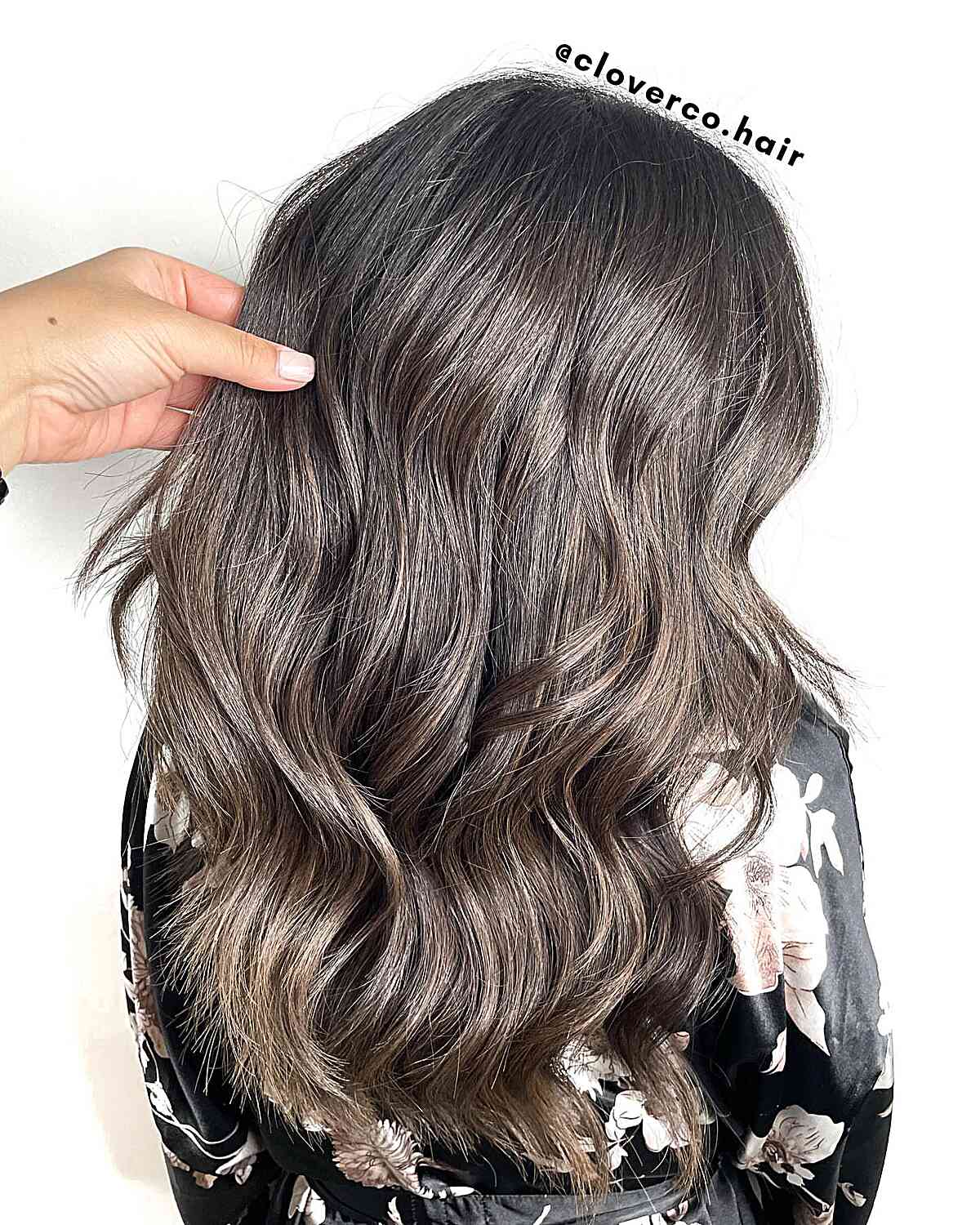
Ash blonde balayage on fine wavy hair adds visual weight without actual bulk. The dark brown base at the roots creates depth while the cooler blonde pieces give the waves a layered effect that looks more volume. A middle part keeps the distribution even. Not for anyone who prefers a warm tone or has thick hair that may appear heavy. Tell your colorist: layers with ash blonde balayage, middle part, wavy styling. A texturizing spray at the roots lifts fine hair through the second day.
A bob with caramel balayage and air-dried texture
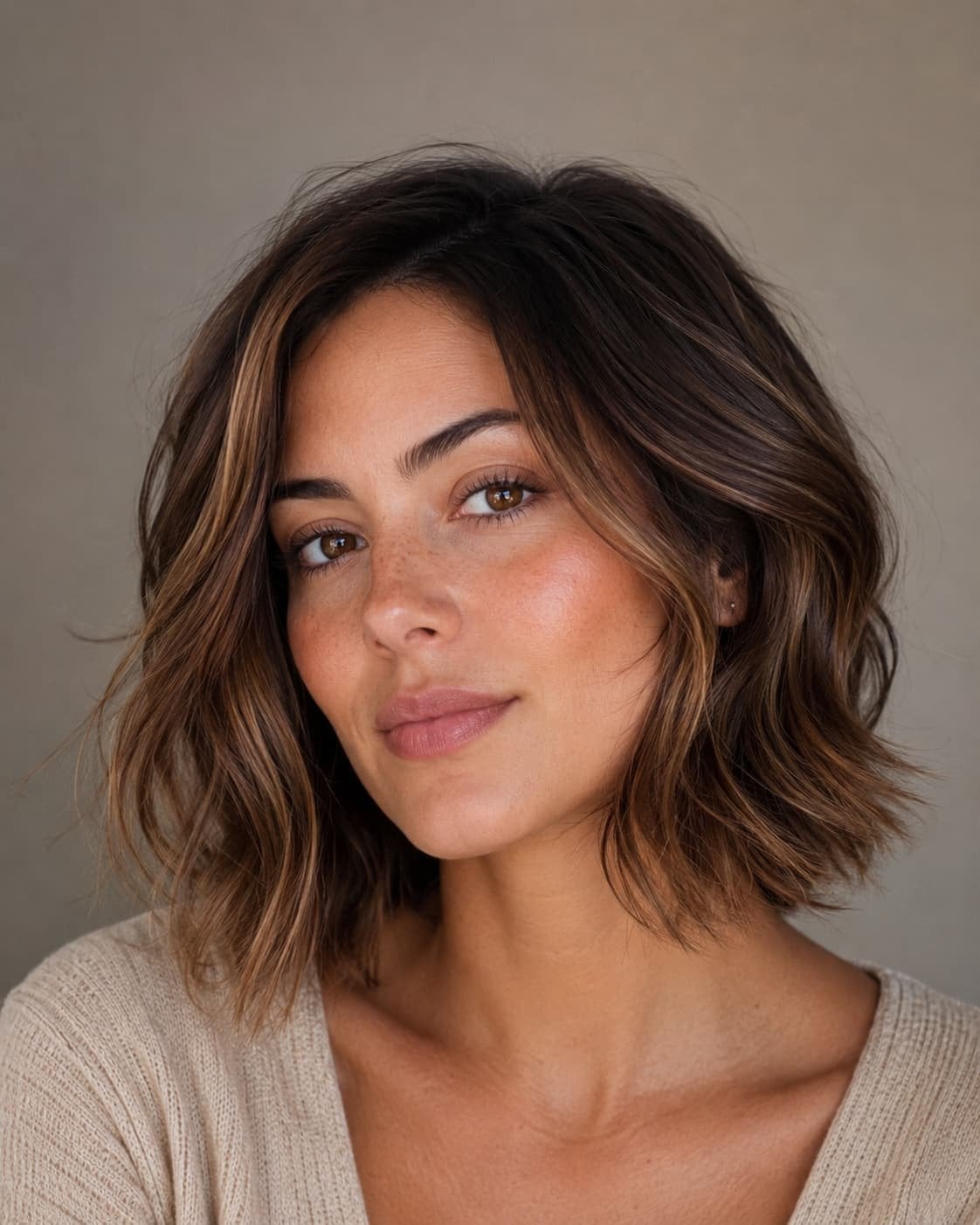
A side-part bob with face-framing layers keeps the caramel balayage visible even when the length falls forward. Fine to medium hair that is jaw length can pull this off without the cut looking too sparse. Long hair or a very dramatic color contrast is not the goal here, the dark brown base and caramel pieces aim for subtlety, not a statement.
Face-framing blonde highlights on long air-dried hair, wavy
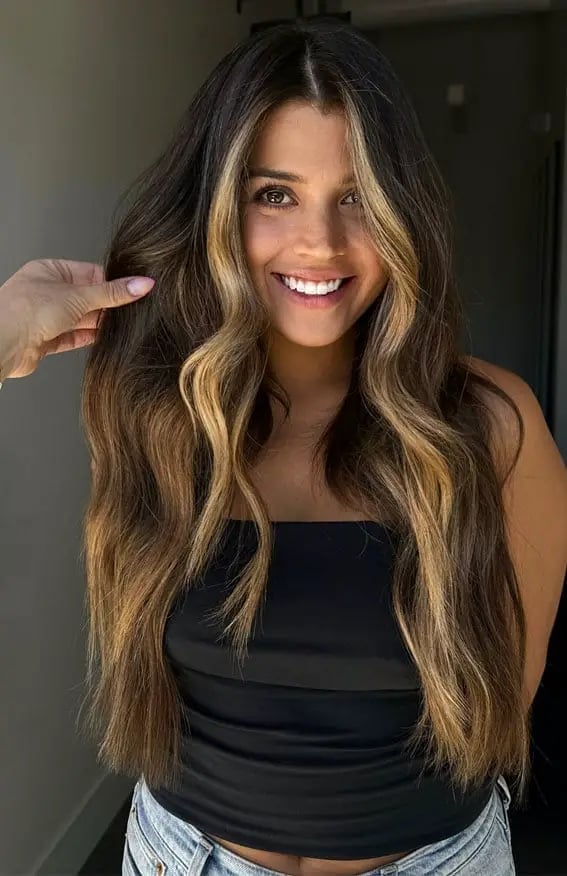
Tell your stylist: long layers with face-framing blonde balayage, middle part. The blonde pieces sit right where the hair meets the jaw and cheekbones, so the length stays dark. Thick, wavy hair that is collarbone length handles the weight of long layers without losing shape. A blunt cut or fine hair that is prone to losing wave may not work well with this style; the air-dried texture relies on natural density to avoid looking flat. A texturizing spray on damp strands defines the wave pattern without heat.
Blonde balayage on a dark brown base grows out softly because the color is concentrated on the front sections. The middle part keeps the face-framing pieces balanced on both sides. Styling time is short: scrunch and go.
Natural dimension with lighter brown balayage
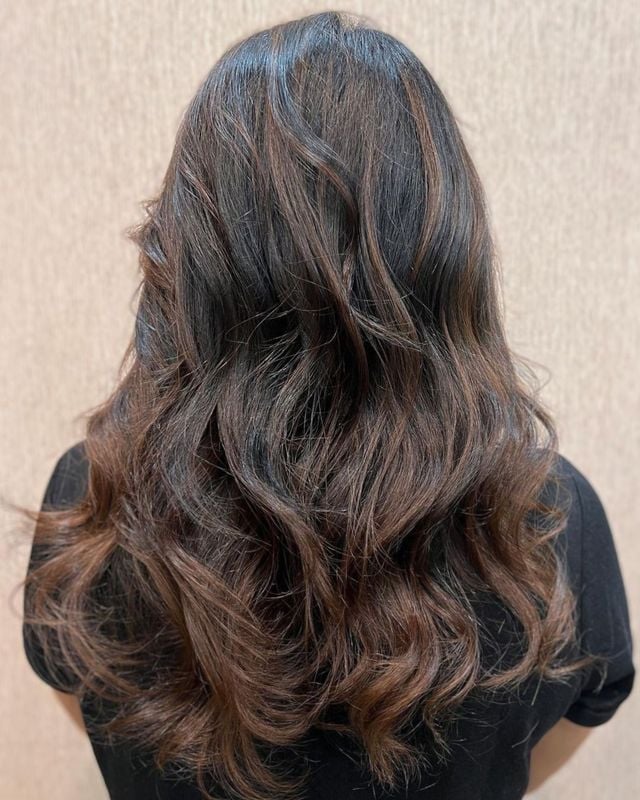
Where caramel balayage reads warm and deliberate, lighter brown balayage sits closer to the base shade. The contrast is there but it does not announce itself. Loose waves on thick hair show the lighter pieces as a soft lift rather than a stripe. Thick, wavy hair at collarbone length or longer holds the wave pattern long enough to make the dimension read. Fine hair may not hold the shape. A wavy blowout with a round brush gives volume at the roots and keeps the ends from looking too heavy.
A lob with blonde balayage and soft waves
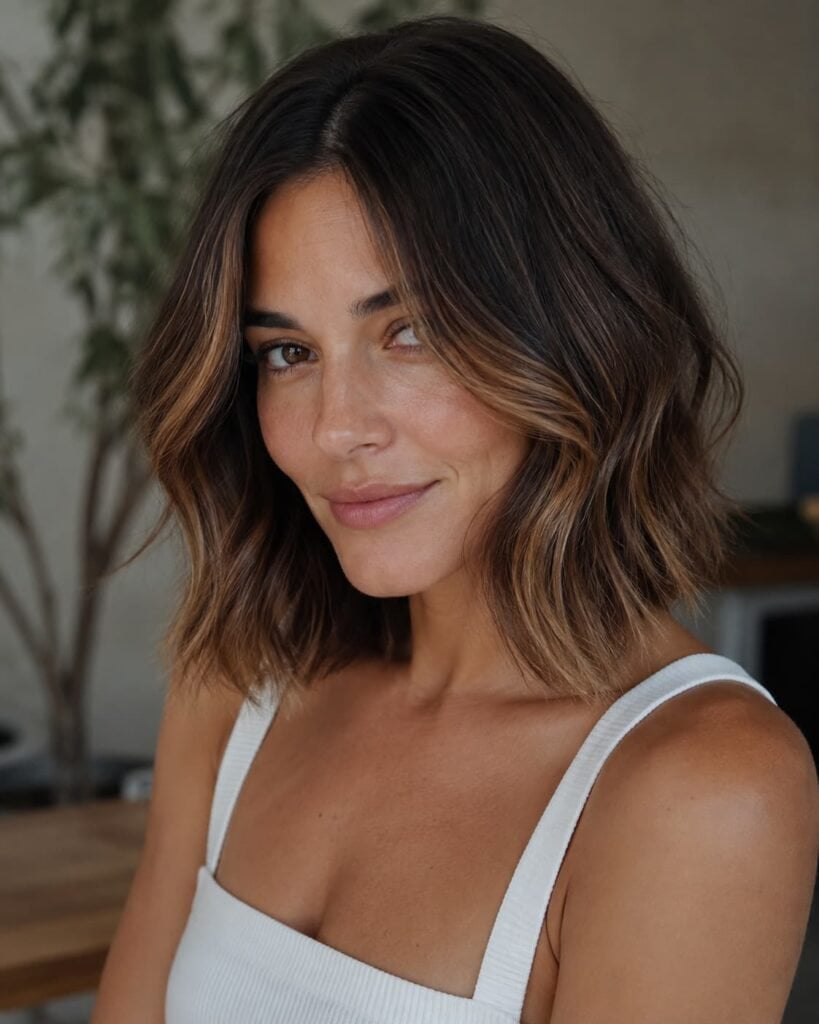
A lob with soft waves is a solid all-season shape. The blonde balayage on a dark brown base lifts the front sections without requiring highlights through the whole head. Fine to medium hair benefits from the blunt-ish lob line. It gives the ends weight. The cut works best on hair at jaw length or longer. Ask your colorist for: blonde balayage on a dark brown base. Ask your tech for: lob cut with blonde balayage, middle part, soft waves. Blow-dry with a round brush for volume that lasts through the day.
Caramel balayage highlights framing the face, wavy
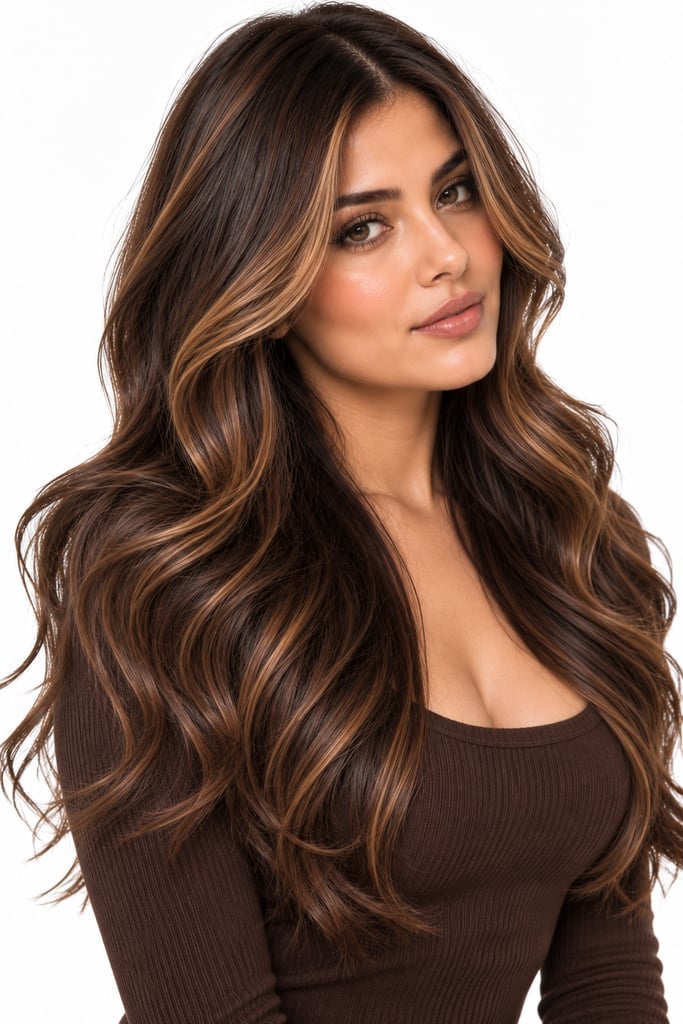
Long layers with a middle parting allow caramel balayage to sit where the hair bends at the cheekbone and collarbone. The warmth shows up in the wave peaks. Thick, wavy hair at collarbone length or longer gives the caramel pieces enough surface area to look dimension rather than a single stripe. The catch: if you prefer a cool tone, the warm caramel will fight your base. Styling with a heat protectant and a round brush produces a smooth wave that holds the color placement visible from the front. Caramel balayage on a dark brown base grows out gently, so you can stretch salon visits to ten or twelve weeks if needed.
Caramel balayage with soft side-swept bangs
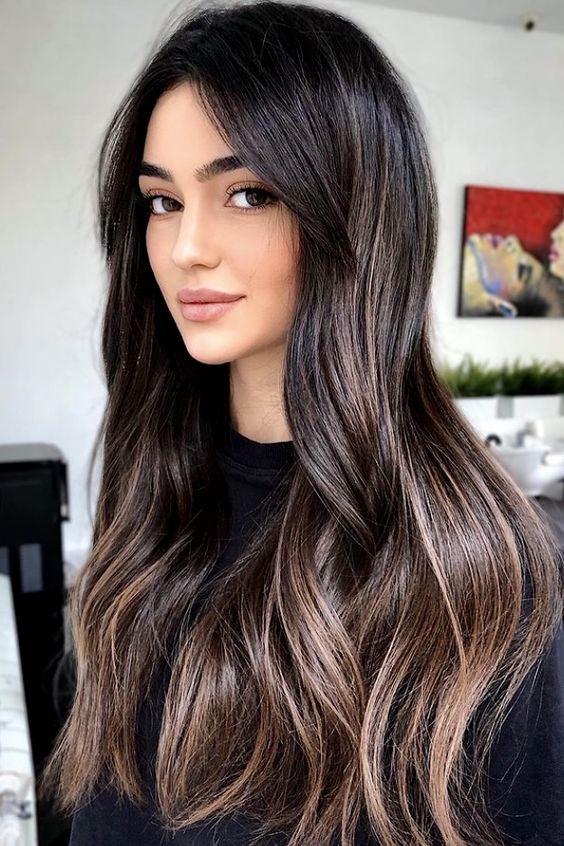
Side-swept bangs with a middle part offer a small rebellion against symmetry. Long layers drop from a dark brown base, with caramel balayage sweeping through the lengths in loose waves. Thick, wavy texture makes the color spread more naturally, no harsh lines where the caramel starts. The bangs hit just past the brow, soft enough to tuck behind an ear on day three.
A cool tone or bangs that require daily styling may not suit this look. Styling takes a round brush and five extra minutes on wash day. Tell your stylist: long layers with caramel balayage, side-swept bangs.
Ash blonde balayage with a wavy blowout
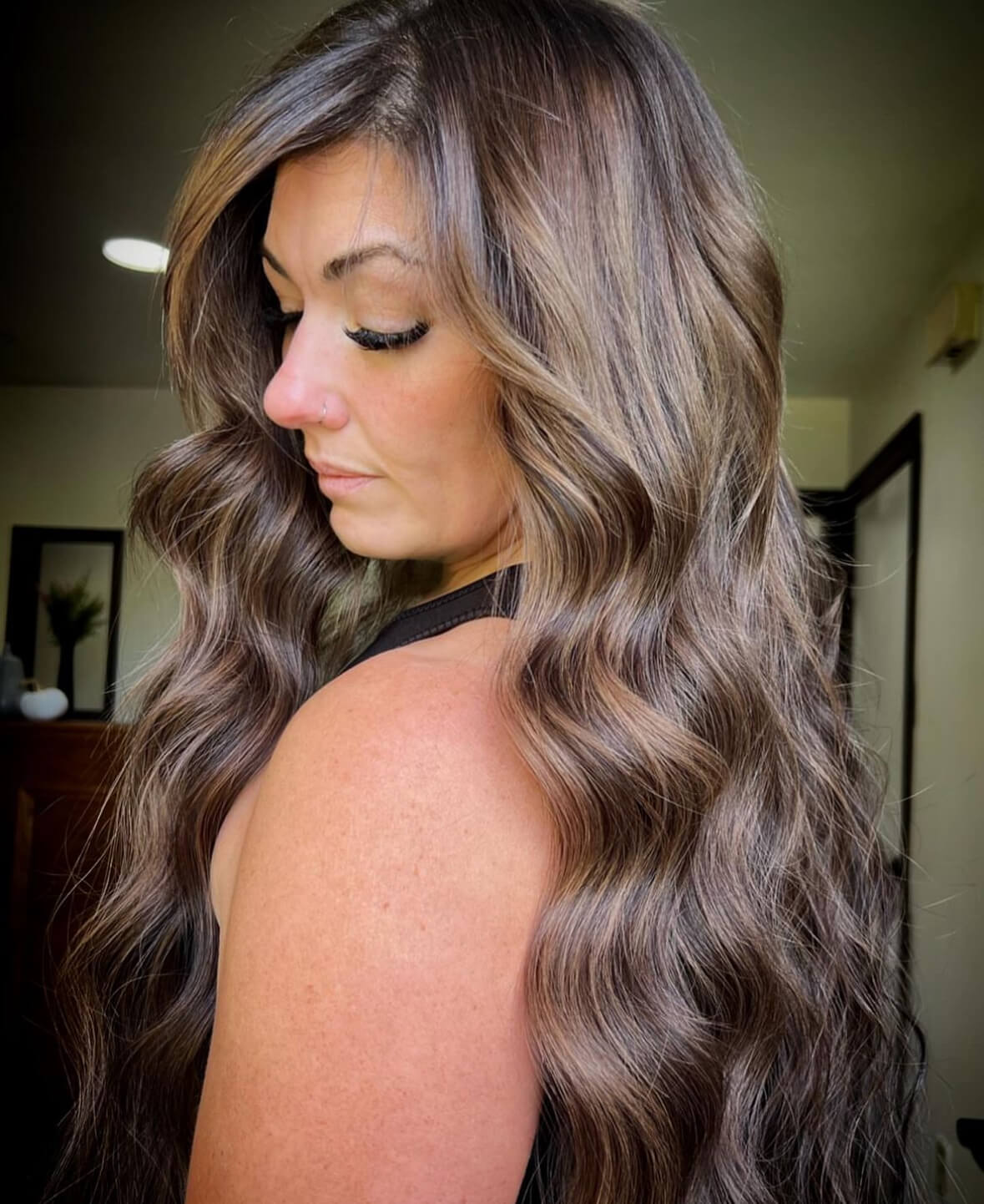
A practical rule: ash tones need a cool base to read correctly. Here the dark brown ground lets ash blonde balayage sit as a contrast, not a washout. Long layers with a side part give the wavy blowout structure, each wave stacks instead of tangling. Thick hair holds the shape through the day.
The catch: ash blonde pulls gray on some brown bases, so the toner matters more than the lift. Skip it if your natural base runs warm or you prefer a blunt cut with no layers. Book it as: long layers with ash blonde balayage, side part, wavy blowout.
Caramel balayage makes brown tones pop with waves
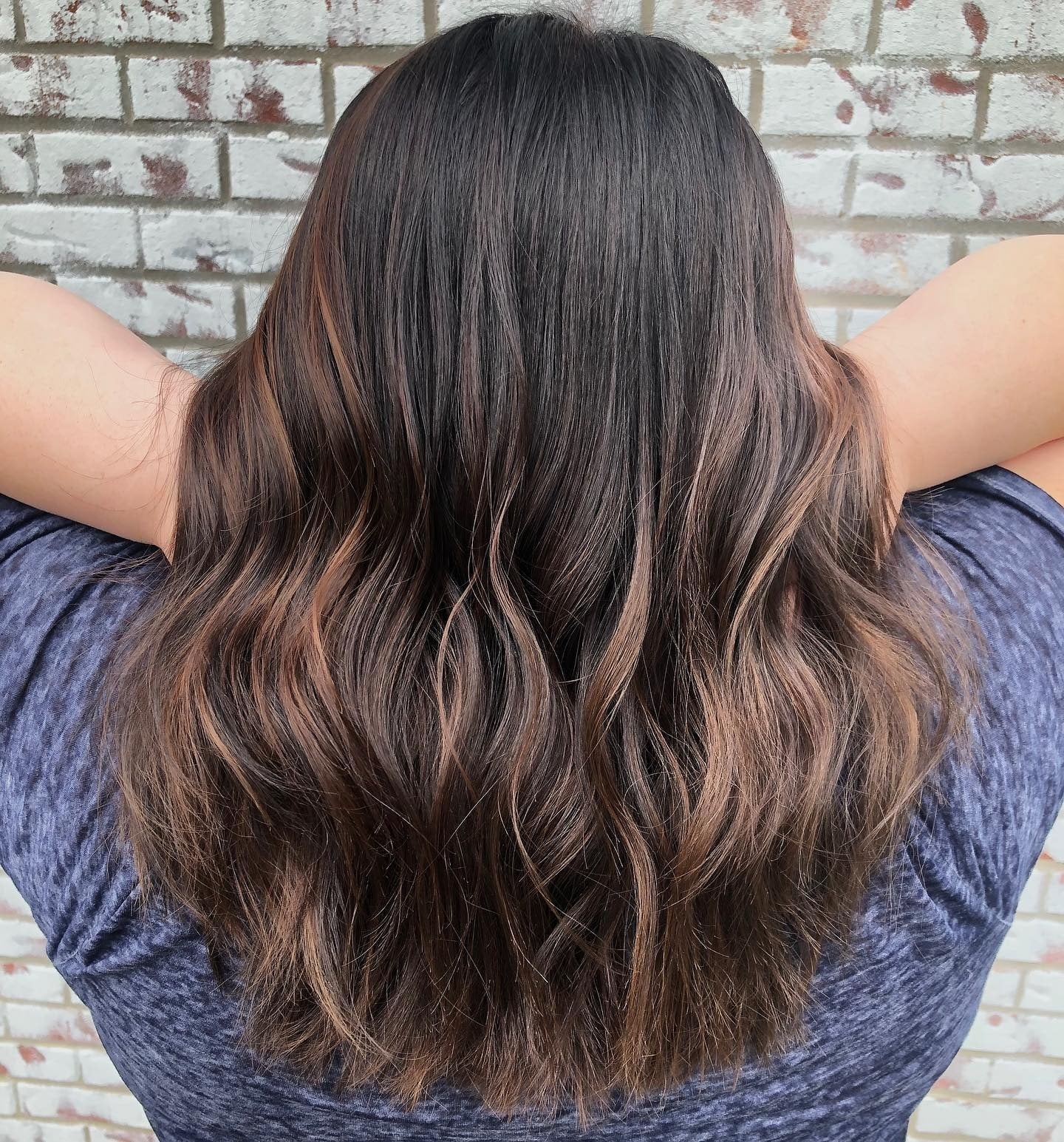
Subtle caramel balayage on thick, wavy hair works differently than the high-contrast version. The lighter pieces sit deeper in the lengths, catching the wave crests without announcing themselves. Long layers cut through the density so the caramel shows at the bend of each wave, not just the ends. From the back, the color looks a warm bloom off the dark brown base.
Ask your colorist for: layers with subtle caramel balayage, loose waves. This is not a color that demands a blowout, air-dried texture lets the caramel sit softer.
Final Thoughts
Pick the one that matches your morning timer and your natural wave.
- Fine hair: a softer blonde balayage with face-framing layers
- Thick wavy hair: caramel balayage with long layers
- Ten minutes in the morning: an air-dried lob with subtle brown balayage
- Cool base that pulls brassy: ash blonde balayage with regular toning
Find the brown balayage that suits your lifestyle and hair type.

