30 Beautiful Parts Braids 2027: Geometric & Heart Designs
Beautiful Parts Braids 2027 featuring geometric and heart parts, medium brown and black box braids with cuffs. See 30 braided hairstyles. Save your favorite.
You are scrolling through saved braid photos, but the part is always wrong for your face shape, or the braids look like they belong to someone with a different life entirely. That is the gap this collection fills, styles where the part and the braid work together, not against you.
30 styles that run from salon-required precision to a ten-minute weekend plait, which is why Beautiful Parts Braids 2027 fill so many saved boards. The struggle is finding the one that holds all day and still lets you sleep. Here it is.
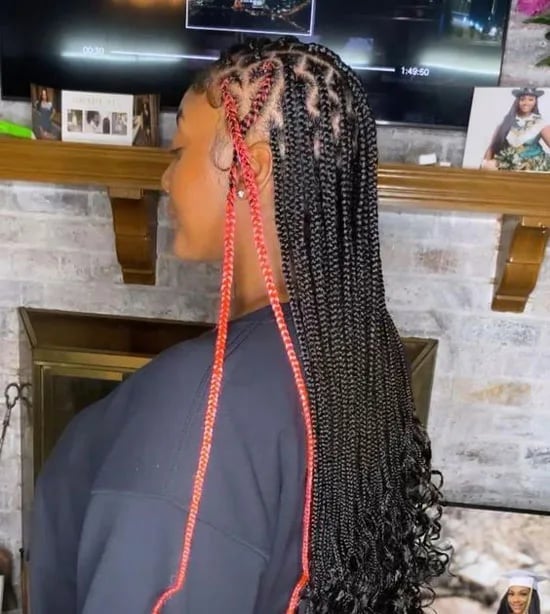
Heart-shaped part with red highlights in box braids
Red threads weave through the black base, concentrated at the heart-shaped parting. That single detail turns a standard middle part into the focal point. You need thick, wavy hair that can hold the braid size and the pattern. Fine hair risks the part shifting within a week. Loose waves at the ends keep the style from looking too rigid. Tell your stylist: box braids with heart-shaped part, red highlights, loose waves. The hold depends on the braid tension; a tight install buys you six weeks of clean lines.
Geometric parting in fine, coily box braids
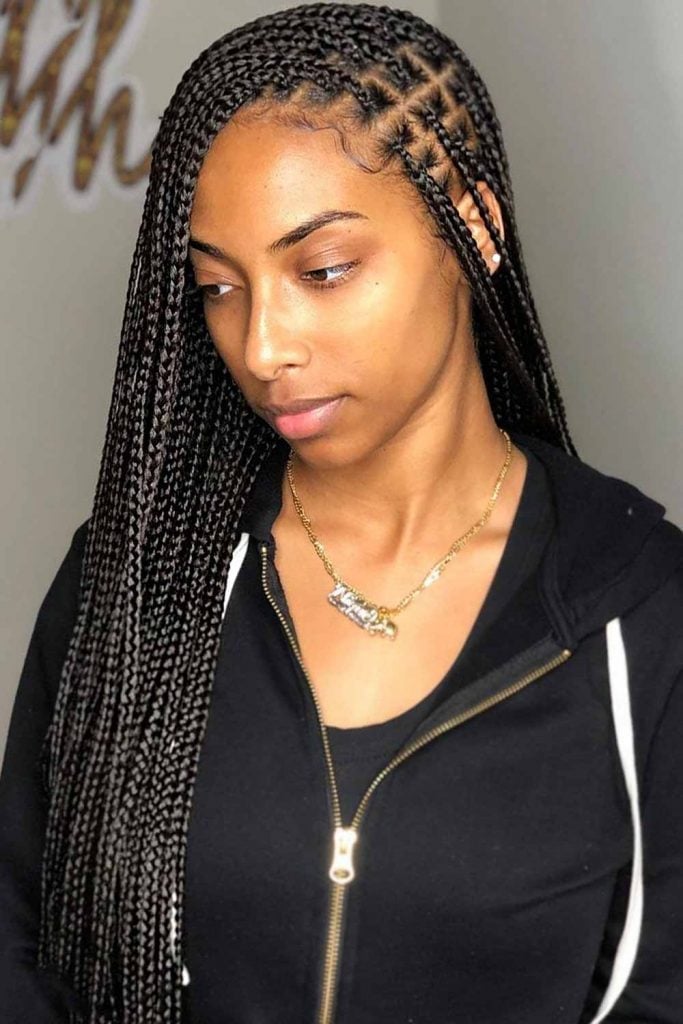
A precise geometric side pattern sets this apart from a standard middle part. Fine, coily braids hold the sharp lines better than thicker ones would. The deep black color keeps the focus on the structure. Not for anyone who wants to change their part daily. This pattern is fixed. The catch: the intricate parting takes twice as long to install, so expect a longer chair session. The hold is strong, but the thin braids can feel tight at the scalp for the first few days.
Black and silver box braids with geometric parts
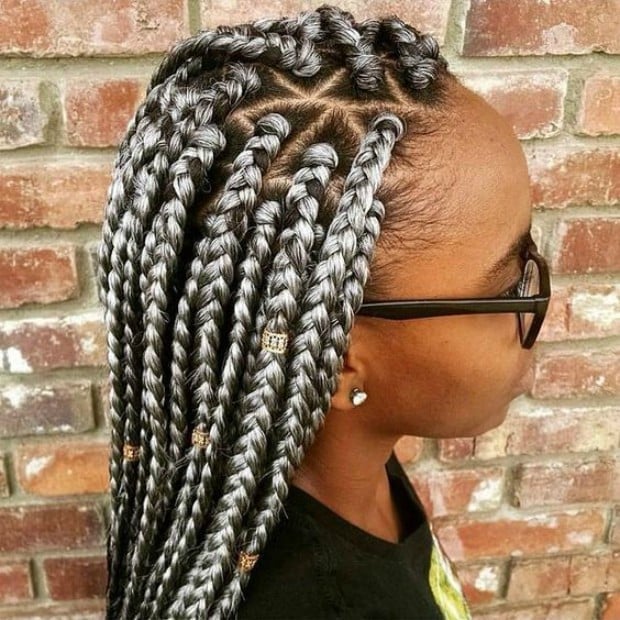
Two tones, black and silver, meet at a geometric parting that runs across the crown. The contrast makes the pattern read clearly even from a distance. Gold beads on a few braids add shine without overwhelming the design. This is a salon look, not a weekend project. The parting requires a steady hand and a clear reference photo. Thick hair is the starting point; thin strands won’t support the weight of the beads. Book it as: box braids with geometric parting, black and silver color, gold beads.
Precise geometric parts in medium brown box braids
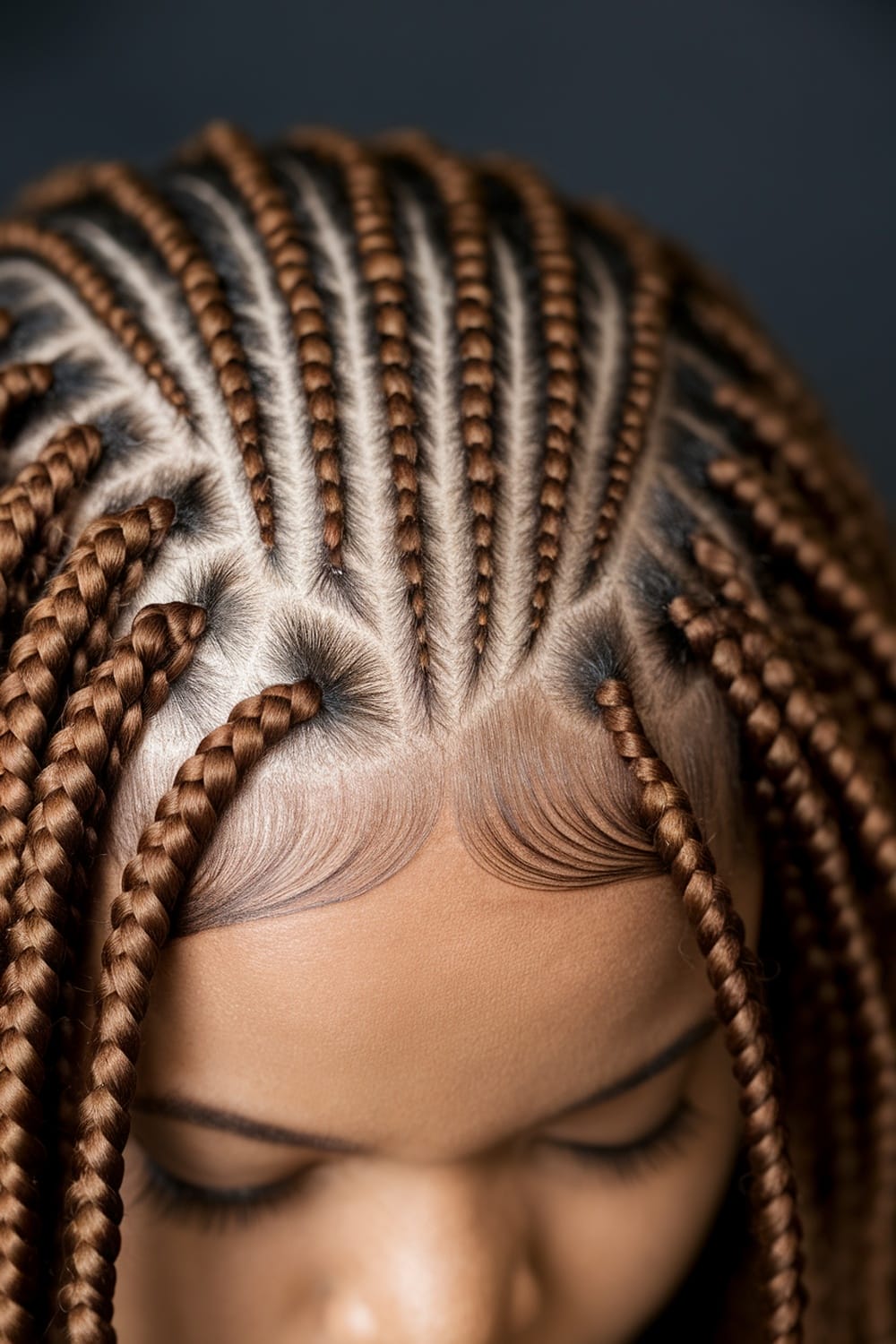
How do you get parts this clean without spending all day in the chair? The answer is a stylist who works with a comb and sectioning clips, not freehand. Medium brown box braids with straight, thick texture hold the geometric lines without frizzing at the edges. The middle part is the anchor; the side patterns branch off from it. Straight hair is the ideal canvas here, coily strands can blur the precision. Tell your stylist: box braids with precise geometric parts, medium brown color.
Gold cuffs on neat box braids side part
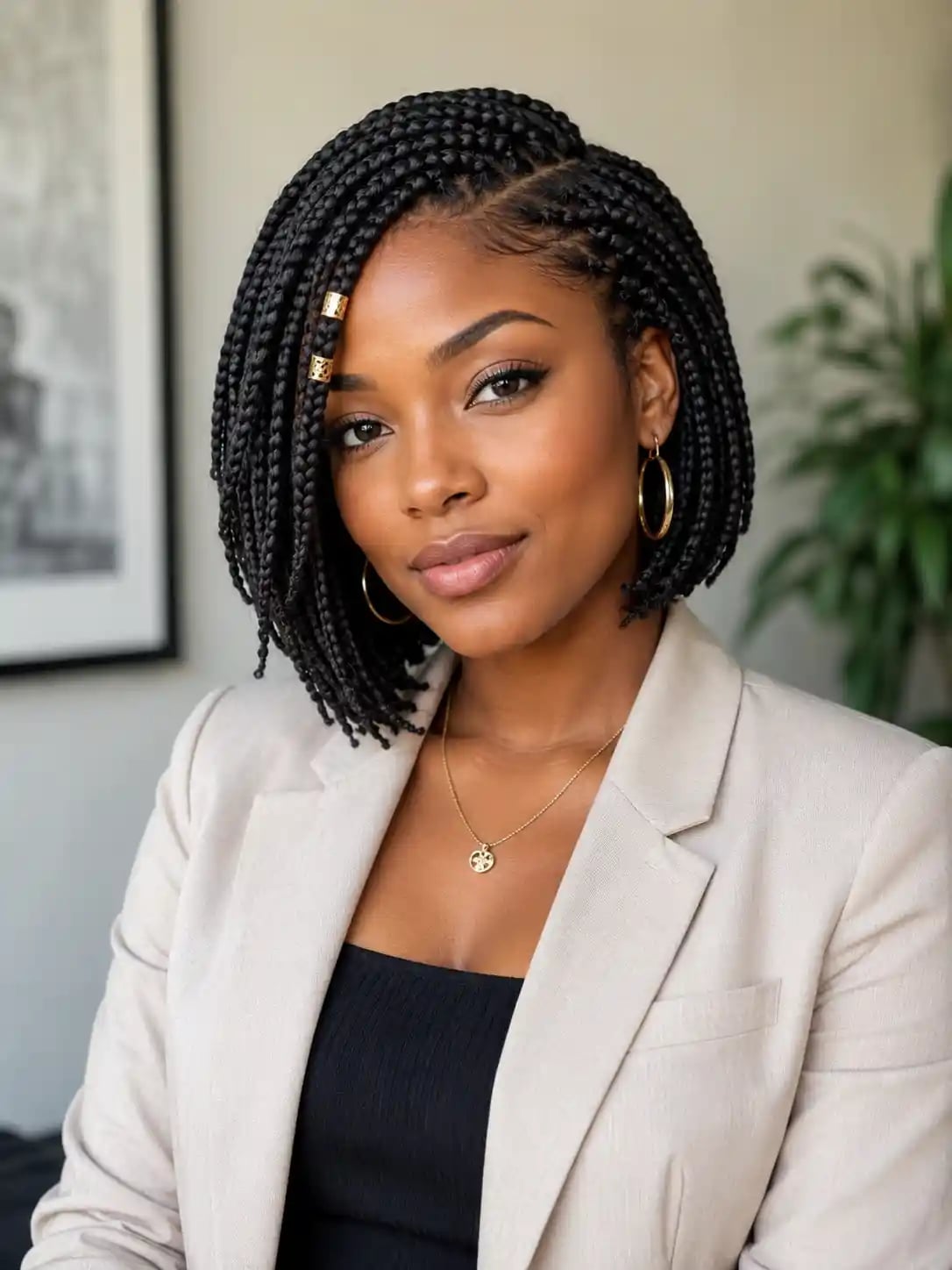
Gold hair cuffs add shine against black box braids. Neat braids with a deep side part keep the look neat and salon ready. Coily, thick hair gives the braids enough substance to hold the cuffs in place without slipping. Fine hair will struggle with the weight, the cuffs pull at the roots. The side part adds volume on one side, balancing a round face. The cuffs stay put for the life of the braids.
Geometric part on black box braids in a top knot
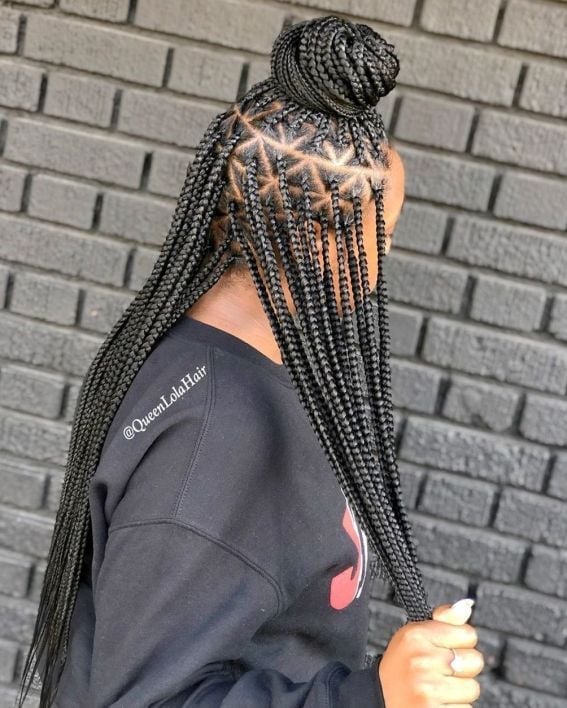
Precise lines angle off the crown, meeting at a center point that reads less like a part and more like a blueprint. The black box braids are thick enough to hold the geometry visible even from a side view, which is the whole trick. You need hair that stays where it is placed for this to look intentional. Straight, thick texture does the job. The catch: the pattern shows every stray strand, so a firm gel along each line is non-negotiable on installation day.
Request this style: box braids with a geometric parting. The color stays solid black, which keeps the focus on the angles rather than a tone shift. About two hours in the chair for the parting alone, plus the braiding time. A strong-hold edge control keeps the lines crisp between appointments. Skip it if you prefer a softer, less structured look or plan to wear the braids loose often.
Cornrow patterns with baby hairs and middle part
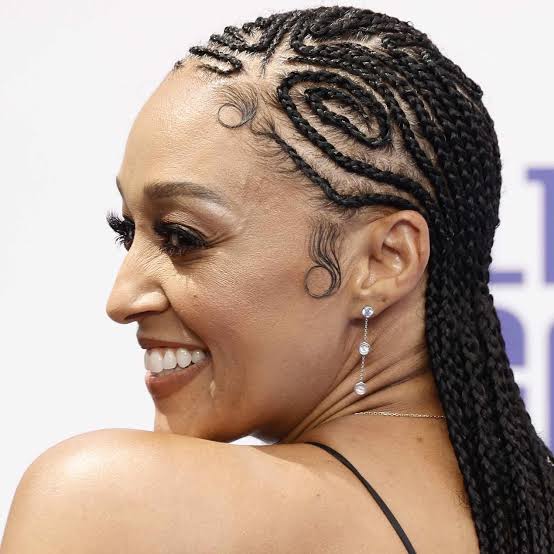
Where a standard cornrow setup runs straight back, this one curves. The rows arc from the middle part toward the temples, then sweep into long black braids that fall past the shoulders. Thick, coily texture lets the stylist create those curved lines without gaps. The baby hairs are not an afterthought here. They are brushed into small swirls that soften the scalp pattern, which tends to read severe without them. A middle part keeps the design symmetrical, so one side does not pull tighter than the other. This is a salon-leaning look for a reason. You cannot curve a cornrow on fine hair without it unpinning by lunch. The whole thing holds for about two weeks before the edges need a reset. A soft brush and a water-based gel are your daily tools.
Sleek cornrows into long braids with laid baby hairs
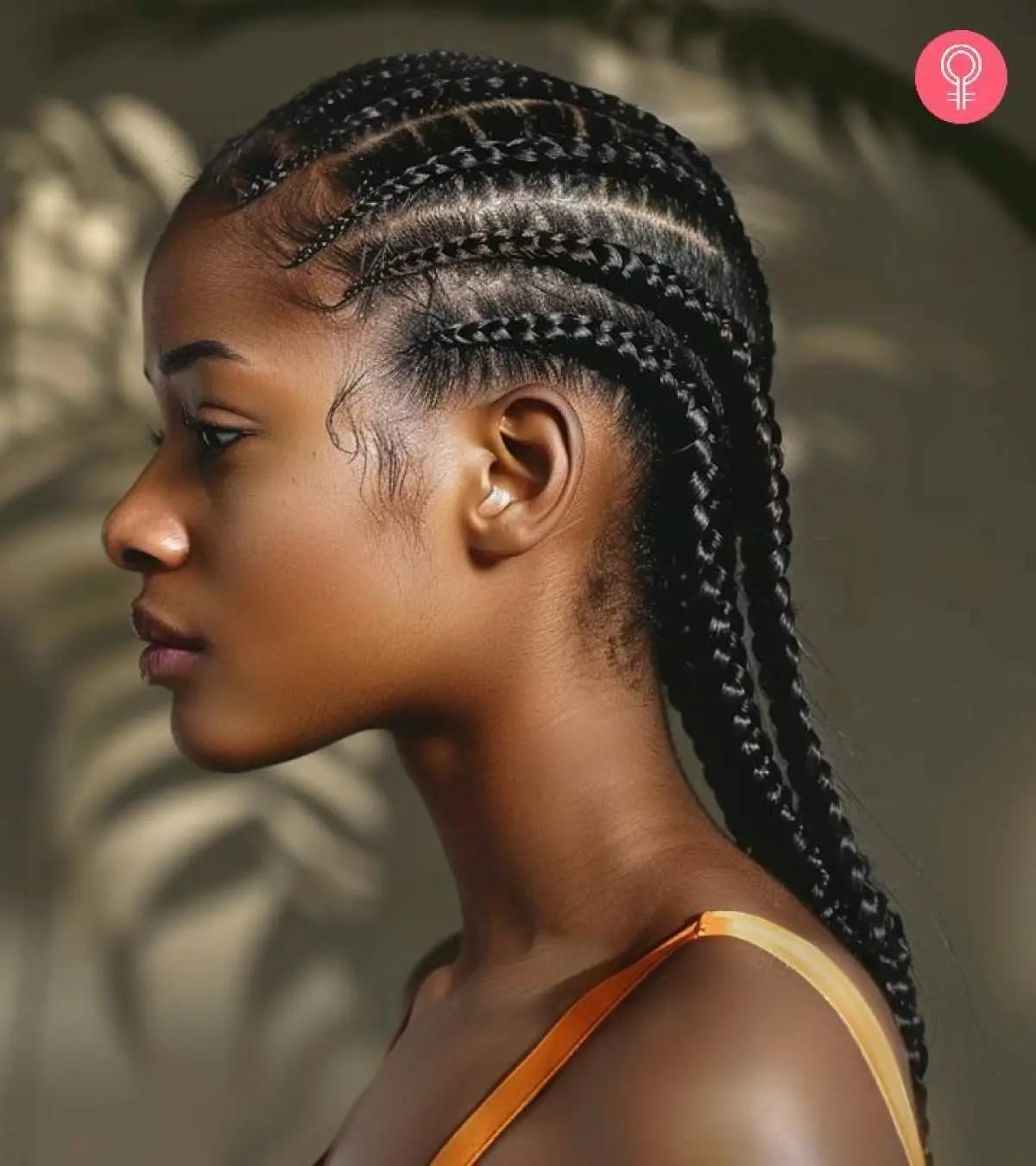
The rule for this one is simple: the scalp work determines whether the braids look expensive or rushed. Neat, middle-parted cornrows run from the hairline to the nape, then release into long black braids that hang straight. The baby hairs are laid flat, not curly, which gives a neat finish that works for a client meeting or a dinner reservation. Thick hair is the baseline here. Thin sections would expose too much scalp between the rows. The styling is sleek, so a light serum on the braids keeps flyaways from forming by mid-afternoon. Request: cornrows into long braids with laid baby hairs. The upkeep is moderate. Re-braid the front rows every two to three weeks. Pass when you prefer a looser texture or cannot commit to the edge routine.
Cornrows lead to voluminous curly cascade
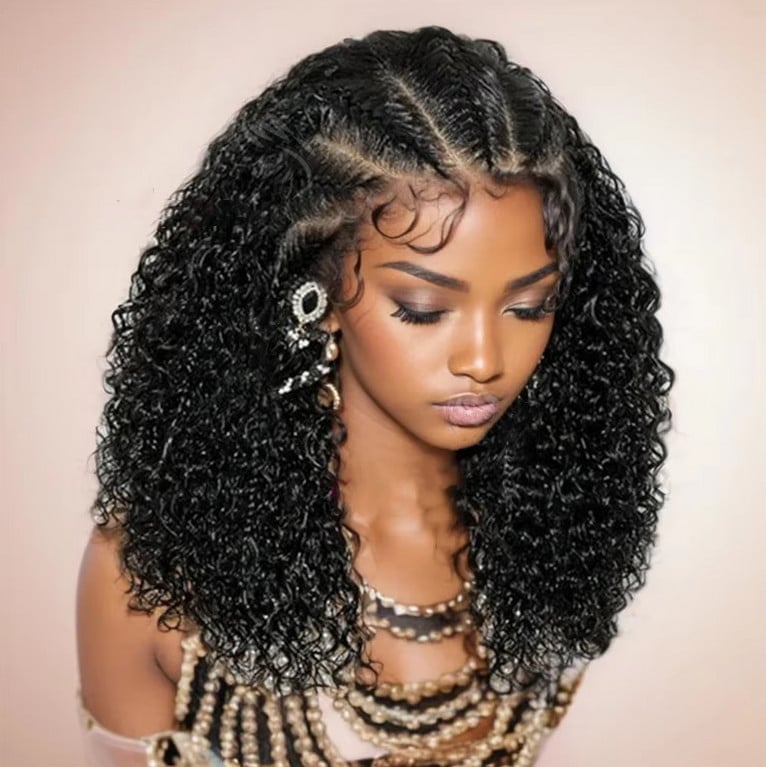
Cornrows at the parting, then nothing but curl. The braiding stops just past the crown, and the black hair falls in defined, thick coils that reach the collarbone. A middle part splits the cornrows evenly, so the transition from scalp work to loose texture looks continuous. The curly cascade requires natural texture that holds a curl pattern without heat. Thick, coily hair works best. Straight or fine hair would need a perm rod set to mimic this volume, and even then, the hold is shorter. A curl-defining cream applied to damp hair, then diffused, sets the shape. The cornrows stay neat for about a week before the edges need a touch-up. The hair is on its own schedule.
Cornrow braids leading to a low coily bun
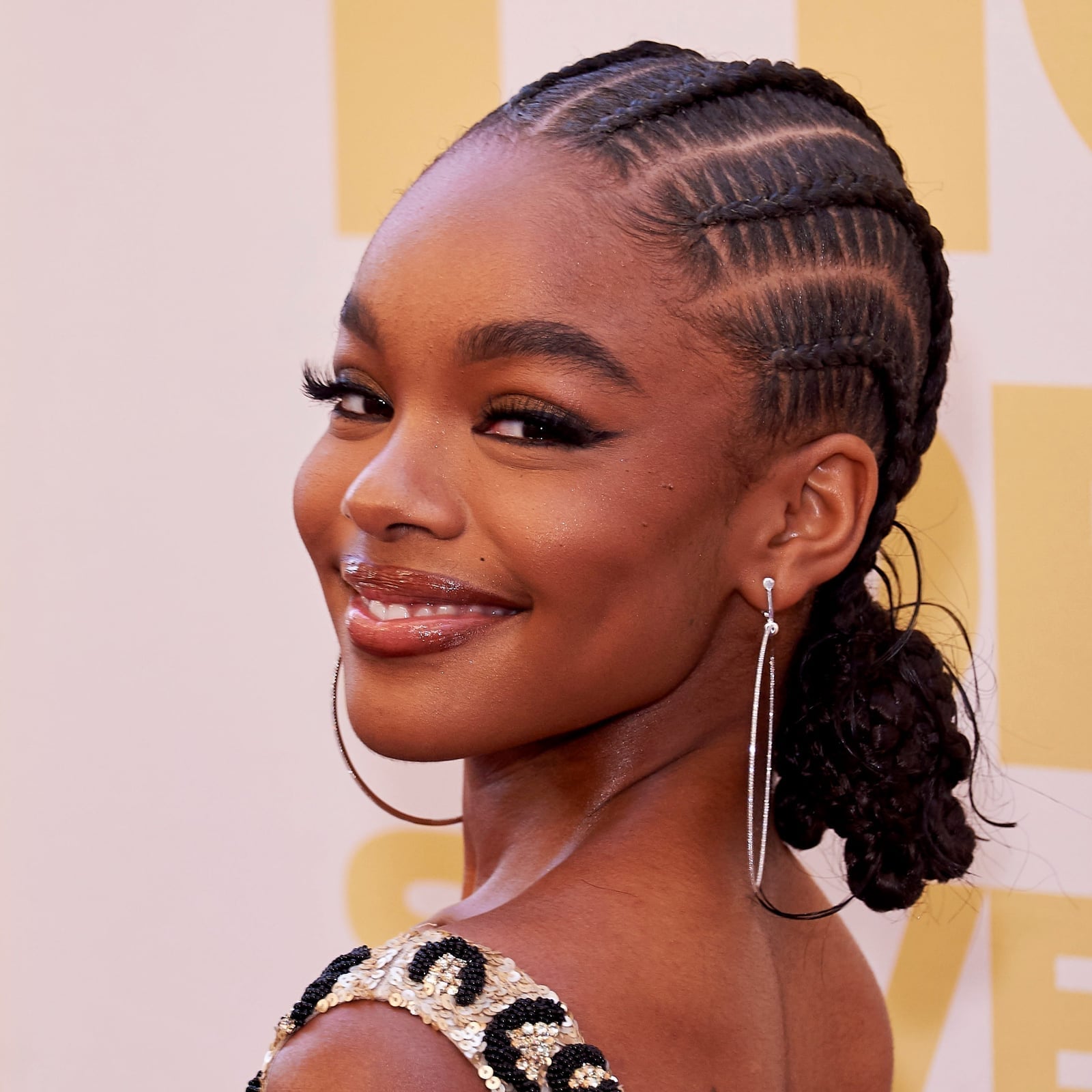
Cornrows trace the scalp from the middle part to the nape, where the hair gathers into a low bun made of coils. The braiding is the structural part; the bun is the decorative one. Thick, coily texture matters here because the bun needs enough body to hold its shape without pins slipping. A centered parting keeps the braid lines balanced on both sides. The catch: the cornrows must be tight enough to stay flat under the bun’s weight but not so tight that they cause tension at the hairline. Request: cornrow braids into a low coily bun. The color stays black, which lets the texture read clearly. The bun benefits from added grip. Re-braid the scalp rows every two to three weeks. Fine hair or a looser updo may not work well with this style.
Two tones, dark brown and blonde box braids
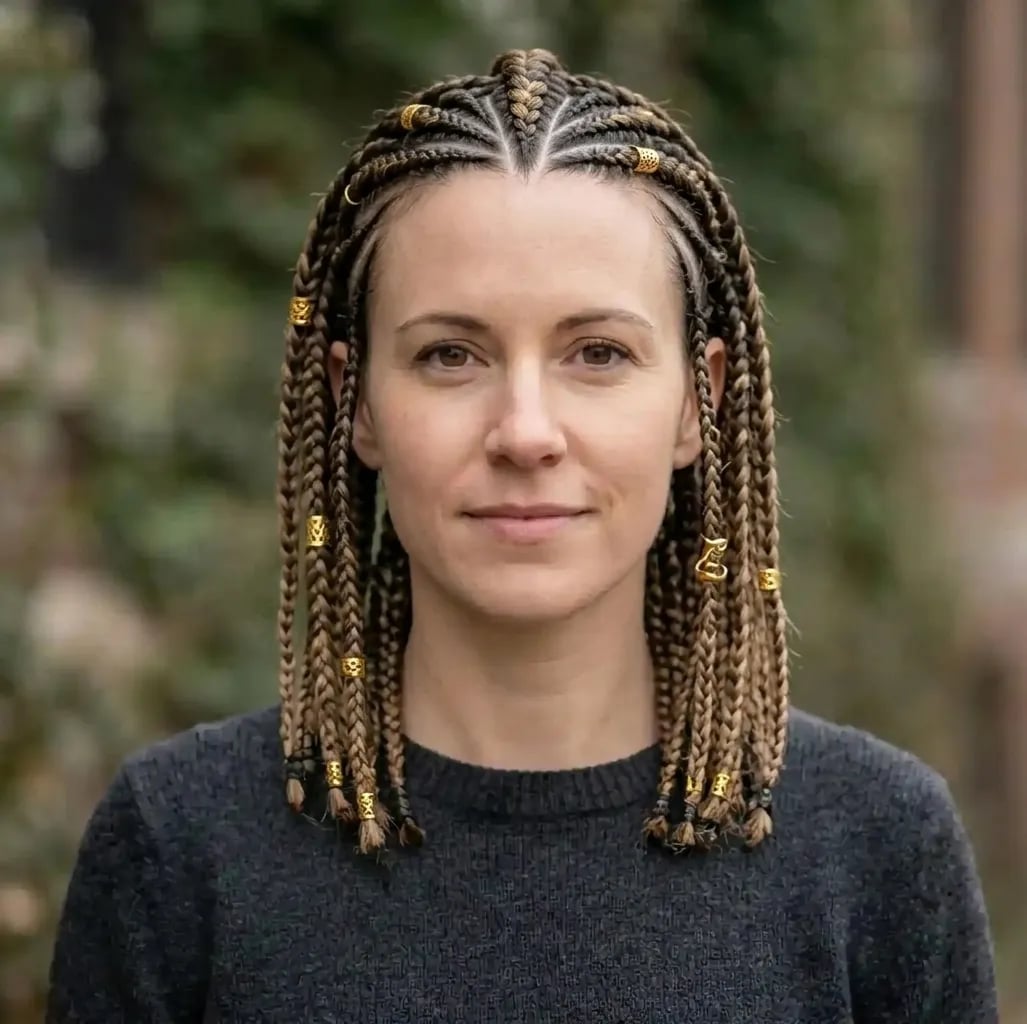
You could do a single shade, but then you would miss the point. Dark brown and blonde mix into a subtle two-tone effect that looks planned. The middle parting keeps the weight balanced, and those small gold beads woven in add a subtle shimmer when you move. Fine, straight texture holds the neat box braids best; the sleek finish keeps everything smooth. Request: box braids with dark brown and blonde mix, gold beads. A single color or a texture that resists sleekness may not work as well.
Book it as a salon appointment. The parting precision and bead placement need a steady hand, not a bathroom mirror. The beads add a gentle weight that helps the braids hang straight without fluffing up at the ends.
Neat, small box braids with a middle part
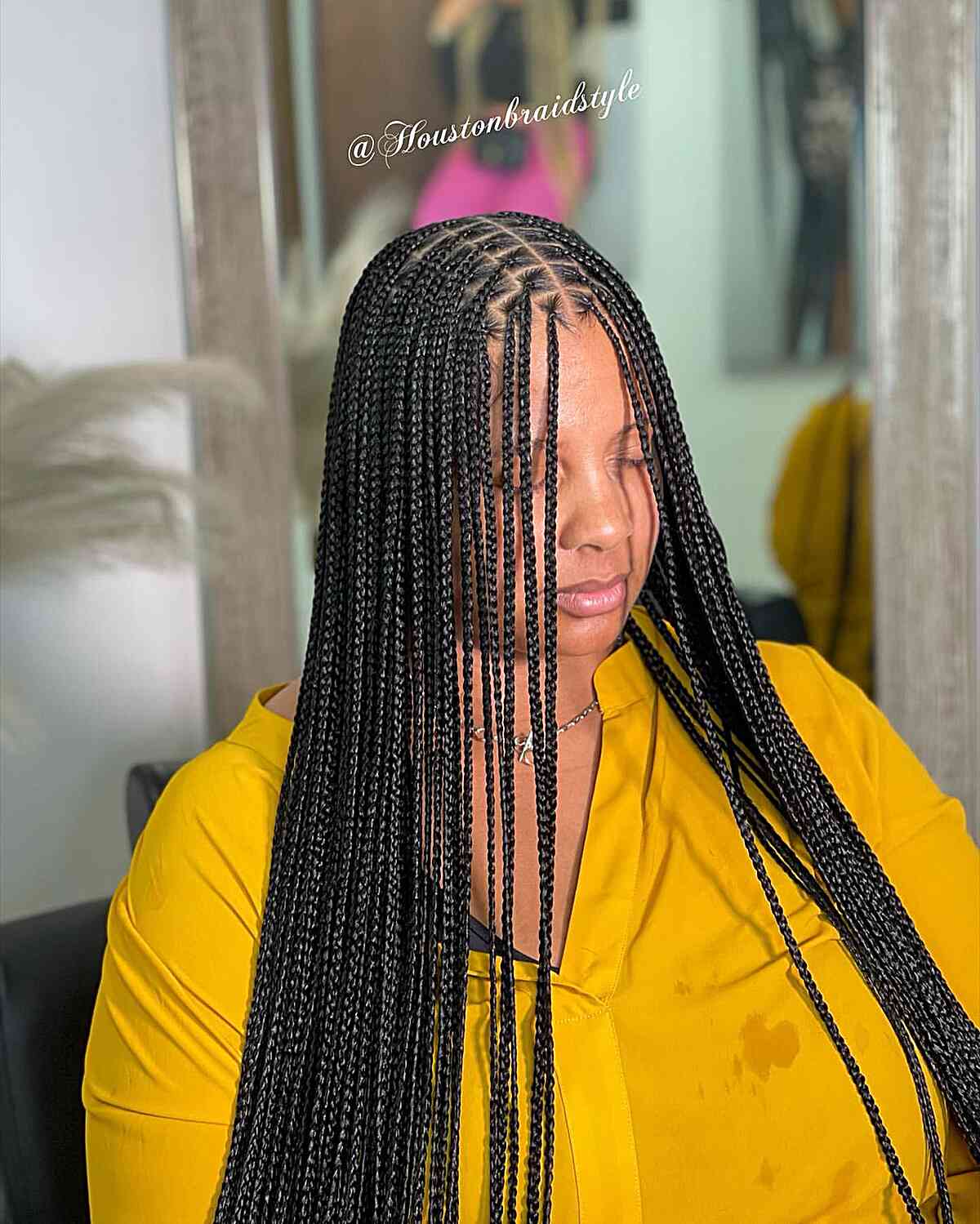
The part is straight enough to measure with a ruler, which is exactly the point. Neat, small box braids in black create a grid of uniform sections that look clean and deliberate. The straight texture holds the shape without frizzing at the roots. Fine hair handles this scale well because the braids are small enough to distribute the weight evenly. Request: neat small box braids, precise middle part. The catch: this style requires a commitment to maintaining the part. The part stays sharp for about a week before the roots start to soften, and that is the window you paid for.
Uniform black braids middle parted precisely
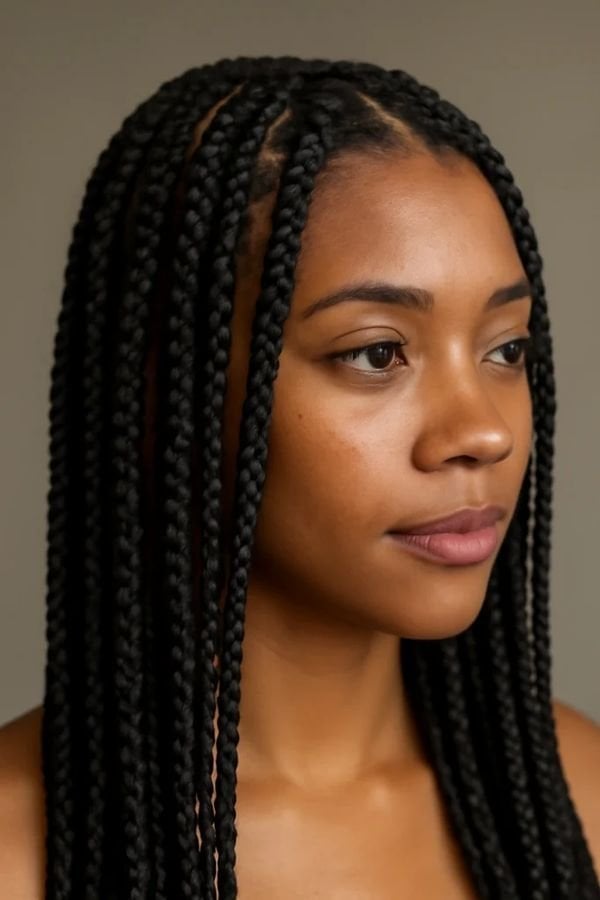
Is this the style that makes you wonder why your parts never look that clean? The mistake is assuming you can eyeball it. Uniform box braids in a deep black hue depend on sections that are identical in size from the hairline to the nape. The middle parting needs to bisect the head with surgical accuracy. Thick hair is an advantage here because each braid has enough substance to lie flat. Request: neat uniform box braids, middle part. This is a salon-only proposition. The time it takes to map out the sections and braid them evenly is not a Saturday afternoon project. You pay for the precision, and the precision is the whole look.
Thin box braids transitioning to loose wavy ends
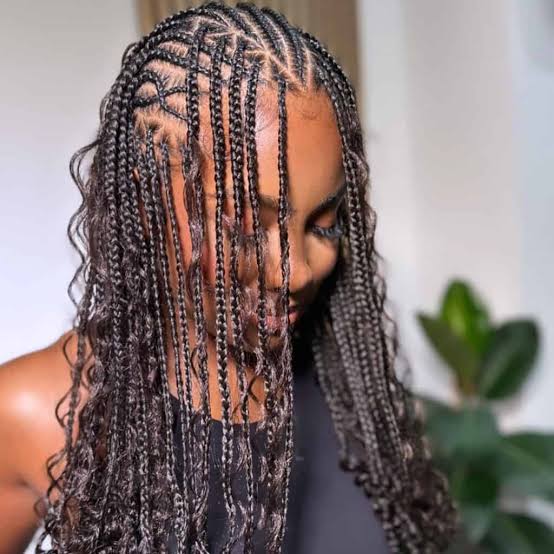
The braids do the work for the first half, and then they stop. Thin box braids in dark brown transition into loose, wavy ends that change the silhouette entirely. The middle parting keeps the top half structured while the lower half moves freely. Fine, wavy texture works here because the loose ends curl naturally without needing heat. The upkeep is straightforward: apply a leave-in conditioner to the wavy ends every few days to keep them from tangling into each other. The braided sections stay smooth for weeks with a satin bonnet at night. This is a salon style, but the daily work is minimal once the braids are in.
Micro braids styled into a bob with side part
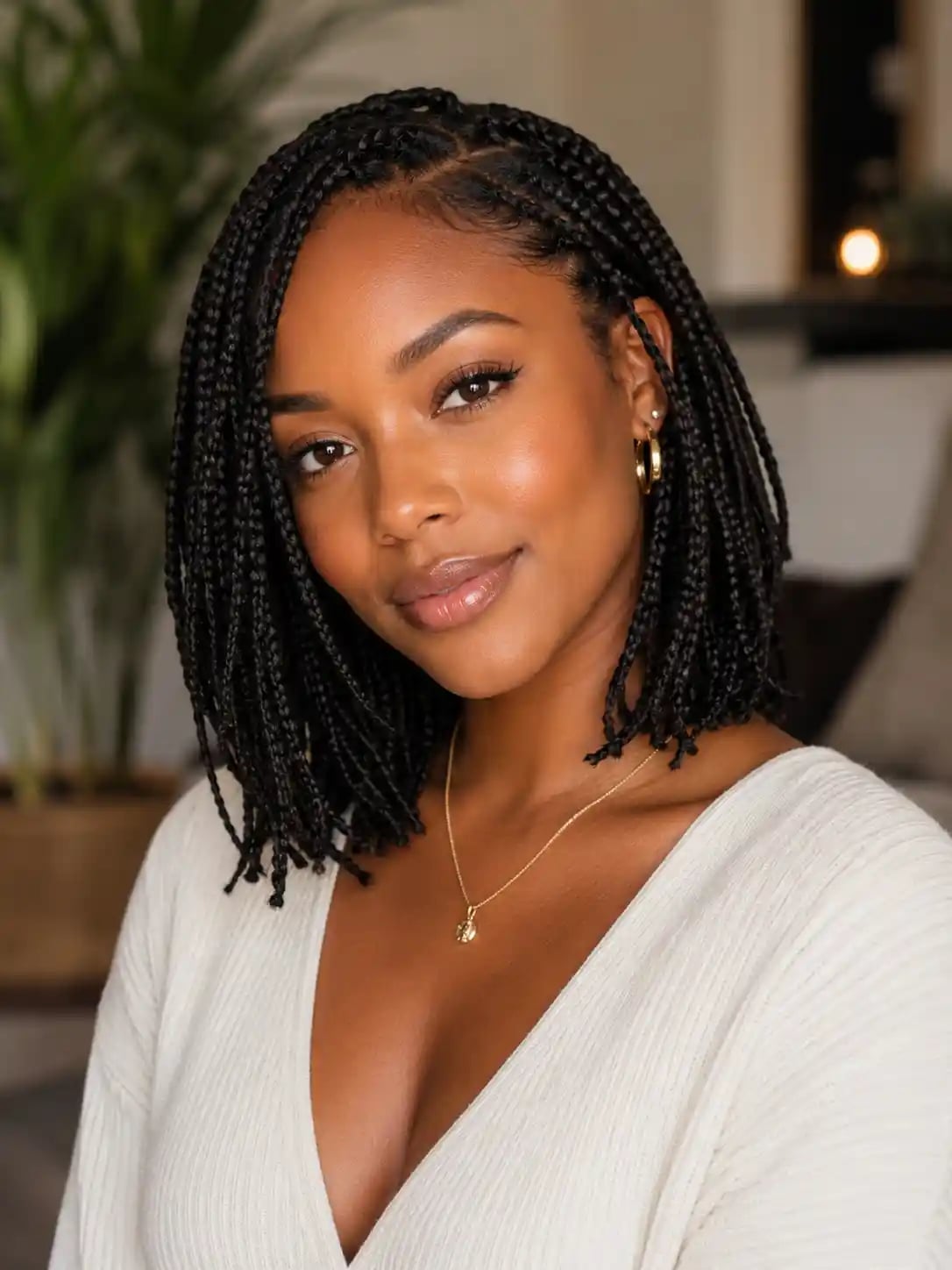
A bob that moves like hair but stays braided. Micro braids in black are styled into a chin-length bob with a side part that breaks up the symmetry. Fine, coily texture is ideal here. The micro scale lets the natural curl pattern peek through without looking bulky. The side part adds volume on one side, which balances a longer face shape. Request: micro braids in a bob cut, side part. It works best for braids at shoulder length or shorter. The bob length keeps the weight low and the maintenance simple. This is a salon commitment, but the payoff is a shape that holds its line for weeks without a trim.
Thick, long braids with wavy texture at the ends
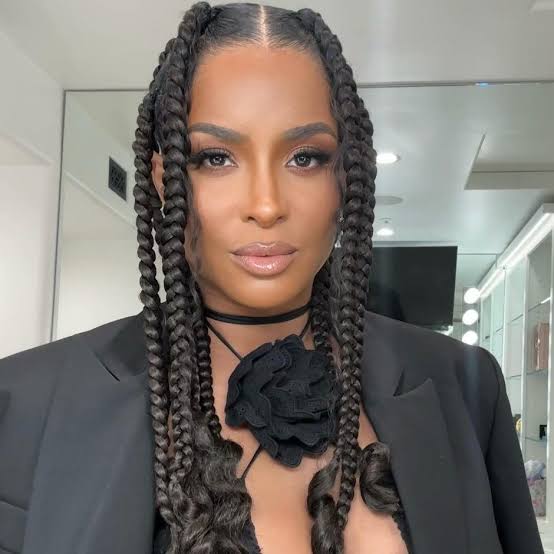
Two thick braids have a different effect than a dozen small ones. The weight sits heavier, the part needs to be exact, and the ends get their own moment. Middle part, black hair, braided from root to just past the shoulder, then the last few inches go wavy instead of sealed. That transition is the detail that keeps it from looking like a uniform rope. The texture change looks planned rather than accidental. Fine hair may not carry two braids well, as they can appear thin. The salon time runs longer because each braid has to be thick enough to carry the wave without splitting. A trim every eight weeks keeps the ends clean enough to hold the wave pattern.
Thick braids with gold beads and laid edges
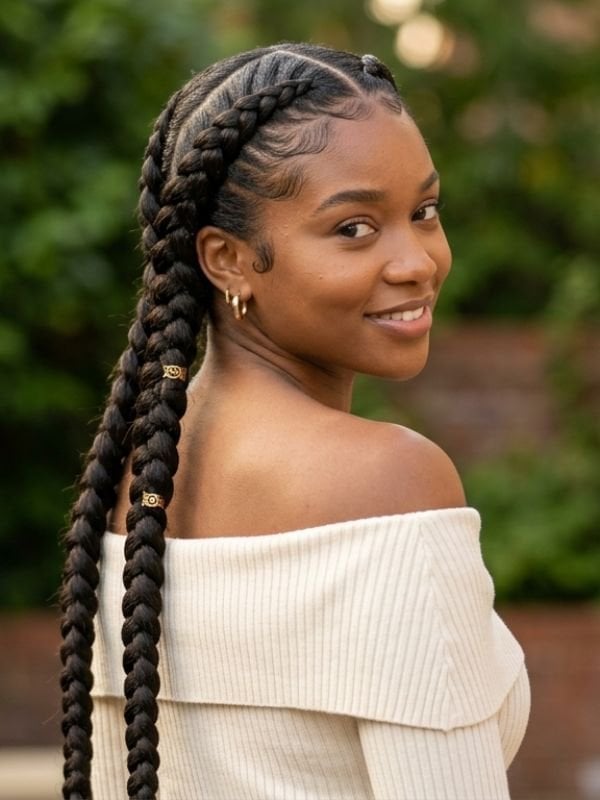
Request: two thick braids with gold beads, laid edges. The beads go on after the braid is finished, so the placement is exact. Middle part, black hair, thick enough that each bead sits snug without sliding. The laid edges add ten minutes to the install and require a small amount of hairspray each morning to stay flat. The catch: beads clink against collars and pillows. Not a problem during the day, but you hear them every time you turn your head. Worth it for the finish.
Textured dark brown braid cascades down
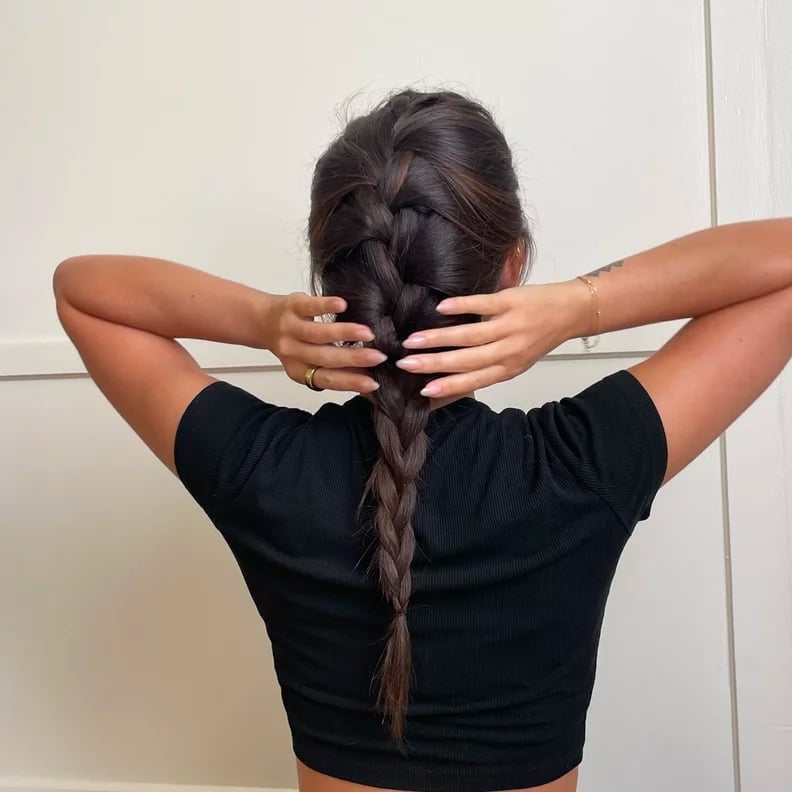
A single braid at this scale is the easiest appointment you will book all year. Dark brown, wavy, thick, pulled into a classic three-strand braid that sits at the center back. No part manipulation, no added hair, no beads. You do it yourself in under ten minutes once you have the tension down. The trick is pulling the sides outward after you secure the elastic. That one move doubles the visual width and softens the edges. The DIY label fits because the technique is basic, but the result lands closer to intentional than thrown together.
Loose, thick side braid with honey highlights

A side braid with honey highlights needs a specific approach to last past noon. Warm brown base, side part, braided loose enough that the highlights show between the sections. The braid sits thick and textured, not tight against the scalp. The upkeep comes down to the color: honey highlights require a toning gloss every six to eight weeks to stay warm instead of brassy. The braid itself holds for two days if you sleep with it loose and re-braid in the morning. The sections before you braid need a texturizing spray for visible grip. The side part also helps the braid sit forward, so it stays visible from the front.
French braid into a thick, textured side braid
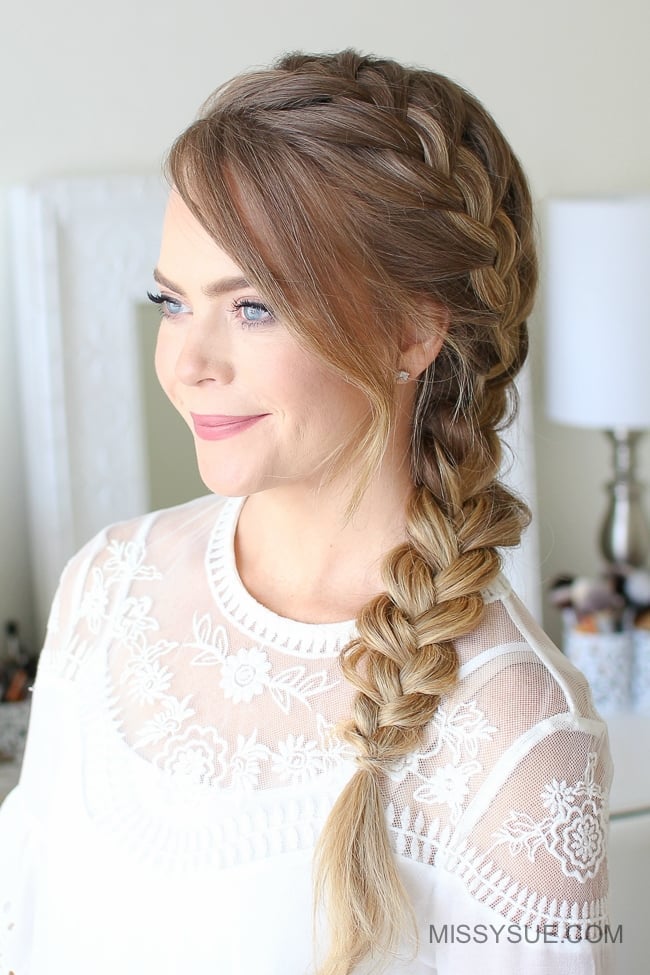
Two braid techniques in one line automatically raises the difficulty. The French braid starts at the crown and runs along the side part, then transitions into a standard three-strand side braid past the ear. Blonde with lighter highlights, wavy texture, side-swept bangs that stay out of the braid. The transition point is where the look lives or dies: the French section has to be tight enough to stay, and the side braid has to be loose enough to match the waves. The bangs frame the face while the braid carries the weight. A side part keeps the braid visible. Salon-leaning because the French braid requires practice to keep the sections even while changing direction.
Cornrow braids on one side with dark brown waves
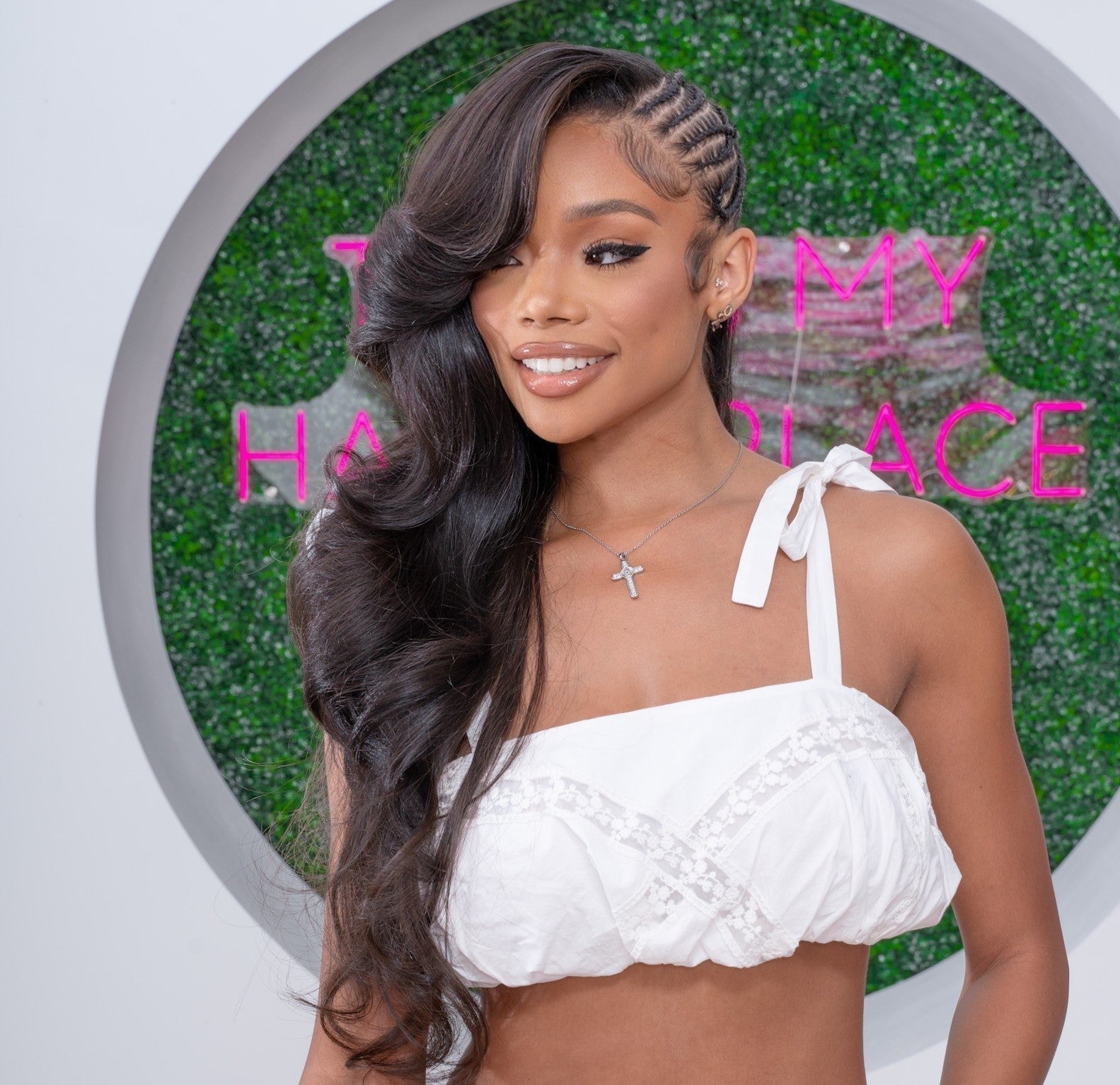
One side does cornrows, the other does waves. The deep side part makes the asymmetry the whole point. You need thick, wavy hair to carry both textures without one side looking thin. The dark brown base keeps the contrast subtle. Request: cornrow braids on one side, dark brown waves. A gloss serum on the wavy side stops it from looking unfinished.
Dutch braids frame auburn wavy hair
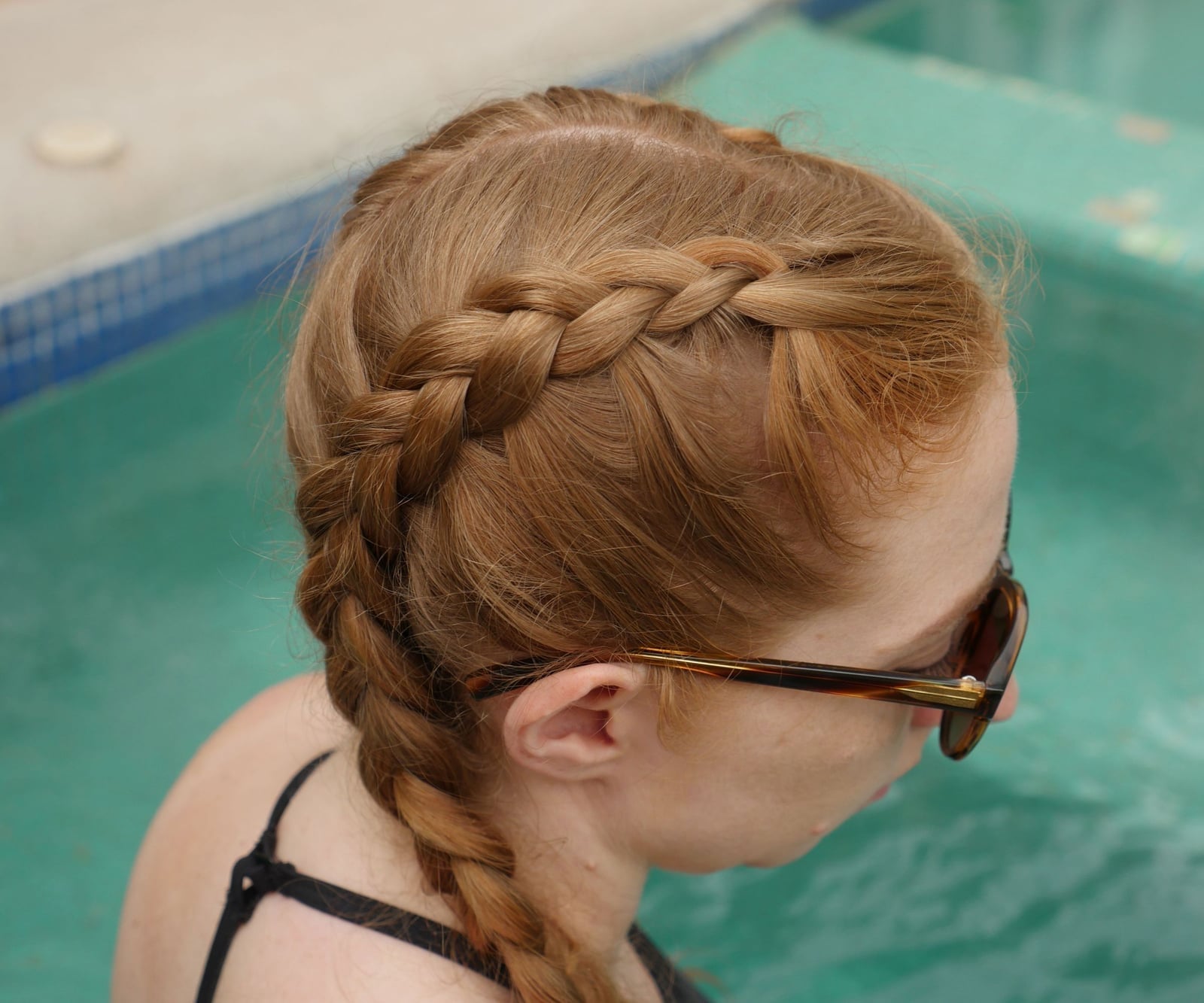
Dutch braids start right at the hairline and travel down each side. The middle parting keeps them symmetrical. Fine, wavy hair holds this braid type well because the sections stay visible. Pass when your hair is very thick, the braids get bulky fast. The auburn color reads warm against the scalp. Request: auburn color. The one real drawback: braiding fine hair at the hairline takes patience. A texturizing spray on the lengths keeps the wavy appearance after you take the braids out.
Neatly plaited French braids in strawberry blonde
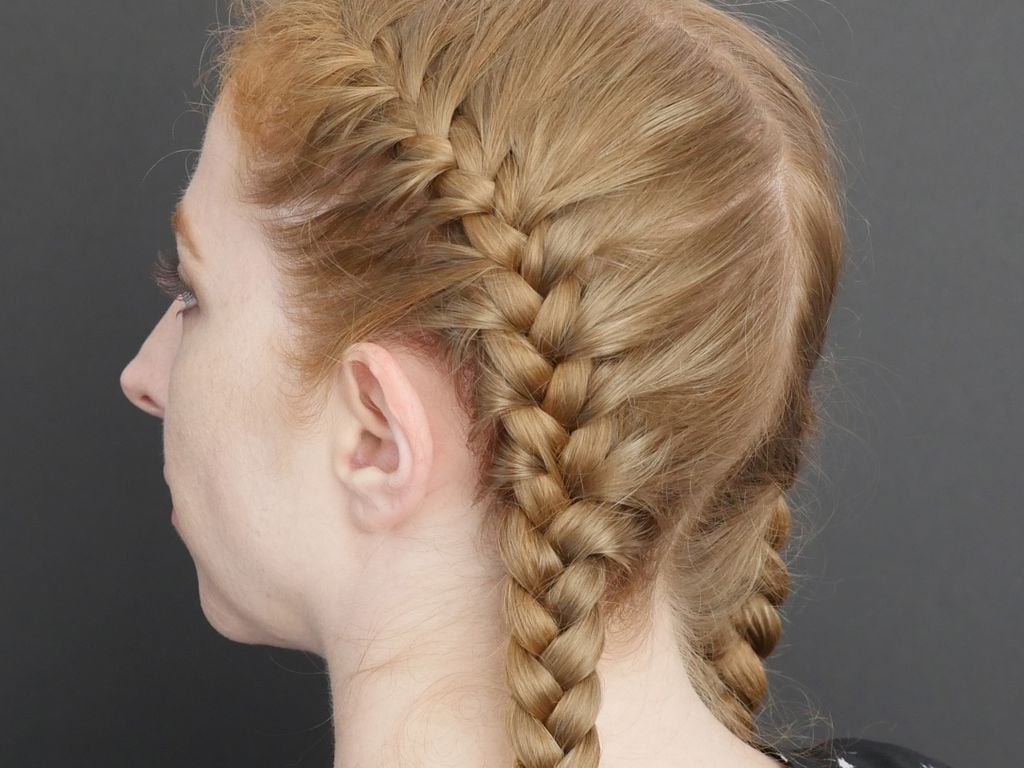
The mistake people make is braiding too loosely. These two French braids are tight from the crown down, which keeps the strawberry blonde color clean against the middle parting. Fine, wavy hair works best because the sections stay defined. DIY is possible if you braid at the nape and pull sections evenly. Thick hair will make the braids look chunky instead of neat.
Small hairline braids blonde waves frame
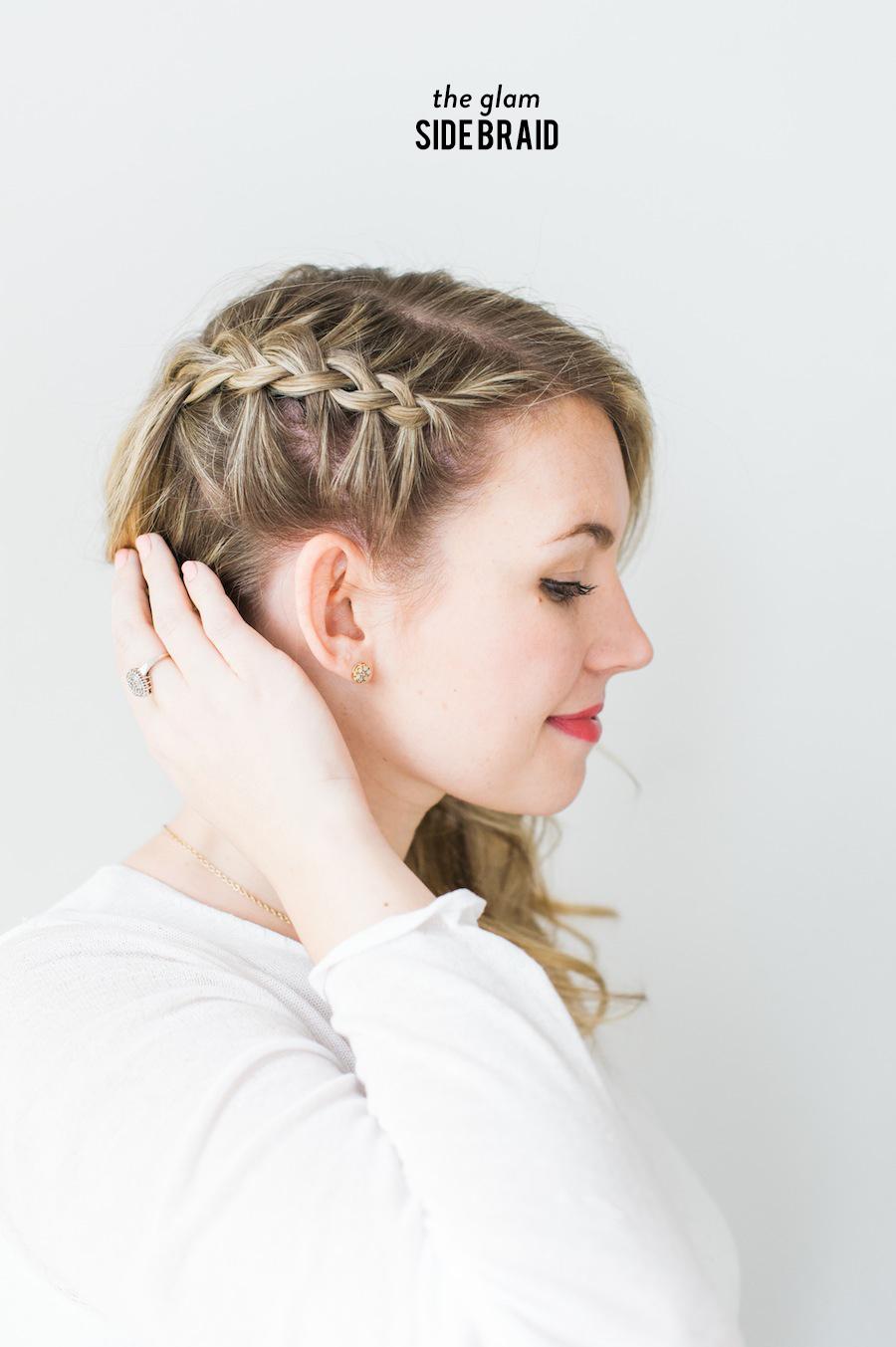
Name the placement first: multiple small braids along the hairline. They frame the face without pulling the rest of the hair up. Fine, wavy hair in a blonde shade with lighter highlights works because the braids add texture without weight. Request: multiple small braids along hairline. The side parting lets the braids sit evenly on both sides. A light styling cream keeps the braids defined and the waves smooth without stiffness.
Heart shapes meet central cascade braid
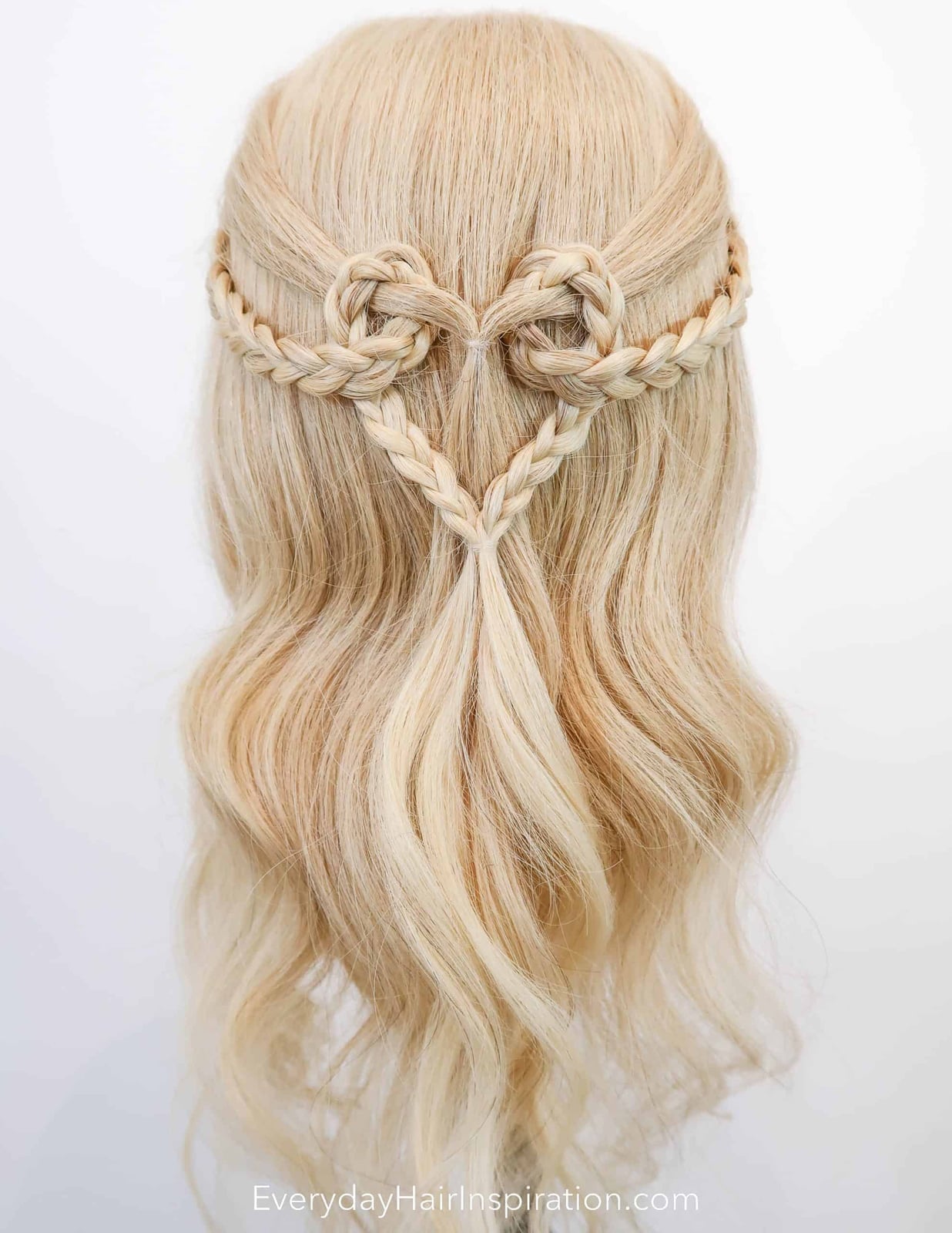
Two braids shape hearts at the crown and meet into one central braid that falls down the back. The half-up construction holds the hearts in place while the loose waves soften the line. Fine, wavy hair in ash blonde with lighter highlights keeps the braid detail visible. Skip it if your hair is very straight. The hearts won’t hold shape without texture. Request: half up half down with heart-shaped braids. A flexible hold hairspray keeps the waves soft and the braids intact through a long event.
Ash blonde braids form heart at back
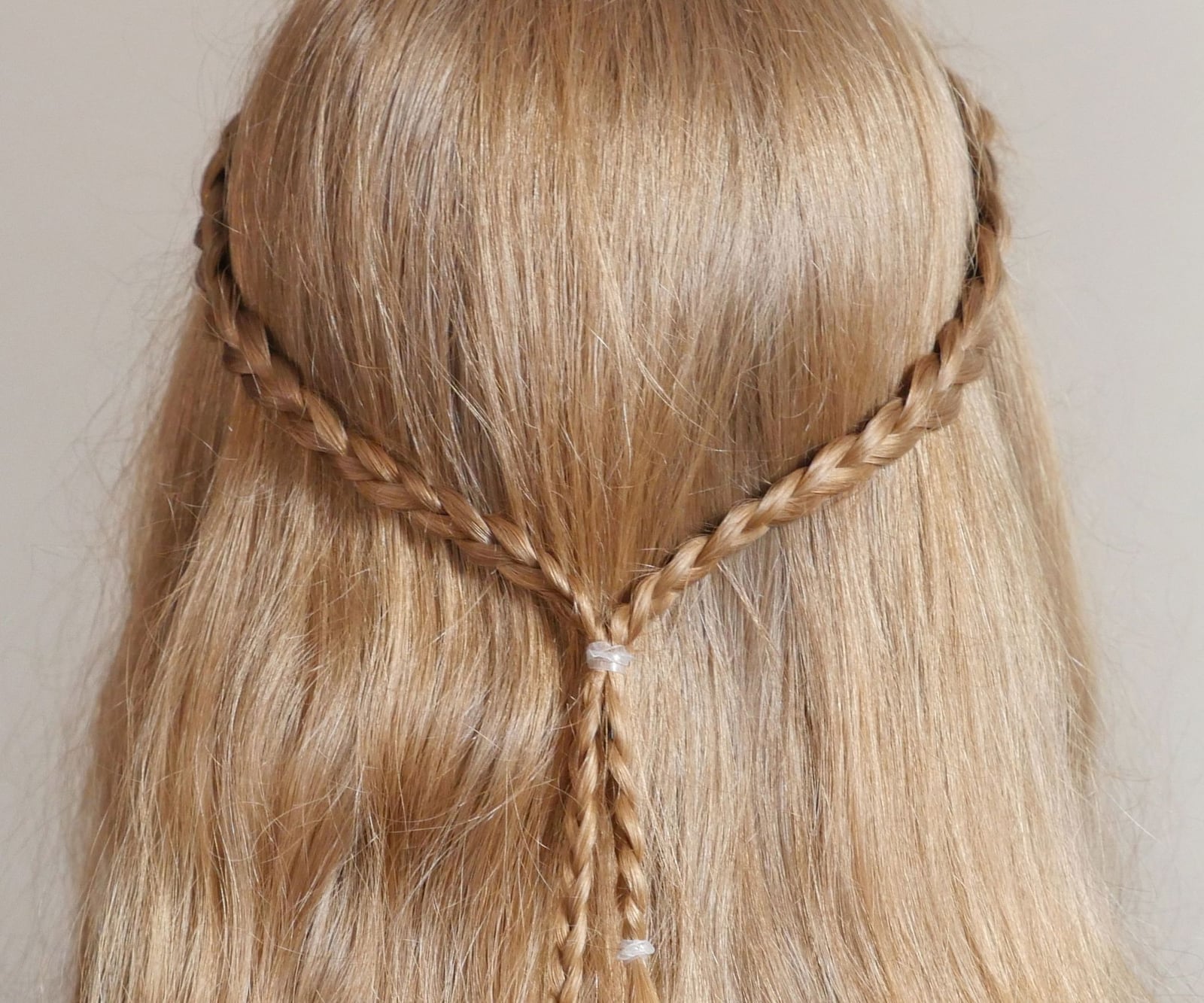
Fine, wavy ash blonde hair typically needs a firm hold to keep a shape like this. Two braids start at the temples and meet at the nape, forming a heart before continuing down as one section. The ash blonde base with lighter highlights gives the detail visibility without contrast. Skip it if your hair is very thick. The heart shape requires delicate strands to lie flat. The real drawback: the braids can loosen by midday, especially if your natural texture is smooth. A dry texture spray applied before braiding helps the pattern hold until you take it out.
Intricate braided crown into a fishtail braid
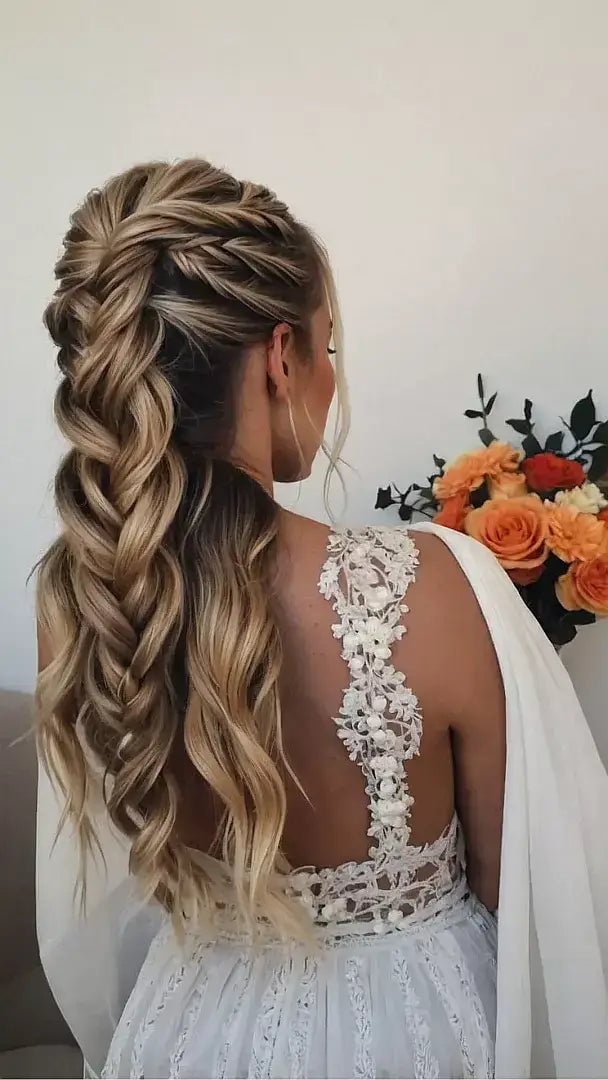
This is a salon-only construction. The braided crown wraps the head, then feeds directly into a fishtail braid that runs down the length. The dark blonde base with lighter highlights shows the weave of the crown clearly. Loose waves in the remaining hair soften the formality of the braiding.
Thick, wavy hair is the ideal starting point. The crown needs density to avoid a sparse look. The crown section is built from multiple smaller braids that cross and overlap, so installation takes about three hours. The fishtail braid looks best with a slightly undone finish. The crown holds its structure for one to two days before the braids start to soften.
Fishtail braid in a half-up, half-down style
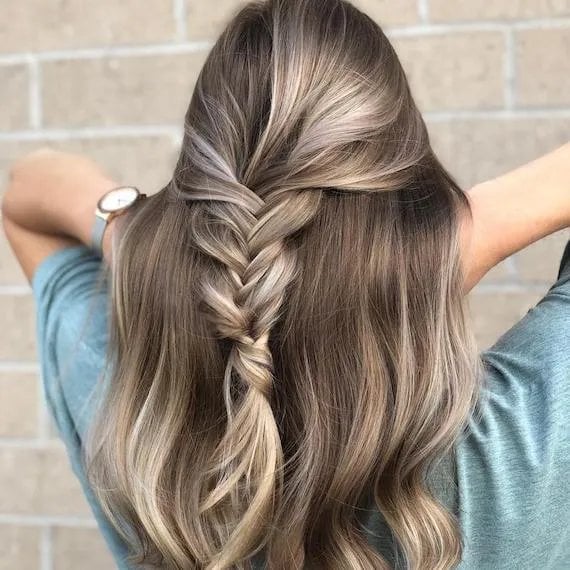
A fishtail braid in a half-up, half-down configuration takes roughly twenty minutes to build. The braid starts at the crown and sits on top of the loose waves, creating a layered effect. The dark blonde base with ash blonde highlights gives the fishtail pattern depth; without those lighter pieces, the braid can look flat. Thick, wavy hair works best here. The braid needs girth to show the alternating sections. Gently tugging the edges of the braid after securing it creates a wider, more relaxed silhouette. The hold lasts a full day, though the loose waves below may need a re-curl by evening.
Platinum blonde fishtail braid with star clips
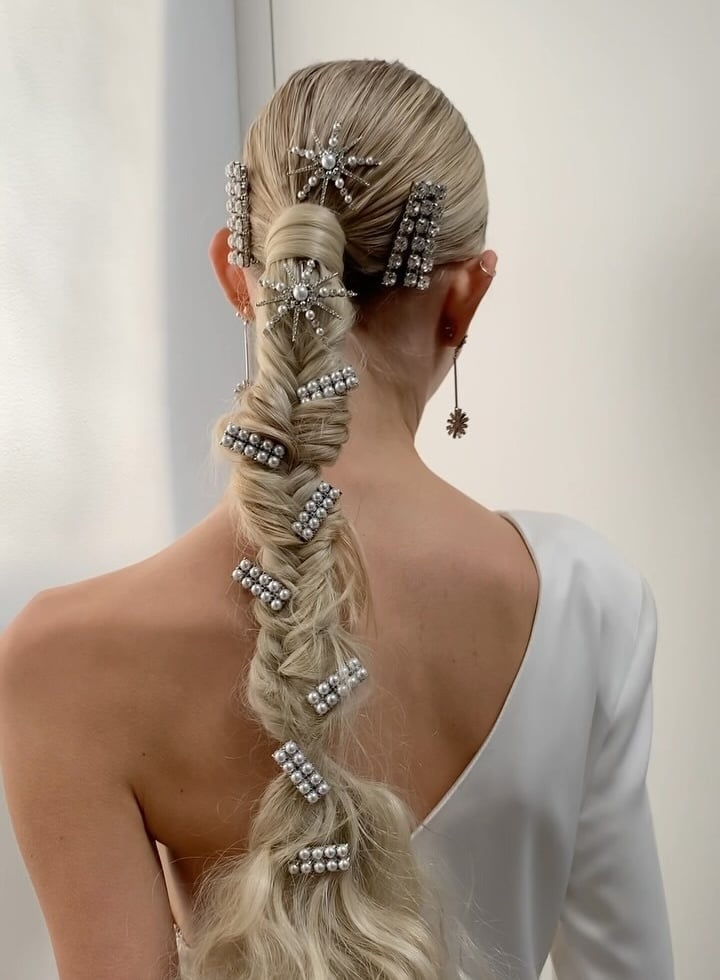
Platinum blonde hair makes a fishtail braid look a single, luminous ribbon. The middle part keeps the braid centered on the back of the head, and the star clips are spaced along the braid at regular intervals. Thick, wavy hair supports the weight of multiple metal accessories, fine hair would let the clips slide. The clips do not affect the braid structure, but they need to be fastened through the outer strands only, or they pull the braid apart. This style lands in party season or any event where the goal is visible texture and shine. The hold is solid until you unclip the accessories.
Braids gathered high ponytail auburn highlights
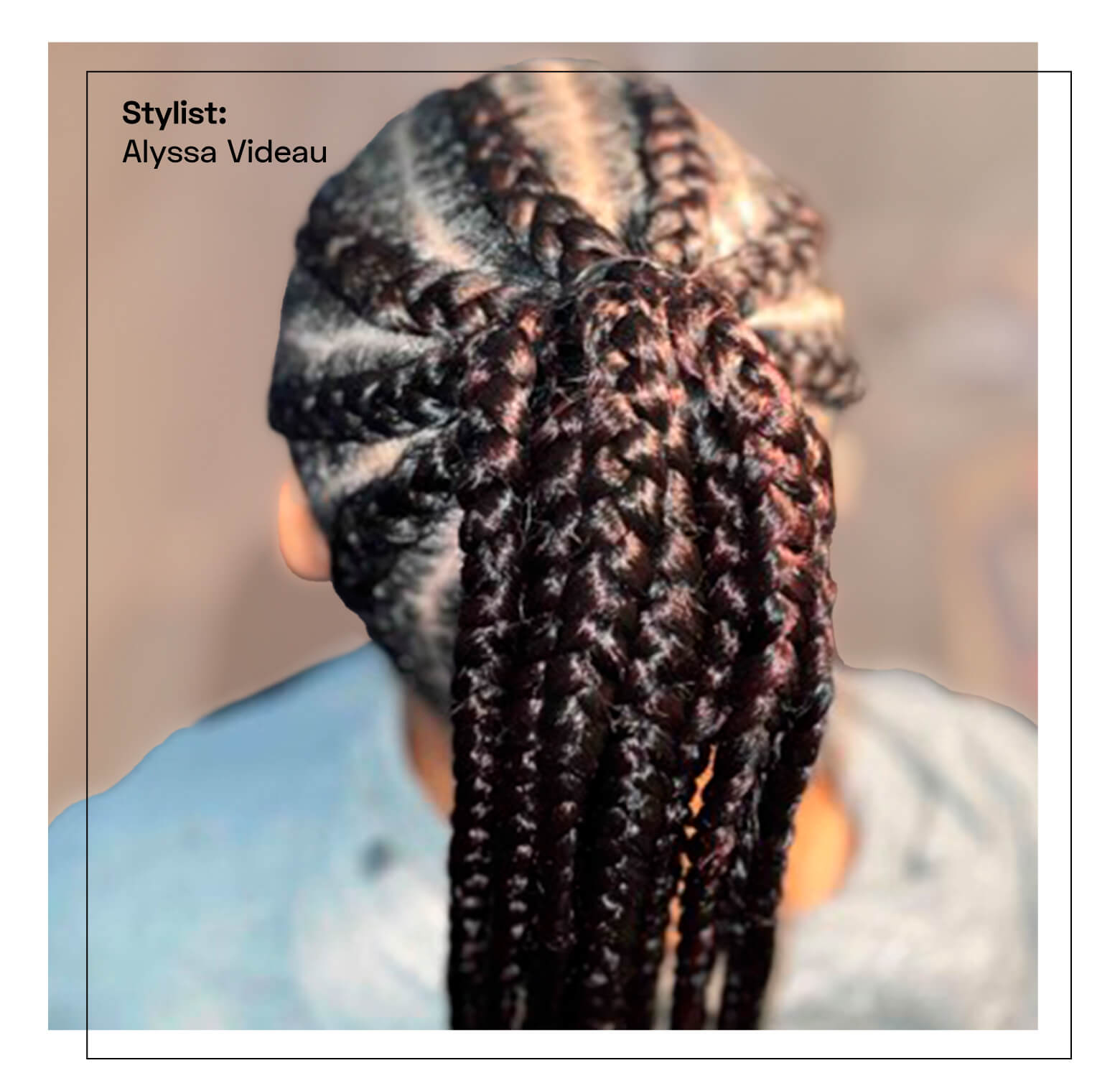
Every braid in this style is parted down the middle before being gathered into a high ponytail. The precise parting is the technical anchor. Each braid must align with its neighbor for the ponytail to sit evenly. The dark brown base with subtle auburn highlights adds dimension without distracting from the braid lines. Thick, coily hair is required; the braids need enough heft to create the ponytail volume. This style works for active days or parties where you want the braids out of your face. Wrapping one braid around the ponytail base conceals the elastic and gives a finished edge. The hold is firm. The braids stay in place until you take them down.
Final Thoughts
Pick the style that matches your time and your texture. The part is the foundation, and the braid is the structure that holds it together.
- Fine hair: geometric parts need precision, not density
- Thick hair: a side part distributes weight evenly
- Ten minutes in the morning: a loose side braid with a deep part
- Salon every four weeks: intricate cornrow patterns and laid edges
Choose the version that keeps your hair healthy and your routine simple.