26 Cute Long Braids with Intricate French Braids 2027
Cute Long Braids 2027 feature decorative loops and intricate french braid designs, perfect for dramatic black and blonde box braids. See 26 styles.
You are scrolling past another saved braid photo and wondering if it will survive a work week. Long braids hold shape without daily heat, which is why the right pattern and color matter more than the braid count itself.
26 looks that actually last from a Monday meeting to a weekend brunch. The spread runs from sleek box braids to decorative loops and fishtails, each chosen for how it holds its shape and reads in real light. Which is why Cute Long Braids 2027 fill so many saved boards: they solve the problem of wanting a protective style that still looks intentional, not thrown together.
Black braids with unique circular braided loops
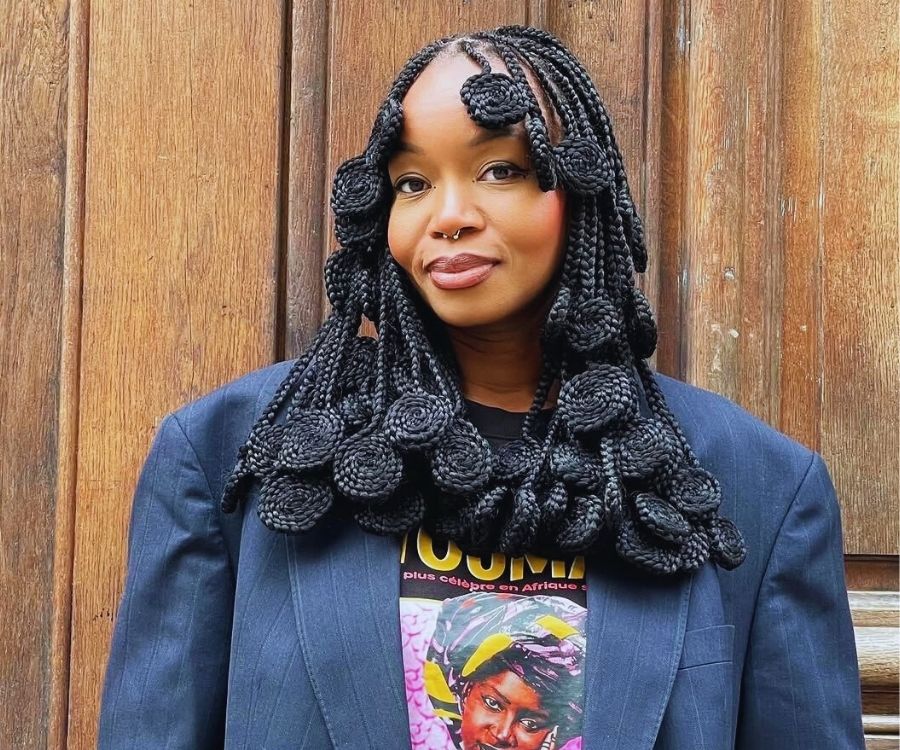
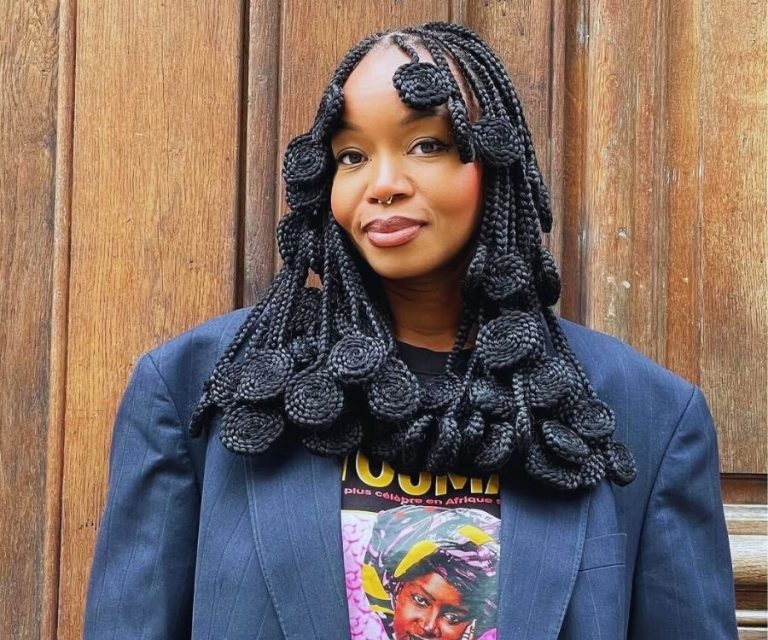
Circular loops are woven into the length of these thick black braids, not added after. The middle part keeps the design symmetrical, letting the eye follow each loop down. You need straight hair with enough weight to hold the shape without pulling. Ask your stylist for: long thick black braids with circular decorative loops. The technique requires a steady hand and a full afternoon in the chair.
Skip it if you prefer simple, unadorned braids. The loops catch on collars and bag straps more than a flat braid does. A satin scarf at night keeps the loops from flattening. Re-braiding every few weeks is the price of the detail.
Two-tone long thin box braids with a middle part
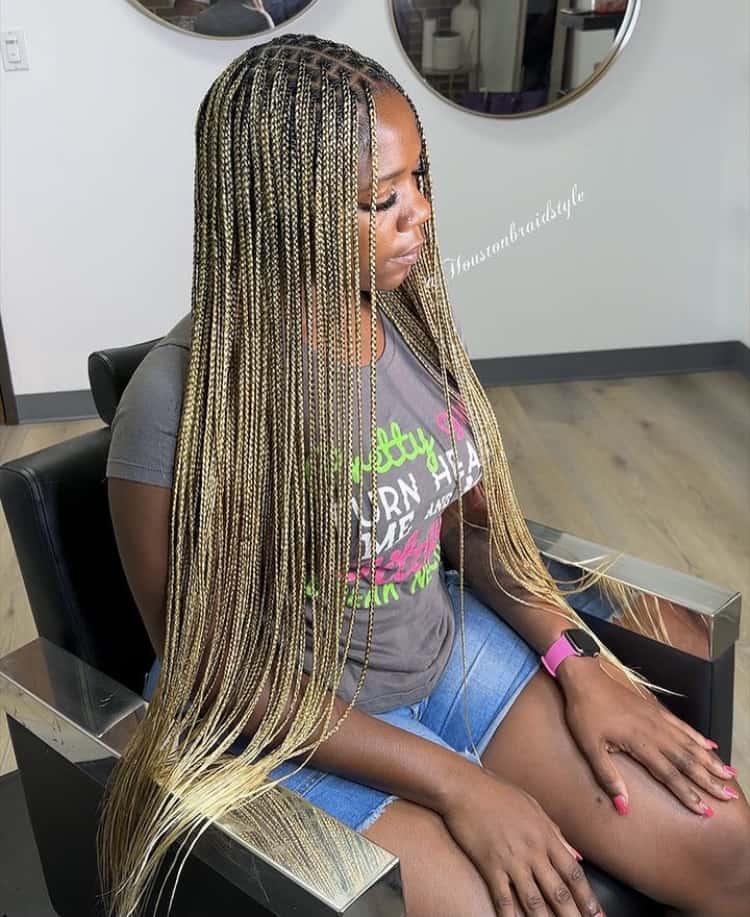
Thin box braids read differently than thick ones. These are fine enough to move like individual strands, and the black-and-blonde mix makes each braid visible against the next. The middle part is clean and straight, no zigzag. The length takes hours to install, but the style swings rather than sits.
Thin braids show root growth faster than thick ones. Plan a touch-up every six to eight weeks if you want the part to stay sharp. Single color or thicker braids are other options. The upkeep is real, but the movement is worth it for a lightweight protective style.
Classic black box braids for a sharp, low-maintenance look
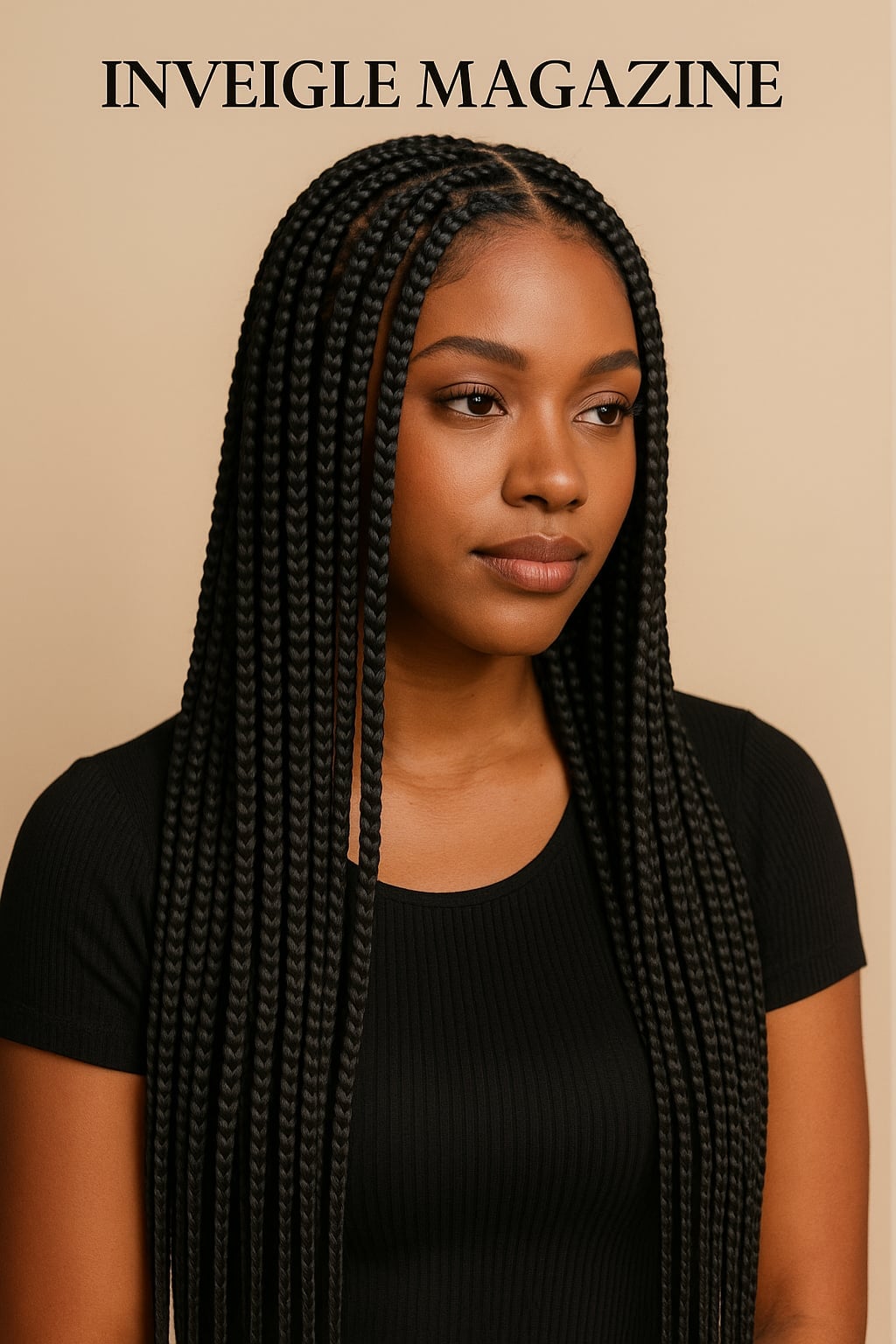
Thick black box braids with a middle part and no added decoration. The weight of the braids keeps them falling straight, and the length lands around the collarbone. This is the version that needs the least fuss between salon visits. Ask your stylist for: long, thick black box braids, middle part. Skip it if your hair is very fine and cannot support thick braids. The simplicity is the point.
Thick dark brown mane in an intricate French braid
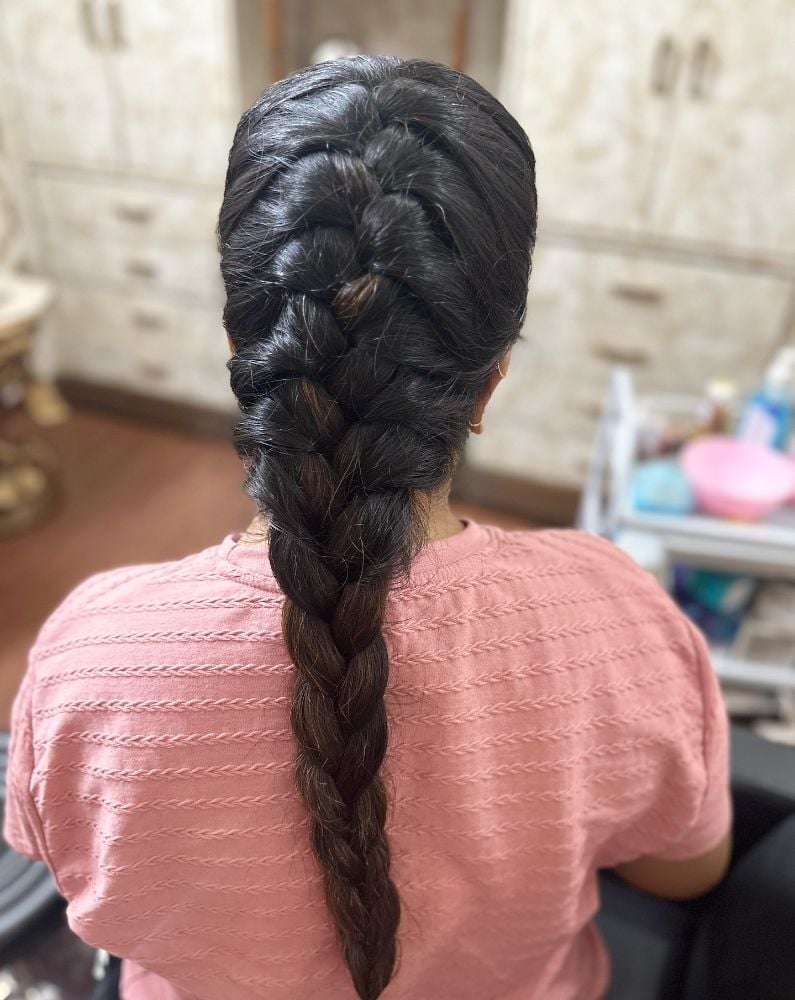
How does a french braid hold on very thick hair? Tighter than you expect. The dark brown strands are woven from the crown to the nape, then continue as a three-strand braid past the shoulders. The middle part keeps the top section flat, so the braid looks a single line down the back. The texture needs to be straight and dense enough to grip itself.
The catch: an intricate braid on thick hair takes a strong grip and time. Plan for at least an hour in the chair. The braid will loosen at the edges after two days. Re-braid it in the morning if you want the neat look back. Skip it if your hair is fine or thin and struggles to hold the pattern.
Large black box braids for a dramatic statement
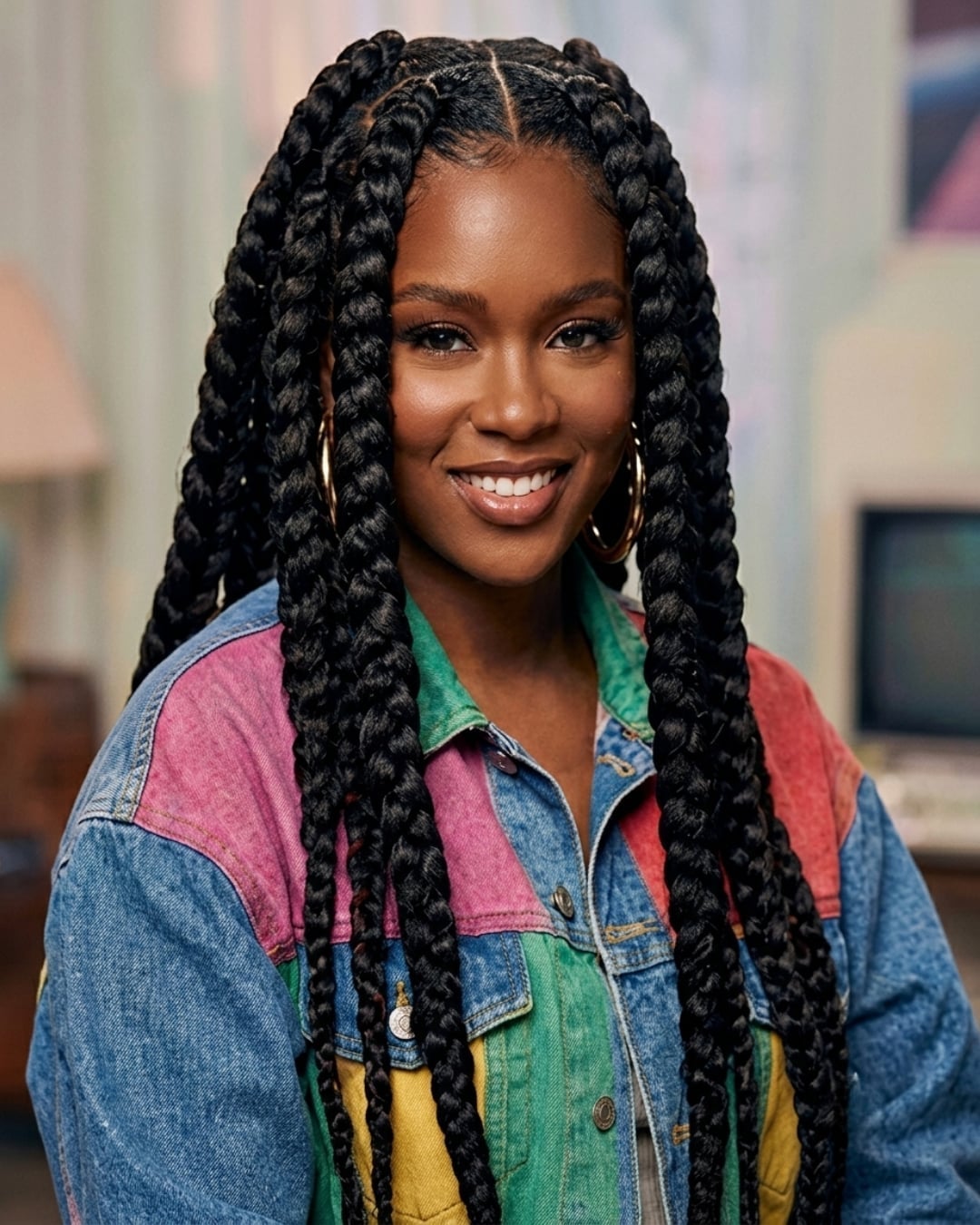
The real drawback: large braids pull at the scalp more than smaller ones. Scalp care matters here. A dry shampoo at the roots every few days keeps the part clean. Avoid this style if you prefer fine or intricate braid patterns. This is a statement that does not compromise.
Voluminous honey blonde fishtail braid with wavy texture
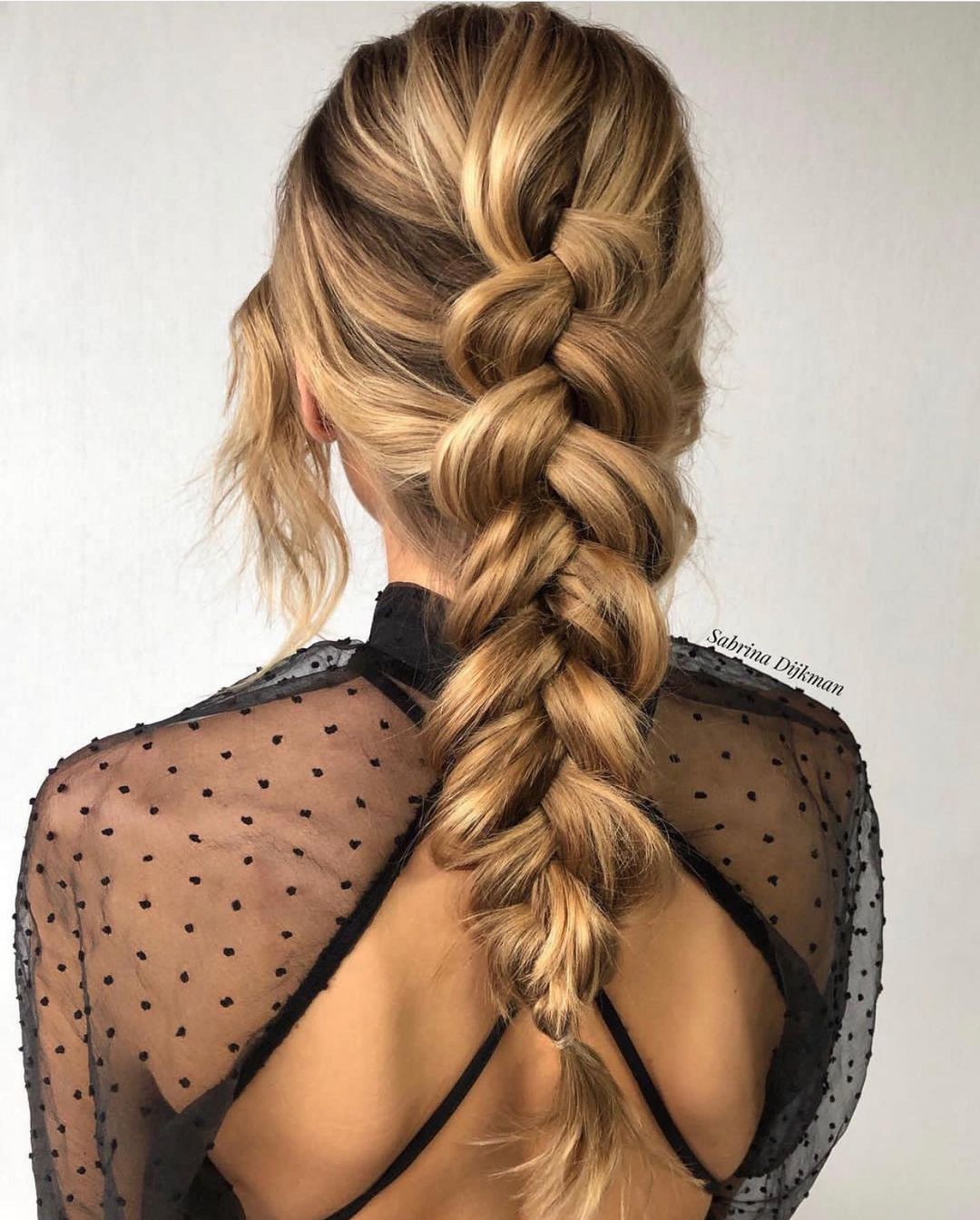
Not a braid you sleep on. The honey blonde fishtail with darker roots needs a wavy, thick texture that can hold the weave without collapsing. Two sections crossed over and over, pulled apart at the edges for volume. A middle part keeps the crown flat so the braid looks one unit. Salon work, not a five-minute fix. The honey blonde base lifts the darker strands underneath, giving each section its own visual weight. Tell your stylist: thick, voluminous fishtail braid, honey blonde with dark roots. Skip it if every braid you wear goes straight.
Daisy flowers woven into a thick dark brown braid
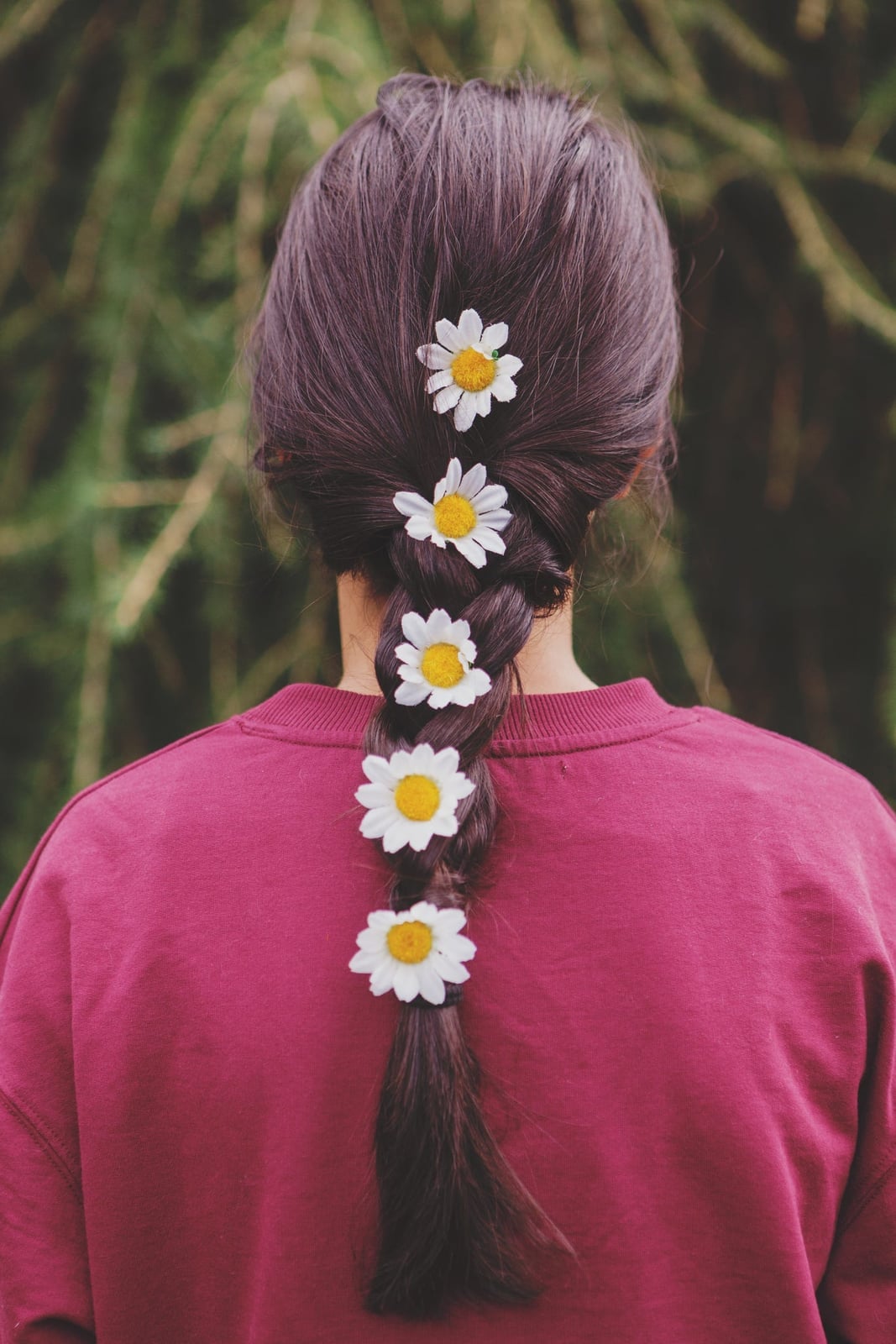
Daisy flowers woven into a thick dark brown braid change the whole mood. Straight dark brown hair, a single braid down the back, and small white blooms tucked into the weave at even intervals. The flowers sit between the strands, not pinned on top, so they stay put through movement. A middle part keeps the front clean.
Start with a basic three-strand braid. Section the hair, braid to the midpoint, then insert the first flower stem-side first. Continue braiding, adding a flower every two or three crosses. Secure the end with a small elastic. The flowers hold for the day; faux versions last the whole wear. Not for anyone who wants a minimal, accessory-free look.
Platinum blonde French braids merging into a fishtail braid
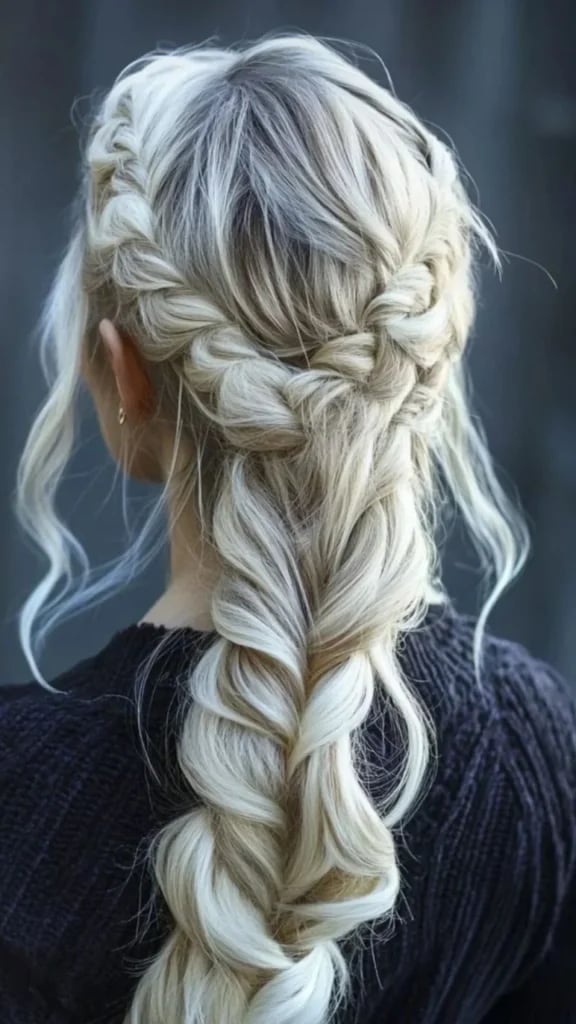
Two French braids start at the hairline and meet at the nape, then the combined strands shift into a single fishtail braid. The transition happens mid-length, so the braid changes texture without breaking the line. Platinum blonde with dark roots gives the whole design contrast; the darker base shows through the French sections, while the fishtail catches the lighter tones.
Thick, wavy hair with significant length is the only candidate here. The French braids need density to stay tight, and the fishtail needs enough bulk to avoid looking thin. A middle part keeps both sides even. Tell your stylist: platinum blonde braided style with dark roots, French to fishtail merge. Skip it if your hair lacks the weight to hold two braids and a fishtail in one sitting.
Warm brown hair with blonde highlights in a loose side braid
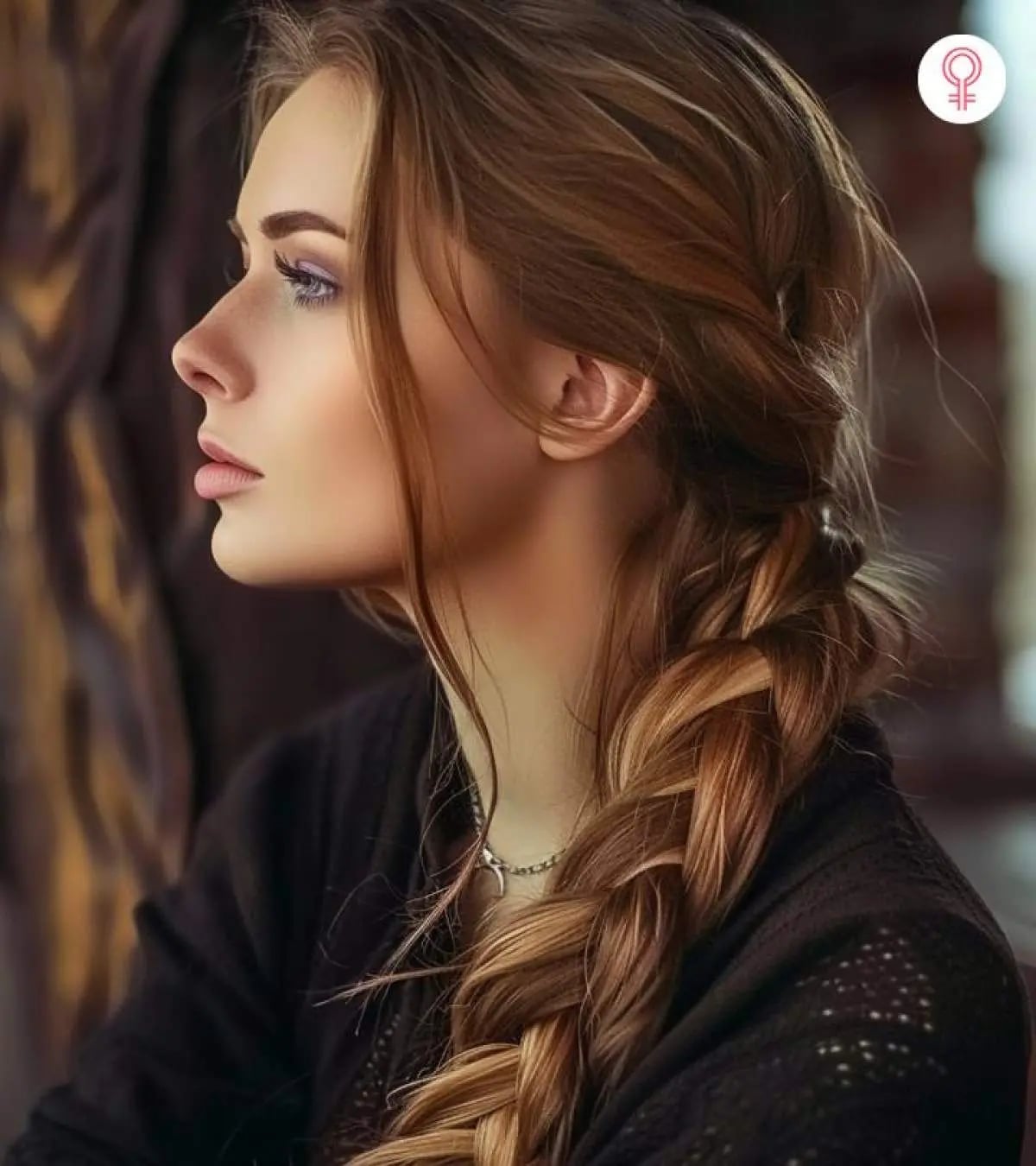
A tight, precise braid and a loose side braid are not the same thing. Warm brown hair with blonde highlights gets styled into a thick, wavy side braid, and the looseness is deliberate. The side part sets the asymmetry, letting the braid fall over one shoulder. Texture here is wavy and thick, which keeps the braid from slipping flat by midday. A texturizing spray on the finished braid helps the strands grip each other. Length needs to be past the collarbone for the braid to appear full. It suits wavy, thick hair more than a sleek, straight texture or a central parting.
Circular braided bantu knots adorn thick black braids
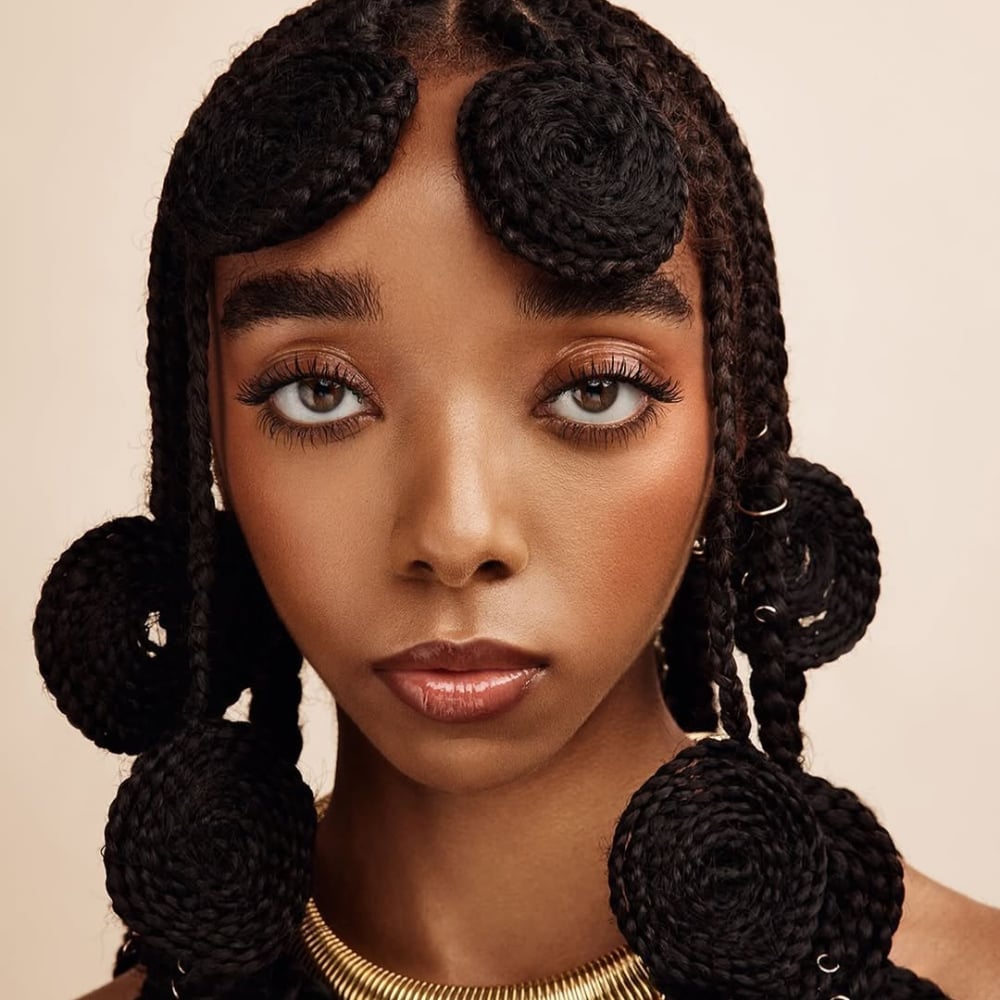
Can you add Bantu knots to braids without the design feeling like two different hairstyles? Yes, when the Bantu knots are braided into the braid itself. Thick black braids with a middle part get circular braided Bantu knots that follow the same braiding technique as the style. The knots sit flush against the scalp, so they do not stick out or wobble. Thick hair that can hold a tight braid pattern carries this design best. This salon-leaning style works for those who want a front detail beyond a simple braid.
Dark brown and blonde braids with loose wavy ends
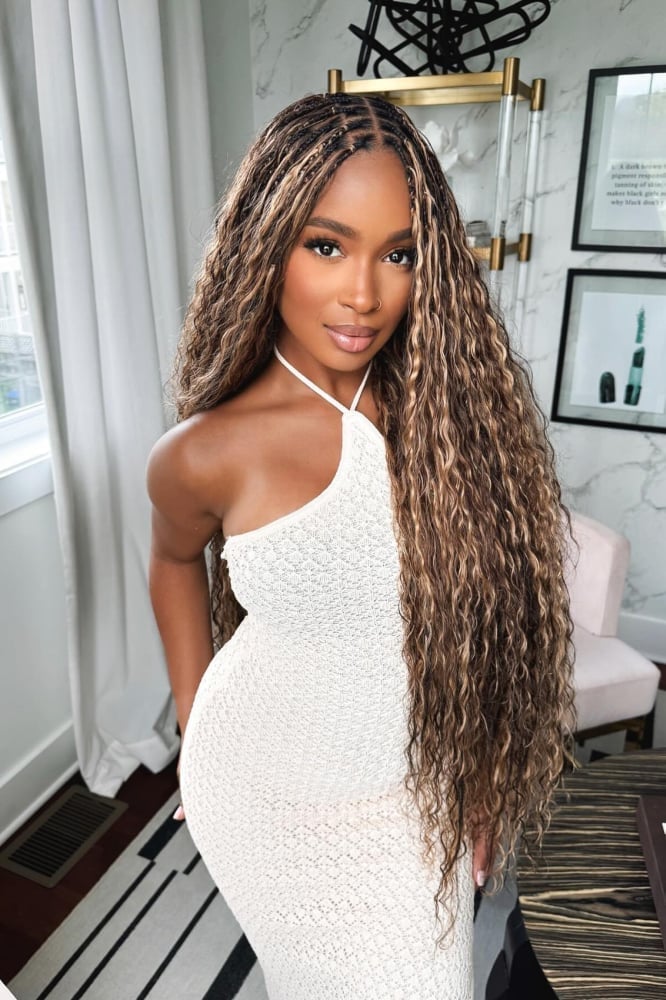
Intricate braids that stop at the jaw and dissolve into waves create a design that fuses two separate styles into one. The braided section and the wavy section must flow into each other, which means the braid needs a gradual loosening in the last inch or two before the wave starts. Tight braids that end abruptly against a curl pattern look like a repair job, not a choice. Dark brown with blonde highlights at the ends gives the wave a visible shift in tone that helps the transition look intentional. This style is for those who want contrast between textures. Hair with enough length to carry both textures is the starting requirement. About ninety minutes in the chair to get the braid pattern and the wave set right.
Thick wavy dark brown fishtail braid with blonde highlights
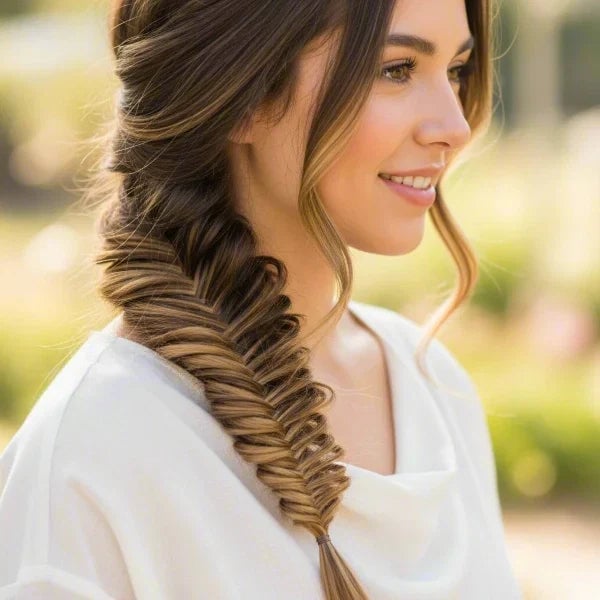
A side part and a center part change how a fishtail braid looks. With a side part, the braid falls asymmetrically, and the weight shifts to one side. Thick, wavy dark brown hair with blonde highlights gets pulled into a detailed fishtail braid, and the side part allows the highlights to catch light differently on each side. The fishtail pattern uses two sections crossed over repeatedly, which makes the blonde strands alternate between visible and tucked. Contrast it with a straight center-part fishtail, which is symmetrical and formal. The side-part version works for thick, wavy hair with ample length to achieve the detailed weave. It suits those with straight textures or a central parting.
Thick black braid for a classic, neat look
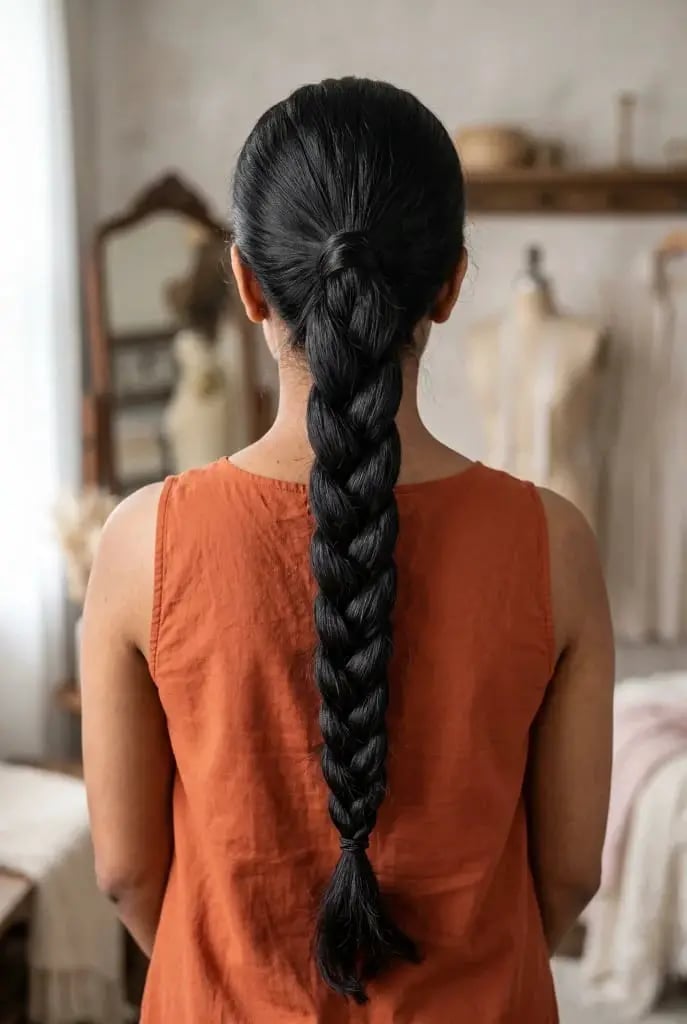
A single, thick black braid down the middle of your back is the quietest statement you can make. Straight, thick hair with a clean middle part and the braid secured at the end requires no texture spray, no waves, no embellishments. The length is long enough to fall past the shoulders and land somewhere around the mid-back. Suitable for DIY styling if you can maintain even tension through the whole braid. Avoid this style if you prefer textured braids or added embellishments. A daily re-braid keeps it neat; ten minutes and a mirror is all it takes.
Black to blonde Ombre box braids with curly ends
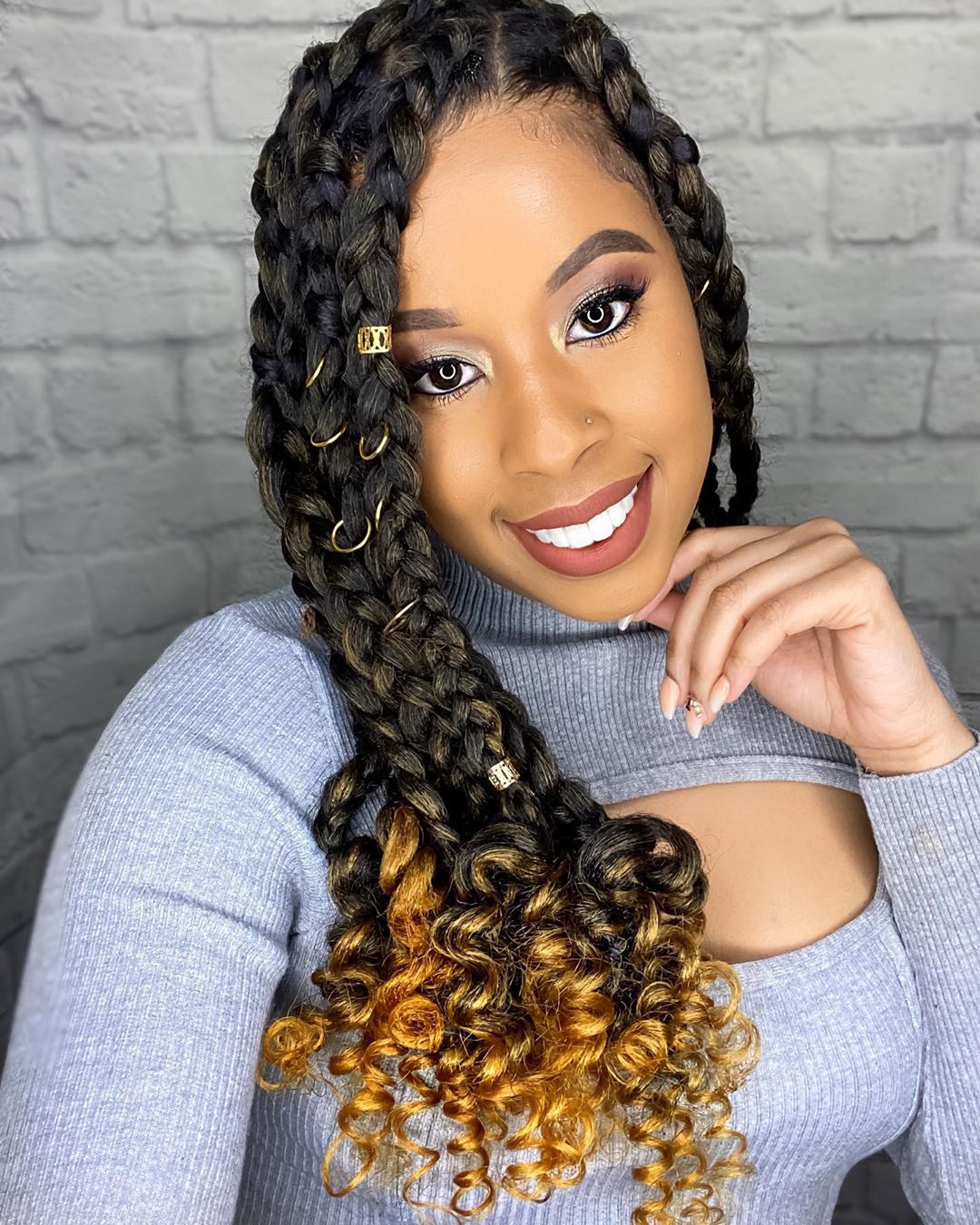
Gold hair cuffs and rings sit at intervals along thick box braids that shift from black to a warm blonde ombre. The color transition is gradual, starting dark at the roots and lightening by the time it reaches the curly ends. Each braid is substantial enough to hold the metal accessories without sagging.
Curly ends add a softer finish than blunt tips, and they reflect light in varied ways. A curl-defining product refreshes the ends between washes. Extensions may require special care to keep the texture bouncy. A middle part keeps the layout symmetrical, letting the gold cuffs act as deliberate accents rather than random additions.
Strawberry blonde bubble braid with colorful hair ties
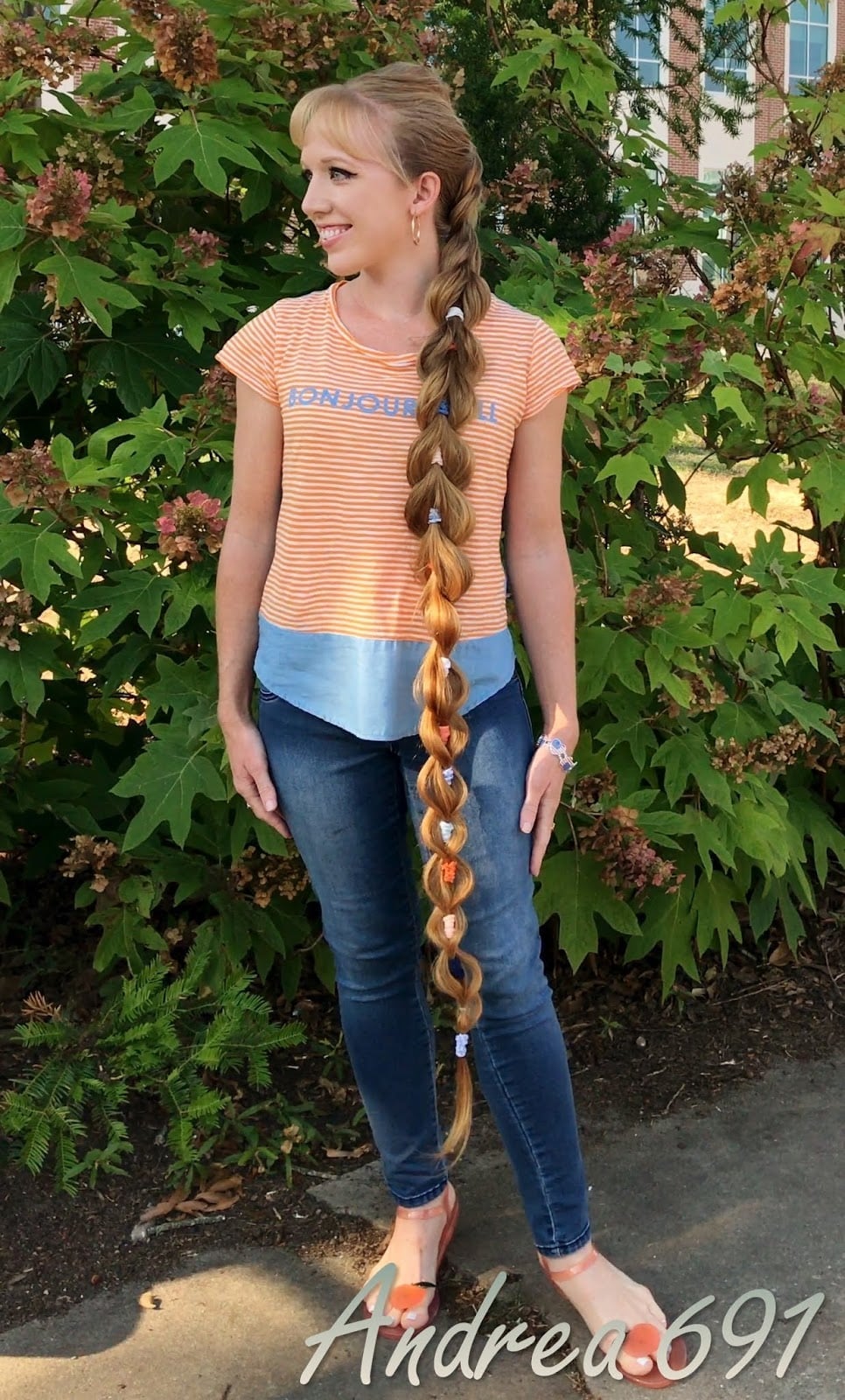
A classic braid relies on even tension throughout. A bubble braid works differently: it uses elastic ties at intervals to create distinct segments, then the hair between each tie is gently pulled apart to form rounded bubbles. Strawberry blonde hair with side-swept bangs and subtle layers gets styled into a long, thick bubble braid secured with multiple colorful hair ties. The side part sets the asymmetry, letting the braid fall over one shoulder.
The colorful ties are the focal point. They break up the strawberry blonde shade into visible sections, and the contrast is playful rather than precise. This version requires significant length and a salon-level hand to get the bubbles even. Suitable for festivals or events where a classic braid feels too quiet. Avoid this style for a single-color tie or a more subtle braid pattern.
Cornrow braids transition into long thick plaits for a sleek look
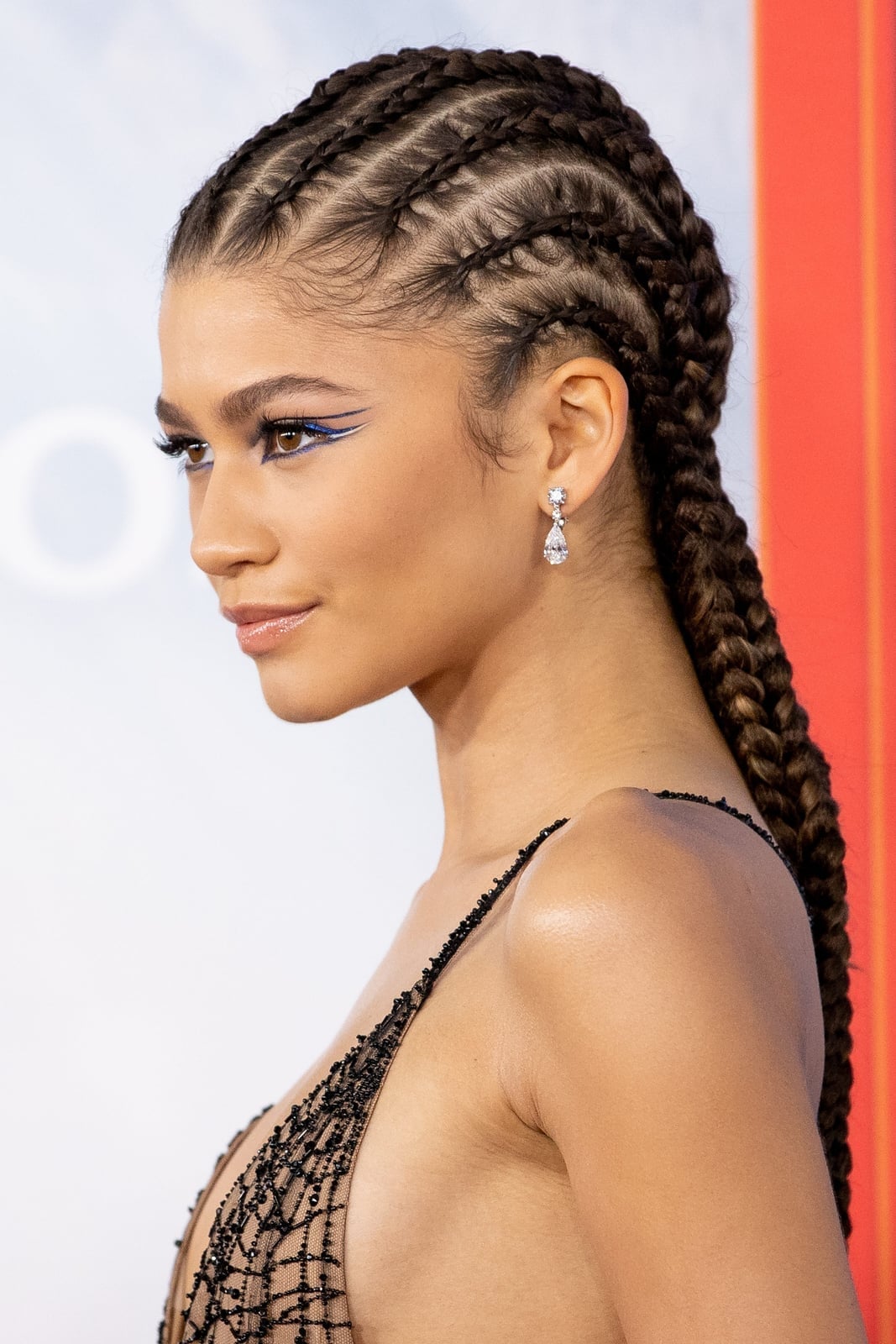
Cornrows start at the hairline and shift into thick plaits by the nape. The middle part keeps the whole layout symmetrical. You need enough density to support both the tight rows and the heavier braids below. Thick hair is the natural candidate here. A single braid type or a more natural texture would change the look. Request from your stylist: dark brown cornrow braids transitioning to long thick plaits. Cornrow maintenance is key; ensure the scalp is moisturized and avoid excessive tension.
Chunky dark blonde fishtail braid with lighter highlights
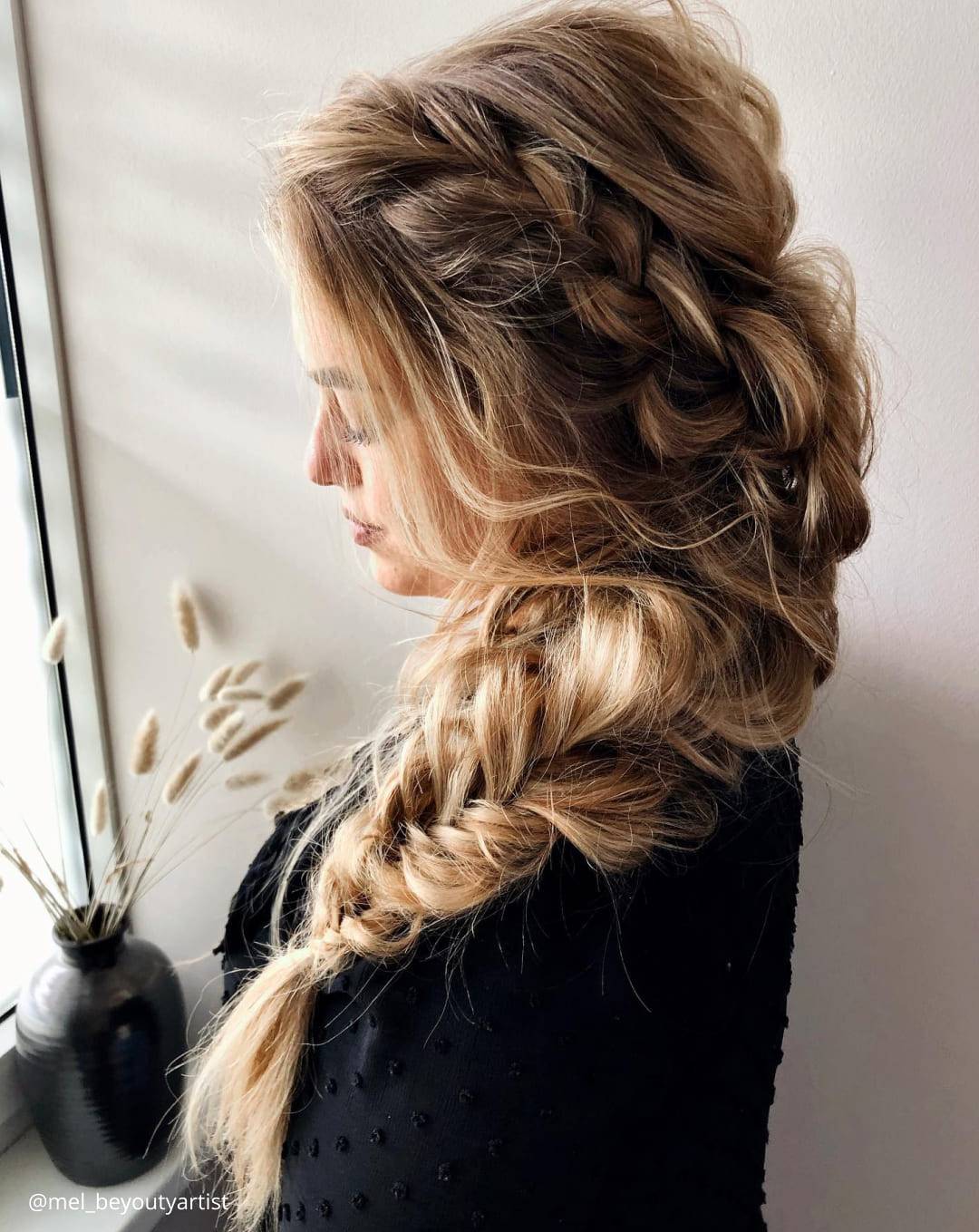
The side part sets up the asymmetry. A chunky fishtail braid runs down one side, while loose waves stay on the other. The dark blonde base gets lift from lighter blonde highlights woven through the braid. Thick, wavy hair with significant length works best here. Avoid this style if you prefer straight hair or a central braid.
Pulling gently on the chunky fishtail braid can enhance its texture and volume. The hold relies on the braid structure itself.
Dark red and black braids with intricate curly ends
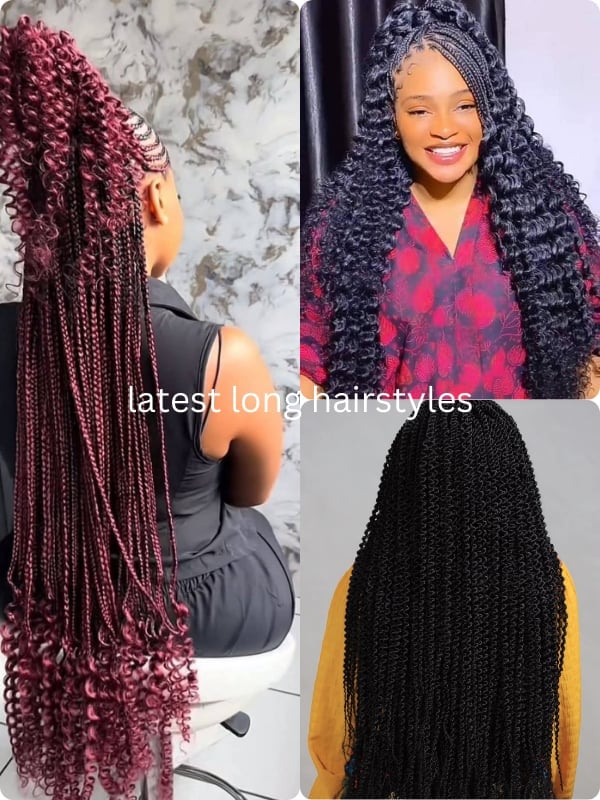
The trade-off is real. Dark red with black undertones makes a strong statement, but the curly ends add a finishing step. A middle part keeps the look grounded. Thick, wavy hair with significant length can carry the intricate braids. Avoid this style if you prefer natural hair colors or straight braid ends. Curly ends can be maintained with curl cream; ensure even application to avoid frizz.
The color also means you commit to that red for the duration. Not a shade you refresh at home.
Long braids with loose curly ends add volume
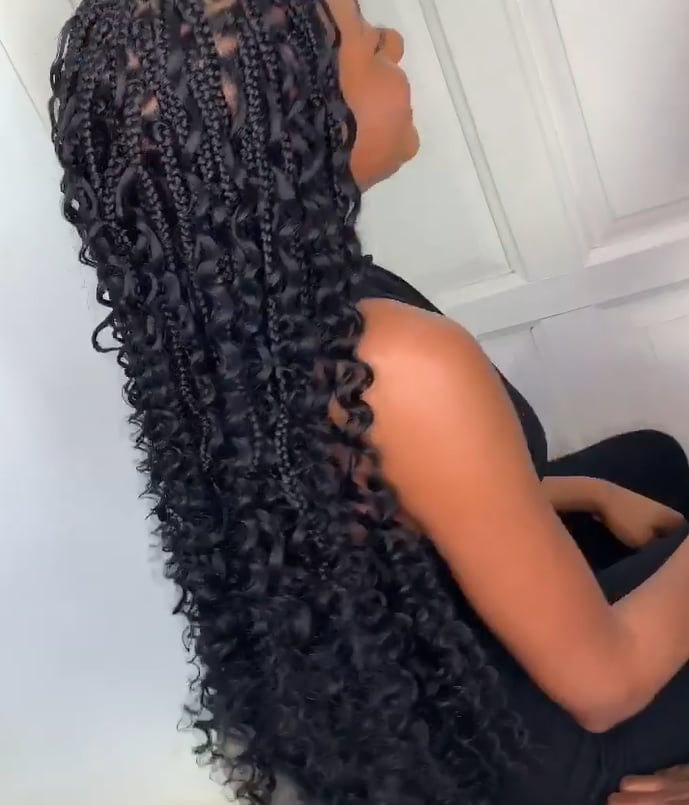
The mistake is thinking a uniform braid texture is the only option. Long braids with loose curly ends add volume and movement without extra bulk. Black hair forms the braid, and the ends break out into soft curls. Hair of significant length can hold both structures. Avoid this style if you prefer uniform texture or a fully braided style. Curly ends add a playful finish; refresh with a light spritz of water and curl enhancer.
Black and blonde box braids with intricate hairline detail
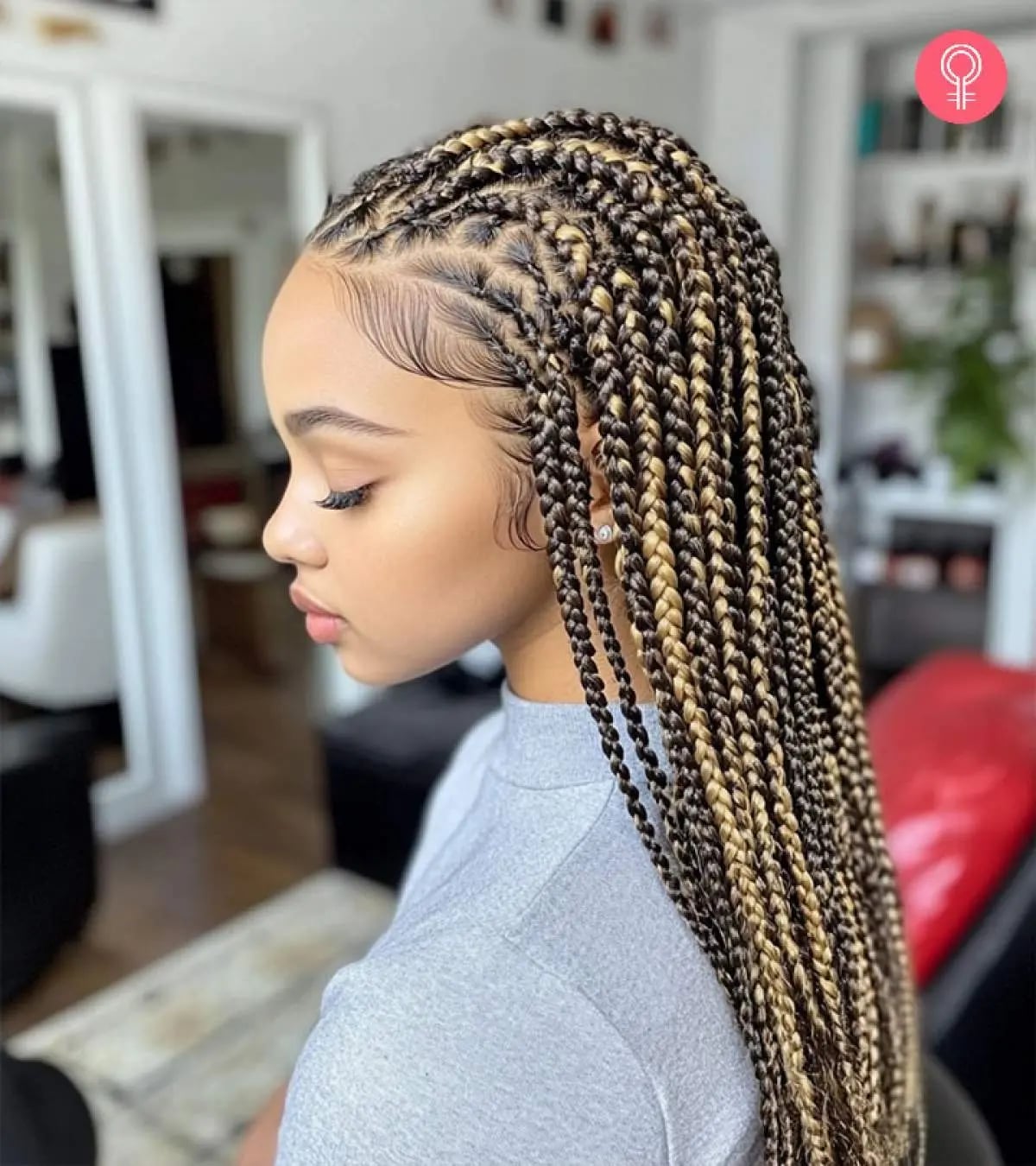
Box braids in black and blonde follow a middle parting. The intricate braiding along the hairline is the technical focus. Sections near the face get smaller, tighter patterns that frame the scalp. Thick hair that can be styled into box braids with precise hairline detailing works best. A simpler braid style or solid color is an alternative. Request from your stylist: long black and blonde box braids with intricate hairline braiding.
Intricate hairline braiding requires precision; keep the scalp clean to showcase the detail.
Thin box braids fall down the back creating a sleek neat look
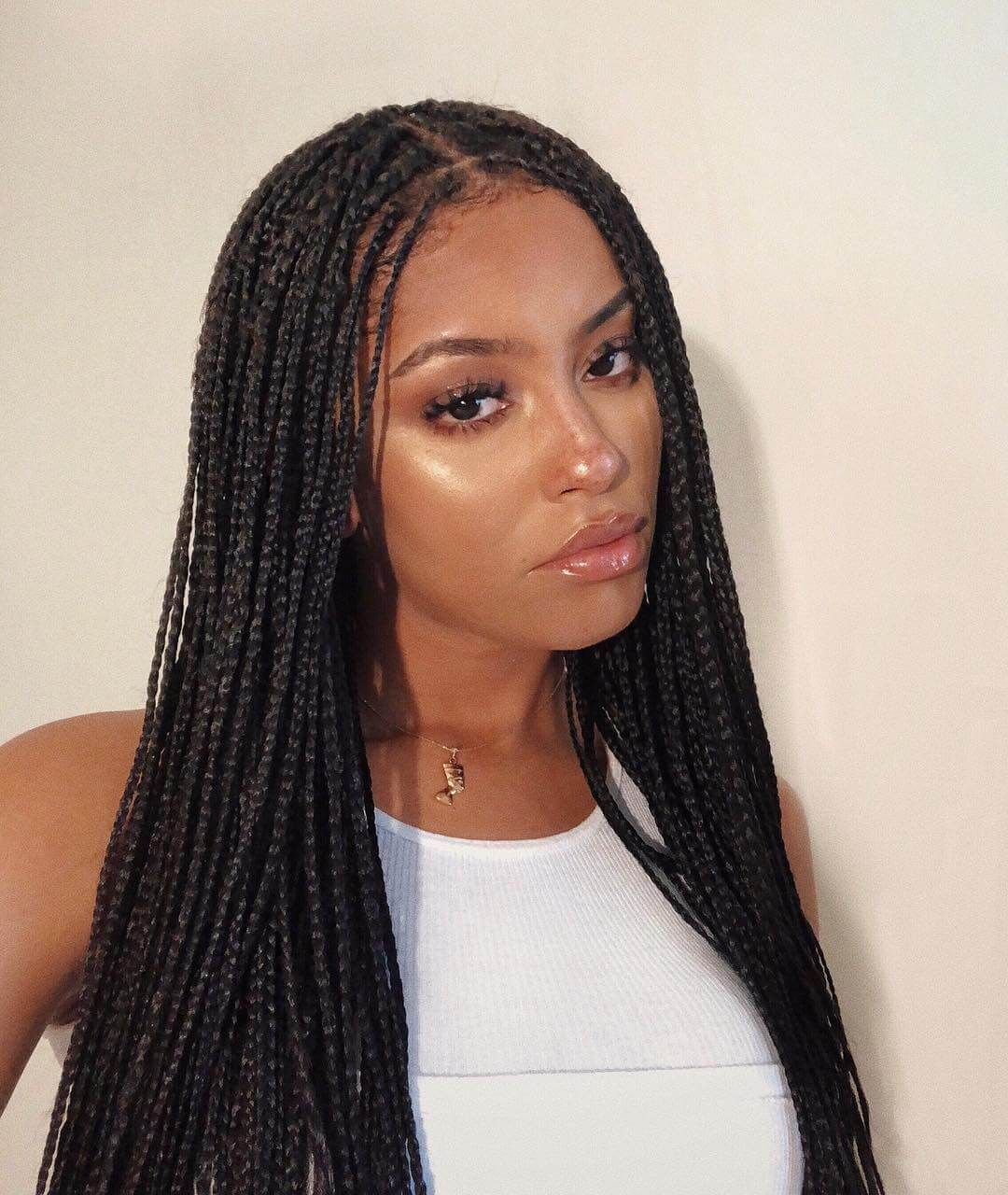
Fine hair holds thin box braids well, and this sleek version proves it. The long, thin strands fall straight past the shoulders with a middle part that keeps everything symmetrical. Styling is minimal. The braids pull the hair flat. Texture here is straight and thick at the roots, then narrows into clean ends. Color is a solid black, no tonal variation needed. Hold is excellent; expect these to stay smooth for two weeks before the first frizz appears at the nape.
Volume is minimal and the finish is deliberately flat and neat. The catch: thin braids show every loose hair at the part line sooner than thicker ones do. You will need a trim every eight weeks to keep the ends from splitting.
Long neat black box braids framing the face and shoulders
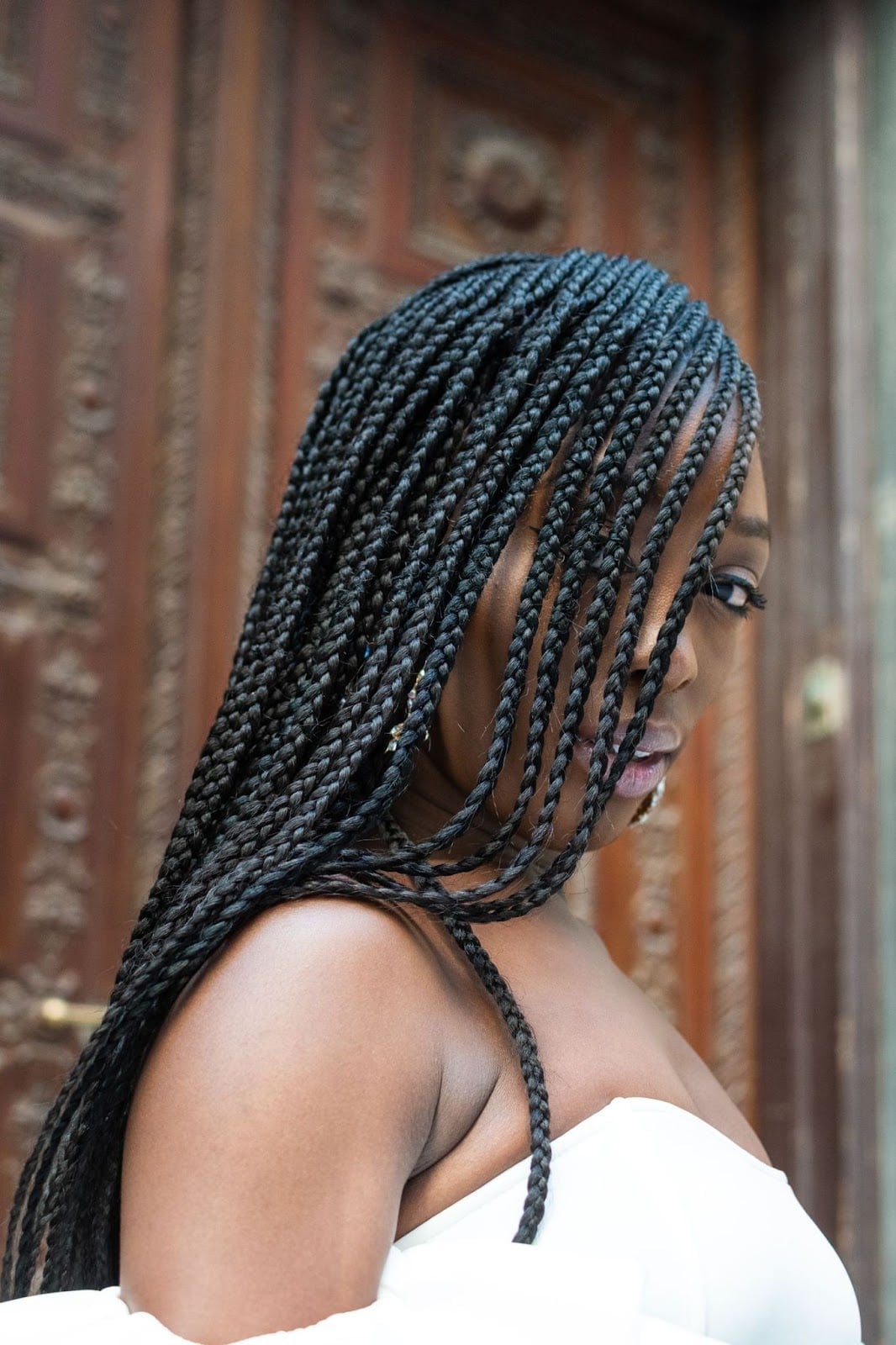
Neat box braids in a deep black hue frame the face and shoulders with a visible middle parting. Styling is straightforward: let them fall straight, no additional heat or product needed. Length hits past the collarbone, thick enough to look substantial. Texture is thick and smooth, with a neat finish. Color is a solid black, no dimension required. Hold is strong for the first three weeks, then the edges start to lift. Consistent tension during installation prevents early unraveling. A light oil on the scalp at week two helps maintain the shine without loosening the braids.
Defined braids with a wavy texture create a striking look
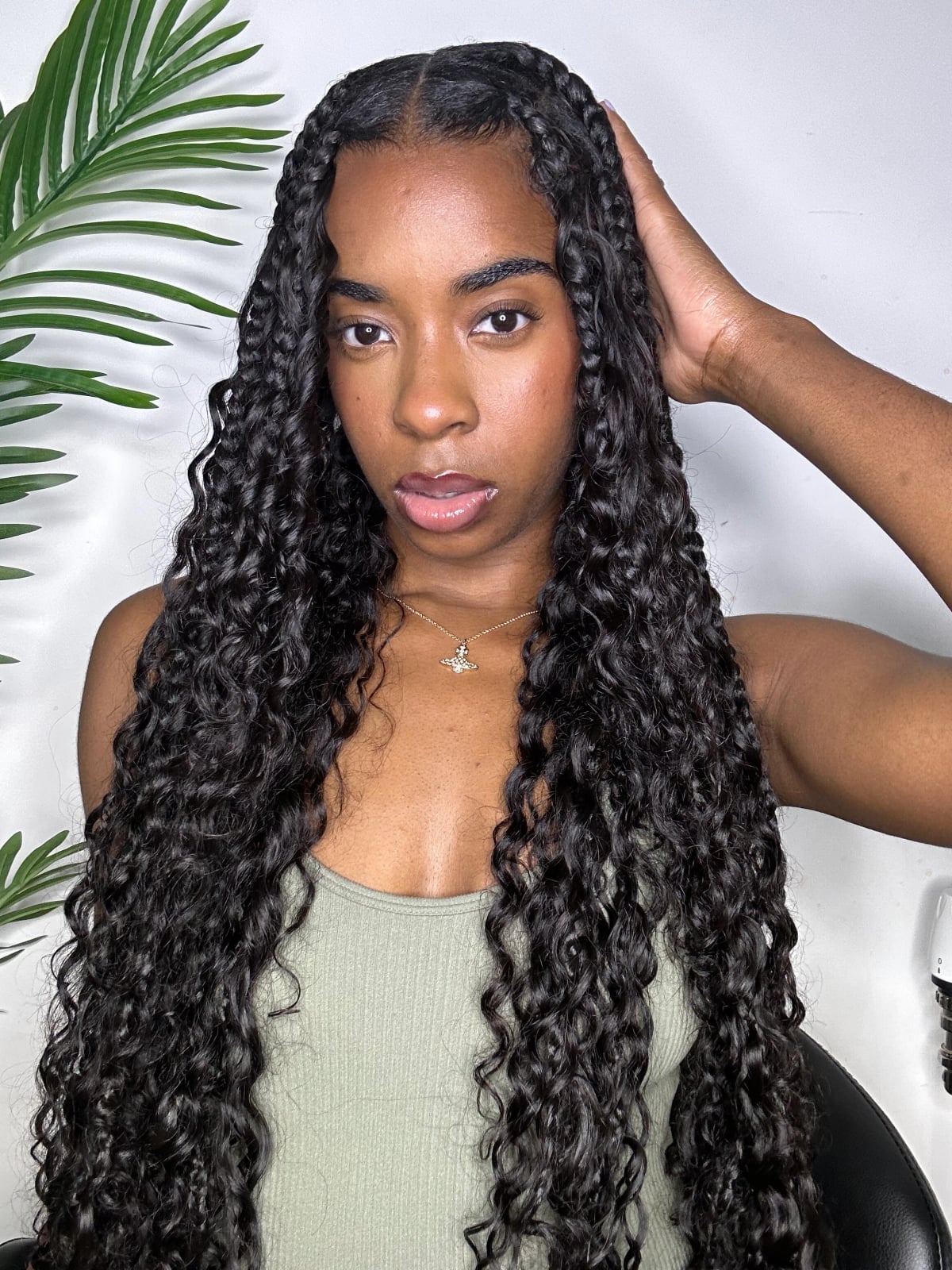
Defined braids with a wavy texture are a different animal from straight braids. The wave creates volume at the scalp and a looser silhouette overall. Styling requires a texturizing spray on each braid after installation, then a gentle scrunch to set the wave. Length is long, past the shoulders, with a middle part that shows the root pattern clearly. Texture is wavy, not curly, and the look is deliberate. Color is black, no highlights needed. Hold is moderate. The wave softens after a week, and you will need to reactivate it with water.
The drawback: defined wavy braids catch on clothing more than straight ones do. Scarves and knit tops are a risk. The wave is the key feature, but it requires a bit of maintenance.
Blonde braided bun with hanging intricate braids
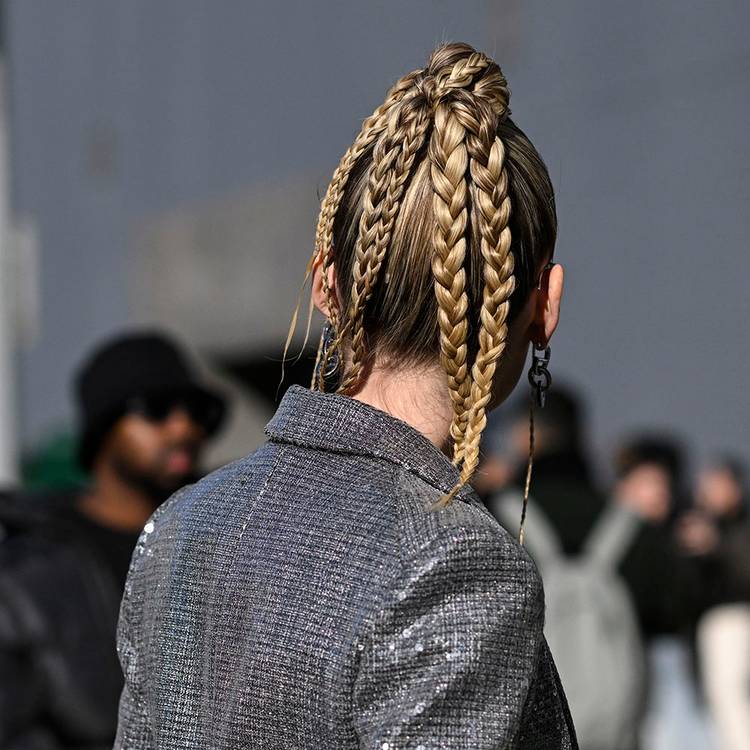
Formal events call for something more than a single braid, and this intricate bun delivers. Multiple braids are gathered into a high bun, with several hanging braids left loose to break up the silhouette. Styling takes time. The bun alone requires sectioning and pinning each braid into place. Length is long enough to wrap into a substantial bun with ends that hang past the nape. Texture is wavy and thick, giving the bun volume without added padding. Color is blonde with darker roots and subtle highlights, creating depth. Hold is secure for a full evening; use pins to keep stray strands in place.
This is a seasonal choice for weddings and galas, not an everyday wear. The complexity means a salon visit, not a quick at-home attempt. Avoid this style if you prefer a fully down style or simpler braiding.
Wavy tendrils frame a neat long dark brown braid
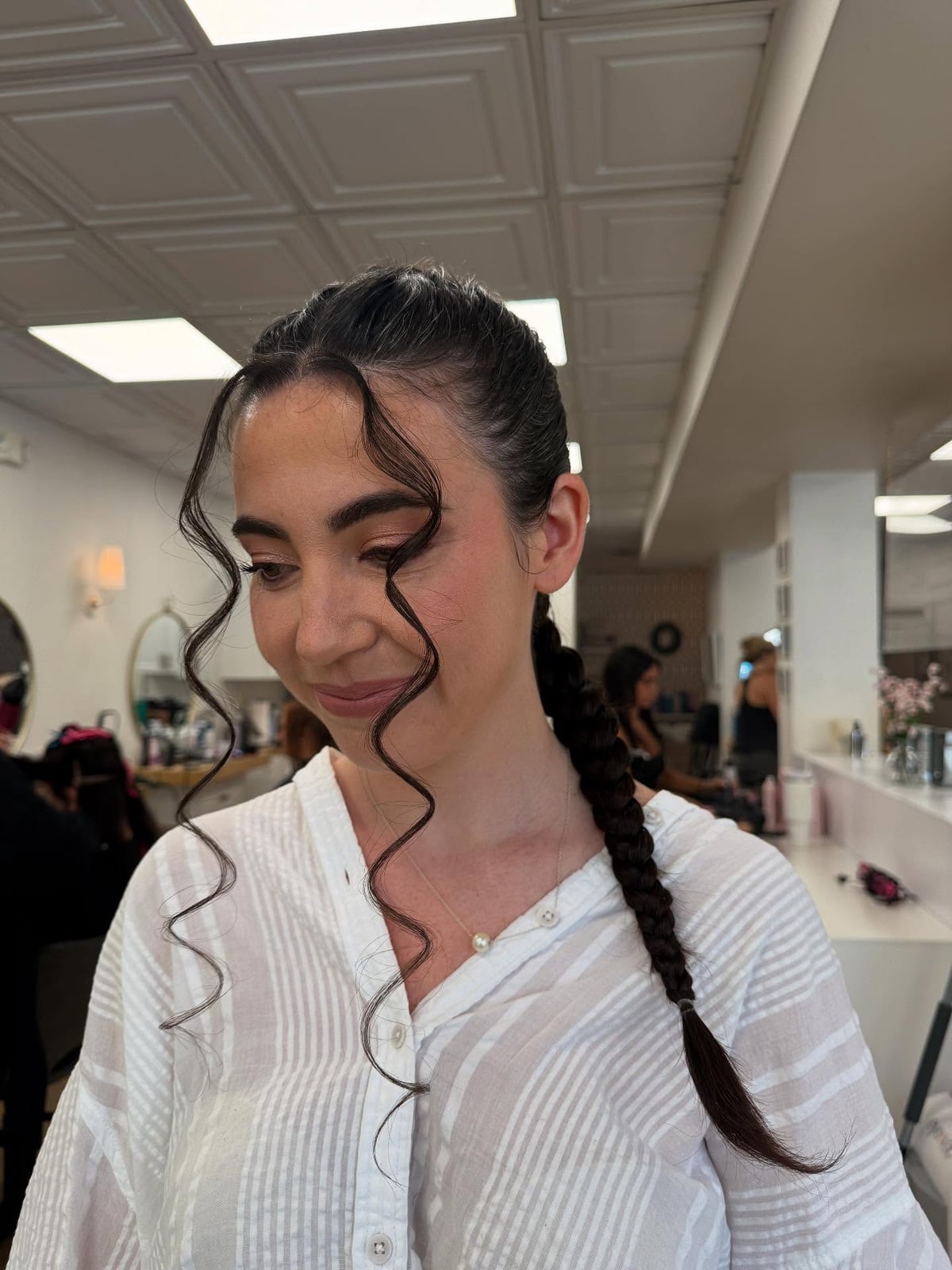
Loose, curled face-framing pieces soften a long dark brown braid without sacrificing structure. Styling involves intentionally leaving out small sections at the front, curling them, and pinning them to stay. Length is long, past the shoulders, with the braid falling straight down the center. Texture is wavy and fine, so the tendrils hold a curl without heavy product. Color is a solid dark brown, no highlights. Hold is good for the tendrils if you use a light-hold product; the braid itself stays neat for a week.
Request from your stylist: long dark brown braid with loose, wavy face-framing tendrils. This works for fine to medium hair with enough length to braid cleanly. Not for anyone who prefers a fully secured style without loose pieces.
Neat long black box braids for a sleek side view, close-up take
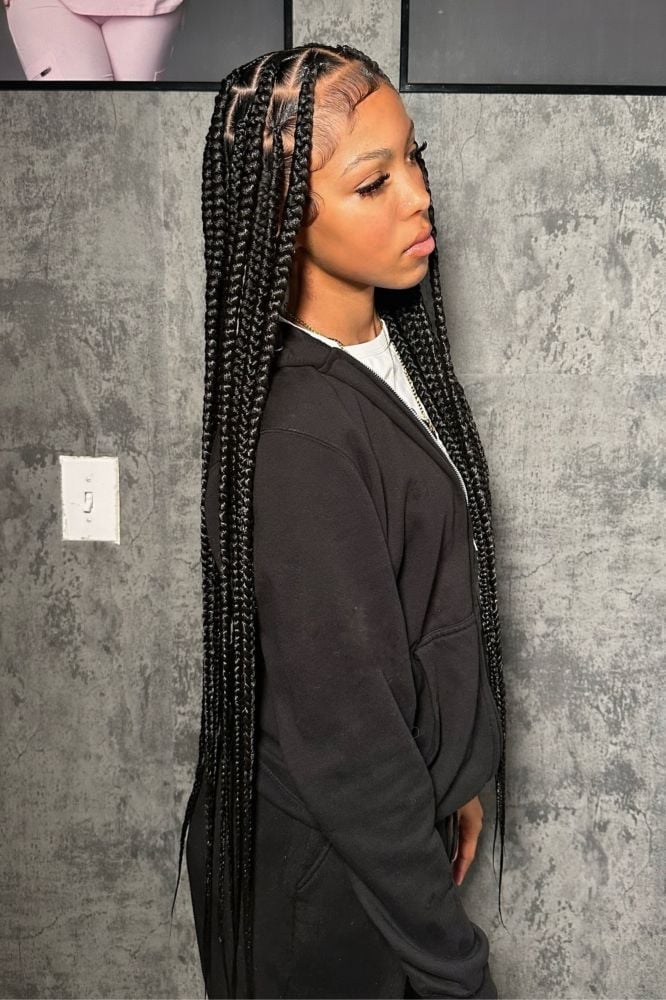
Neat box braids demand a certain discipline. Long, thick black strands fall straight from a clean middle part, and the sleek side view shows every line holding. Styling is straightforward: let them hang, no added wave or curl. Texture stays straight and thick, which means the braids keep their shape without frizz creeping in at the edges. Color is solid black, no highlights or ombre to distract from the precision.
Upkeep here is about maintaining that crisp line. Consistent tension during installation matters, and a silk scarf at night keeps flyaways down. This version stays clean and structured for weeks with a quick re-tie at the ends around week four.
Final Thoughts
Pick your braid by how much time you have for upkeep and how often you want to see your colorist.
- Fine hair: medium box braids with a middle part add density without weight.
- Ten minutes in the morning: a single fishtail or French braid styled the night before.
- Cool base that pulls brassy: ombre or two-tone braids skip brassiness entirely.
- Six weeks between appointments: classic black box braids with a silk bonnet at night.
Long braids offer a flexible and stylish protective option.