34 Beautiful Fulani Braids 2027 with Beads and Rounded Ends
Beautiful Fulani Braids 2027 featuring neat styles, updos with beads, and cornrows with rounded ends. See 34 ornate and elegant designs.
You sit in the chair, open a photo of a braided pattern that runs from hairline to crown, and the stylist nods. That is the moment Fulani braids stop being a board save and become a real plan, the lines, the beads, the way the whole shape holds for weeks without a second thought.
Beautiful Fulani Braids 2027 fill so many saved boards for a reason: they pack cultural history into a protective style that also photographs beautifully. Here are 34 versions, from a five-minute bun to an all-afternoon cornrow map, for anyone who wants a look that stays put and still turns heads.
Ornate braided pattern with long curly braids to mid-back
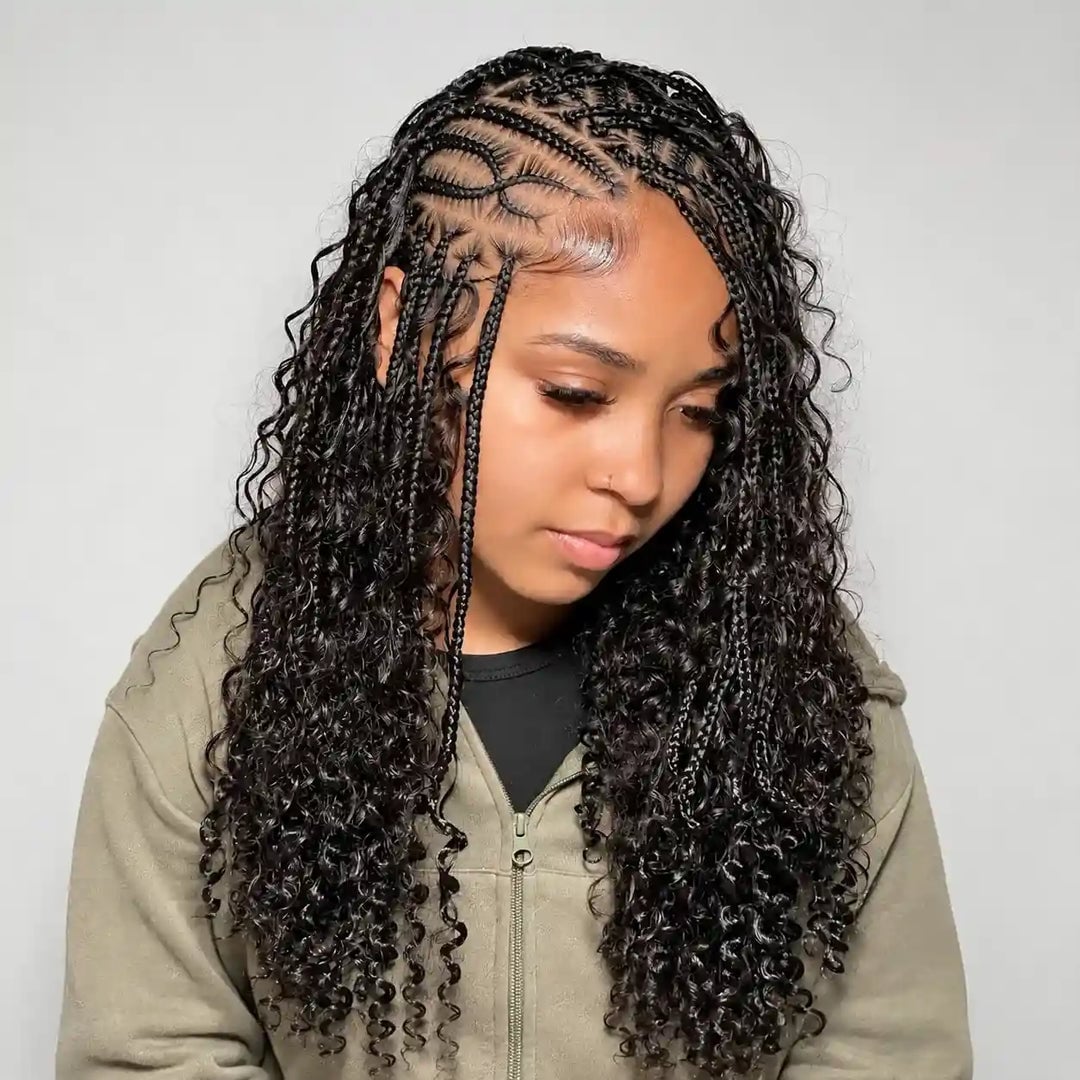
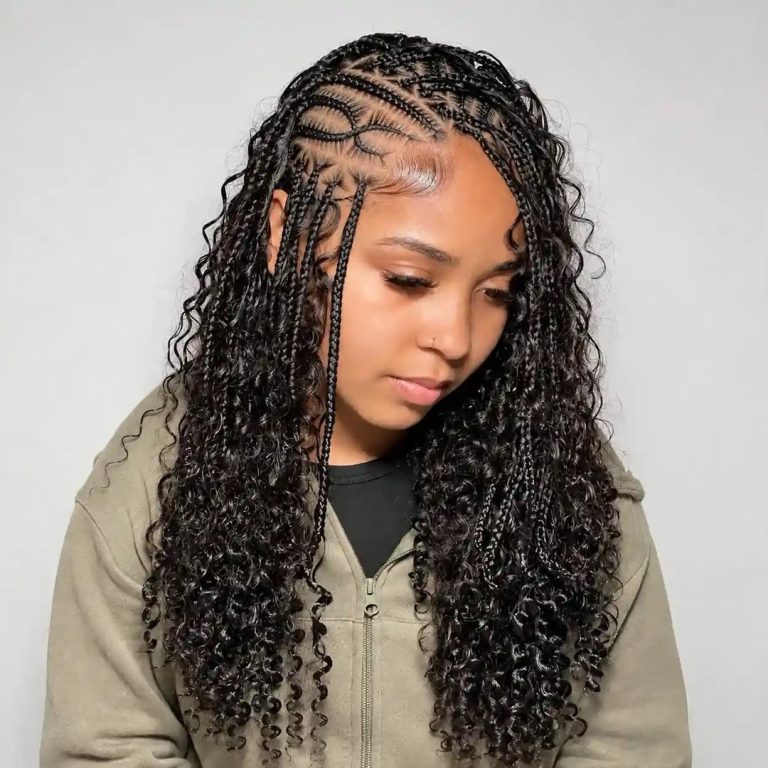
Scalp work this detailed isn’t an accident. Each cornrow curves into the next, forming a pattern that feels architectural rather than decorative. The braids themselves drop in long, curly lengths, thick enough that the texture reads clearly even from a distance. You need hair that already has some density and length, shoulder at minimum, to let the pattern breathe. A side part keeps the design visible without splitting the symmetry. This style takes at least three hours in the chair. Ask your tech for: intricate scalp pattern, long curly braids to mid-back. Maintain the scalp with daily spritzes of water and a light oil; trim the curly ends every ten to twelve weeks.
Fulani braids into a high, voluminous ponytail
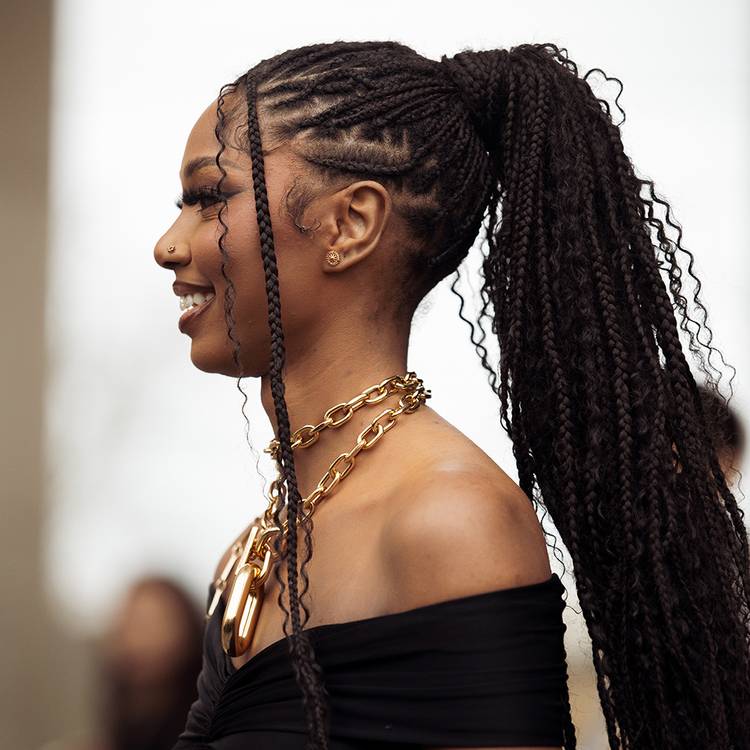
A standard Fulani braid style sits flat against the scalp. This version pulls the whole thing into a high ponytail, so the volume stacks at the crown instead of spreading across your back. The middle part stays neat, and a few loose tendrils frame the face, an intentional choice that keeps the look from looking severe. The ponytail itself is thick and coily, which means it holds its shape without product. Texture matters here: fine or thin hair won’t fill the ponytail the same way. Not for you if you dislike styles that pull hair away from your face completely. Secure the ponytail with a silk scarf at night; refresh the tendrils with a curl refresher spray in the morning.
Neatly parted straight thick black braids
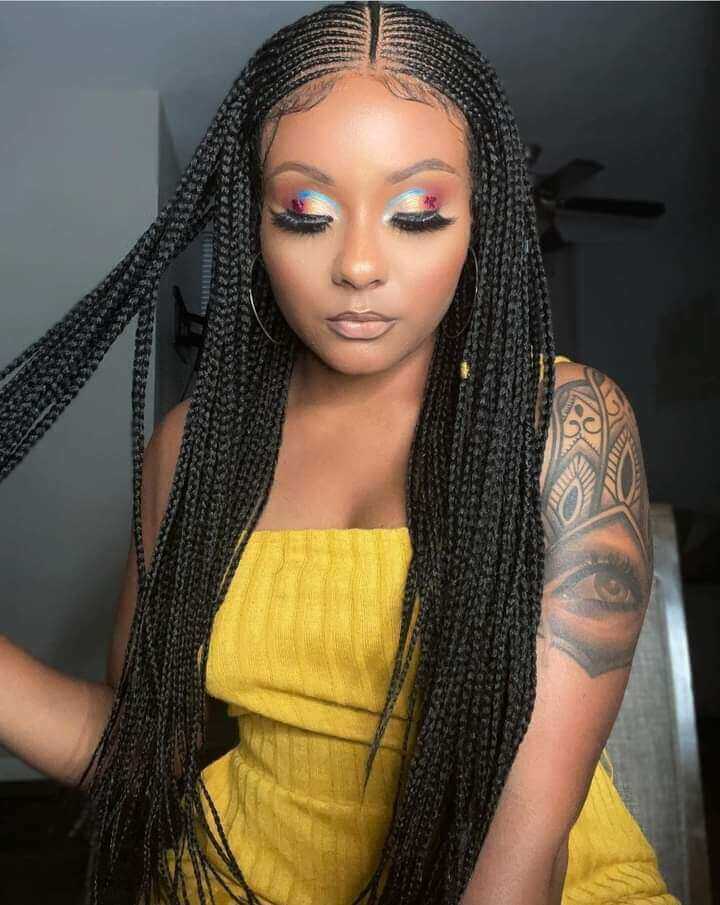
A precise middle part runs from hairline to nape, and each braid is the same width, no variation, no loose ends. The straight, thick black braids hang with a weight that signals patience in the chair. This is the version you choose when you want the structure of Fulani braids without the curls or texture at the ends. It suits most face shapes because the symmetry is neutral. The catch: if you prefer a braid with movement or a wavy finish, this one will feel too rigid. Apply a light serum to keep the braids smooth and shiny; trim the ends every twelve weeks to maintain the clean line.
Tight cornrows into a high bun with beaded accent strands
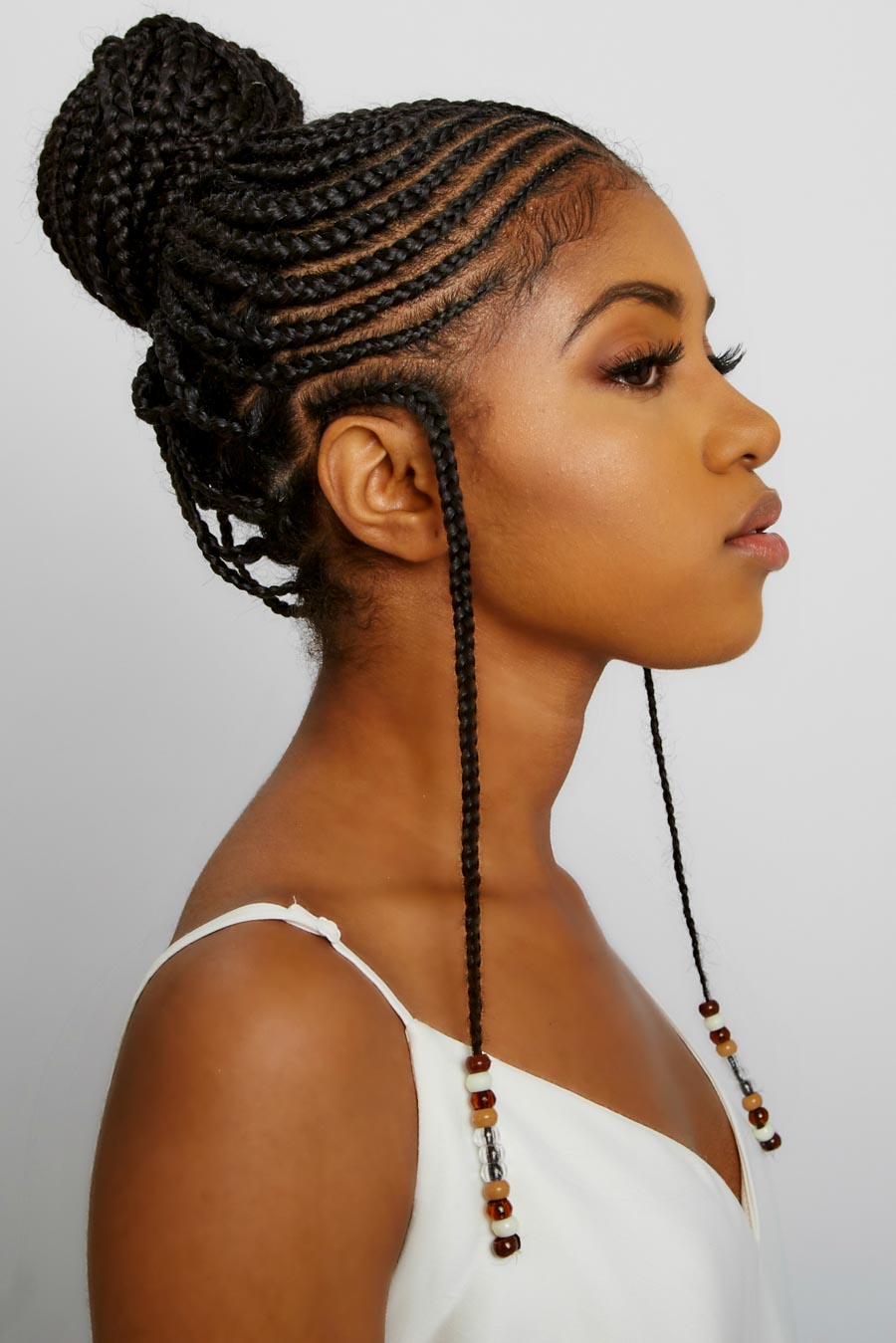
Tight cornrows feed into a high bun, and several braids are left loose, cascading down the sides. Wooden and clear beads punctuate those accent strands, small details that catch the eye without overwhelming the shape. The middle part keeps the cornrows symmetrical, and the bun sits high enough that the weight doesn’t pull at the nape. It works best on thick, coily hair that can hold the bun’s structure without slipping. It suits those who prefer hair worn up and can handle the tension of an updo. Ask your tech for: high braided bun with loose beaded accent strands. Secure the bun with bobby pins and a light hairspray; refresh the beads with a mist of water.
Striking pattern from hairline to nape in rounded braids
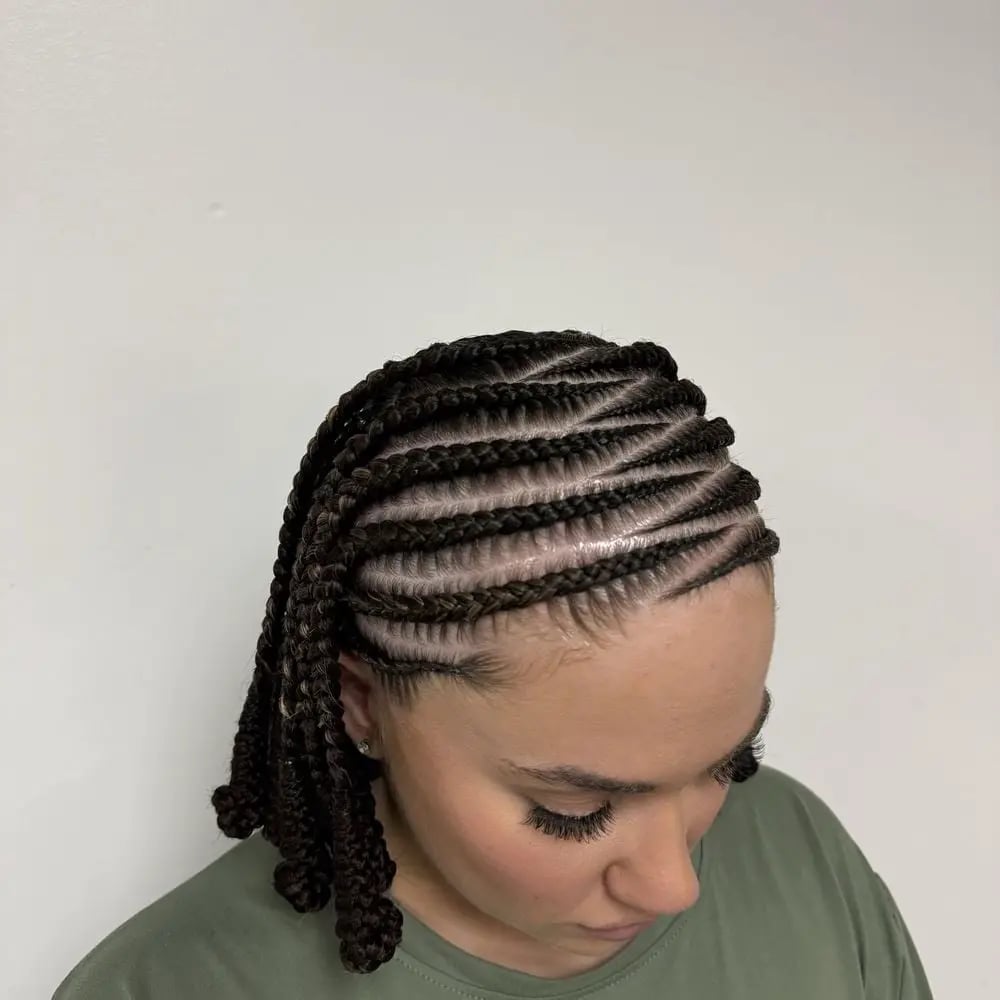
Cornrows often end in a tail or a taper. Here, each braid curves into a rounded finish at the nape, creating a clean silhouette that works for professional settings or everyday wear. The center part guides the eye down the middle, and the dark brown color highlights the pattern itself. This style lands well in cooler months when you want a low-maintenance option that does not need daily styling. The rounded ends mean less fraying over time, which extends the life of the install. Choose this style if you prefer structured braids over individual hanging braids or a less structured look. A light oil along the scalp parts keeps the skin from feeling tight.
Heart-shaped braid design with curly ends
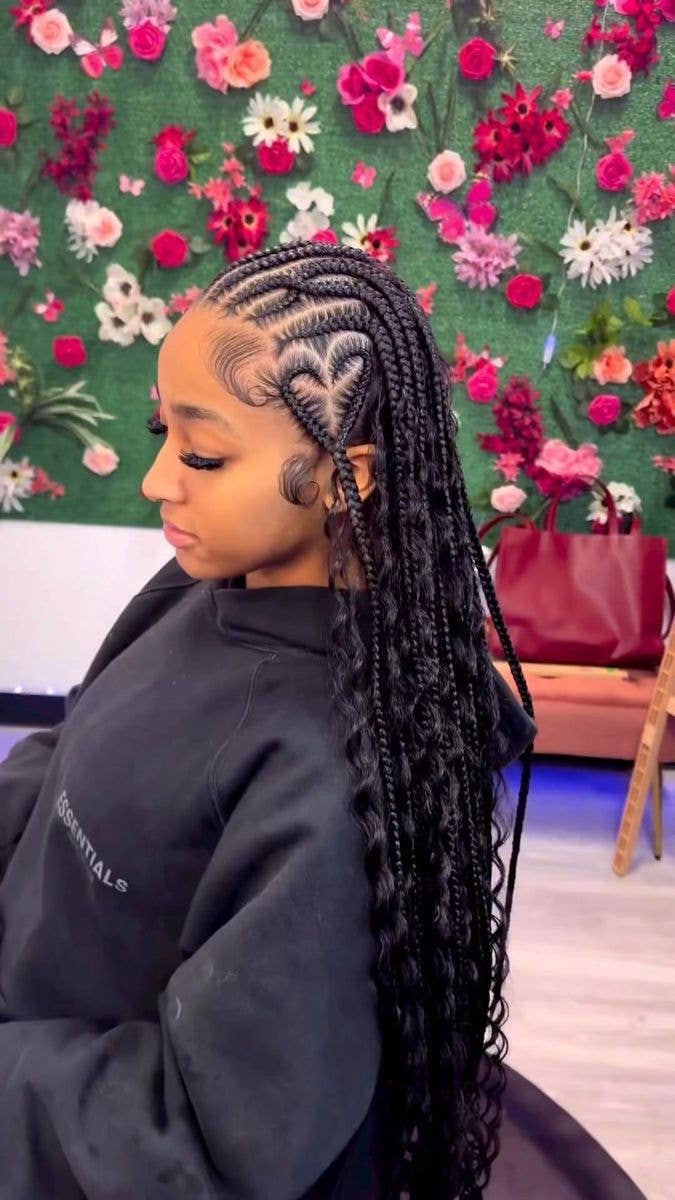
Can a braid pattern actually look like a heart? Yes, and it takes a stylist who knows how to map a design before she starts. The deep black hue makes the shape stand out, while the curly ends add a softer finish to the coily, thick texture. Middle part, side profile, every strand placed with intention. Tell your stylist: fulani braids with a heart-shaped design and curly ends. The heart sits near the temple, meaning the scalp follows a standard pattern elsewhere. A simple, classic braid style is a different look. The pattern holds well for weeks, but the curly ends need a light mist to keep their shape.
Geometric braid pattern with face-framing braids
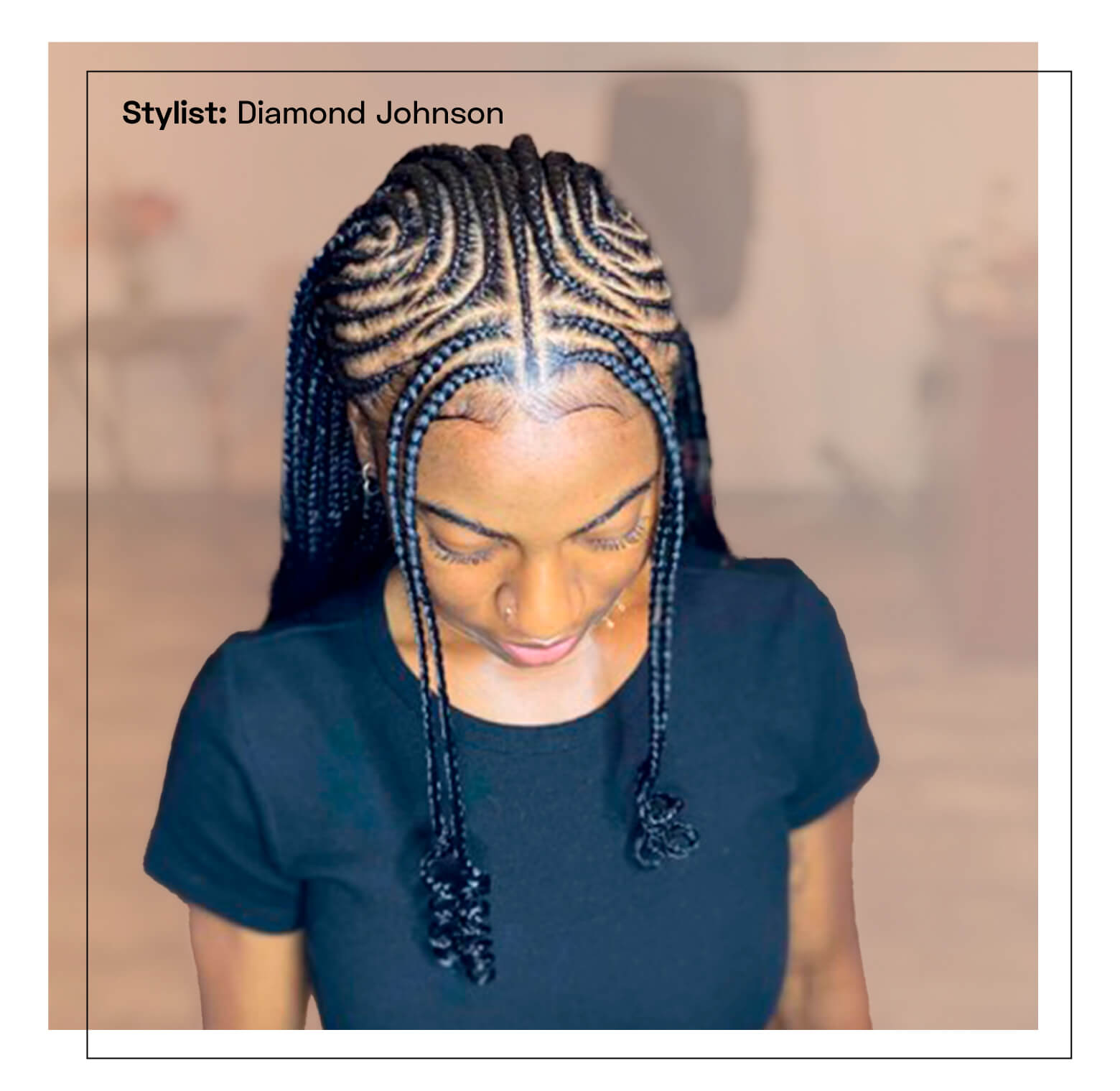
Two face-framing braids with curled ends break up an otherwise uniform pattern. The geometric design radiates from the middle part, each line precise and evenly spaced. Black, thick, coily hair carries the detail best. The framing pieces hit just below the jaw, which softens a square face. Skip it if you prefer a uniform braid pattern. The geometry stays crisp as long as you sleep with a satin scarf. No need to touch it for three weeks.
Wavy coily ends with intricate scalp pattern and baby hairs
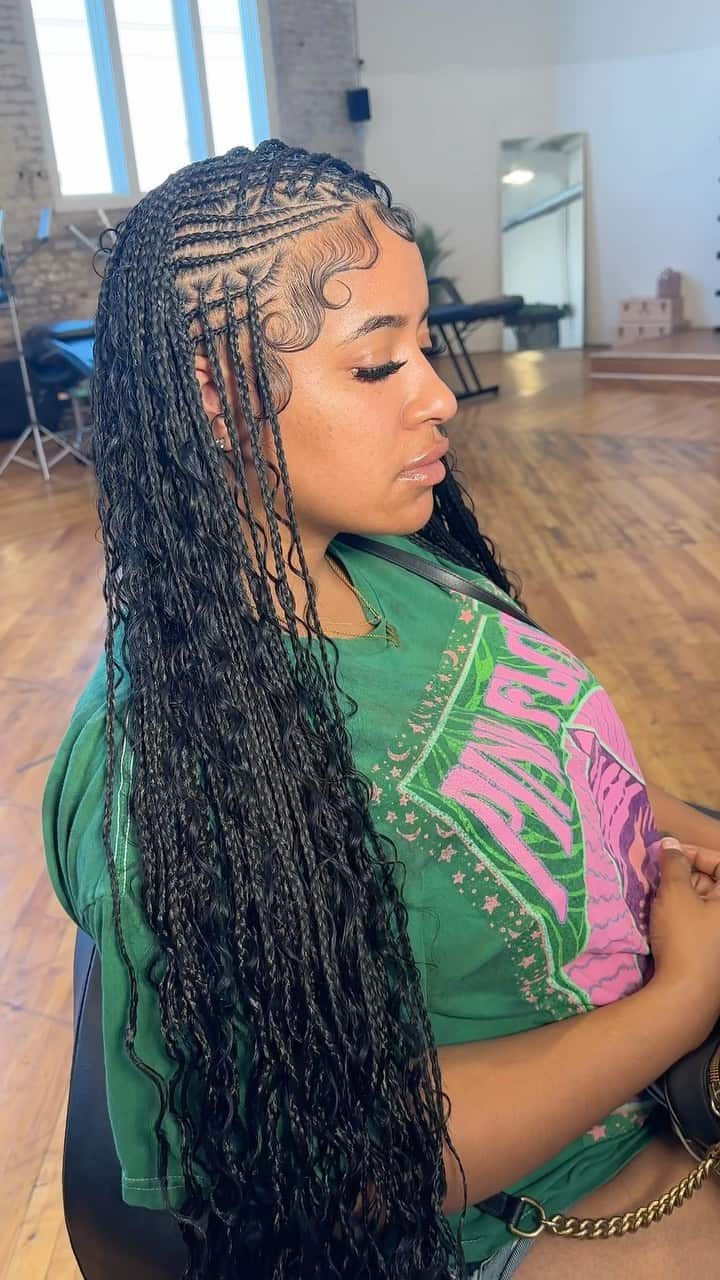
Does an intricate braided pattern on the scalp mean more chair time? Yes, and the trade-off is worth it. The wavy, coily ends add movement, while the defined baby hairs frame the face. Black, thick, coily texture holds the pattern well. The catch: baby hairs require daily styling. A toothbrush and edge control become part of your morning routine. Skip it if you prefer not to style baby hairs. The scalp pattern itself lasts for weeks with minimal upkeep. A side profile shows the full scope of the design.
Dark brown braids with auburn highlights and gold/silver beads
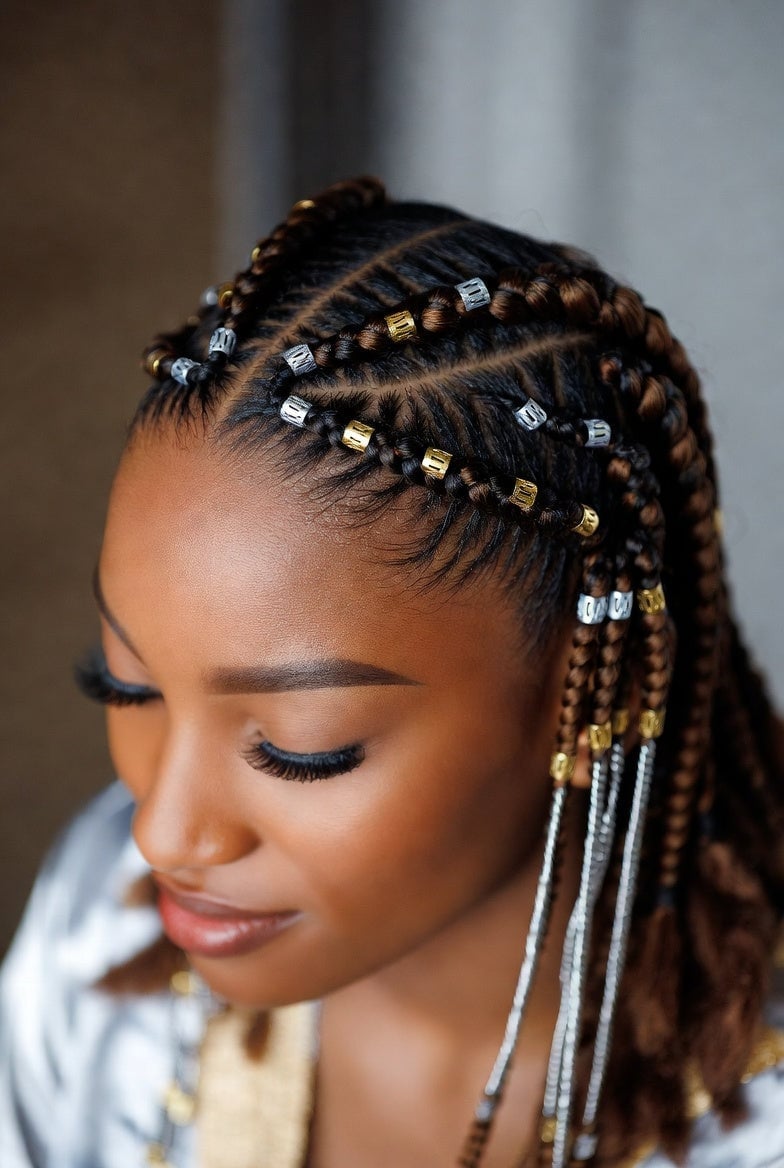
Two tones in one braid: a dark brown base with subtle auburn highlights running through. The centered parting keeps the look balanced, and the gold and silver beads add weight at the ends. Coily, thick texture holds the color well without bleeding. Tell your colorist: dark brown braids with auburn highlights and gold/silver beads. The auburn looks a warm accent, not a full highlight. Wipe the beads with a soft cloth every few days to keep the shine. The color holds its tone for about four weeks before the auburn starts to fade.
Intricate cornrow pattern transitioning to hanging braids
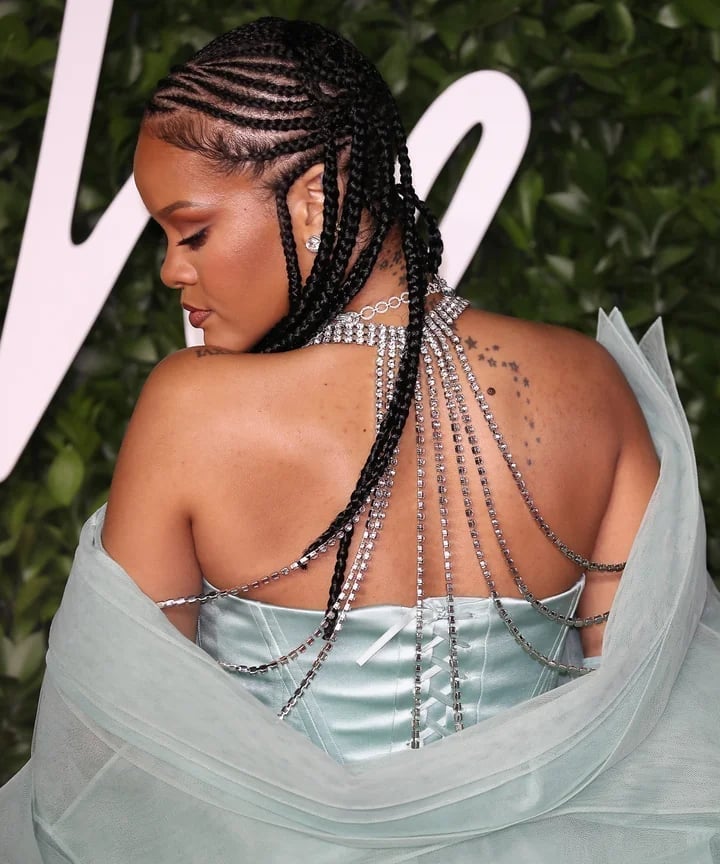
This one splits the difference between a full cornrow style and loose braids. The intricate cornrow pattern on the scalp transitions into long, thick hanging braids. Middle part, black, coily texture. Compare it to a style where the cornrows run the full length: that version feels heavier and takes longer to remove. This version gives you the scalp art with less bulk. A side profile and back view show the full transition. Skip it if you prefer uniform braids throughout. The hanging braids move freely, which makes this style cooler for travel and everyday wear.
Black and honey blonde Ombre braids with beads
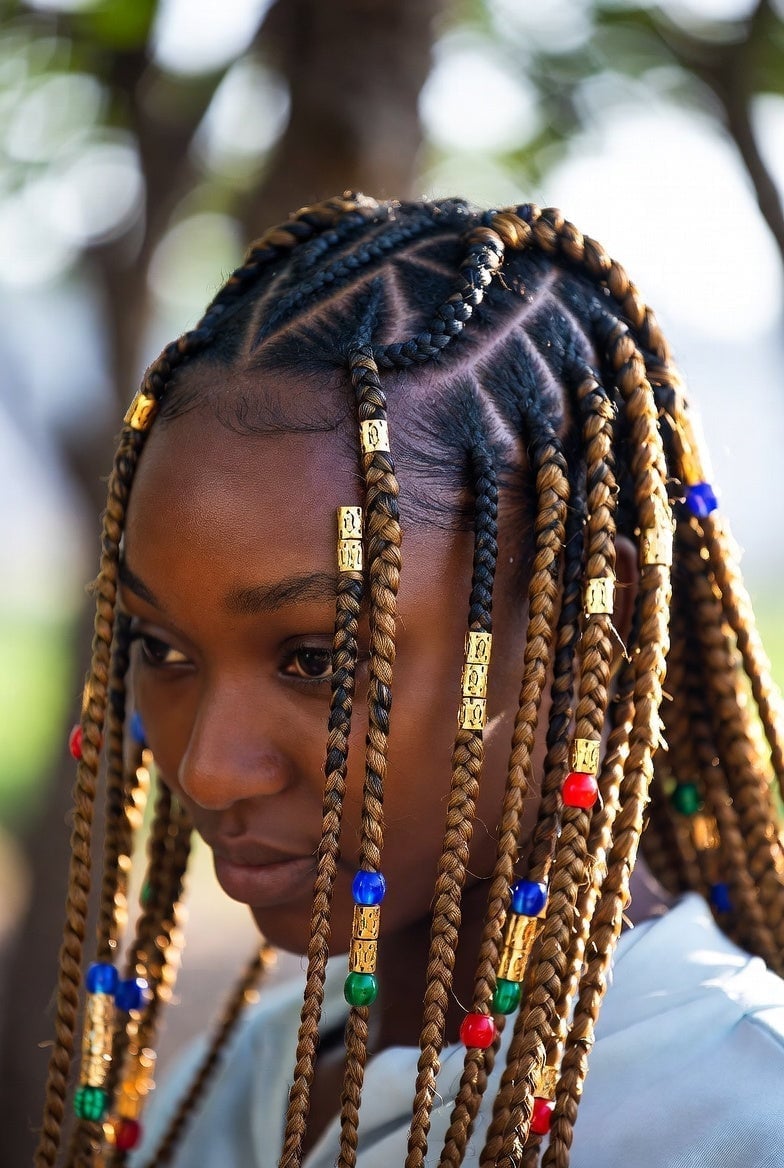
Geometric parting meets a two-tone shift. The black base deepens into honey blonde as the braids travel, so the color reads intentional from every angle. Gold beads catch first; colorful accent beads add a second layer of detail. A single, natural hair color avoids the upkeep this ombre demands. Tell your stylist: black and honey blonde ombre Fulani braids with geometric parting and beads. Thick, coily texture holds the color separation best, and a color-safe shampoo keeps the blonde from dulling. One short sentence: this is a salon-only design.
Classic fulani braids adorned with wooden beads
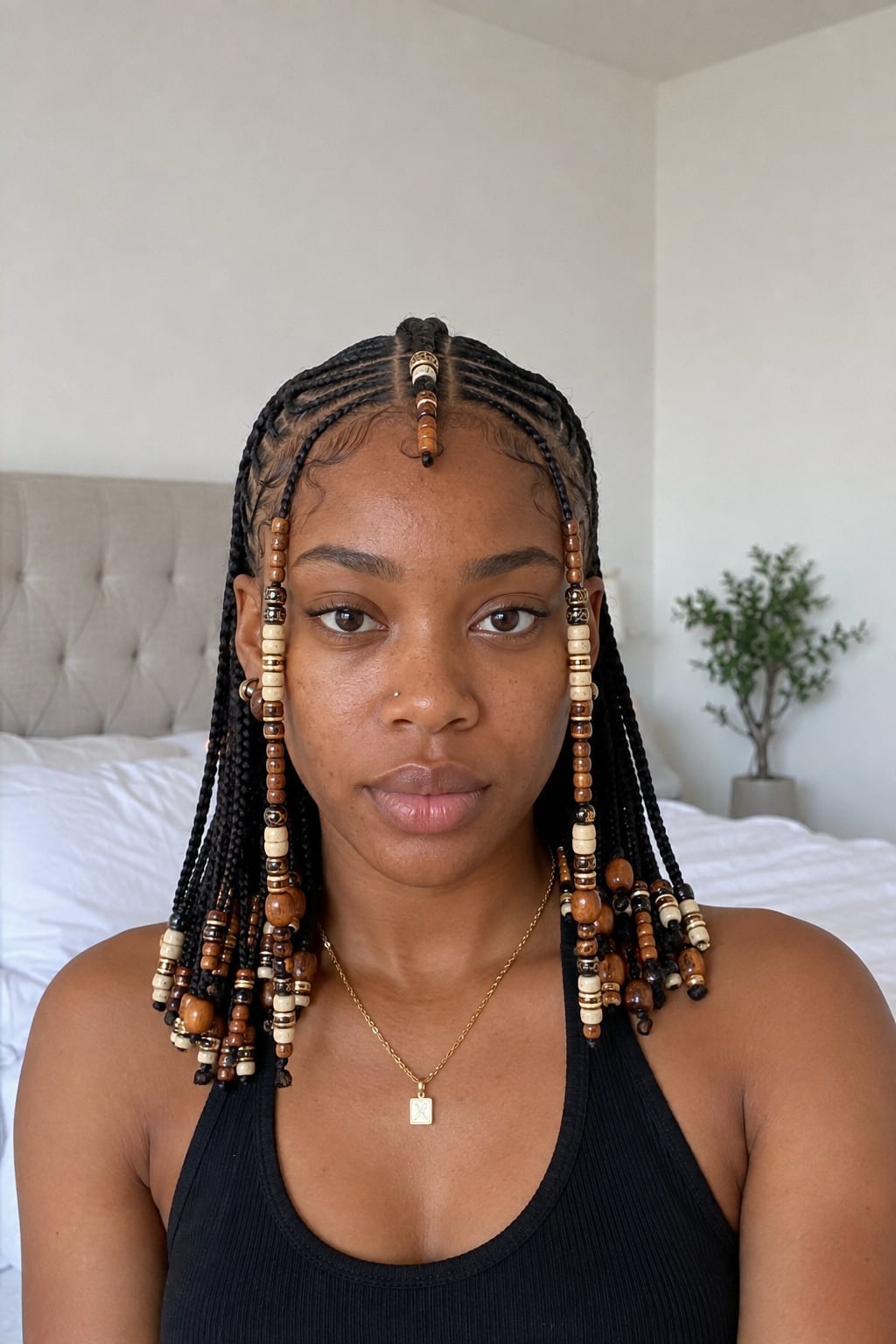
Neat cornrows feed into hanging plaits that fall past the shoulders. The structure is straightforward, feed-and-braid, but the wooden beads change the rhythm. Assorted shapes and sizes get threaded onto random strands, so no two sections land the same. The natural matte finish of the wood sits quietly against black coily hair. Thick texture gives the beads enough grip to stay put. Wipe each bead with a dry cloth before you tuck in at night; dust collects fast.
Dark brown braids with lighter highlights and clear beads
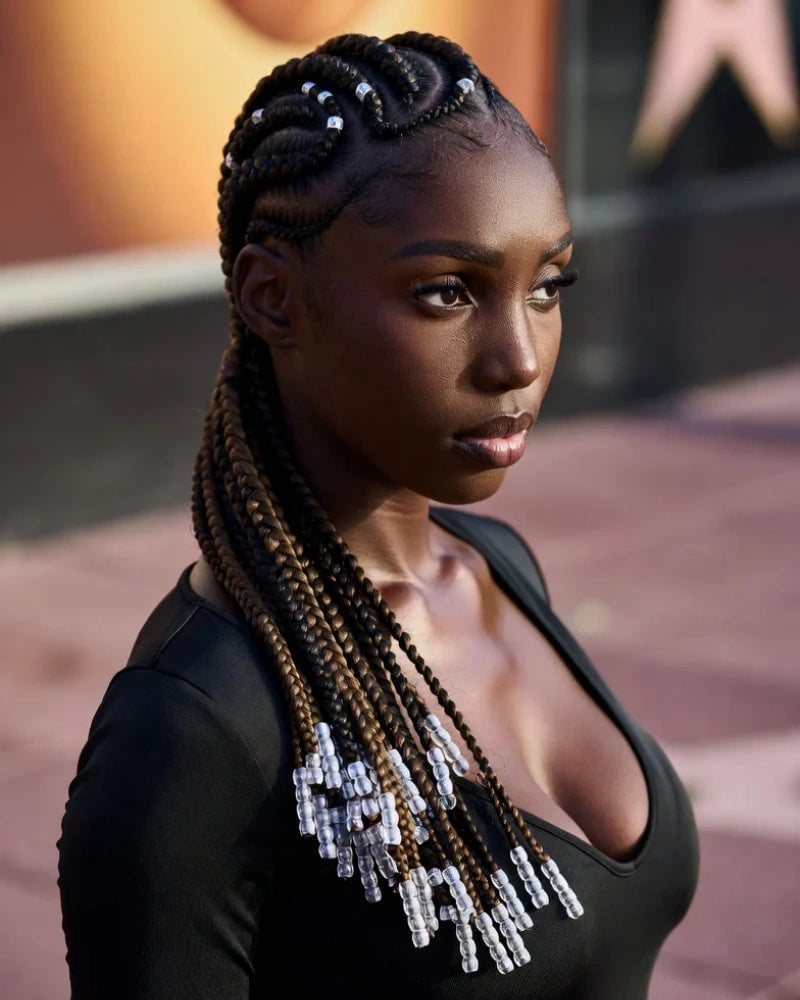
Subtle lighter brown streaks weave through a dark brown base without screaming for attention. The center parting keeps everything symmetrical, and clear beads add shine without competing with the color. Works best when your natural texture is thick and coily. The beads need weight to hang straight. Skip it if you prefer bold highlights or none at all; this sits in the middle. Tell your stylist: dark brown Fulani braids with lighter highlights and clear beads. The clear beads pick up the light, so a soft brush every few days keeps them from fogging over.
Cornrows transitioning into long thick coily braids
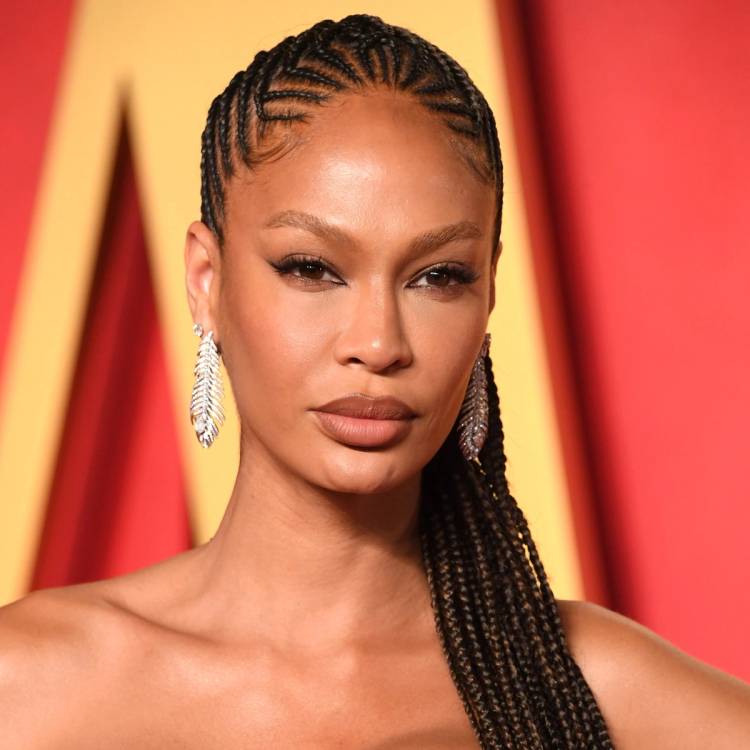
A standard Fulani braid starts with cornrows at the hairline and lets the rest hang loose. This one keeps the cornrow tension all the way to the crown before releasing into thick coily lengths. The difference is weight distribution. The base sits tighter, so the hanging section feels lighter on the scalp. You need thick, coily texture for the transition to look smooth rather than abrupt. The words for the chair: cornrows transitioning into long thick coily braids.
Upkeep is about the part line. A light oil along the cornrow sections keeps the scalp from tightening overnight. The braids hold their shape for weeks, but the root lift at the hairline softens around week three. Plan a trim at the ends when the coily texture starts to unravel.
Braided top knot with beads and charms, face-framing strands
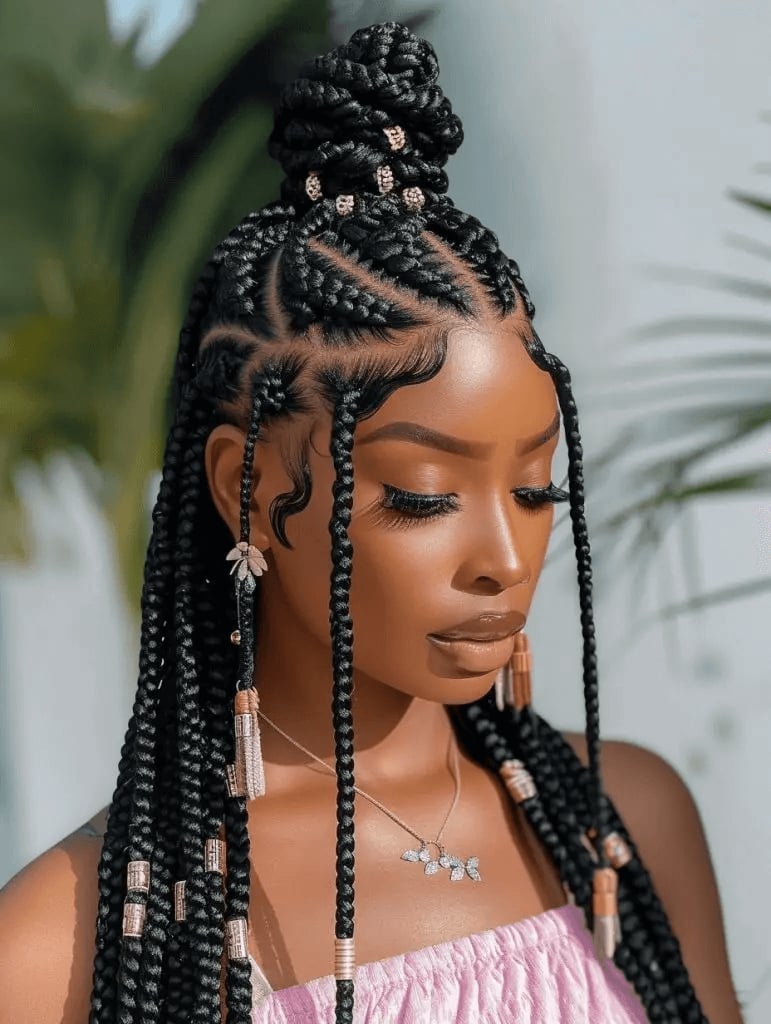
A high braided top knot clears the neck completely, which makes this a summer pick. Beads and small charms cluster at the knot base, and a few strands stay loose to graze the jawline. The contrast between the pulled-up volume and the soft face-framing pieces keeps the look from looking severe. Thick, coily texture holds the knot without slipping. Tell your stylist: Fulani braids with a high braided top knot, beads, charms, and face-framing strands. The knot needs a firm base, four to six braids wrapped and pinned, so the beads don’t pull the whole thing loose.
Many beads adorn intricate braids when you want a unique flair
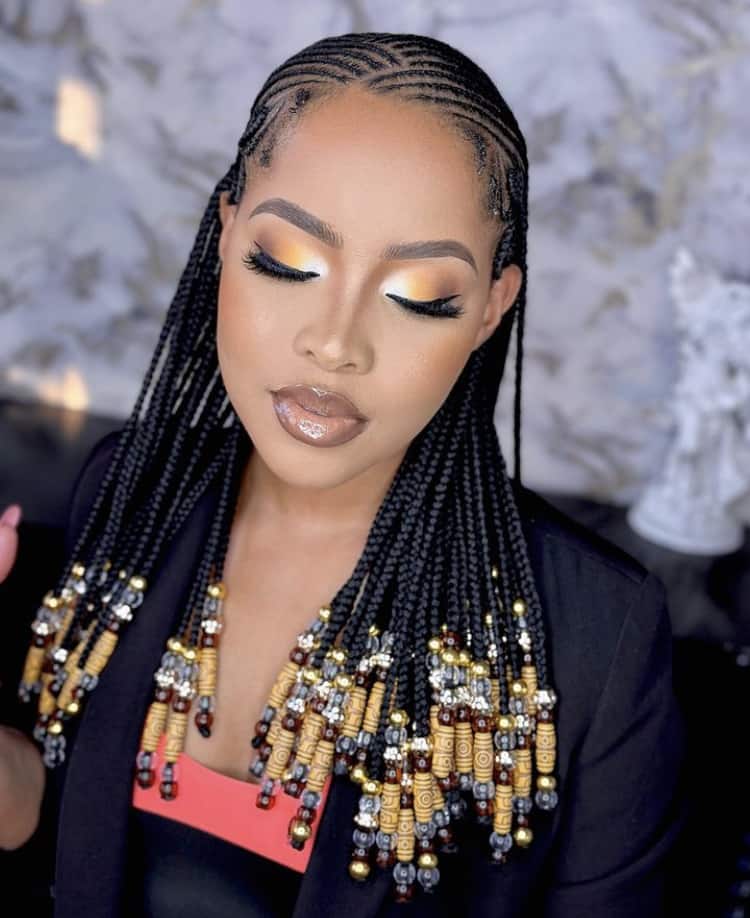
Before you settle on plain black, consider how much a handful of beads changes the whole thing. These Fulani braids stay neat with a middle part and thick, coily texture, but the real work is in the gold, brown and clear tones spaced evenly along each strand. Skip it if you prefer minimal embellishments or a quieter finish. Arrange them evenly at the salon so the weight stays balanced and the pattern reads cleanly. Clean the beads with a damp cloth every few weeks so the shine holds.
Side parted braids with gold beads and wavy extensions
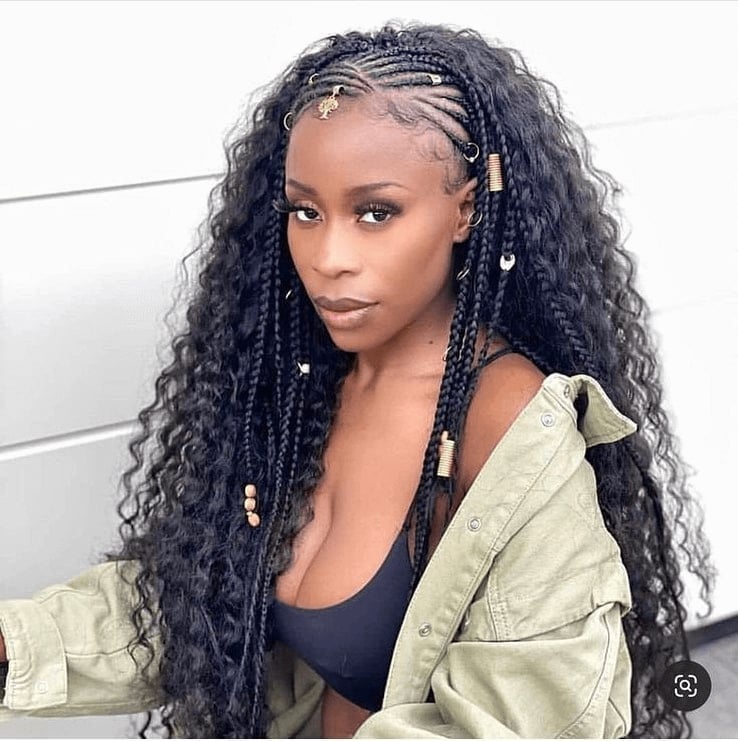
A side part shifts the whole geometry. These Fulani braids start tight at the root and transition into loose, wavy extensions, with gold beads and small charms catching light as the hair moves. The texture is thick and wavy, so the extensions blend naturally without sitting separate. A middle part or straight extensions are an alternative. Tell your stylist: Fulani braids with a side part, gold beads and wavy extensions. The wavy sections need a lightweight texturizing spray to keep their shape without weighing them down. Secure each bead and charm firmly at the salon so nothing slides during the week.
Afro puff with geometric cornrows when you want a striking look
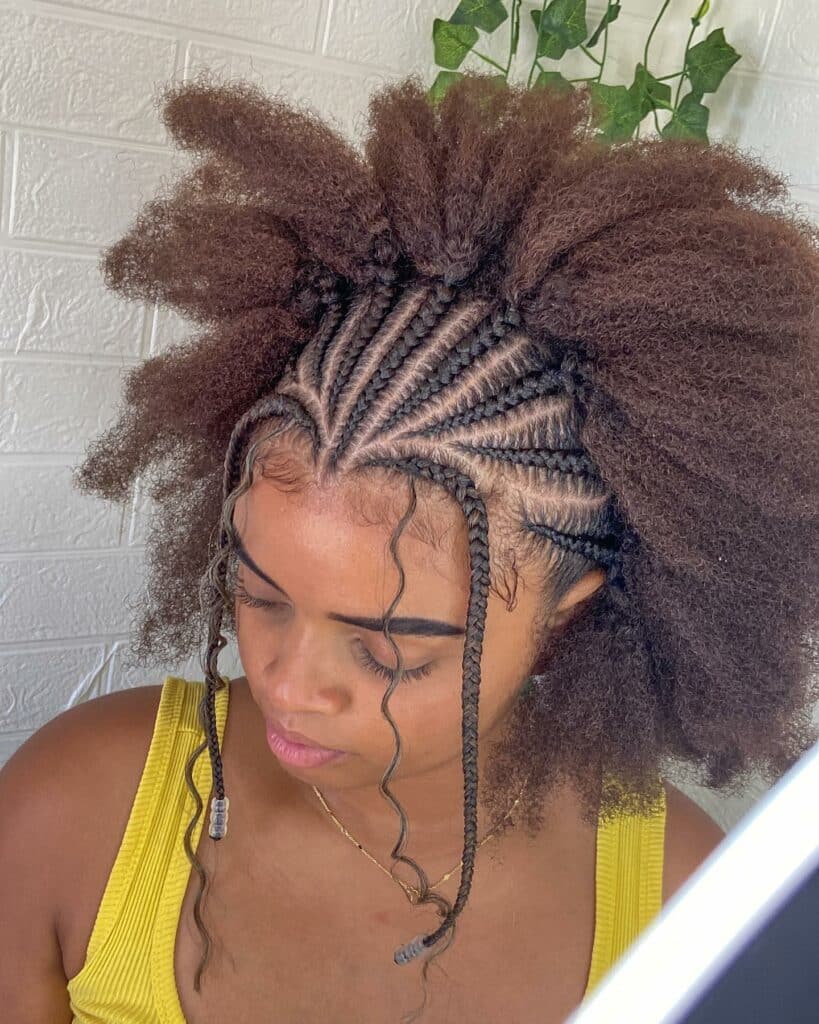
This one trades full coverage for a bold silhouette. Geometric cornrows run from the hairline toward the crown, then release into a voluminous afro puff with a few beaded tendrils left loose at the front. The dark brown, coily texture holds the puff without extra product, but the trade-off is real: the puff needs reshaping each morning, and the exposed scalp means you cannot hide a sloppy part. Skip it if you prefer your hair fully braided or dislike the upkeep of a puff.
Metal cuffs and beads create a unique flair on mixed braids
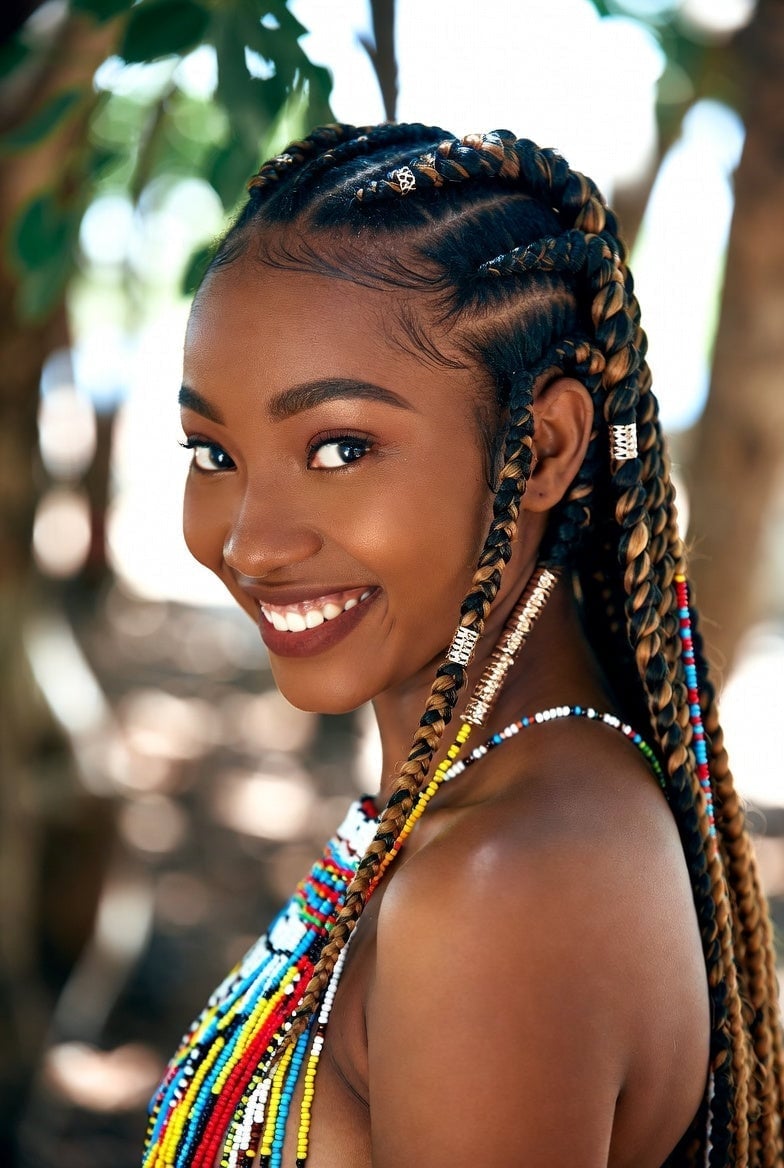
Two colors change the rhythm. Black and honey blonde alternate through these Fulani braids, with metal cuffs and decorative beads spaced at intervals along the thick, coily strands. The middle part keeps the pattern symmetrical. The cuffs add noticeable weight, so the braids hang with a deliberate swing rather than floating. Skip it if you prefer a uniform color or no metal embellishments. Tell your stylist: black and honey blonde Fulani braids with beads and metal cuffs. Polish the cuffs occasionally with a dry cloth so the metal stays bright against both shades.
Voluminous curls cascade when you want flowing waves
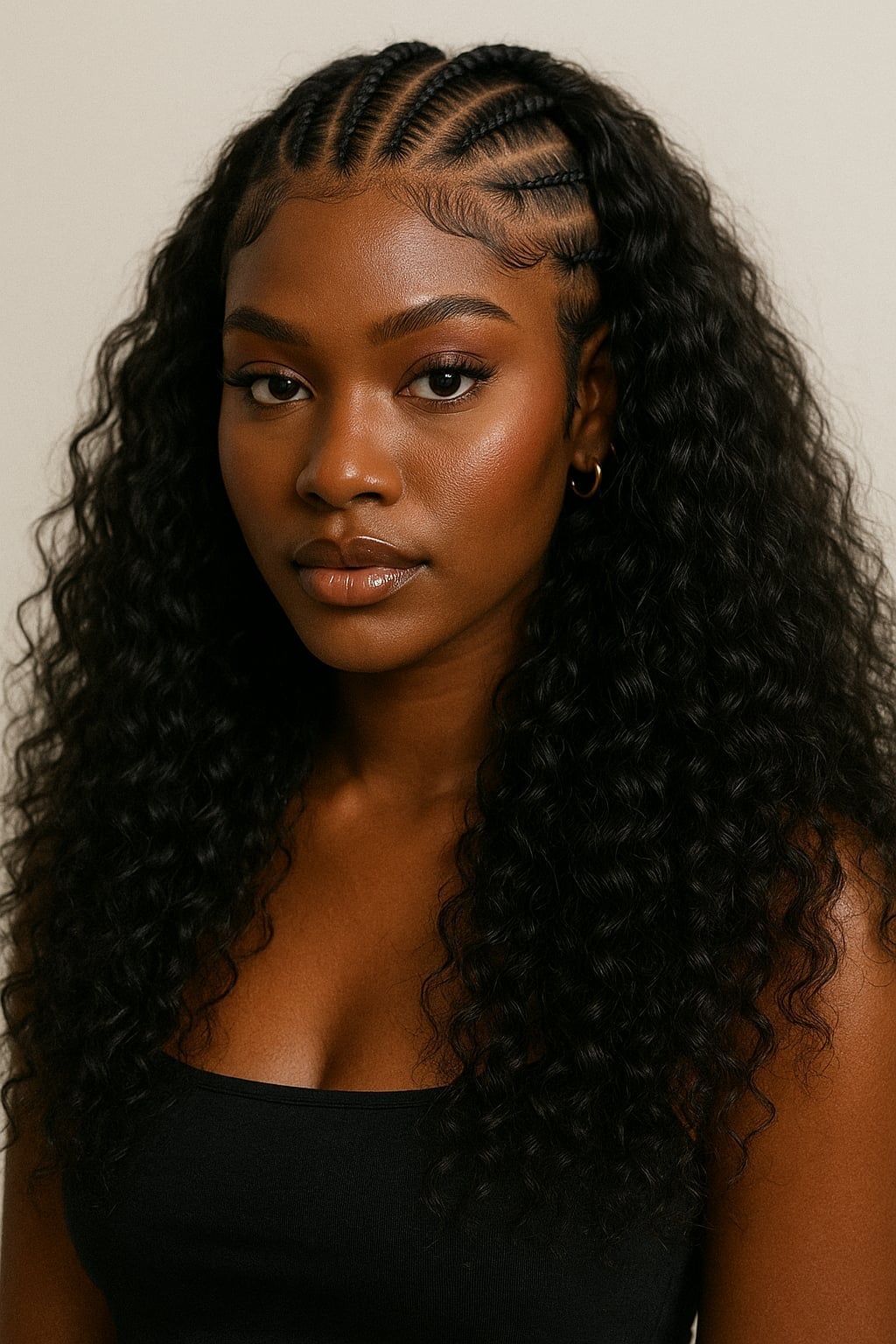
Cornrows that end in loose curls split the difference between structure and movement. These start as neat, precise cornrows from a middle part, then release into a cascade of voluminous waves in deep black. The contrast is deliberate: the braided sections stay flat and sharp, while the curly sections add body and bounce. Skip it if you prefer fully braided hair or straight extensions. Use a curl-defining cream on the loose sections so the pattern holds without frizz. Keep the cornrows neat at the root by wrapping a satin scarf at night.
Straight black braids with decorative curly tendrils
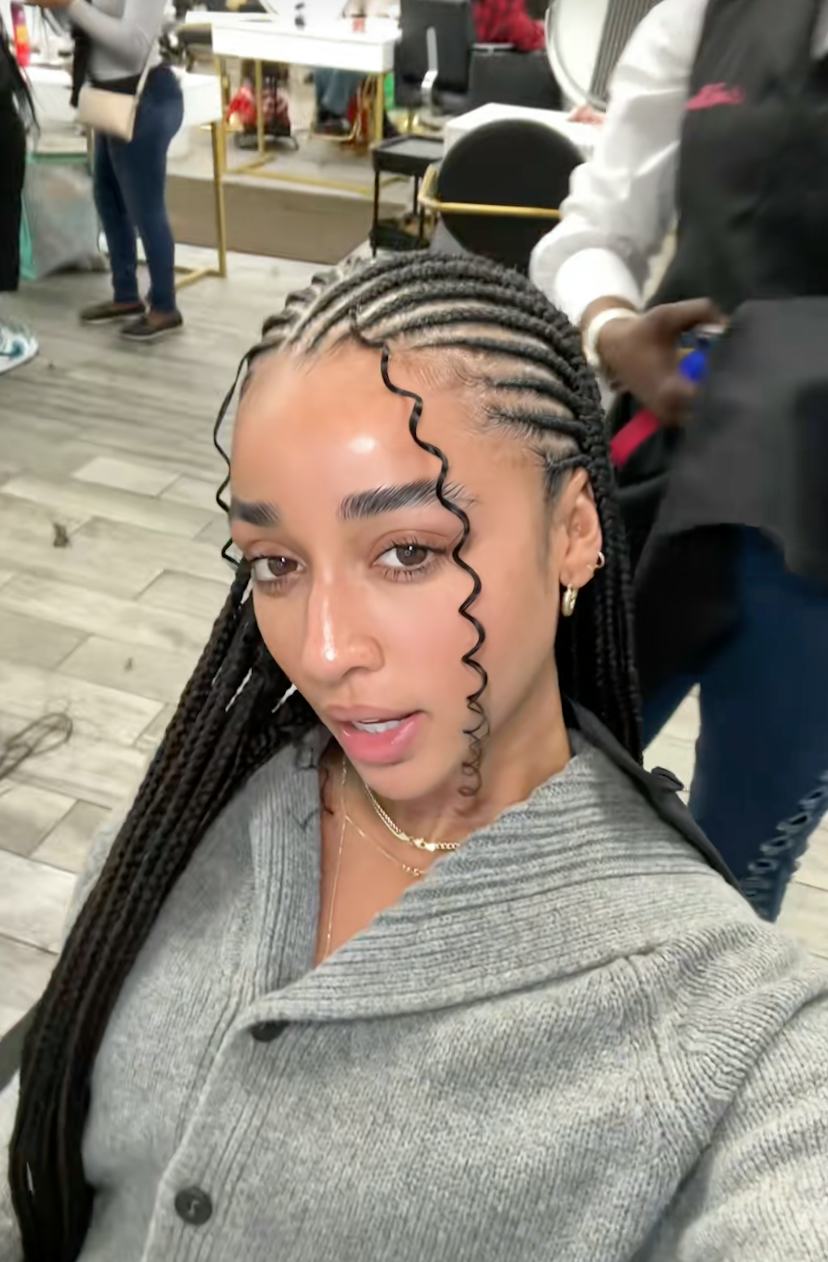
Decorative curly tendrils break the symmetry of straight black braids. You end up with a style that has two textures in one head: the neat, straight braids keep the structure, while the curly pieces soften the edges. Tell your stylist: neat straight fulani braids with decorative curly tendrils. The execution matters here. The curly tendrils need to be placed deliberately, not scattered, so the straight sections stay crisp. For thick, coily hair at least shoulder length, this works on most face shapes. A middle part keeps the look balanced. The straight versus curly contrast is what makes this version distinct.
Baby hairs frame face with blonde highlights on dark brown braids
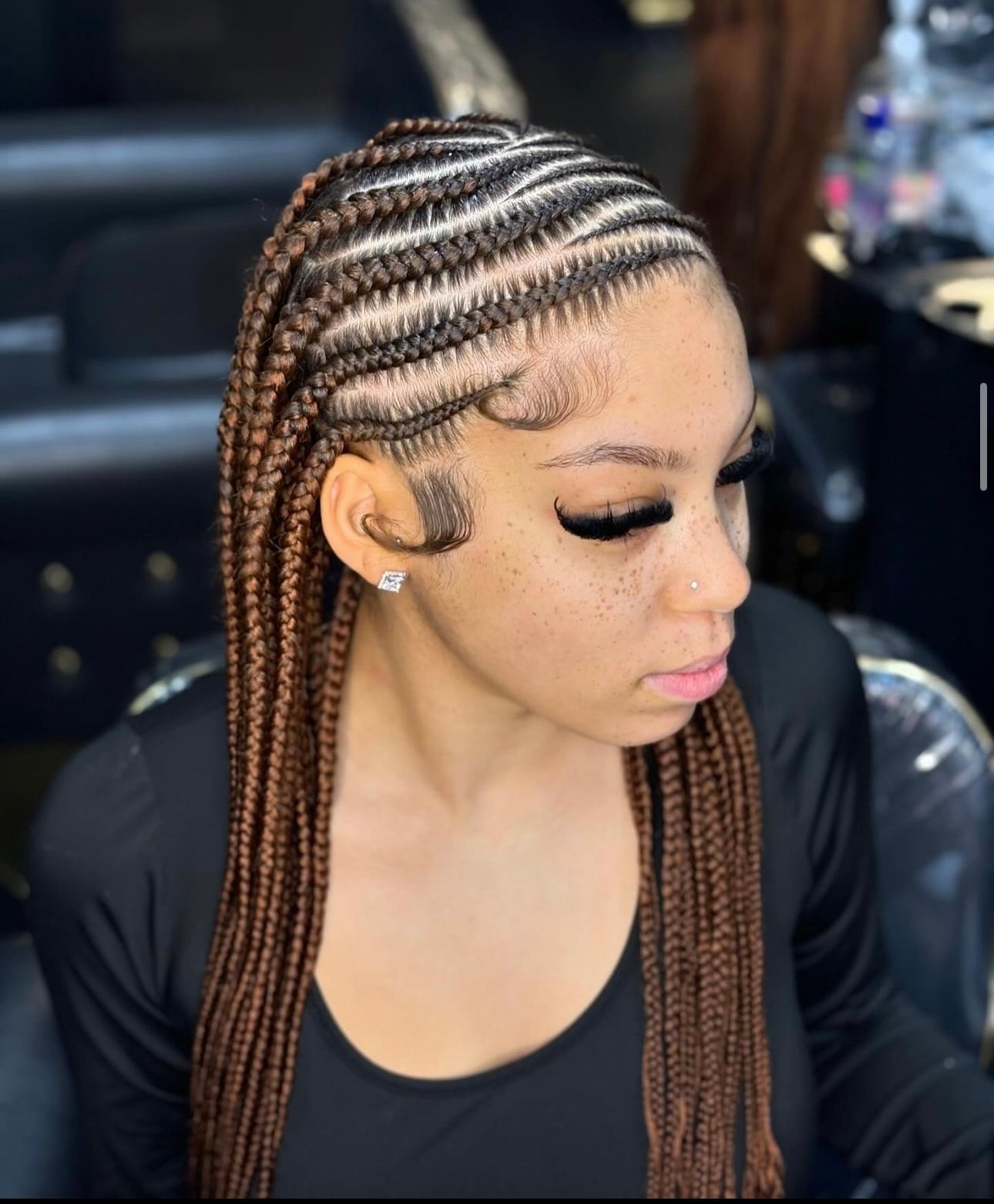
Middle-parted cornrows move into long, flowing braids, and the blonde highlights are woven into the dark brown base rather than painted on top. Baby hairs frame the face, swept into soft curves that anchor the whole design. The highlights need to be distributed evenly across the braids, not clustered at the ends or the roots. A side view shows how the cornrows hug the scalp and the flowing section picks up the light. Skip it if you dislike baby hairs or prefer a single hair color, since the two-tone effect and the hairline styling are central to the look.
Clear and amber beads add flair to neat braids
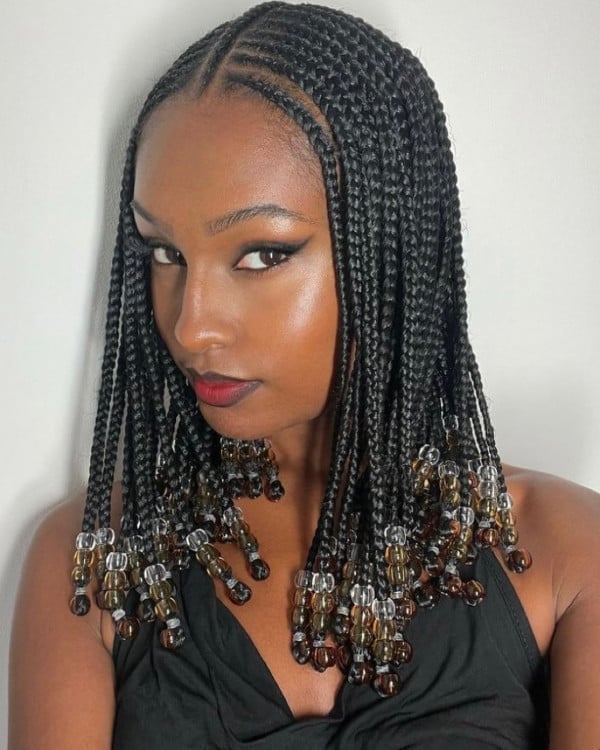
Clear and amber beads create a subtle variation in shine, and that difference makes the style feel deliberate without being loud. The centered parting keeps the braids symmetrical, so the beads become the focal point. Tell your stylist: neat fulani braids with clear and amber beads. Thick, coily hair at least shoulder length carries the weight of the beads best, and the dark base color lets the transparent and warm tones stand out. This combination has a specific warmth that does not look neutral, so it is not for those who prefer gold or silver beads. The beads should be spaced evenly along the braids, not crowded at the ends.
Long flowing braids result from neat parted cornrows
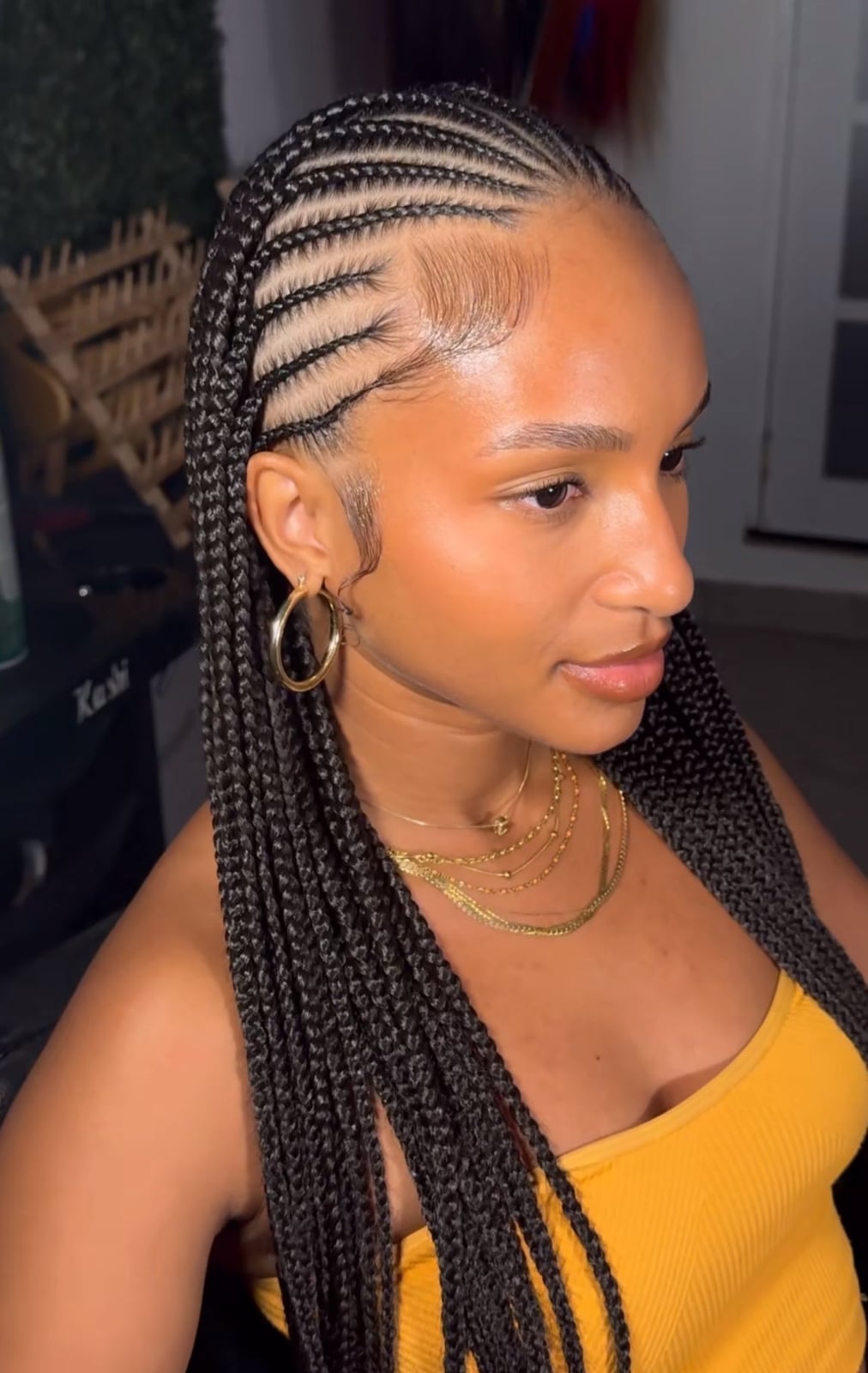
This one lives in the contrast between the precision of the cornrows and the freedom of the flowing braids. The parts are clean and straight, running from the hairline to the crown, and then the braids drop without a hard transition. For thick, coily hair, the weight of the braids keeps them from tangling, but the parts will need a light oil every few days to stay defined. The hold comes from the cornrow base, which keeps the shape intact for weeks. Skip it if you prefer braids that are shorter or have a different texture, since the length is what makes the contrast work.
Curly ends on loose braids when you want a blend of textures
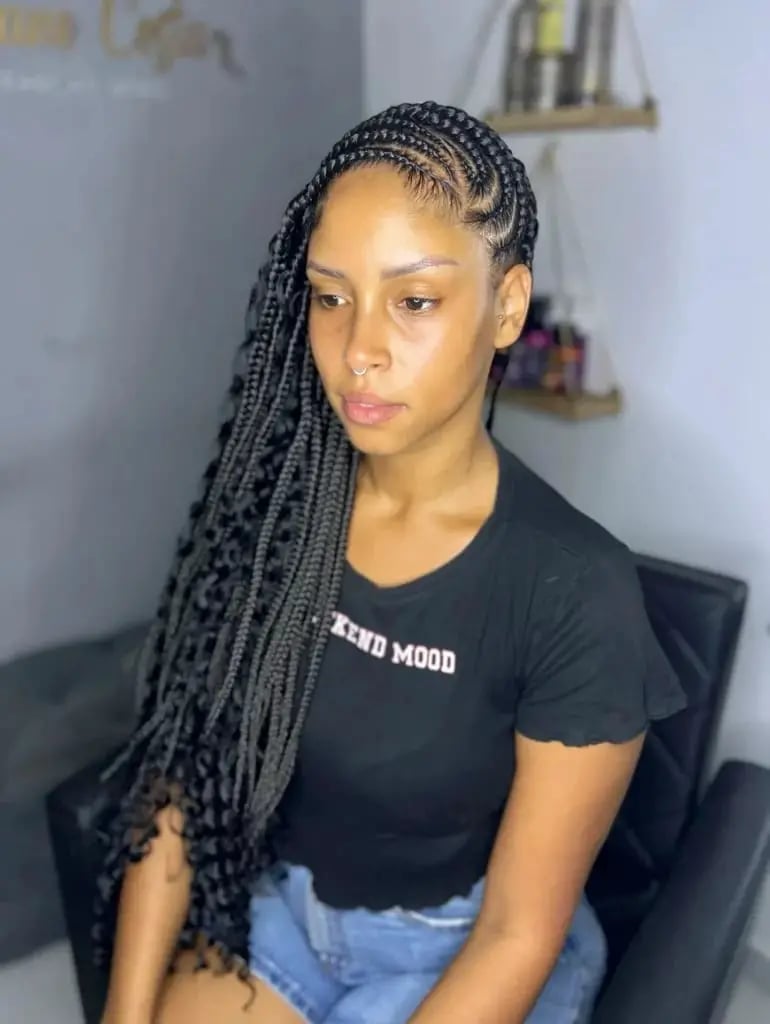
Cornrows along the hairline transition into loose braids with curly ends, and the shift in texture is what gives this style its movement. The deep black color keeps the look grounded, while the curls at the bottom add a soft finish that straight braids can’t replicate. Tell your stylist: cornrows with loose curly ends. This lands best for casual settings, where the relaxed ends feel appropriate and the cornrows keep the front tidy. Thick, curly hair at least shoulder length gives the curls enough body to hold their shape. Skip it if you prefer straight ends or no cornrows, since both elements are essential to the blend.
Dark brown and blonde braids with gold beads
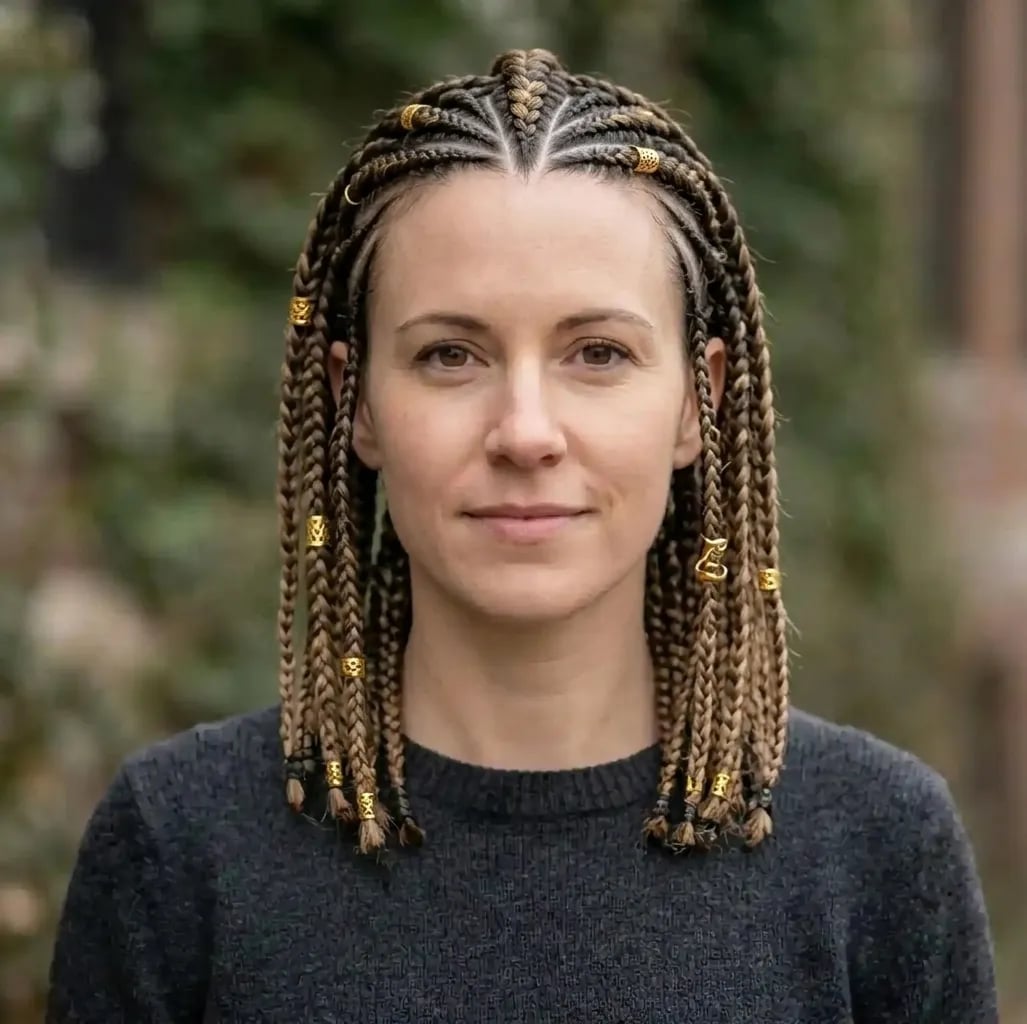
Two colors in one style mean you can ask for exactly what you see. Dark brown and blonde braids with gold beads give you a deliberate contrast. The middle part keeps everything symmetrical. Gold beads woven into the braids catch attention at every turn. That middle part suits most face shapes, pulling the eye evenly down. Thick hair holds this weight best. Maintain the blonde highlights with color-safe products and polish the gold beads for shine.
Ponytail with striking curly ends contrasts sleek braided sections
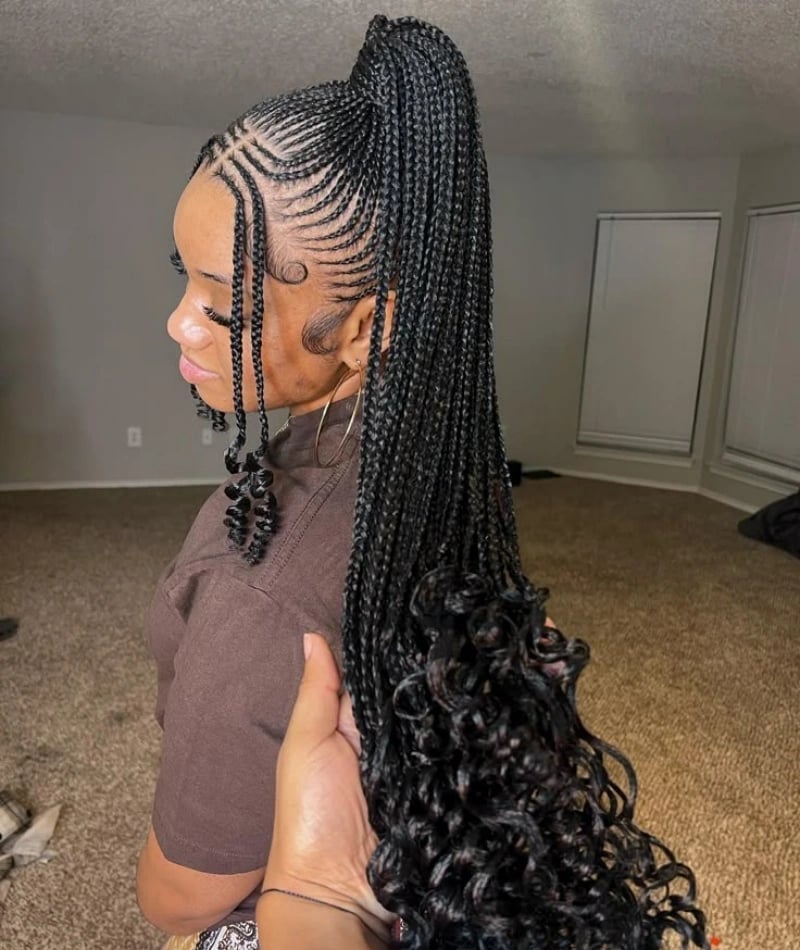
Braids in a high ponytail change the whole silhouette. Fulani braids into a high ponytail with curly ends give you volume up top and texture below. The middle part keeps the scalp pattern visible. Sleek braided sections lead into those curly ends. Thick, coily hair holds this style without slipping. Skip it if you prefer your hair worn down or dislike high ponytails. A middle part and height at the crown suit most face shapes. Tell your stylist: fulani braids into a high ponytail with curly ends.
Laid edges and subtle curls result when you want a salon look
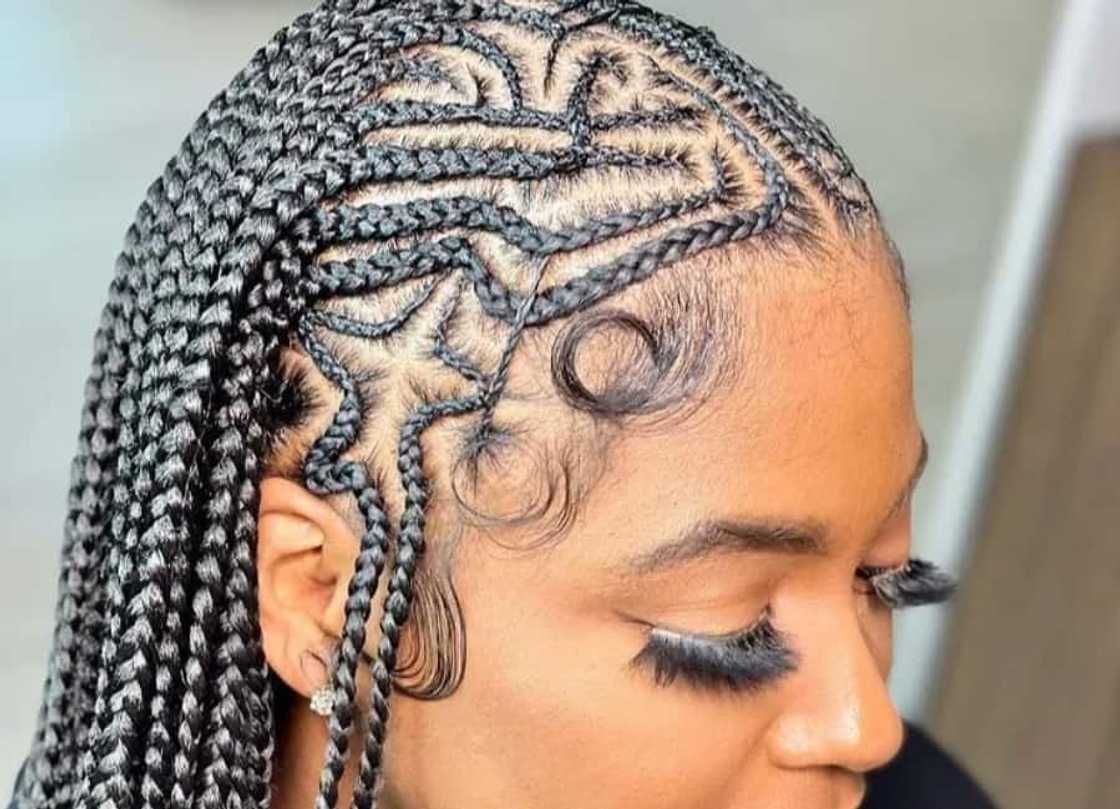
Intricate parting patterns take time. Laid edges and subtle curls framing the face require patience from both you and your stylist. Deep black braids with a detailed parting create that finished look. Coily, thick hair holds the pattern best. The trade-off: this style demands significant skill and time. Skip it if you prefer a simpler parting or dislike styled edges. A middle part with volume at the sides suits most face shapes. Use a toothbrush and edge control to maintain the laid edges.
Dark brown braids with auburn undertones and cornrows
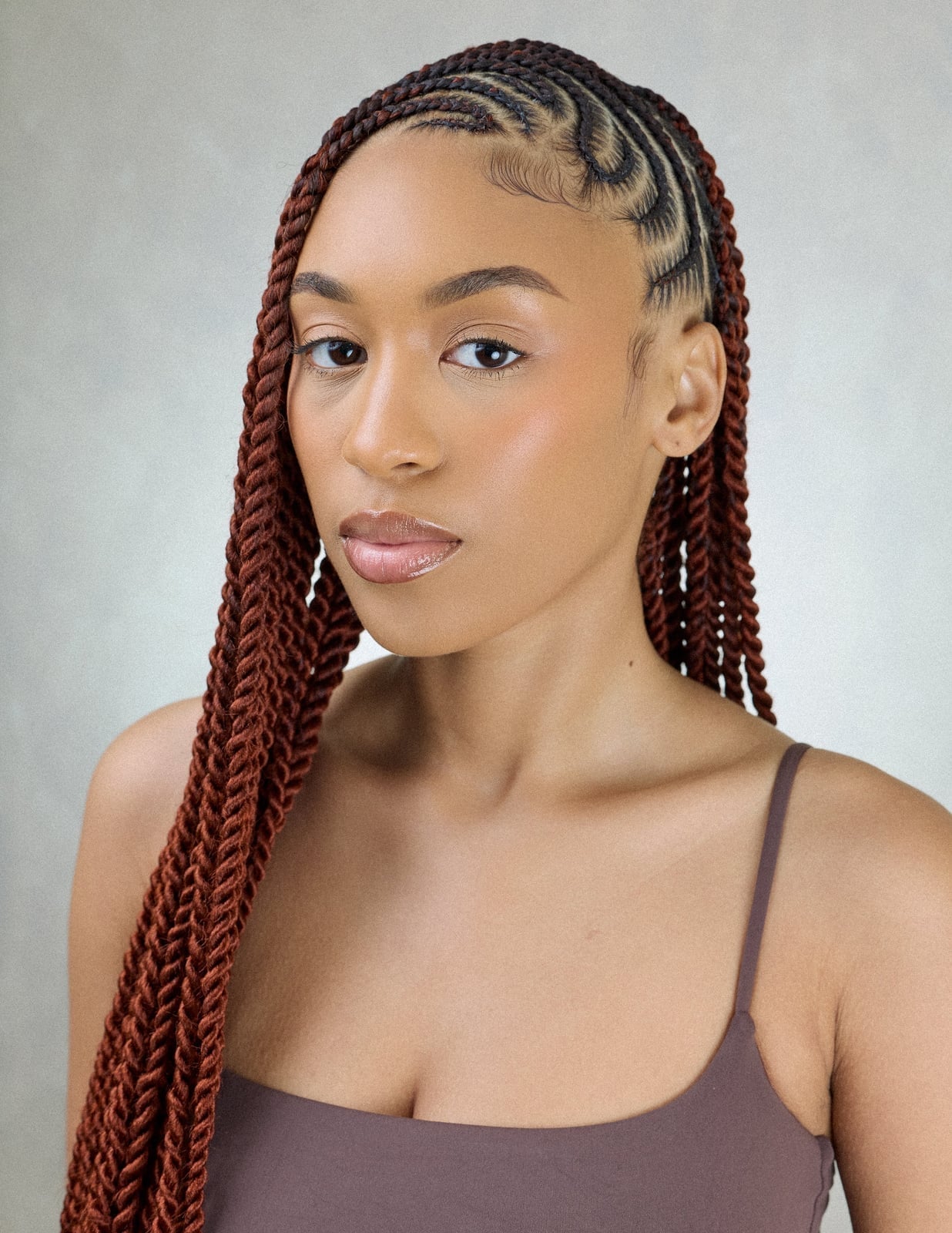
Auburn undertones shift the whole color story. Dark brown braids with auburn undertones and intricate cornrows at the hairline create depth. The middle part shows the braiding technique cleanly. Thick, coily hair holds both the cornrows and the loose braids well. This is a time-intensive style. The cornrows along the hairline need careful sectioning. A single hair color or no cornrows is simpler. A middle part works for most face shapes. Tell your stylist: dark brown braids with auburn undertones and intricate cornrows at the hairline. Apply a light oil to the scalp along the cornrow parts to keep the auburn undertones visible.
Geometric parting with curly ends and lighter highlights
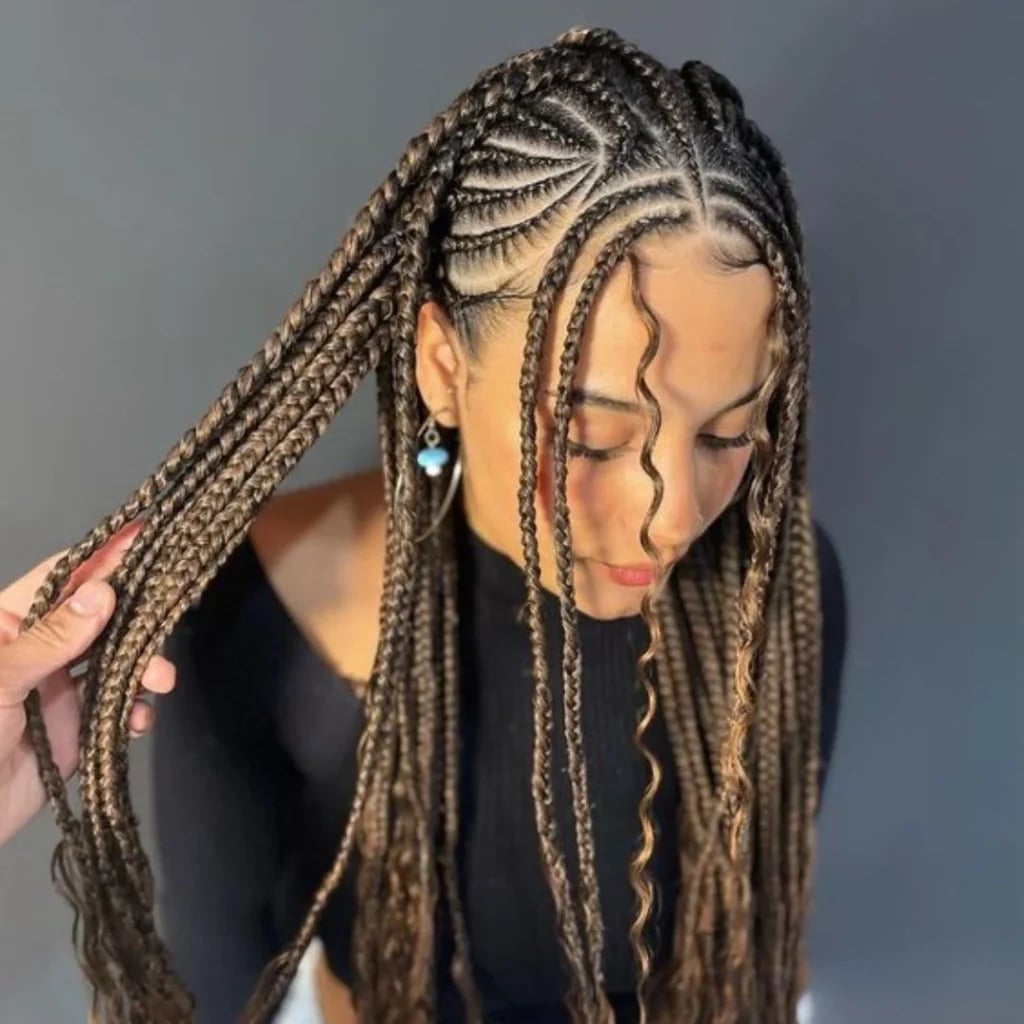
Geometric parting patterns need a steady hand. Fulani braids with a geometric parting at the crown, curly ends, and lighter brown highlights on a dark brown base give you a lot of detail. Thick, coily hair holds the pattern and the curls. The lighter highlights add contrast without a full color change. Skip it if you prefer a simple parting or straight ends. A middle part with a geometric crown suits most face shapes. Refresh the curly ends with a light spray to keep the geometric pattern defined.
Thin long braids with face-framing tendrils
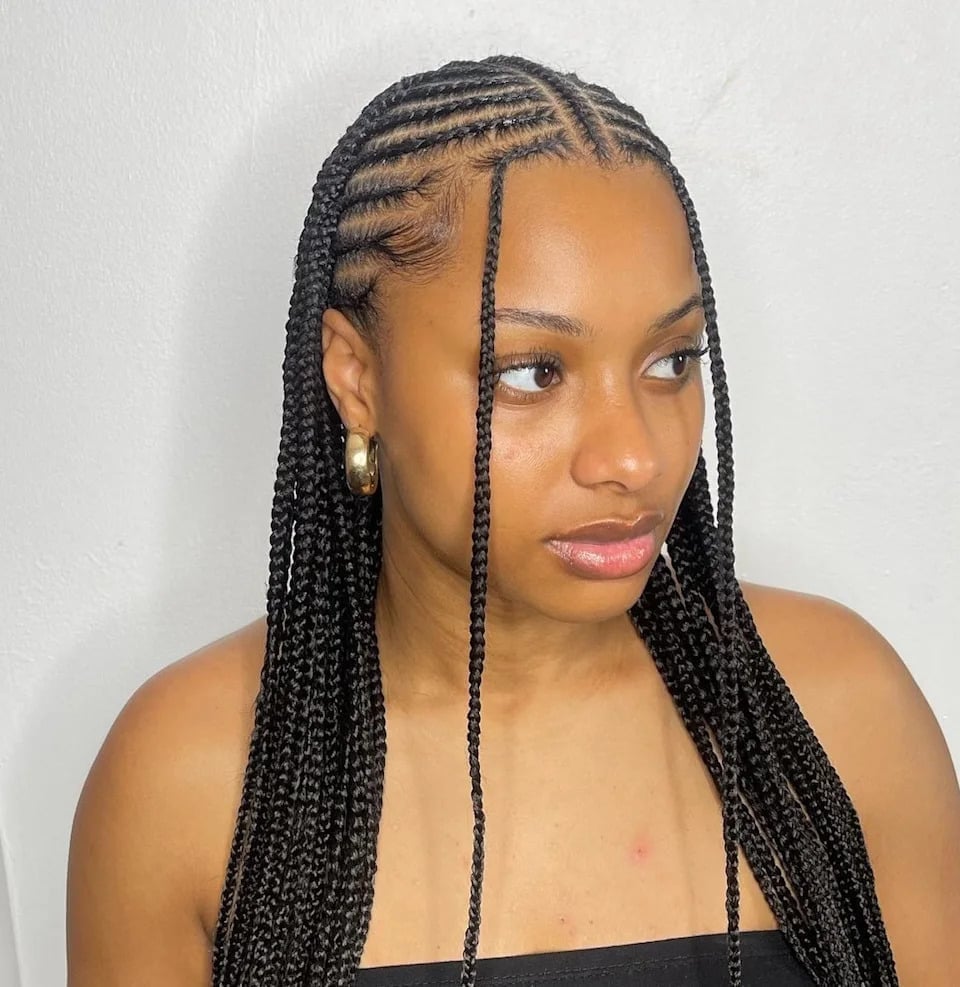
Thin braids sound like less work. They are not. The middle part and neat cornrow-like sections mean every row needs precision, and at home patience runs thin by row ten. Coily, thick hair at shoulder length or longer gives the braids enough weight to hang well. The face-framing tendrils change the look from uniform to asymmetrical, which helps soften a square jaw. Apply a light serum along each braid to keep the black color smooth and cut down on frizz. Skip it if you prefer thicker braids that install faster. This one takes a salon chair and a clear afternoon.
Loose curls add playfulness when you want subtle highlights
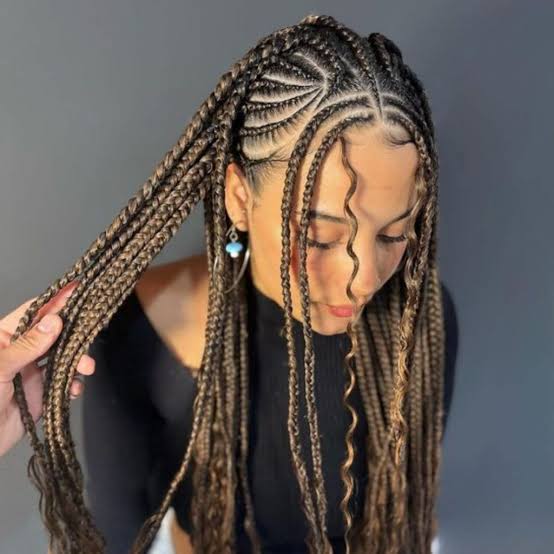
Cornrows that climb the crown add visual weight, so the loose curls at the ends balance the whole silhouette. Dark brown with lighter brown highlights works because the contrast stays soft. Thick, coily hair at shoulder length or longer holds the curl pattern without drooping. The trade-off: straight ends would read cleaner, and uniform color would read simpler. Pass when you want either of those. Ask your stylist for: dark brown fulani braids with lighter highlights, cornrows and curly ends. Refresh the curls with a spray between washes to keep the playful shape intact.
Bun with beads and face-framing tendrils adorns geometric braids
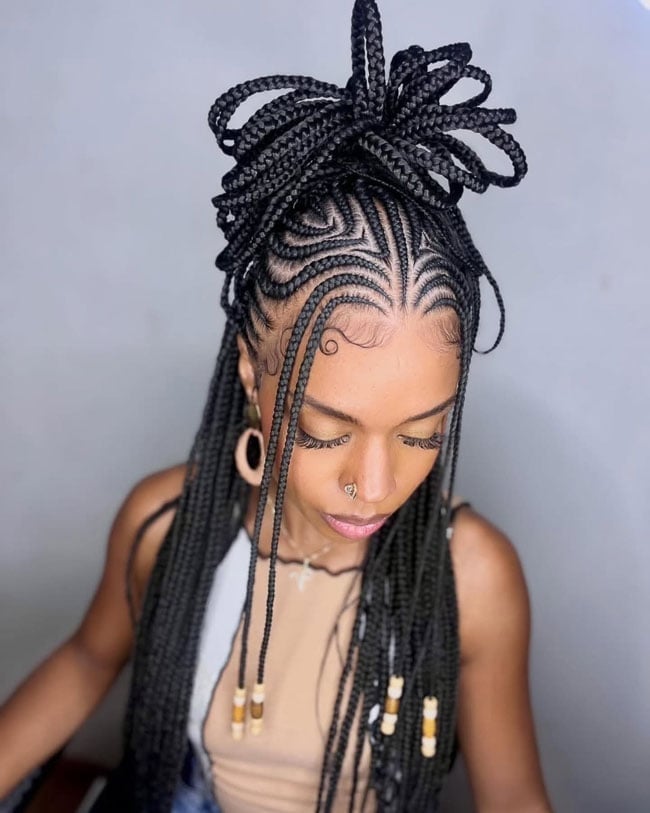
A large braided bun at the crown changes the geometry of any silhouette. Geometric scalp braids lead into long, thin braids that gather upward, so the eye moves from the hairline to the top. Wooden beads add texture without shine. Coily, thick hair at shoulder length or longer holds the bun without slipping. The bun sits high, which opens up the face and works for round or oval shapes. Skip it if you prefer your hair worn down or dislike the weight of an updo.
Black braids with curly ends and baby hairs
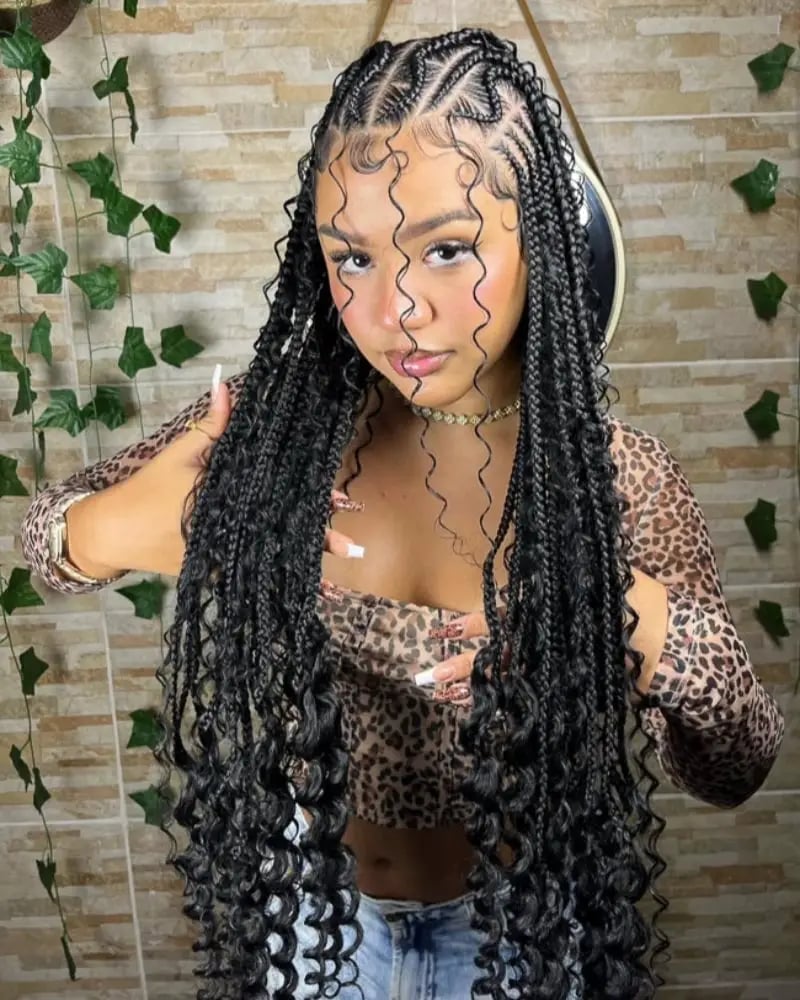
Baby hairs along the hairline require maintenance, not just talent. The middle part and coily, thick texture give the braids body, while the curly ends create a contrast against the straight braid shaft. Use edge control to style the baby hairs, and refresh the curly ends with a light spray to keep them defined. Black color holds its depth through the entire wear period. This style requires styled baby hairs and curly ends that need touch-ups. The result is neat, but the upkeep is real.
Final Thoughts
Pick by how much chair time you have and how much weight your edges can handle.
- Quick install: side-parted braids with pre-curled ends and a few beads.
- Maximum hold: tight cornrows into a high bun with metal cuffs.
- Low upkeep: straight black braids with decorative curly tendrils.
- High impact: geometric parting with lighter highlights and loose curls.
Fulani braids give you a style that holds shape and tells a story.