32 Stylish Blue Highlights 2027 for a Bold Hair Color Statement
Stylish Blue Highlights 2027 combine dark base with blue streaks or ombre ends for a bold look. Explore 32 bob with blue ombre ends and dark gray hair blue.
You’ve settled on blue highlights, but the consultation is still a week out. The grow-out line and the fringe you are unsure about need real answers, and this shade is worth the chair time now because it photographs well and lives longer between trims than pastels.
32 ideas cover the spread from low upkeep to high, short to long, salon-only to home-friendly. Fine hair, thick curls, dark bases, and blonde lobs all get a version here. Which is why Stylish Blue Highlights 2027 fill so many saved boards. The hard part is picking just one.
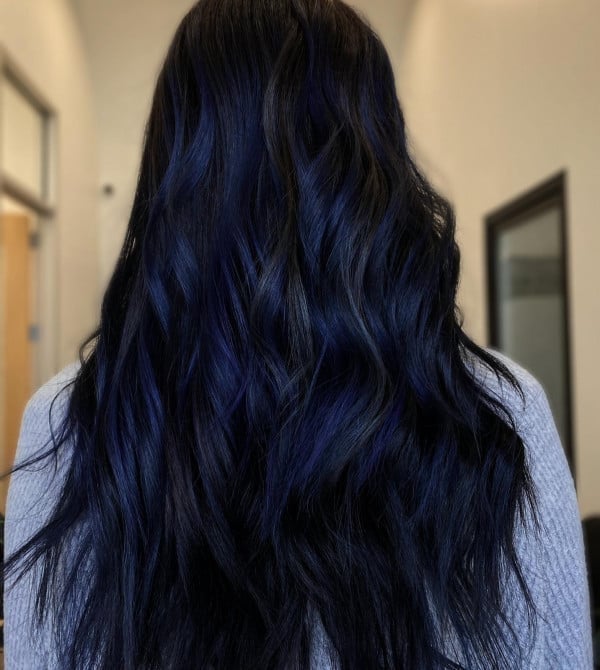
Deep blue highlights woven through a dark base with loose waves
Dark base meets deep blue highlights in a back-view composition. The deep blue tones sit low enough to stay wearable, high enough to catch the eye. Wavy texture carries the color without fighting it, each wave turning a highlight into a separate event. Thick hair holds the shape well, but the real trick is the weave: not too dense, not too sparse. The result avoids a costumed look. You need at least collarbone length to let the waves develop. Not for pin-straight hair or very fine strands that collapse under the weight of a wave.
Vibrant blue streaks on dark brown layered hair
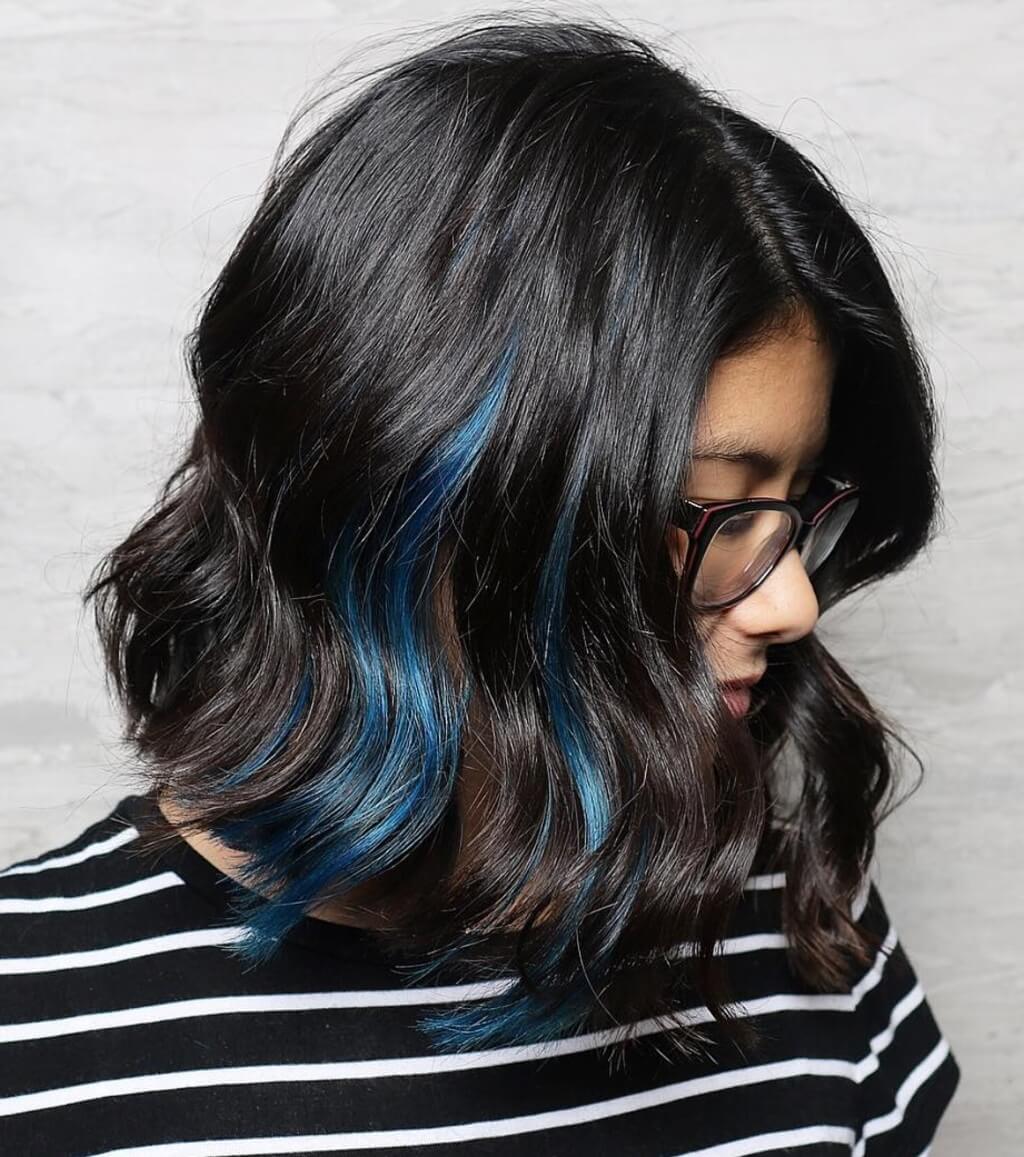
How do you get that streak placement without looking like a highlighter exploded? The answer is a layered cut and a middle part that lets the color land where it matters. Vibrant blue streaks sit on a dark brown base, each one placed so it falls naturally with the wave. The wavy blowout adds volume and keeps the streaks from looking pasted on. Thick hair carries the density well. Not for fine hair that struggles to hold a blowout or prefers a more uniform color story. Tell your colorist: dark brown base, vibrant blue streaks, layered cut.
Blue Ombre on the ends of dark brown layered hair
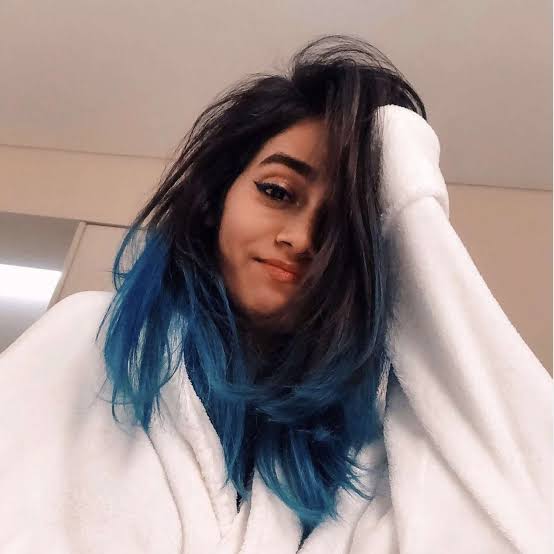
Blue ombre on the ends works differently than all-over color. It starts dark brown at the root and shifts to vibrant blue only where the hair ends, so the grow-out is softer and the commitment lower. The technique requires precision: the transition point sits at the layers, not a straight line. Fine wavy texture helps the ombre look airy rather than heavy. The middle part and subtle face-framing layers keep the front view interesting without needing bangs. It suits those who prefer a non-uniform color from root to tip and have hair that takes the ombre gradient well.
Dark bob with blue Ombré on the ends
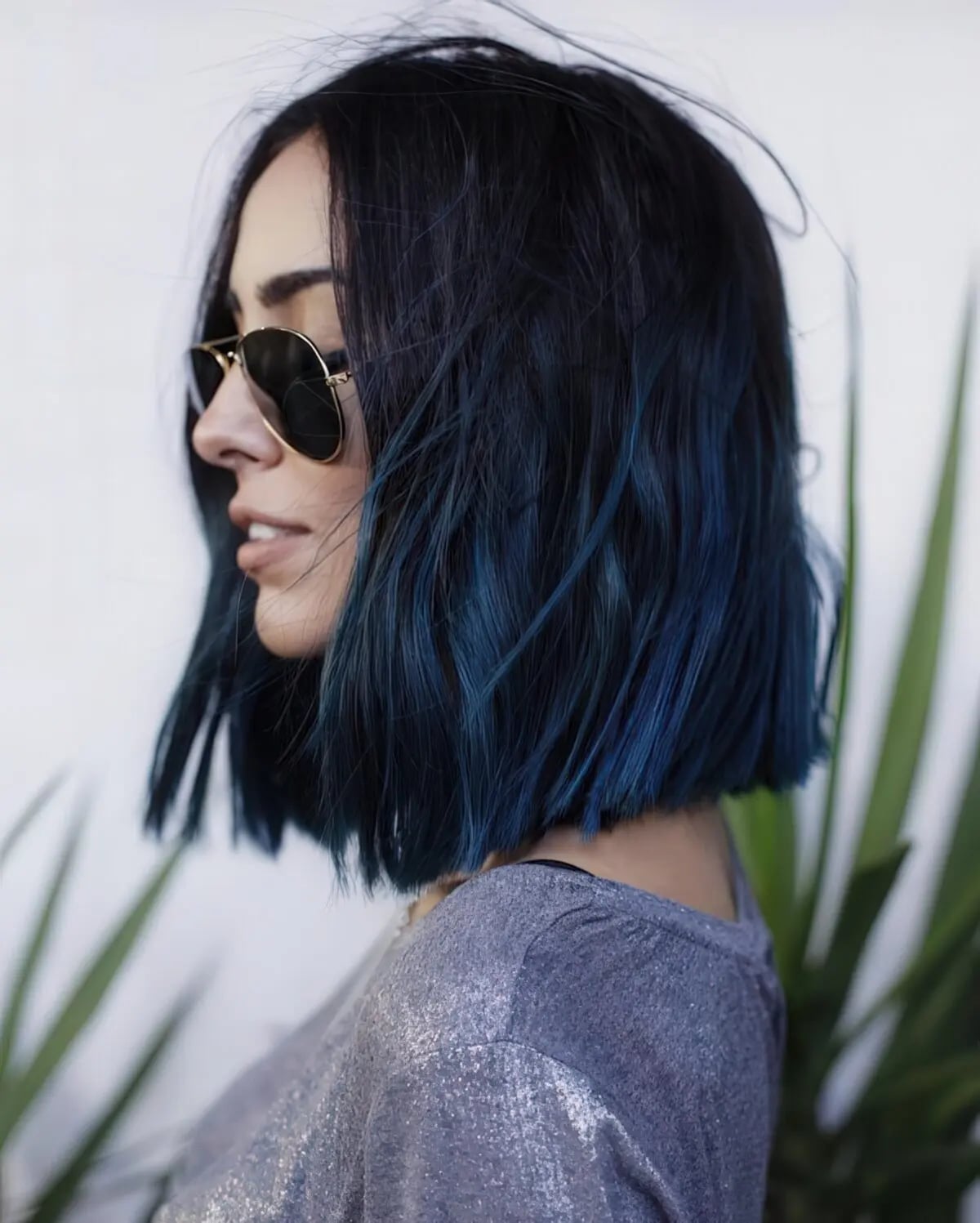
A bob with blue ombré on the ends is a fair trade: you get the color pop without the full commitment. The dark base keeps roots low-maintenance, while the vibrant blue ombré lives only on the ends. Fine wavy texture works well here because the bob shape stays light. The middle part and air-dried finish keep it from looking overworked. Not for very thick hair that will make the bob appear bulky or prefer a blunt cut. The ombré is a salon technique, not a box-dye job. You need at least jaw length to start.
Striking blue highlights on dark gray base
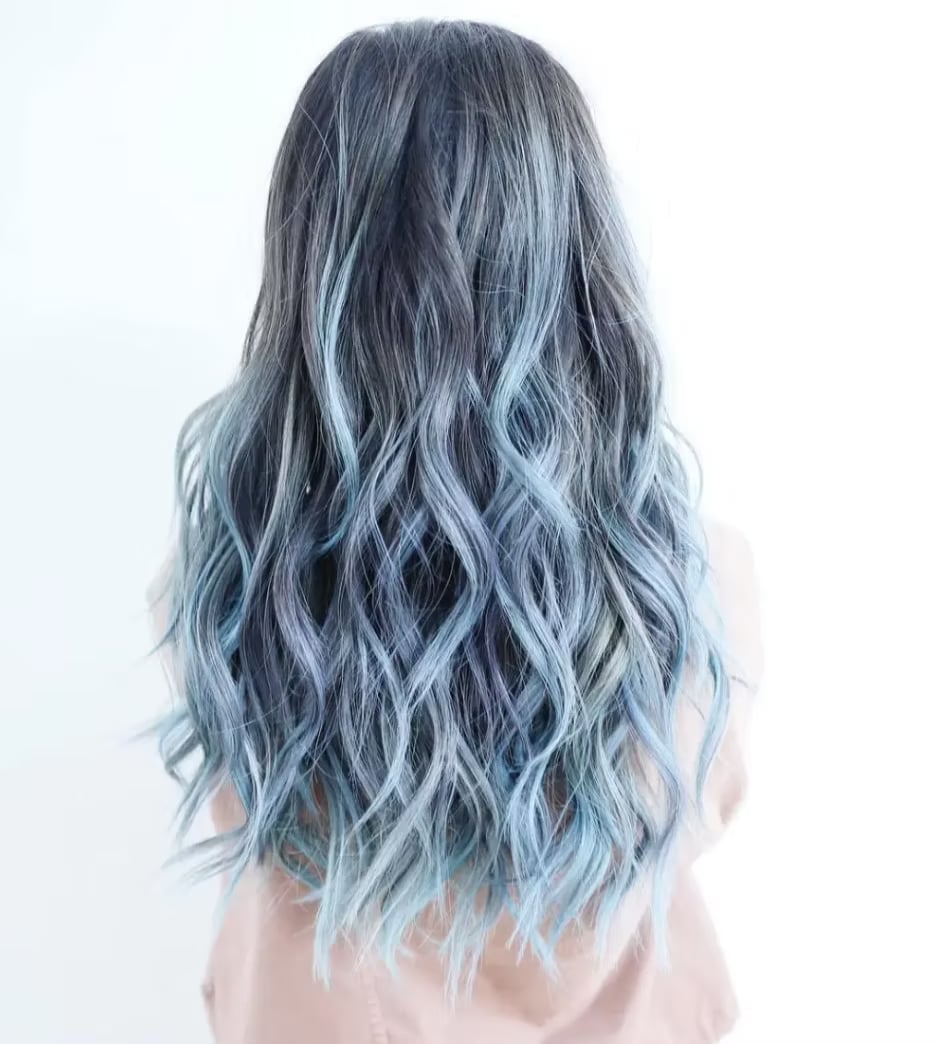
Dark gray base with striking blue highlights is a cooler combination than dark brown with blue. The gray provides a neutral canvas that makes the blue look fresh rather than muddy. Thick wavy texture gives the highlights room to separate and show. The back view reveals the placement: the blue sits mostly mid-length to ends, keeping the root area dark and low-fuss. Air-dried styling works because the waves add natural movement. Not for fine hair that might be weighed down by the density or anyone who prefers warmer tones. Toning every four to six weeks keeps the gray from warming up.
Two tones of blue highlights on long wavy hair
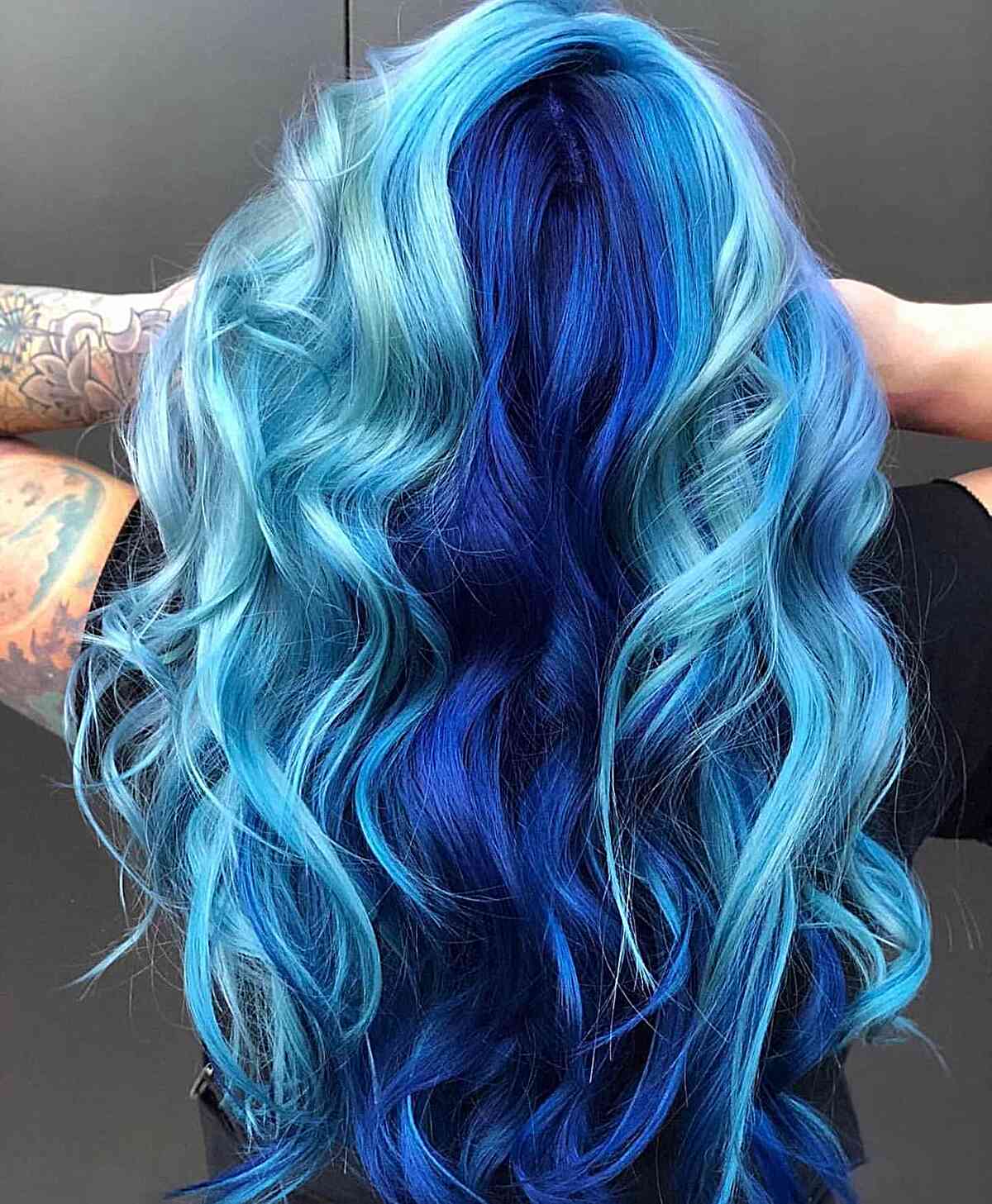
Does a single shade of blue feel like not enough? Long wavy hair with a middle part gives you room for two. Dark blue forms the base, while lighter blue highlights cut through the layers for contrast. The thick, wavy texture keeps the blend from looking flat. Tell your colorist: vivid blue, two-tone blend, balayage technique. A round face benefits from the length and the vertical color placement. Monochrome looks or fine hair that struggles with multiple bleach passes are not ideal for this style.
Blue Ombre ends on a blonde layered cut
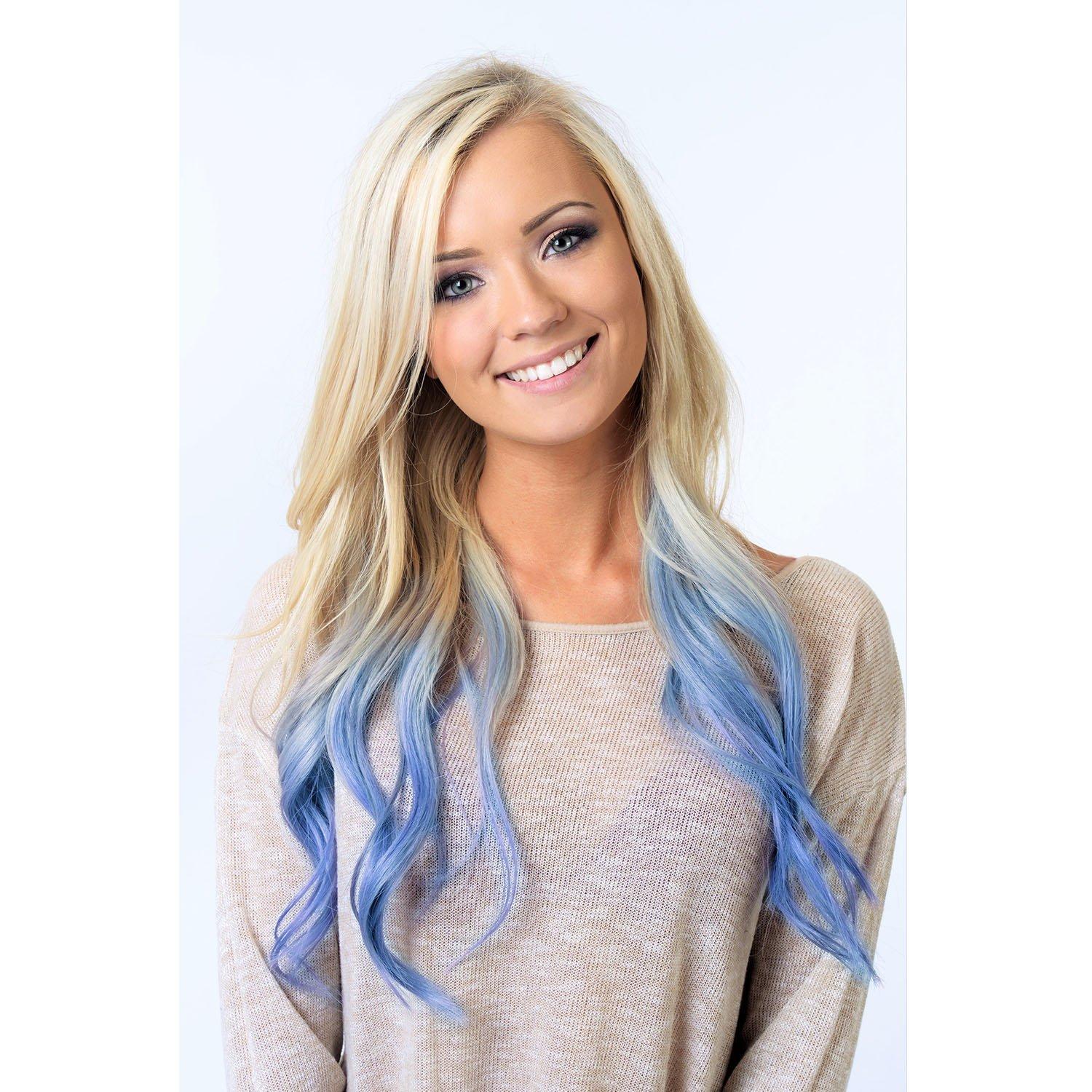
A blonde base with a blue ombre on the ends is a design that starts light and finishes cool. The fine, wavy texture means the color sits mostly on the lower layers, keeping the root area low-maintenance. A side part adds a casual asymmetry to the look. The catch: bleached ends on fine hair need regular deep conditioning to prevent dryness. Toning every four to six weeks keeps the blue from washing out to green.
Teal Ombre ends on a dark base lob
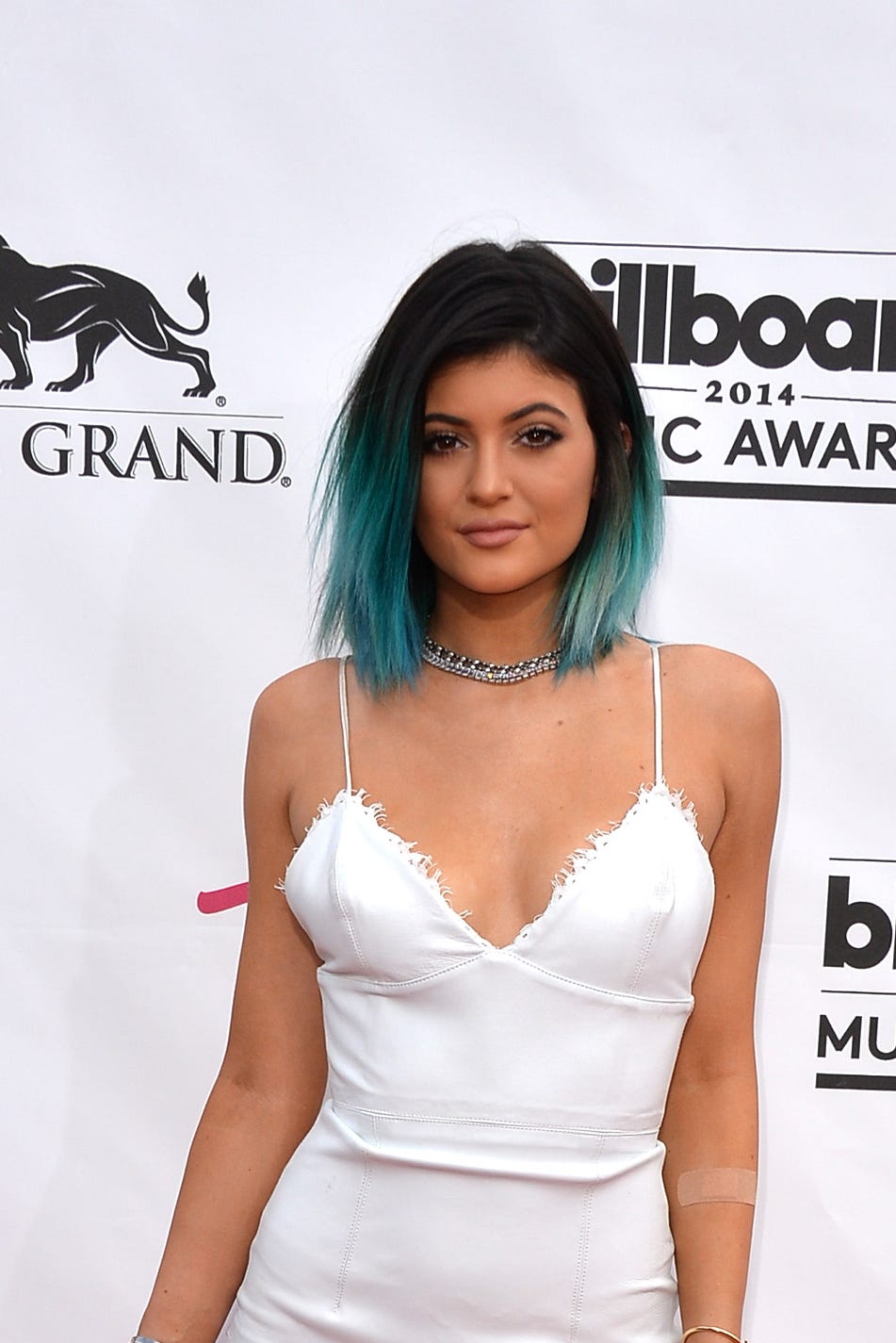
A dark base lob with teal ombre ends lands somewhere between blue and green, which gives it a cooler feel than standard navy. The fine, wavy texture air-dries naturally with a middle part, so the color transition looks intentional, not accidental. A gloss every six weeks keeps the teal bright and the ends from looking faded. This cut works for fall, when darker bases and cooler tones tend to feel right.
Grown-up blue color with ash on pixie
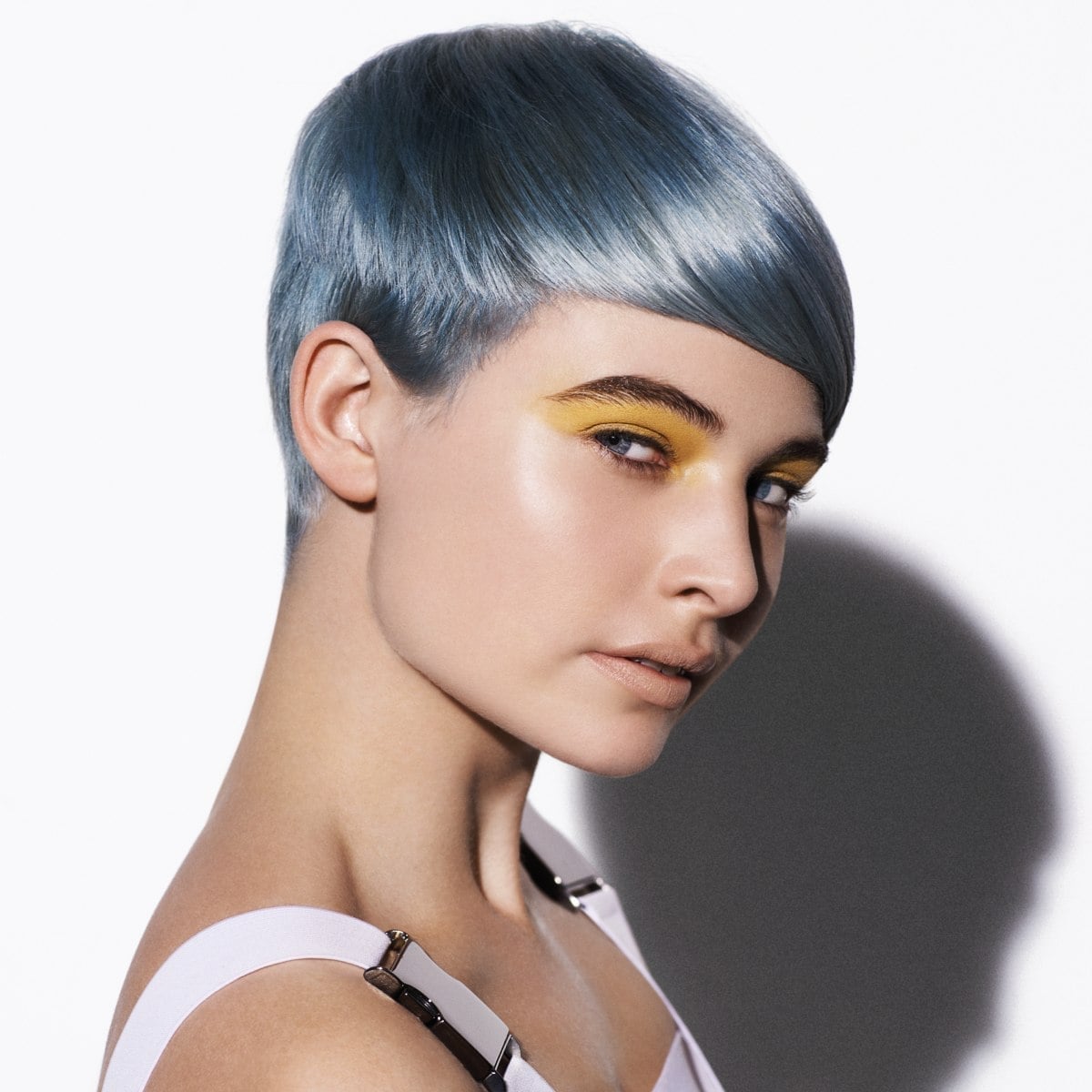
A pixie cut with a blue shade and ash undertone is the opposite of a pastel fantasy. The fine, straight texture lets the cool tone sit evenly, without warm spots. A side part keeps the shape from feeling too severe. The short length means a trim every four to six weeks is required. Skip this if you prefer a longer style or a warmer blue that reads more playful than neat.
Vibrant blue highlights adding playfulness to layered waves
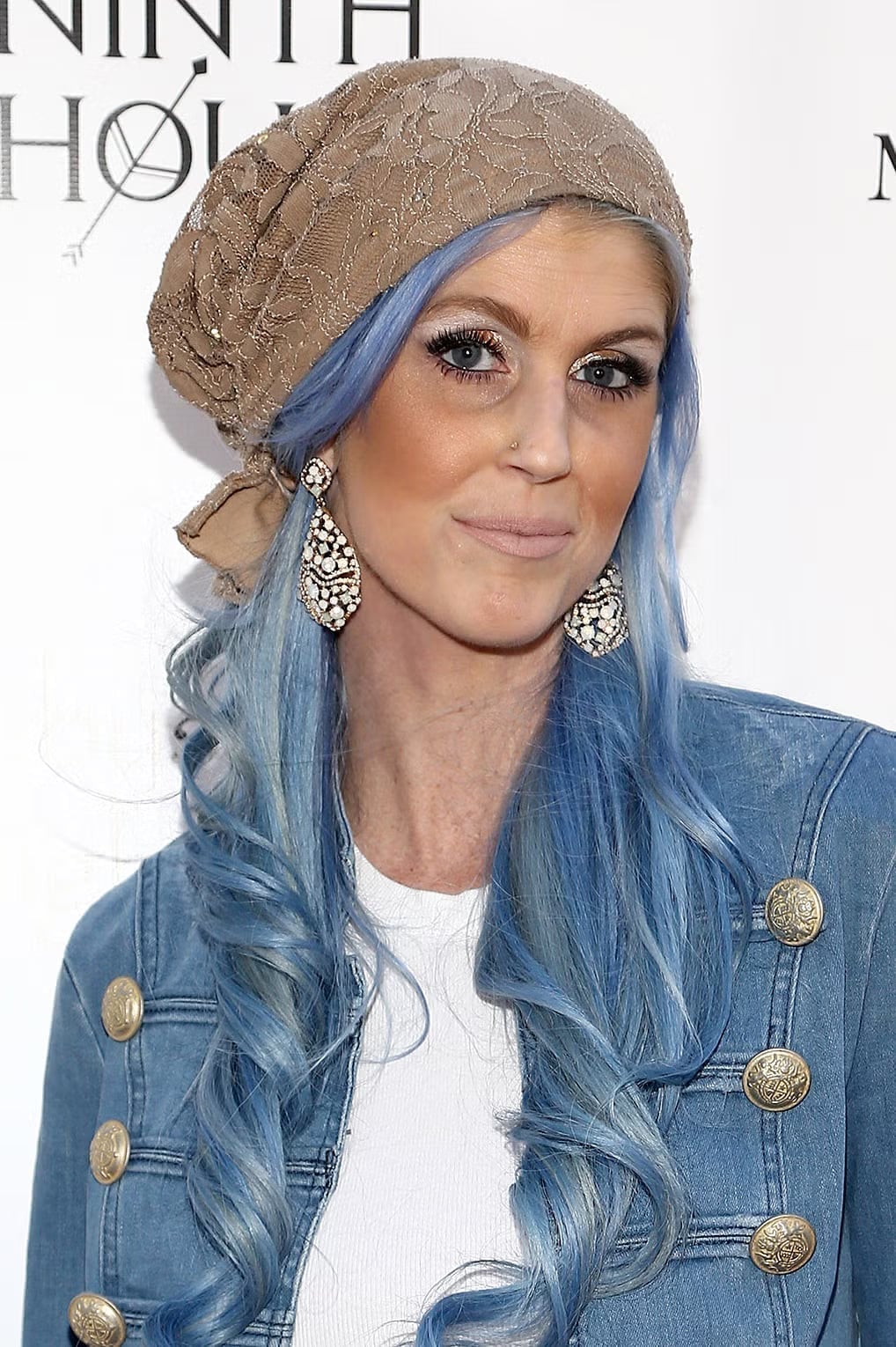
Vibrant blue highlights on a layered cut with wavy texture create a look that looks playful without trying. The thick, wavy hair gives the blue pieces room to separate and show against the darker base. A side parting keeps the color distribution uneven, which is the point. The layers help the waves hold shape without extra product. A trim every six to eight weeks keeps the ends from splitting and the color looking intentional.
Vibrant blue streaks woven through a dark base
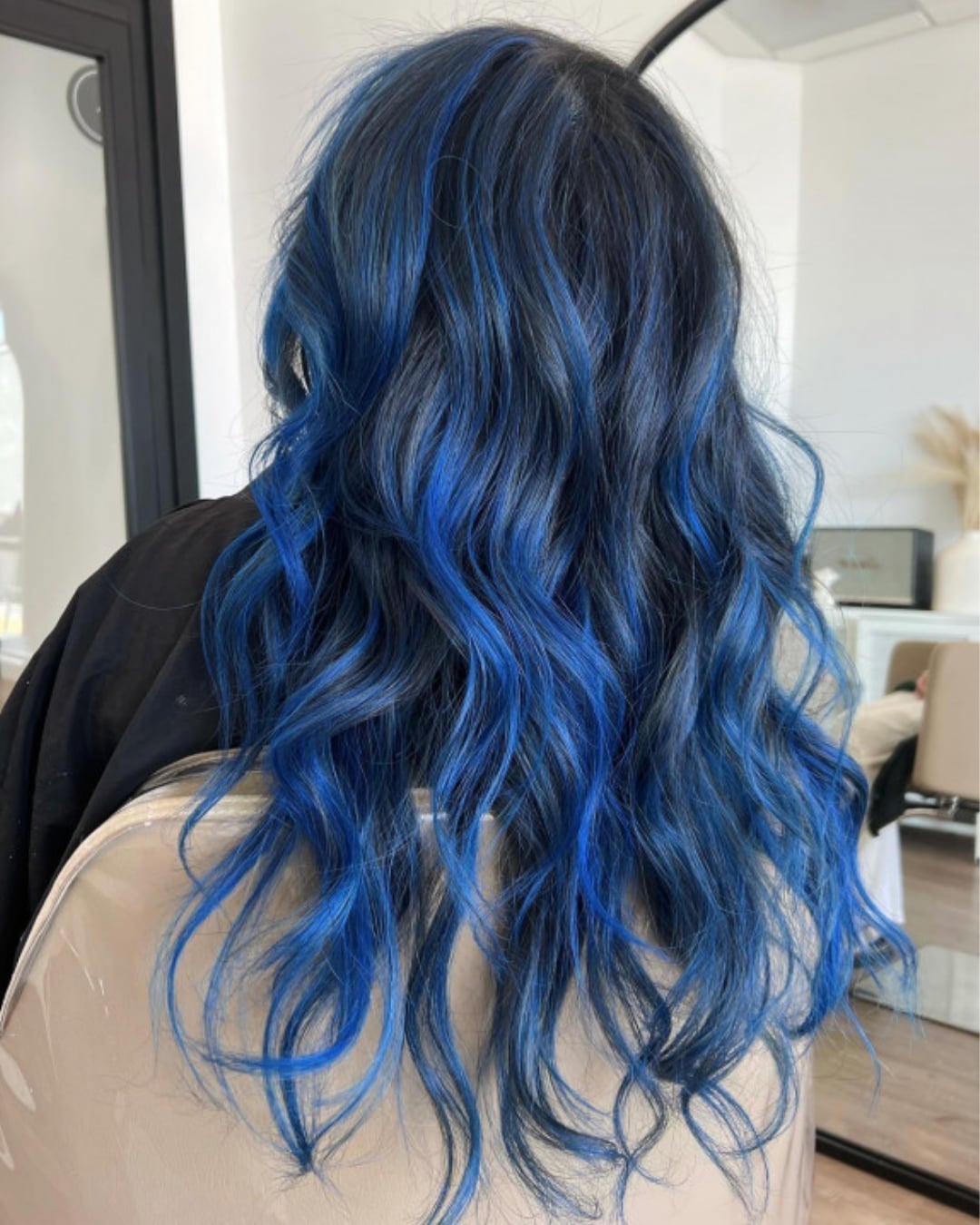
Thick, wavy hair can handle bold color placement without looking sparse. The dark base here anchors the vibrant blue streaks, each strand catching light at a different angle through the loose waves. A middle part keeps the pattern symmetrical from the back view.
Tell your colorist: dark base with vibrant blue streaks, loose waves. A color-depositing conditioner every two weeks maintains the tone between appointments. Not for those who prefer a subtle color or have very fine hair that might look overly processed.
Vibrant blue streaks on fine straight hair
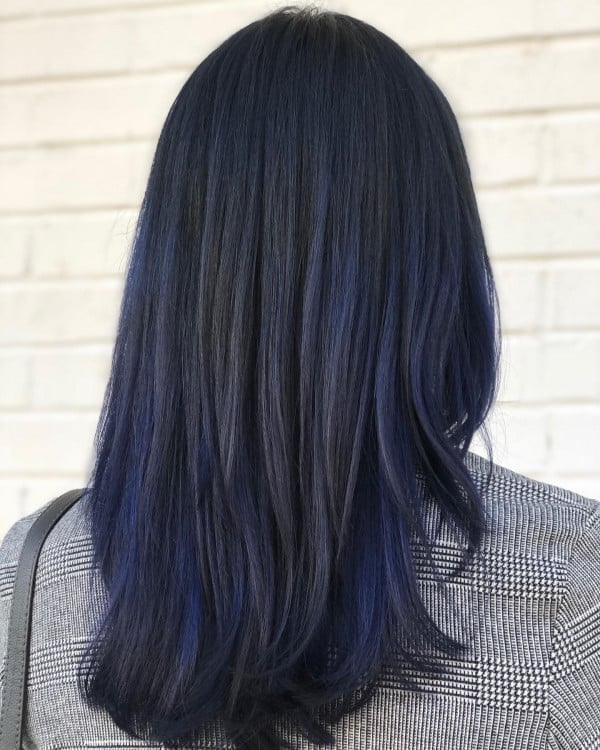
Fine, straight texture needs a different approach than thick waves. The vibrant blue streaks here concentrate toward the ends, avoiding the root weight that can drag down a finer strand. Layers add movement without bulk, and an air-dried finish keeps the look natural rather than stiff.
Two tones: vibrant blue to icy white Ombré
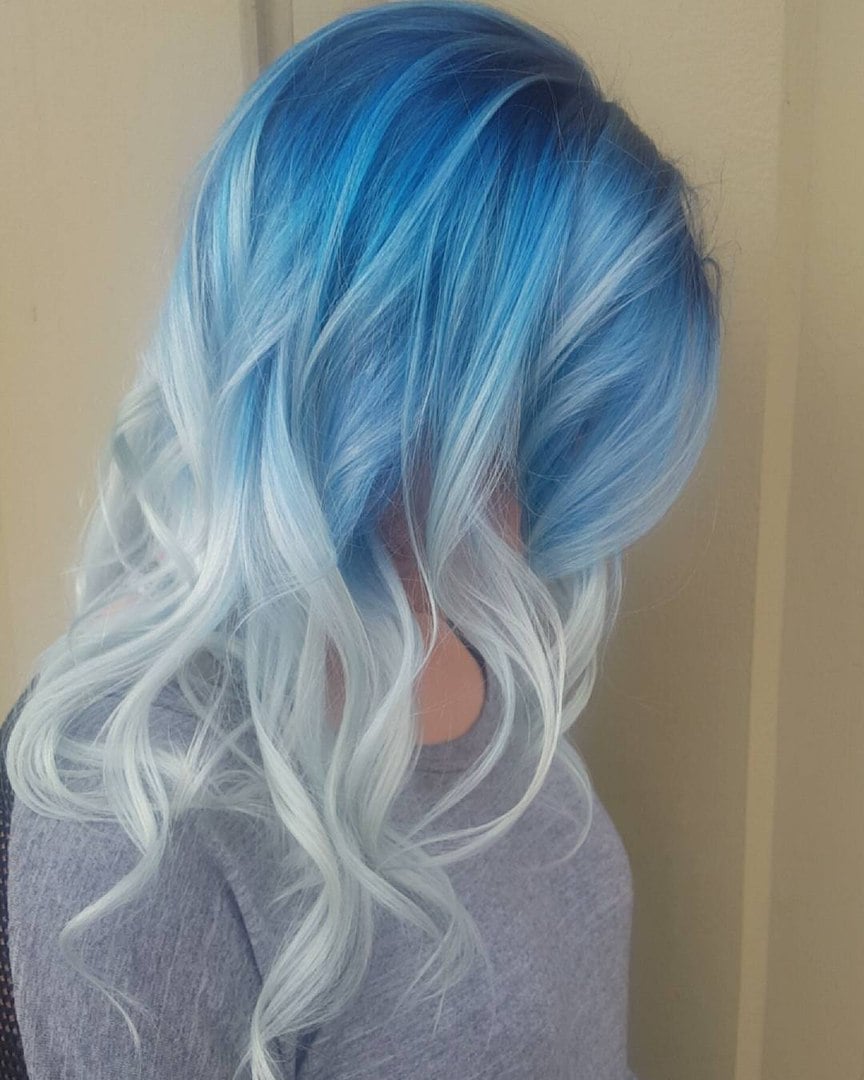
A deep vibrant blue at the roots fading to icy white at the ends creates a gradient that looks planned. Subtle layers in the thick, wavy texture help the transition flow smoothly from the side view.
The transition zone can require frequent toning to keep the white from warming up. This look is best for those who want a single color tone or have fine hair that might appear damaged by the bleaching needed for the ends.
Vibrant blue streaks on thick curly black hair, close-up take
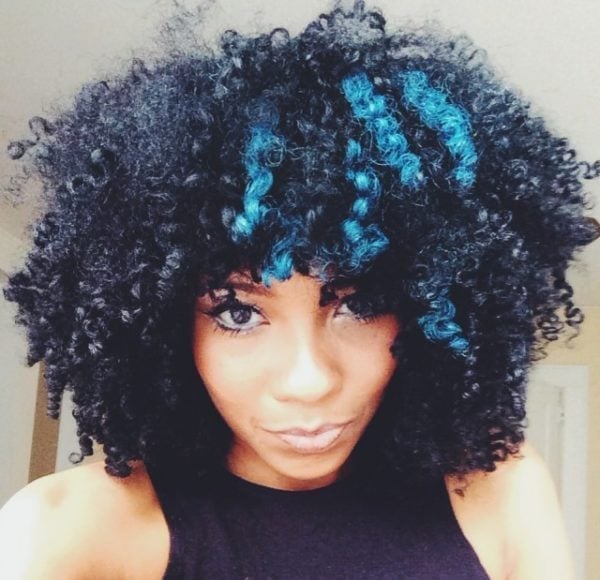
Thick, curly texture changes how a vibrant blue streak reads compared to straight or wavy hair. The curl pattern bends the color around each spiral, so the blue appears in flashes rather than solid lines. A black base with vibrant blue highlights placed through the layers keeps the contrast high without overwhelming the natural movement. A middle part and no bangs let the curls fall forward, framing the front evenly. Not for those who prefer straight hair or want very fine, delicate highlights. Tell your colorist: black base, vibrant blue highlights, thick curly texture. A curl-defining cream and air drying are all the styling this needs.
Vibrant blue highlights on black curly hair
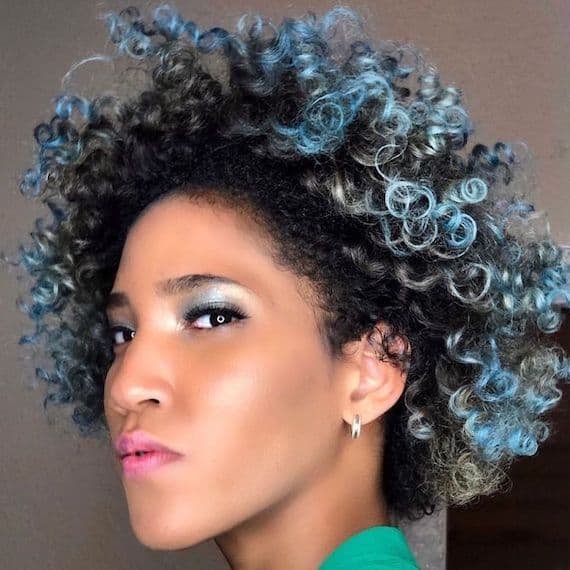
Natural black hair with vibrant blue highlights looks playful, not costume-like. The ear-length cut keeps the curly, thick texture compact, and an air-dried finish lets the side-framing streaks show naturally.
Subtle blue highlights add dimension to waves
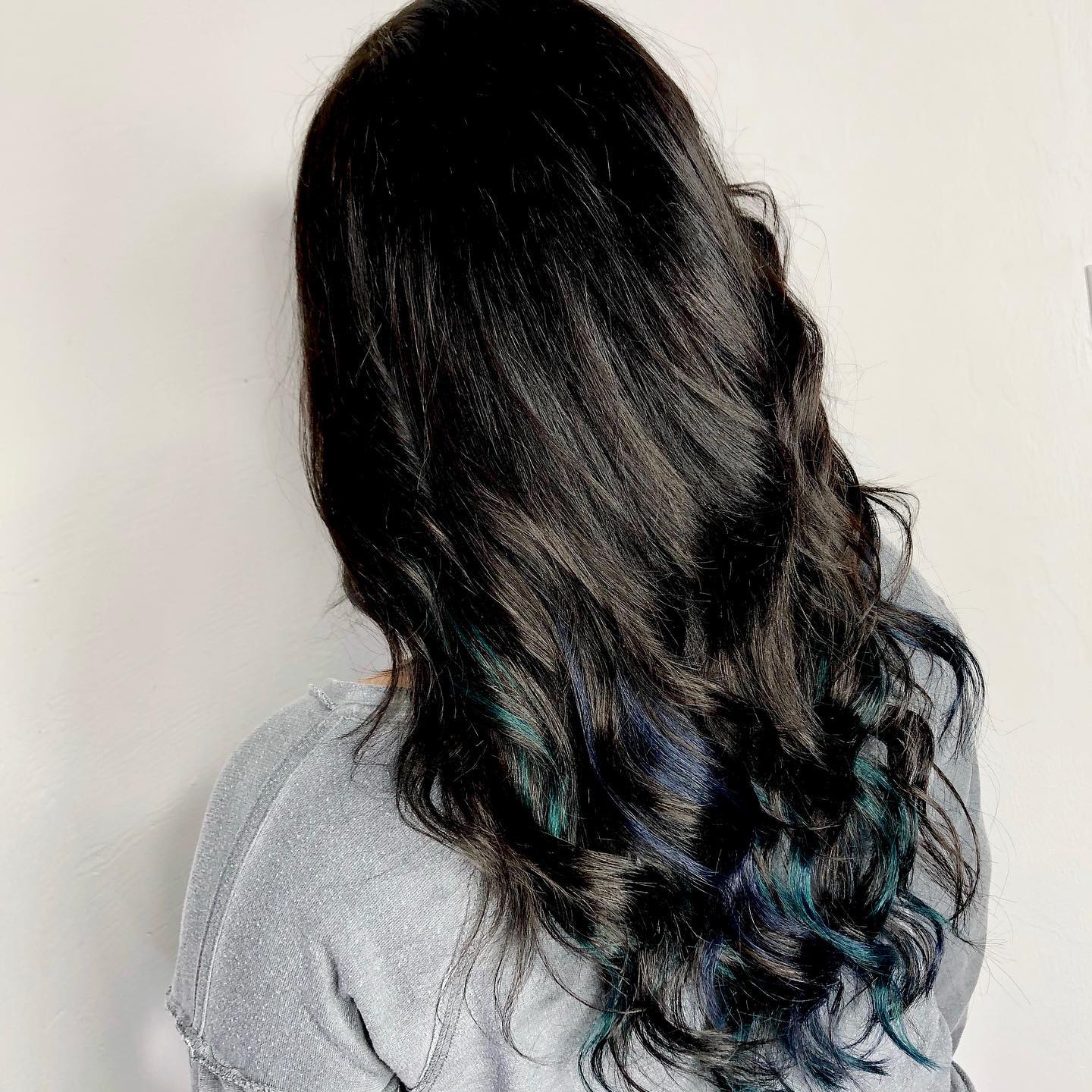
Dark brown with blue highlights creates a soft contrast on thick, wavy hair. The blue adds dimension along the side of the wave. This look works for those who want a hint of color without a vivid streak. It is not ideal for high-contrast statements or very fine hair that tends to absorb subtle tones. Ask your colorist for: dark brown with subtle blue highlights. A color-depositing shampoo once a week keeps the blue from fading into an unintended greenish tint.
Vibrant blue streaks on a deep black layered cut
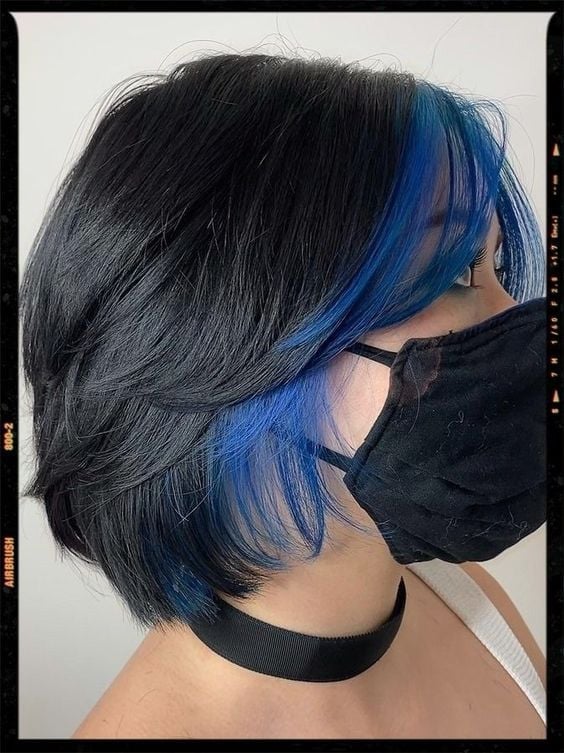
Layers on fine, wavy hair create the illusion of density, and vibrant blue streaks placed through the mid-lengths and ends reinforce that movement. The deep black base keeps the contrast sharp. A middle part lets the color land evenly on both sides. The catch: fine texture shows every faded tone, so the blue needs a refresh at week six to stay vibrant. Air drying with a smoothing serum keeps the wave pattern defined without weighing it down.
Vibrant blue streaks on a sharp bob with blunt bangs
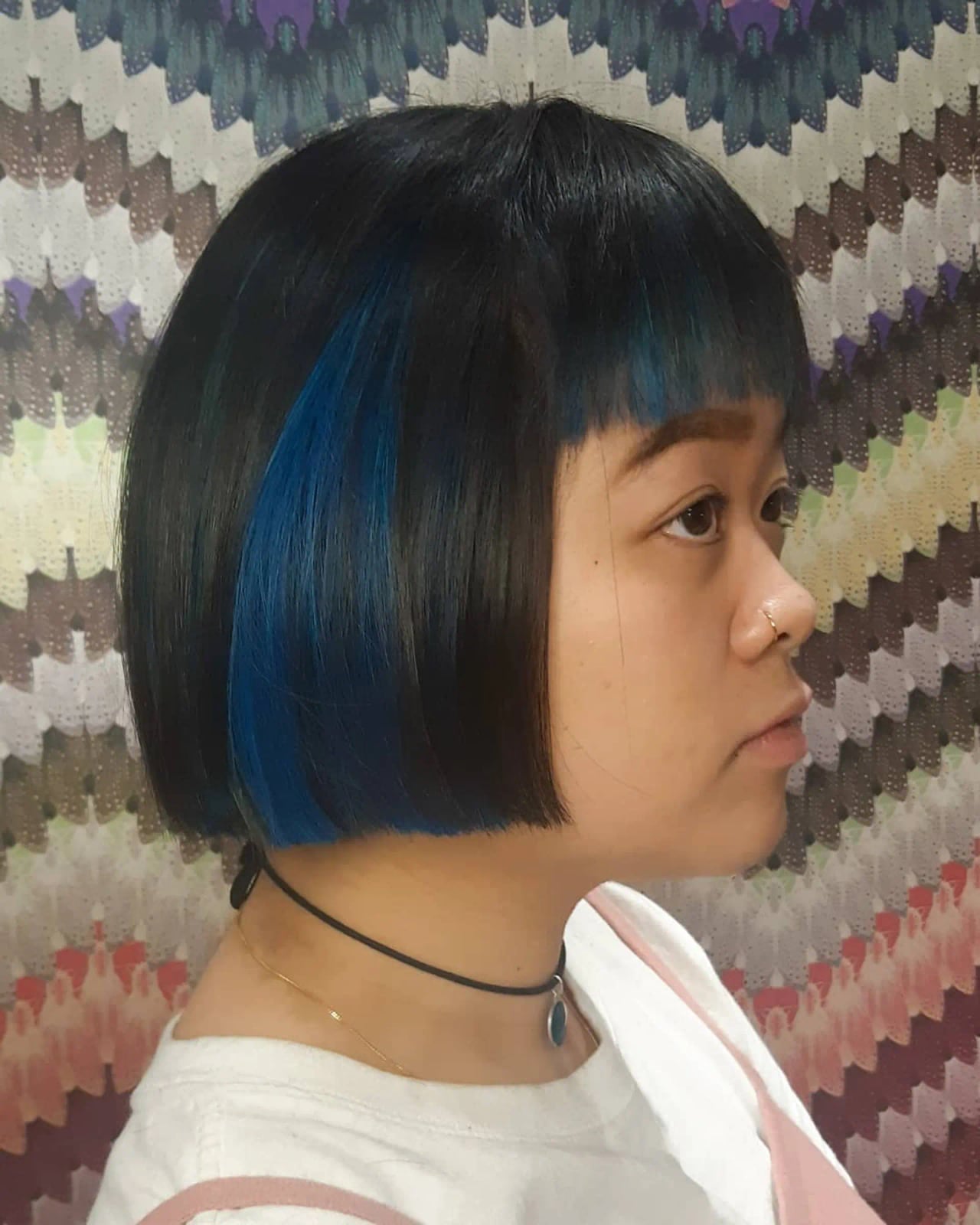
Blunt bangs and a sharp bob create a graphic frame, and vibrant blue streaks cut through the dark base like a deliberate accent line. The straight, fine texture keeps the color placement precise and visible. A flat iron finish seals the look. This is a salon-only project. The bang geometry and color placement need a steady hand. A softer fringe or a four-week bang trim commitment may not suit this style.
Two tones of blue highlights on layered wavy hair, layers
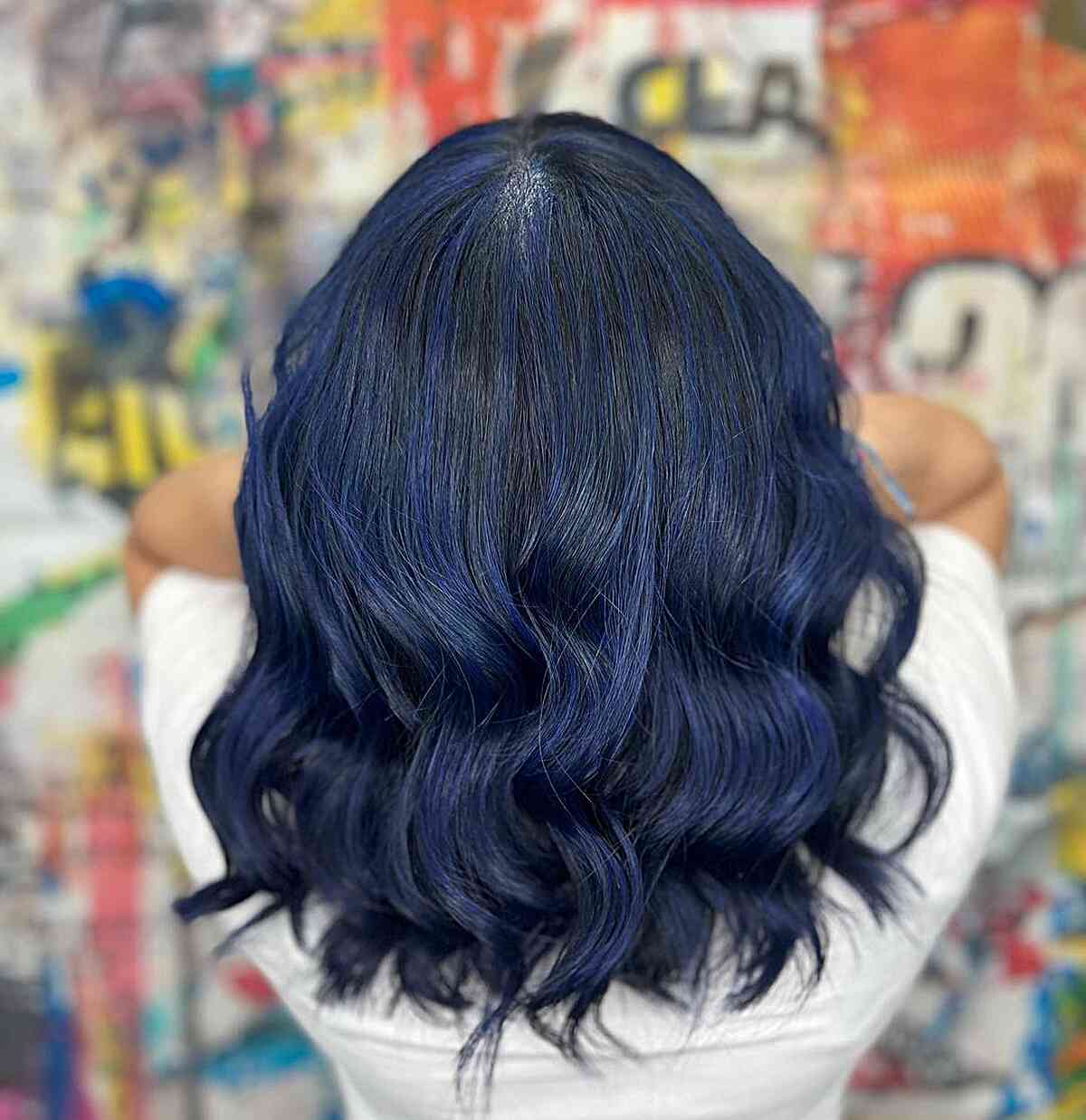
Two tones of blue on thick, wavy hair mean the layers actually show their work. Dark blue sits deeper in the cut, while lighter blue highlights catch the wave peaks, creating a tonal shift that moves with the hair. The centered part keeps the distribution even front to back. Chair time runs about three hours for the double process. A curl-enhancing cream applied to damp hair and air drying keeps the waves defined without heat. Request from your colorist: layered cut with dark blue and lighter blue highlights.
Subtle blue highlights adding a modern touch to layered waves
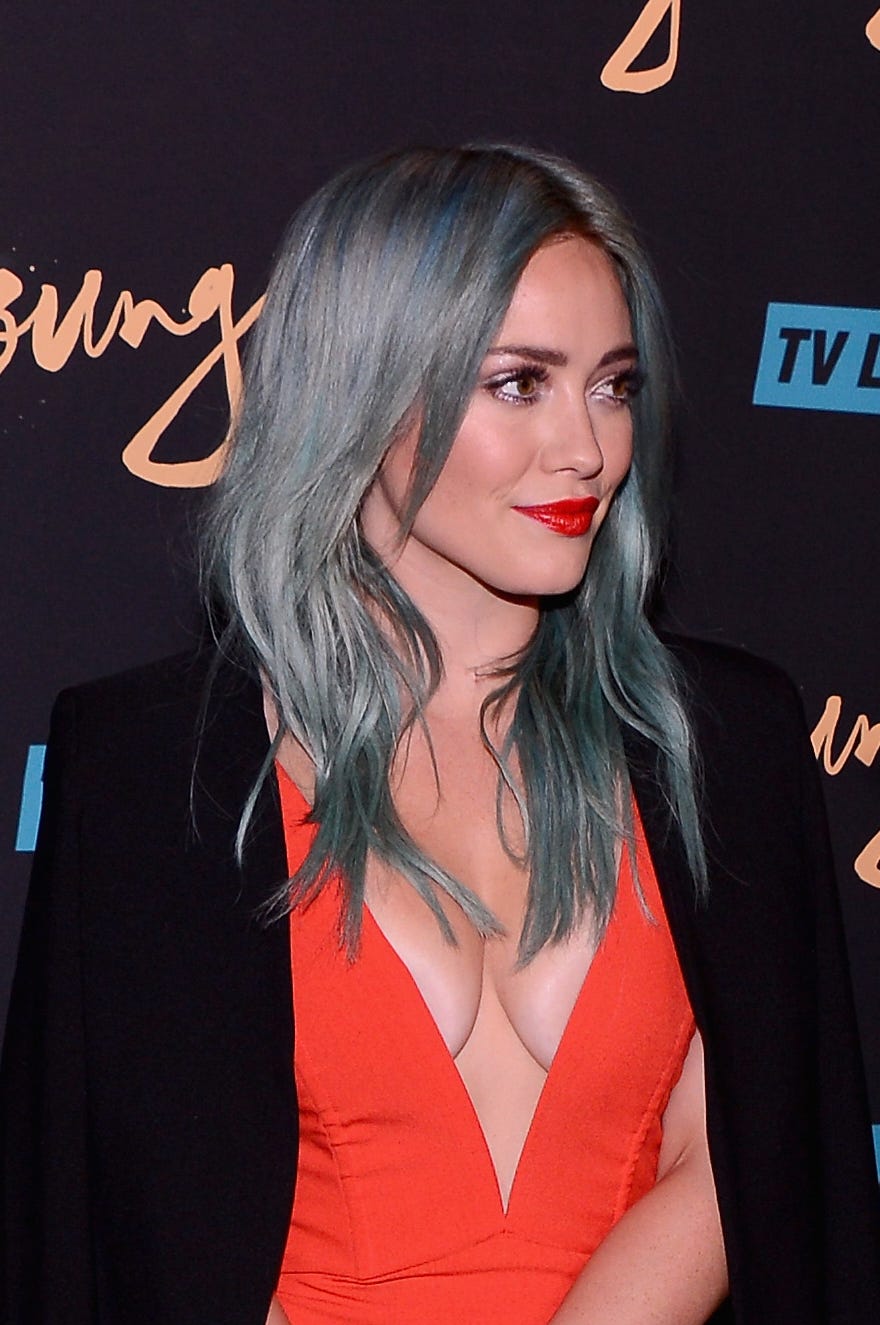
Fine, wavy hair benefits from a middle part and subtle blue highlights placed through the layers. The blue appears as a cool shift in the light, which keeps the overall look natural. The air-dried finish avoids heat damage and lets the fine texture move freely. A texturizing spray on dry hair adds grip without stiffness. This is a low-commitment entry point for a subtle color change.
Lighter blue highlights on deep blue layers
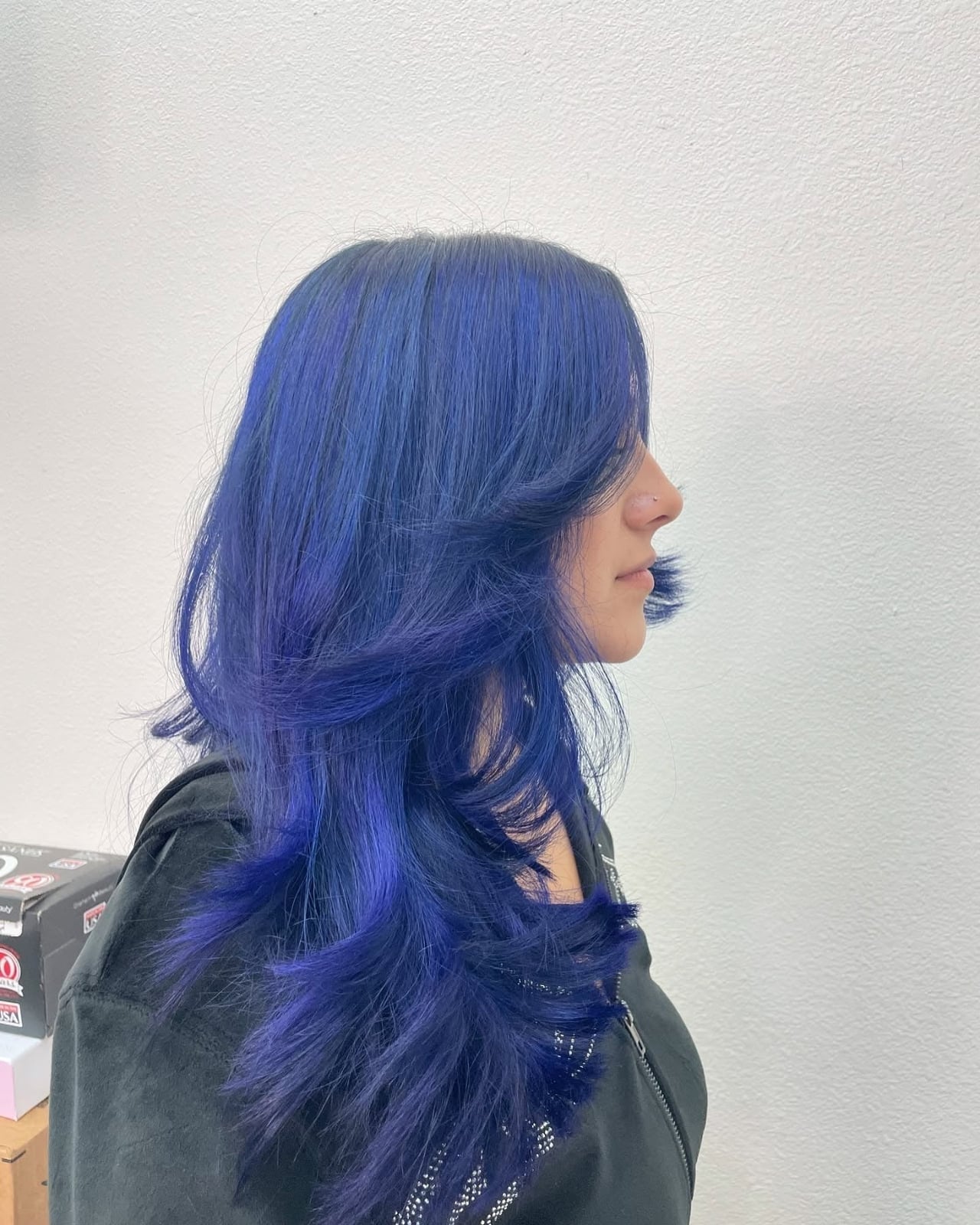
Fine hair with curtain bangs needs a color placement that doesn’t weigh the ends down. A deep blue base with lighter blue highlights woven through the layers keeps the tone dimensional without bulk. The side part lets the curtain bangs fall forward, softening the face. Air-dried texture works best here. A round brush on the bangs is enough. Request from your colorist: deep blue base, lighter blue highlights, curtain bangs. Toning every four weeks prevents the lighter pieces from pulling green.
Vibrant blue balayage highlights on a dark base
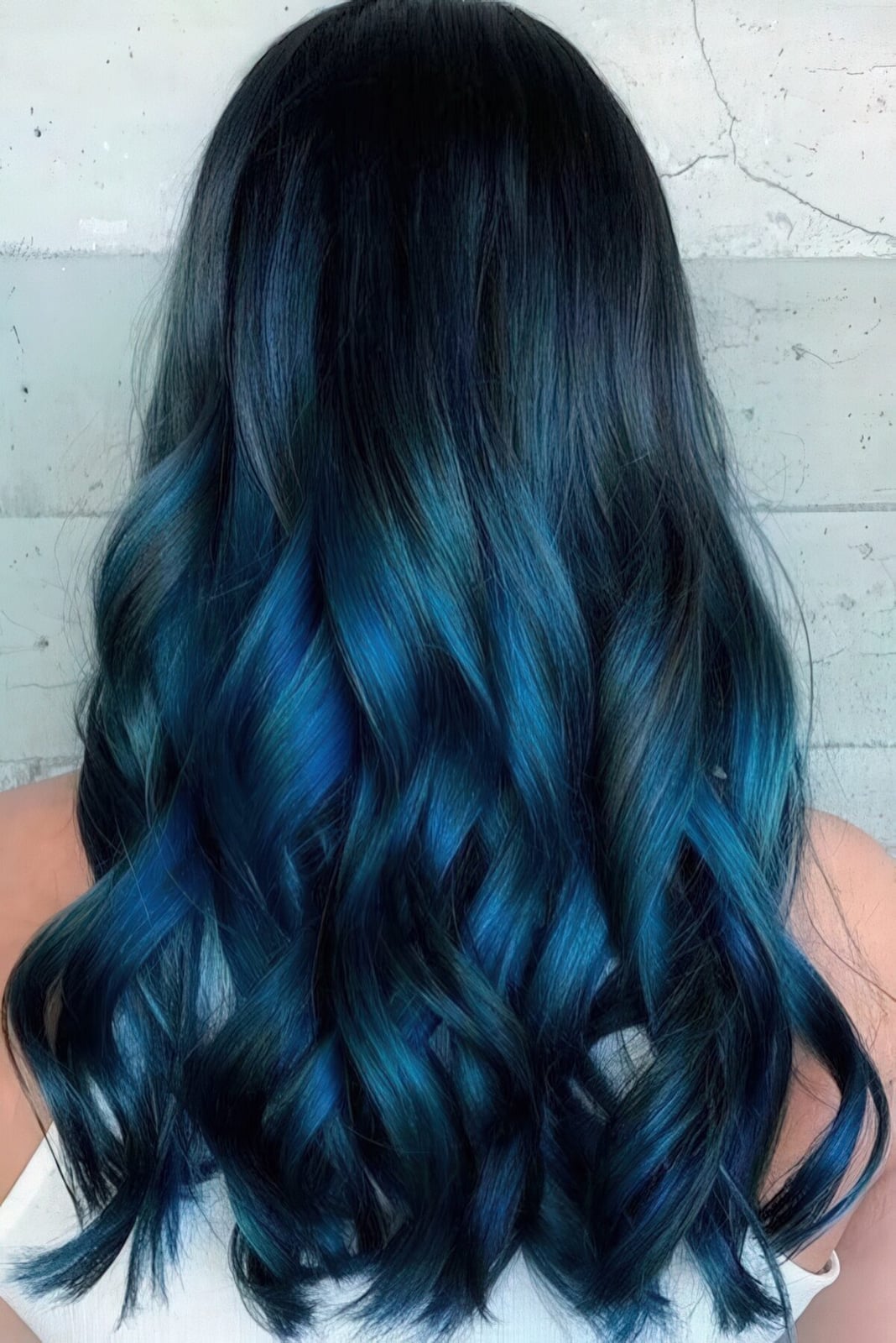
Balayage is often described as a painting technique, and this look proves why the description fits. A dark base transitions into vibrant blue balayage highlights, with the color concentrated on the mid-lengths and ends. The thick, wavy texture helps the blend look smooth. Loose waves show the hand-painted sections naturally. For a high-contrast, foil-defined highlight, balayage gives a softer edge. The back view confirms no harsh lines, just a gradual fade into blue.
Blue highlights adding depth to fine wavy hair
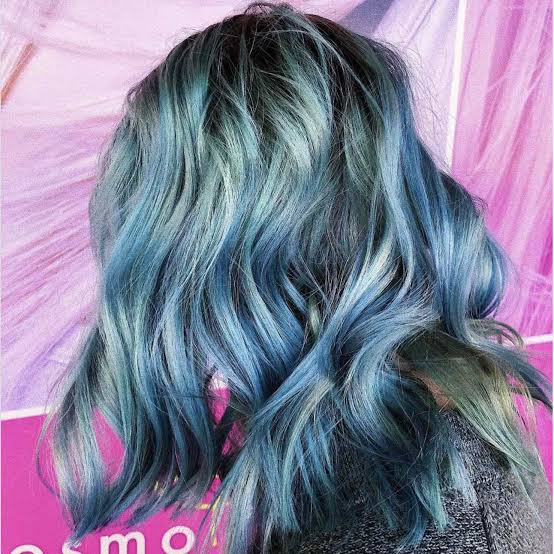
Fine hair and vibrant color have a complicated relationship. The blue holds best on pre-lightened strands, and fine hair can struggle to hold that saturation without feeling dry. A dark base with blue highlights on wavy layers adds depth without overwhelming the texture. The middle part and soft waves create movement, which helps the color catch the eye.
The catch: fine hair needs regular toning to keep the blue from fading to a washed-out green. A purple shampoo used once a week helps. Not for those who plan to wear the hair straight daily. The color reads better with wave or curl to break up the lines.
Teal highlights on black hair in a half-updo
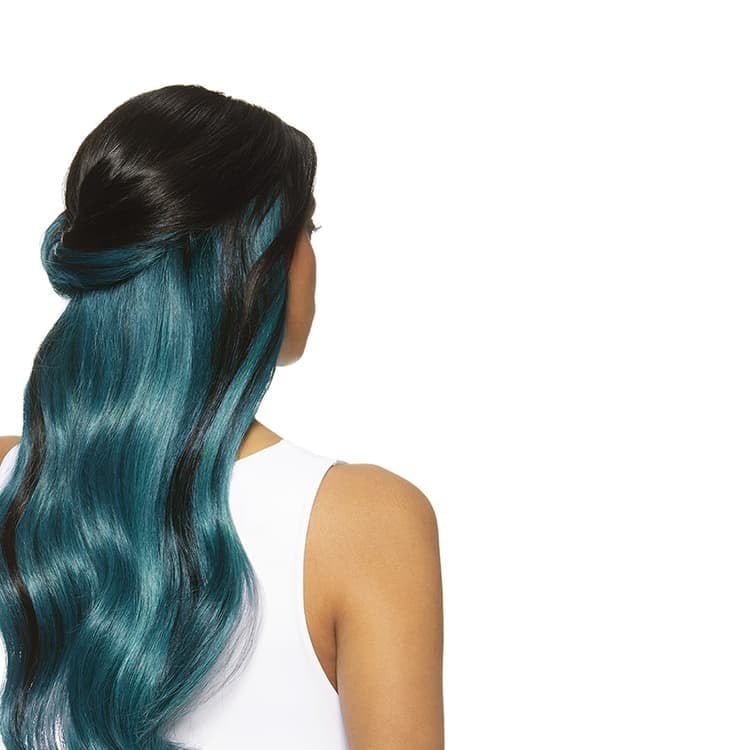
Teal sits between blue and green on the color wheel, which makes it a different decision than a straight blue. On a black base, teal highlights look bold without needing a full color commitment. The half-updo pulls the top section back, leaving the teal visible on the lower lengths. Thick, wavy texture gives the style body. A few pins and a light hairspray hold the updo for an event. Not for anyone who prefers to wear hair fully down or has very fine hair that won’t secure well in a half-up style.
Subtle blue highlights on a blonde lob
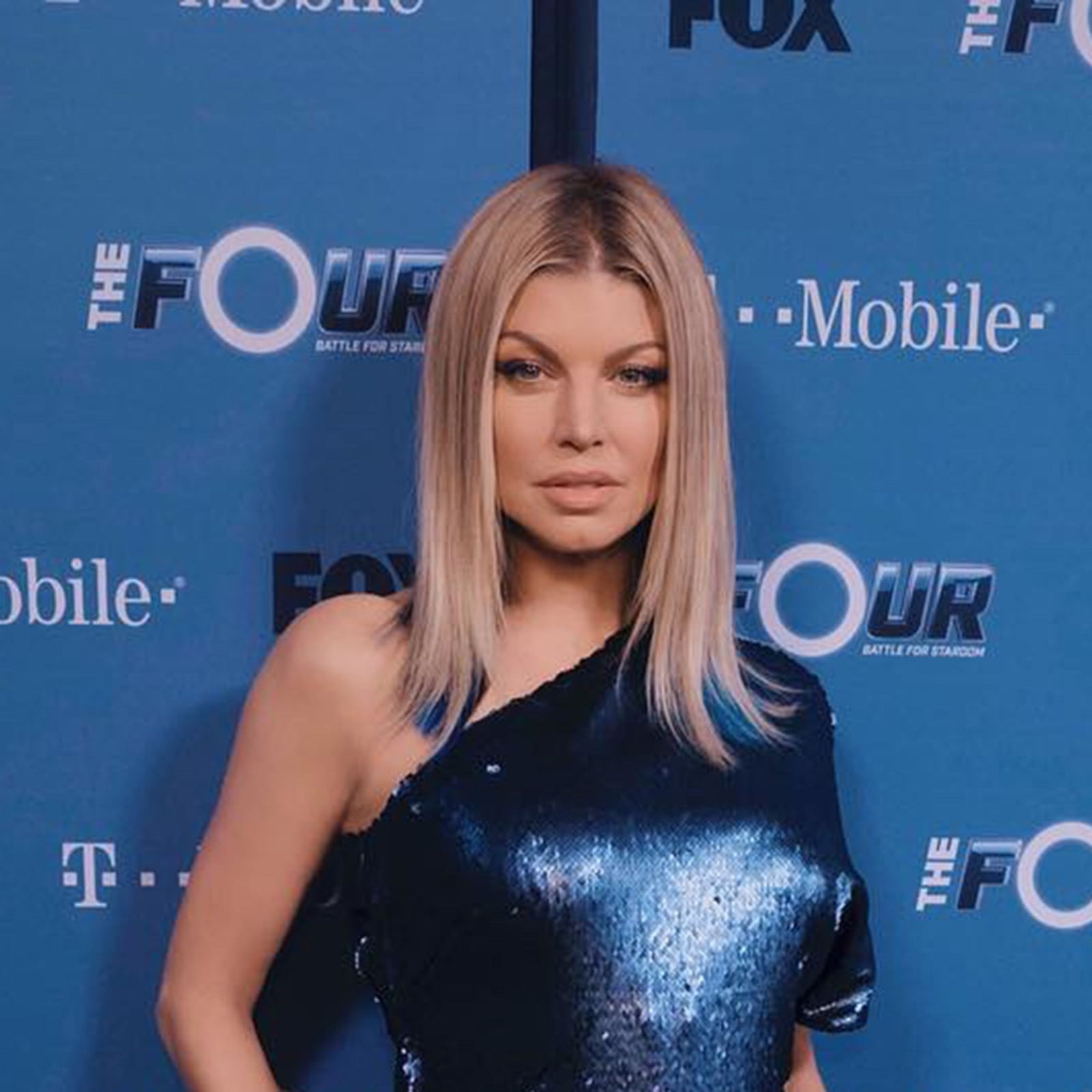
A lob with a middle part and air-dried straight texture shows every detail of the color. The blonde base here gets subtle, vibrant blue highlights woven through, not chunky, not hidden. Fine, straight hair makes the blue streaks look like deliberate lines. The effect is modern without being costume. Request from your colorist: blonde base, subtle blue highlights, straight lob. A smoothing serum keeps the air-dried finish neat.
Icy blue highlights contrast dark brown straight
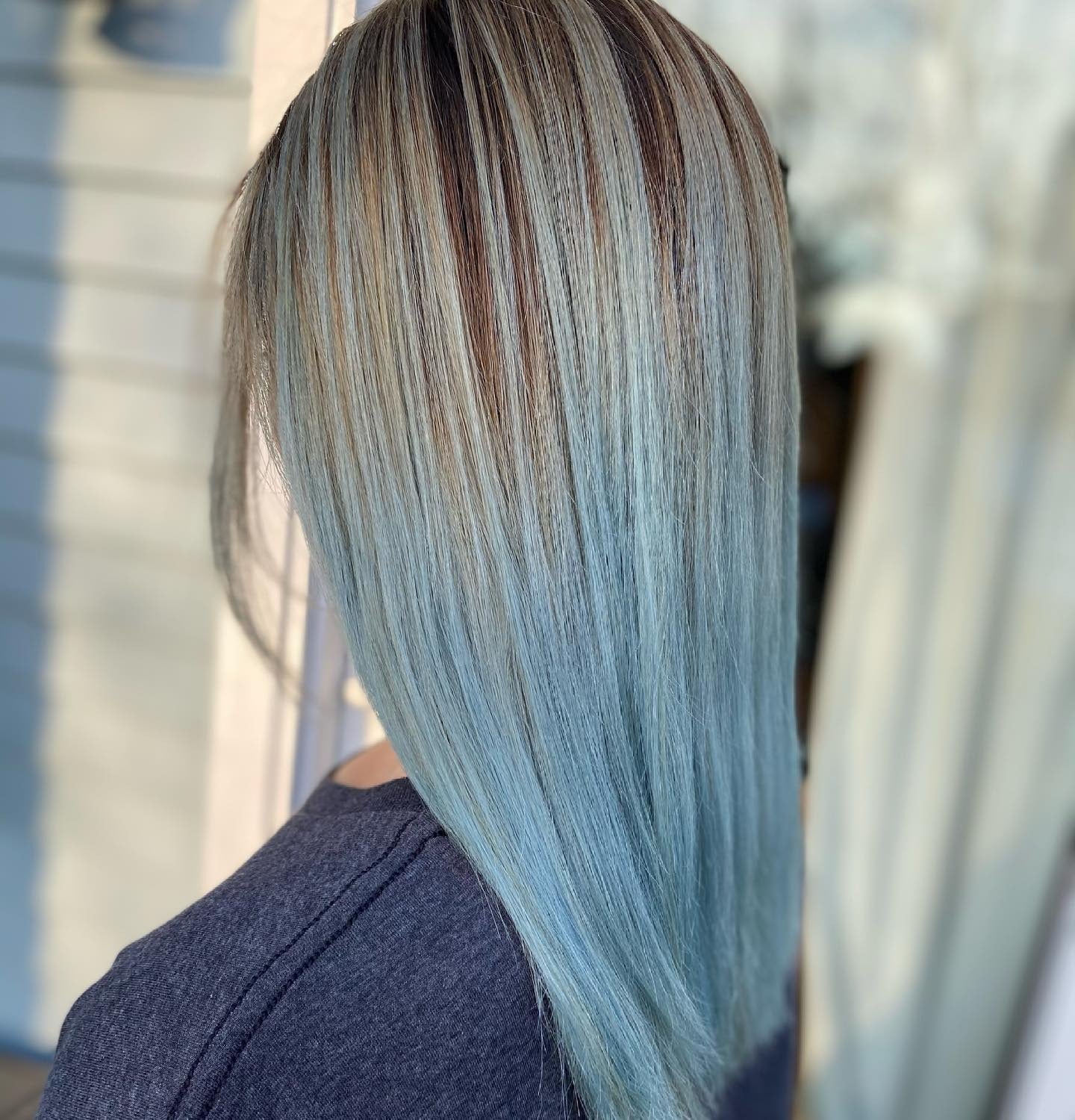
A dark brown base and icy blue highlights form a deliberate contrast. Fine, straight texture lets the cool tone sit cleanly against the deeper shade without competing. Not for those who prefer warmer tones or have very thick hair that might swallow the subtle blue. A purple shampoo twice a month keeps the blue from warming toward green.
Cool blue highlights on dark base long layers
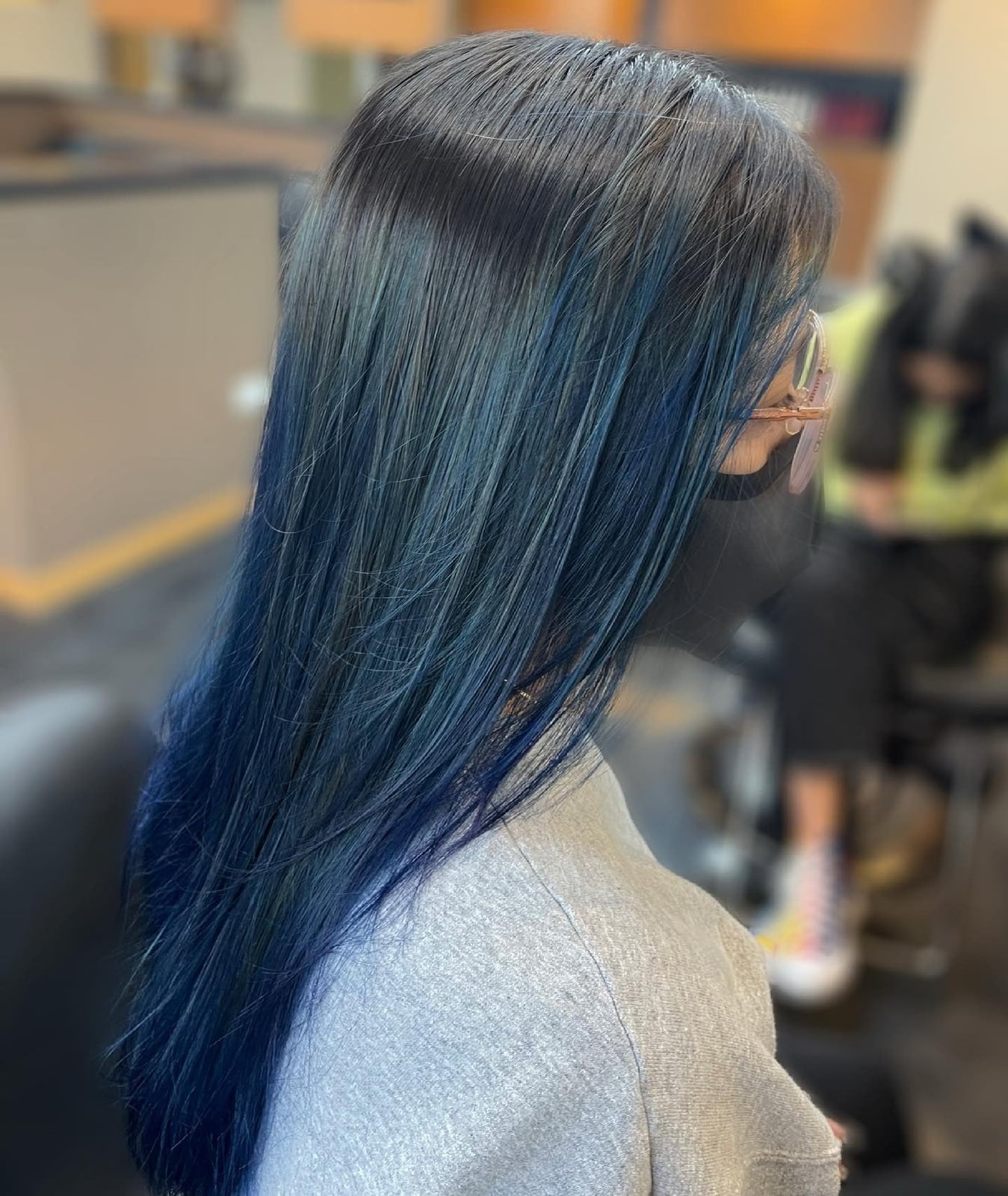
Air drying a fine, straight texture means the blue tone lands softly. Long layers keep the weight distributed so the cool-toned highlights look part of the base rather than an add-on. The blue concentrates toward the ends, which keeps the root line low-maintenance. Fine hair can handle this because the color is woven, not painted on thick sections.
Request from your colorist: dark base, subtle cool-toned blue highlights, long layers. The finished look works best on hair starting at collarbone length or longer. Shorter cuts might crowd the color zone.
Two tones of blue highlights on thick wavy hair with loose waves
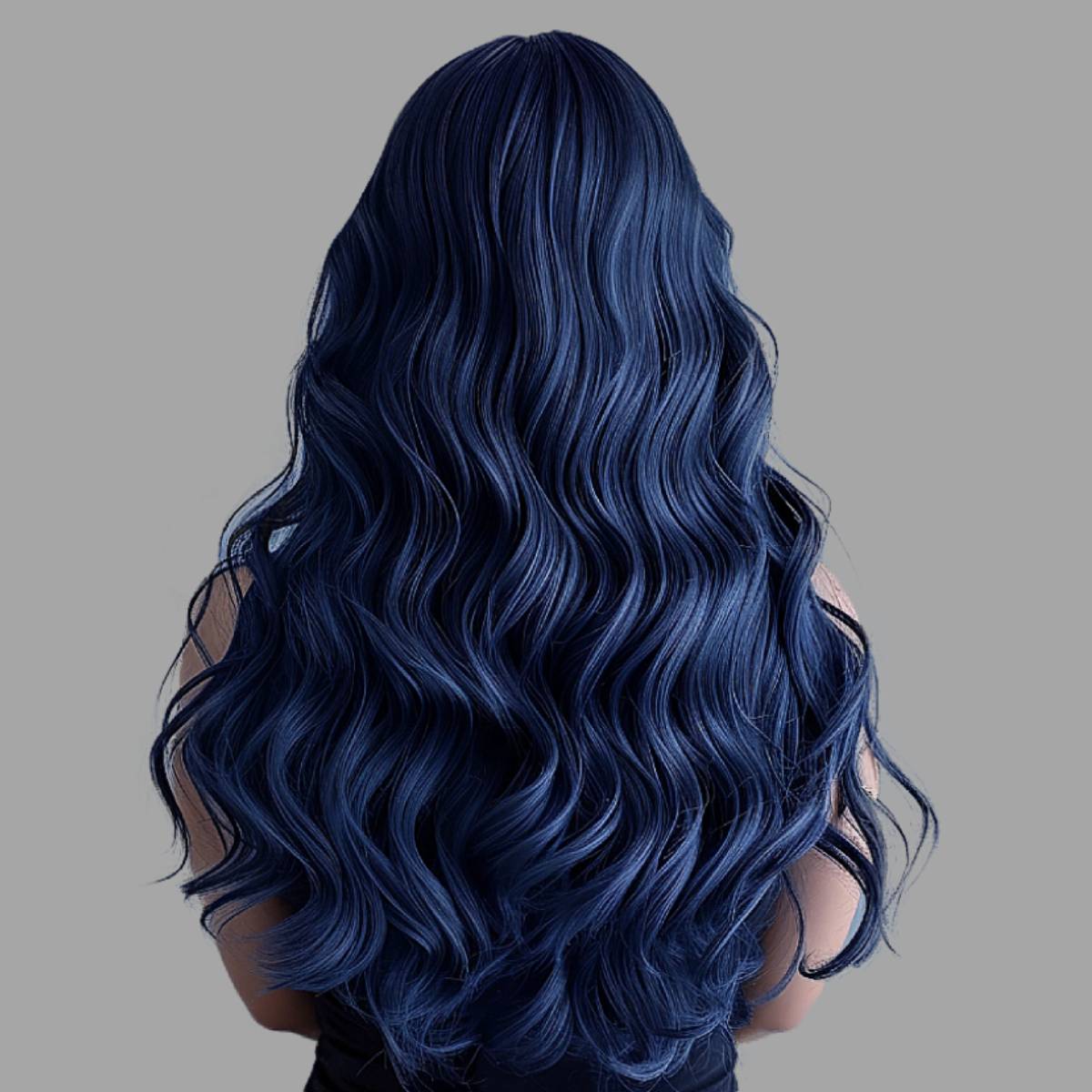
Loose waves on thick hair give two blue tones room to separate. A deep blue base carries the weight; lighter highlights sit on the wave crests. The result is a single color with depth, not a stripe pattern. Straight hair or a single flat tone would not show this effect. A curl-defining cream keeps the waves distinct and the color visible.
Vibrant blue Ombre ends on layered hair with full fringe
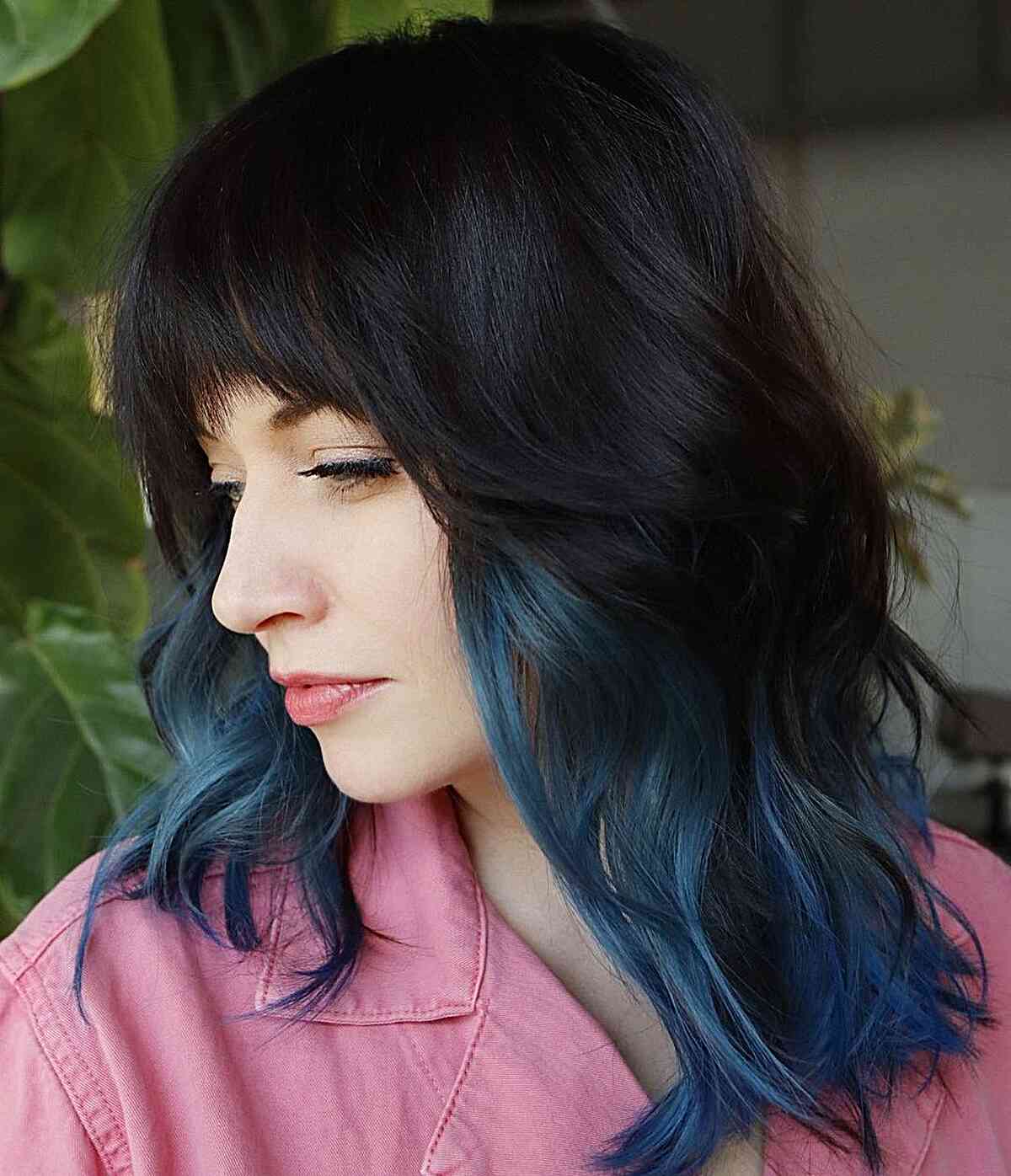
This one takes a salon visit. The full fringe and layered cut need precision, and the blue ombre ends require a bleach lift before the color goes on. Fine, wavy texture works well here because the layers keep the fringe from lying flat. Not for those who prefer no bangs or have very thick hair that might make the fringe hard to style. Request from your colorist: dark base, full fringe, wavy layers, blue ombre ends.
Blue highlights making the darker strands pop with waves
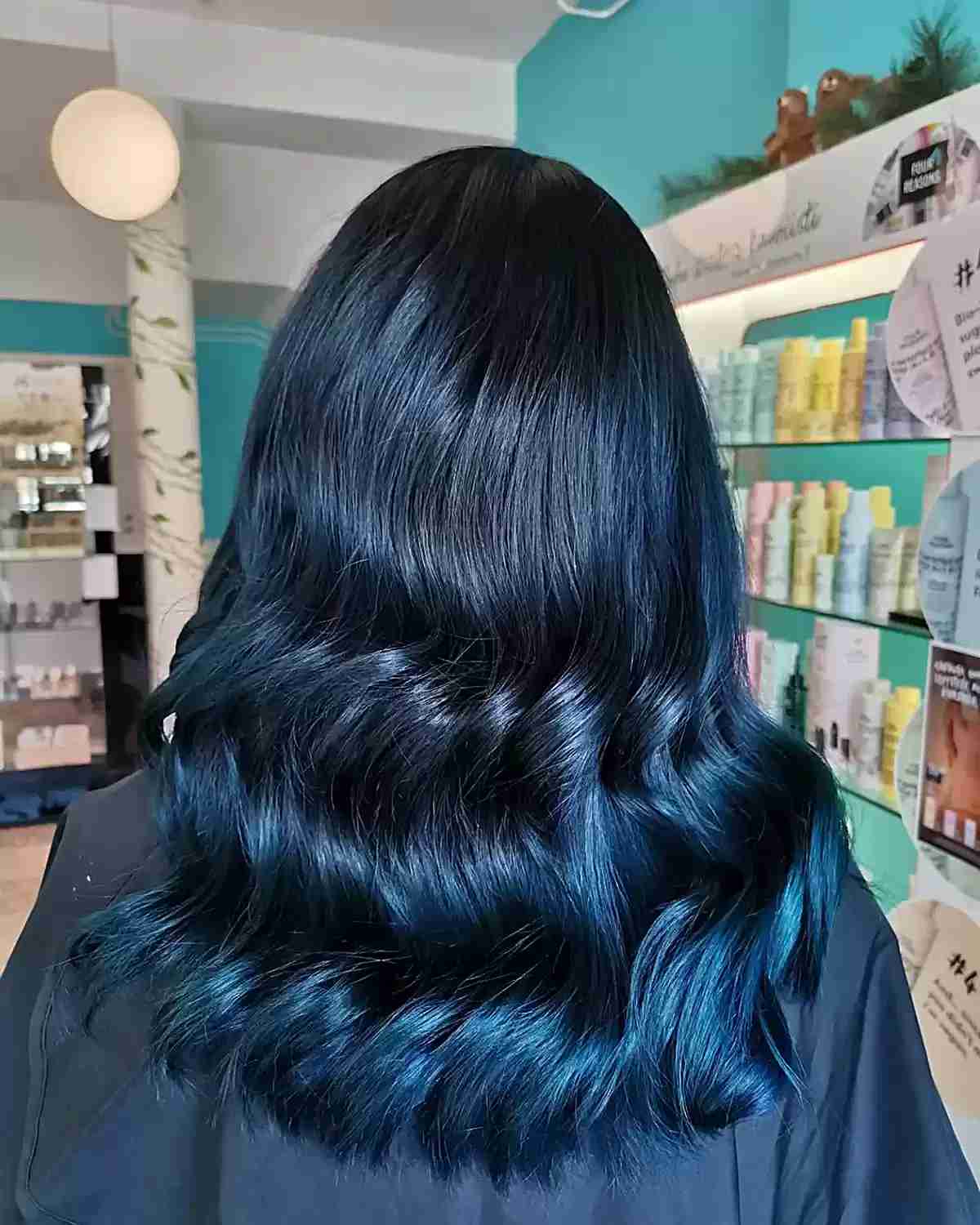
Waves on thick, straight hair change how the blue highlights read. The dark base stays solid while the lighter blue catches the wave bends. Bold by design, the look works because the texture does the contrast work for you. Not for those who prefer straight styling or a very subtle color shift. A texturizing spray holds the wave pattern without weighing the hair down.
Vibrant blue streaks framing the face on wavy black hair
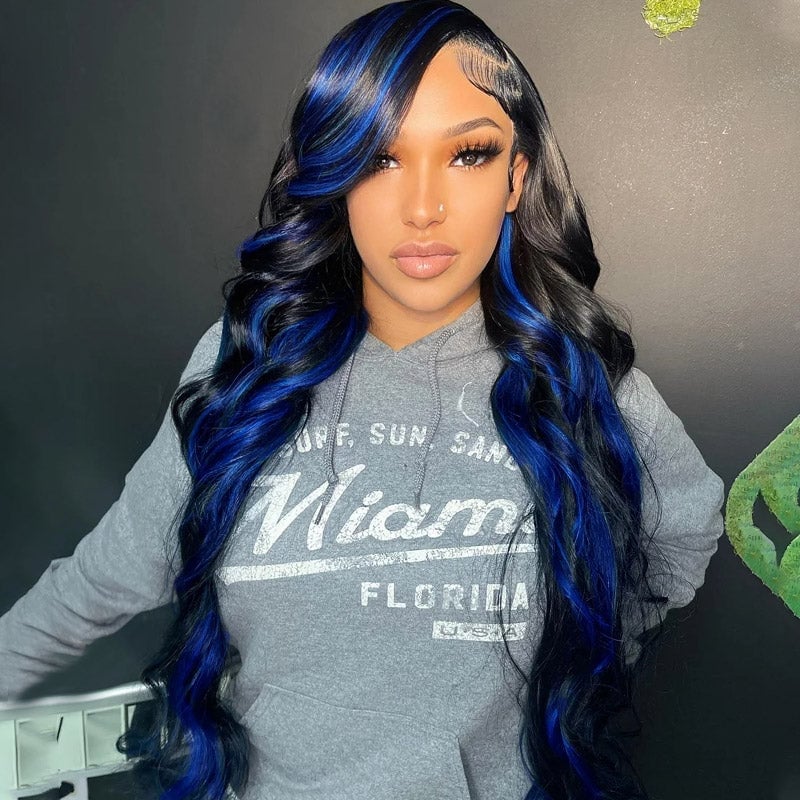
Face-framing placement turns blue highlights into a deliberate design feature. Long wavy black hair gets a side part and thick vibrant blue streaks that start at the jaw and sweep forward with the wave pattern. The contrast draws attention to the cheekbone area. Request from your colorist: vibrant blue streaks framing the face. Thick wavy texture holds the color well and shows the shift between black and blue clearly. The catch: maintaining that vibrancy requires a salon toner visit every four to six weeks. Fine hair may not have enough density to carry the front-heavy placement. A styling cream keeps the wave definition intact between washes.
Vibrant blue highlights on a dark base with waves, wavy
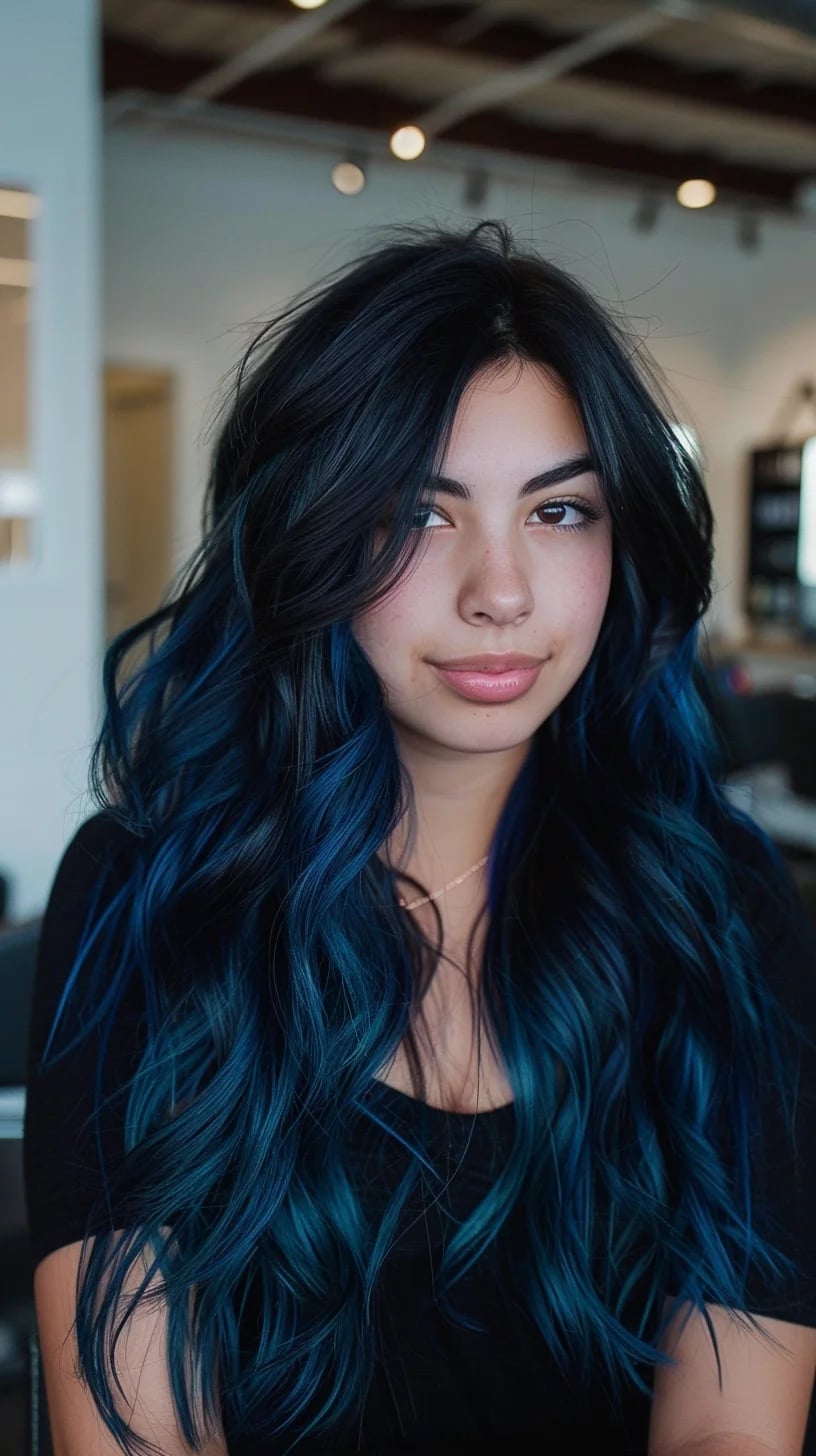
Blending blue tones into a dark base demands a colorist who understands saturation and lift. The technique uses a middle part and layers cut through wavy thick hair, with vibrant blue highlights woven from mid-length to end. No bangs keeps the front clean. The dark base anchors the blue so the streaks look deliberate contrast rather than faded color. The waves break up the color line and add a textured surface that shifts between dark and bright. A texturizing spray helps the wave pattern hold its shape and keeps the blue from looking flat.
Final Thoughts
Blue highlights come down to one choice: how often you want to see your colorist.
- Low upkeep: a few face-framing streaks on dark hair
- Medium: ombré ends that grow out soft
- High: full saturation with toning every 4-6 weeks
Pick your maintenance level first, then the shade.