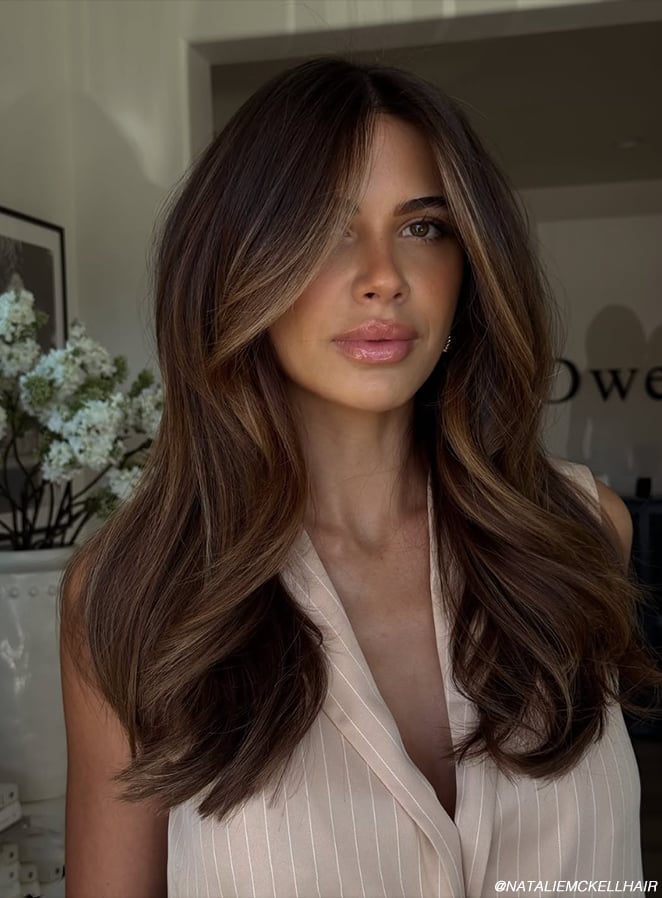
31 Dreamy Ombre Hair Color Ideas for 2027
Dreamy Ombre Hair 2027 features dark brown caramel ombre balayage, magenta, ash blonde, and honey blonde shades. See the looks and save your favorite.
Ombre hair is the color technique that buys you time. A dark root stays put while the ends lighten, which means a grow-out line that looks intentional for months. That is the appeal for 2027: less chair time for a result that still photographs like you planned it.
31 versions of Dreamy Ombre Hair 2027 fill saved boards for a reason. From caramel ribbons on a dark brown base to icy silver on black roots, this collection covers low-maintenance blends and bold statement ends. It is for anyone who wants dimension without a strict touch-up schedule.
Caramel ribbons on a dark brown base with curtain bangs
Dark brown at the roots, then a slow melt into caramel that wraps around the front pieces. The balayage technique keeps the line soft, no harsh stripe where the color changes. Curtain bangs catch the lighter shade first, which is the whole point of having them. Wavy texture helps the transition look natural sun exposure rather than a salon decision. Skip it if you prefer a low-maintenance fringe. Those bangs need a trim every few weeks to stay out of your eyes. Ask your colorist for: dark brown to caramel balayage, curtain bangs, face-framing layers.
Vibrant magenta ends on a dark brown base
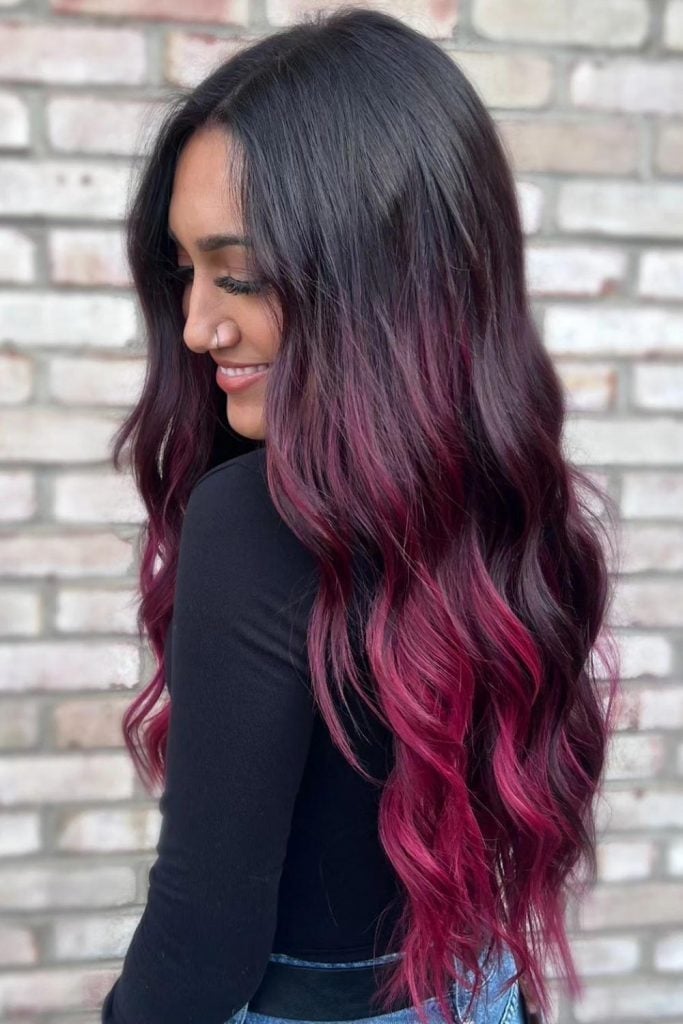
Wondering how to get that dark-to-bright shift without it looking like a Halloween wig? The dark brown base grounds the color, so the magenta looks purposeful. Thick wavy hair carries the pigment well, the ends holding the vibrancy while the roots stay natural. The technique is a standard ombre application, lightener painted on the lower half only. This one announces itself.
Ash blonde ends on a dark brown base
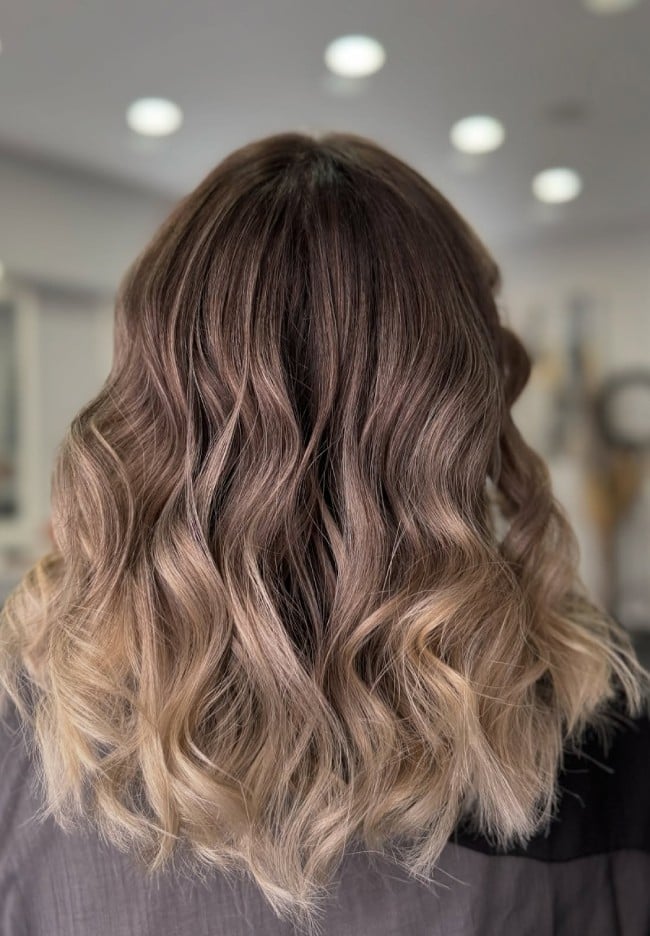
Cool ash versus warm caramel: the difference is in the toner. Where a caramel ombre reads sunny, this one lands cooler and more deliberate. The dark brown base meets ash blonde ends through a smooth transition, the wavy blowout showing off the multi-tonal effect. It works for thick wavy hair that starts at least at the collarbone. Skip it if your hair pulls brassy tones easily. You will be fighting the warmth every wash.
Honey blonde ends on a dark brown base, close-up take
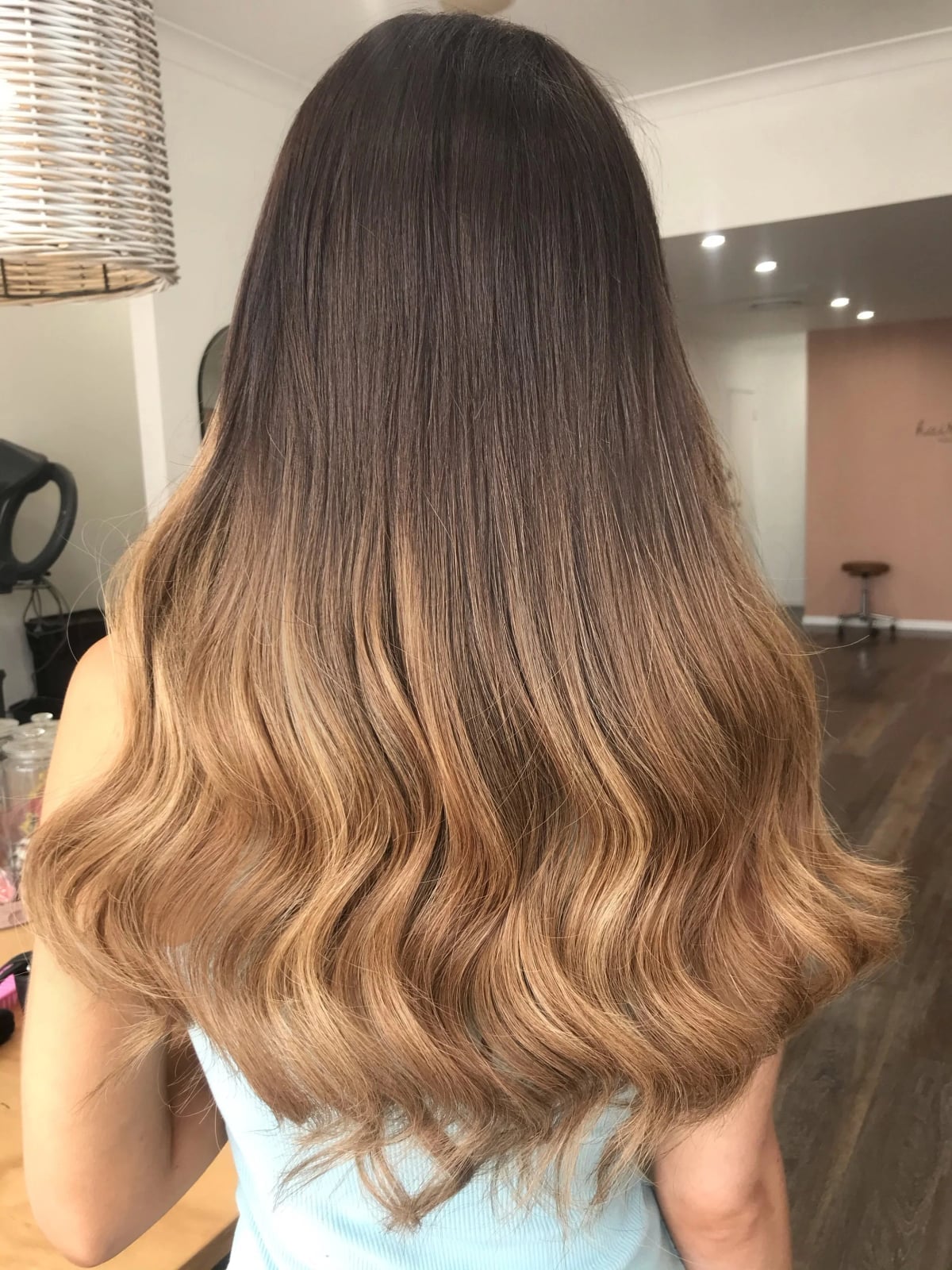
Two tones, one smooth gradient. The technique here is a hand-painted ombre, the colorist feathering the honey blonde into the dark brown so no line appears. Soft waves break up the color further, each bend showing a different ratio of base to blonde. It is a close-up view for a reason: the blend is the whole story. Thick wavy texture keeps the transition from looking flat. Ask your colorist for: dark brown to honey blonde ombre.
Caramel Ombre for a lighter vibe
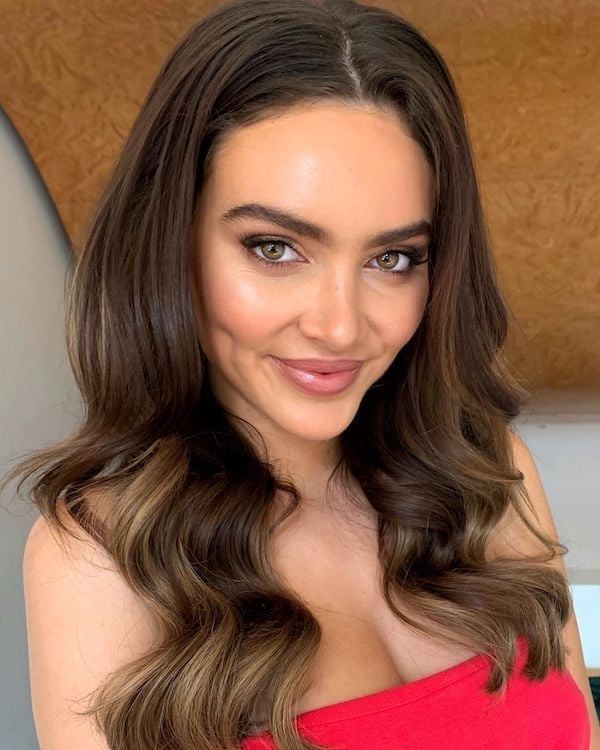
Caramel starting below the ears, the dark brown roots do the work of looking grown-in. The wavy layered cut adds movement, with each layer showing the warm tone at a different height. This shade suggests beach vacation even in January. It genuinely flatters thick wavy hair. Skip it if you want a high-contrast look. This one is built on subtlety, not drama.
Warm caramel tones blend smoothly
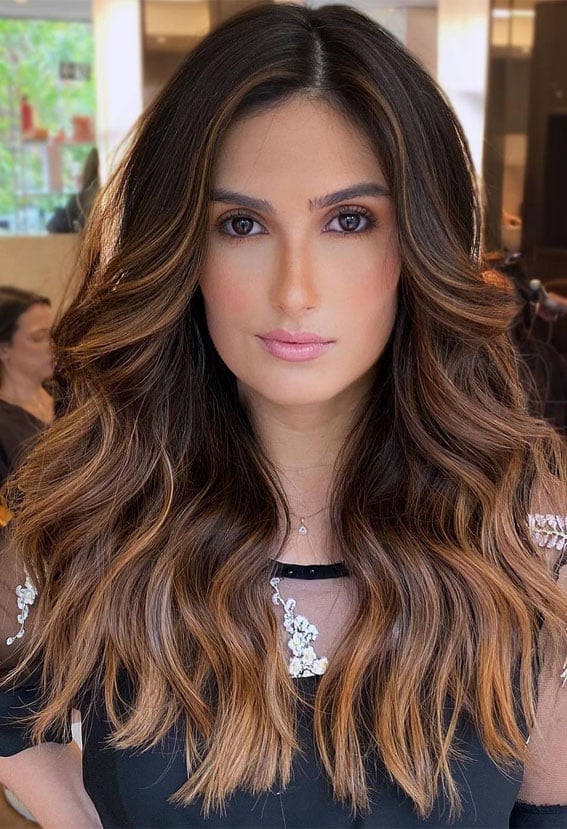
Soft wavy layers make an ombre transition look intentional, not grown out. Dark brown roots graduate into a warm caramel hue here, with no hard line between them. The thick, wavy texture holds the color gradient visible even when the hair moves. Tell your colorist: dark brown to caramel ombre, soft wavy layers. Skip it if you have fine hair that struggles with volume. A large barrel iron builds the wave pattern; trim every eight to ten weeks keeps the shape from looking straggly.
Bold magenta ends for a statement
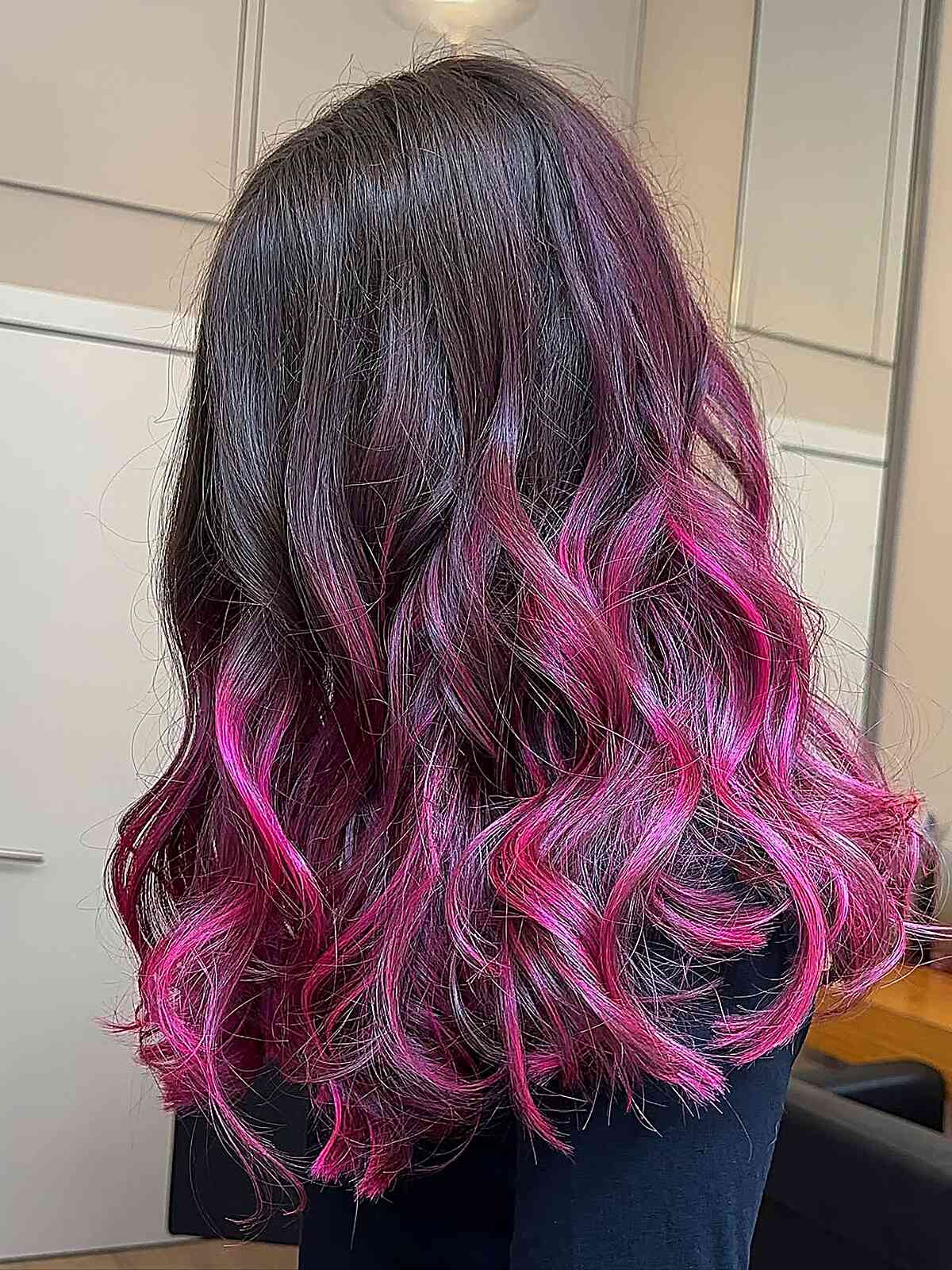
How long does a vibrant color like this actually stay bold? Dark brown roots anchor the look, while the ends shift to a true magenta. The wavy blowout adds fullness, making the multi-dimensional color look one deliberate piece. About three hours in the chair for the initial application. A color-safe shampoo is not optional here; without it, the magenta fades to a dusty pink inside four weeks.
Deep red ends on a dark brown base
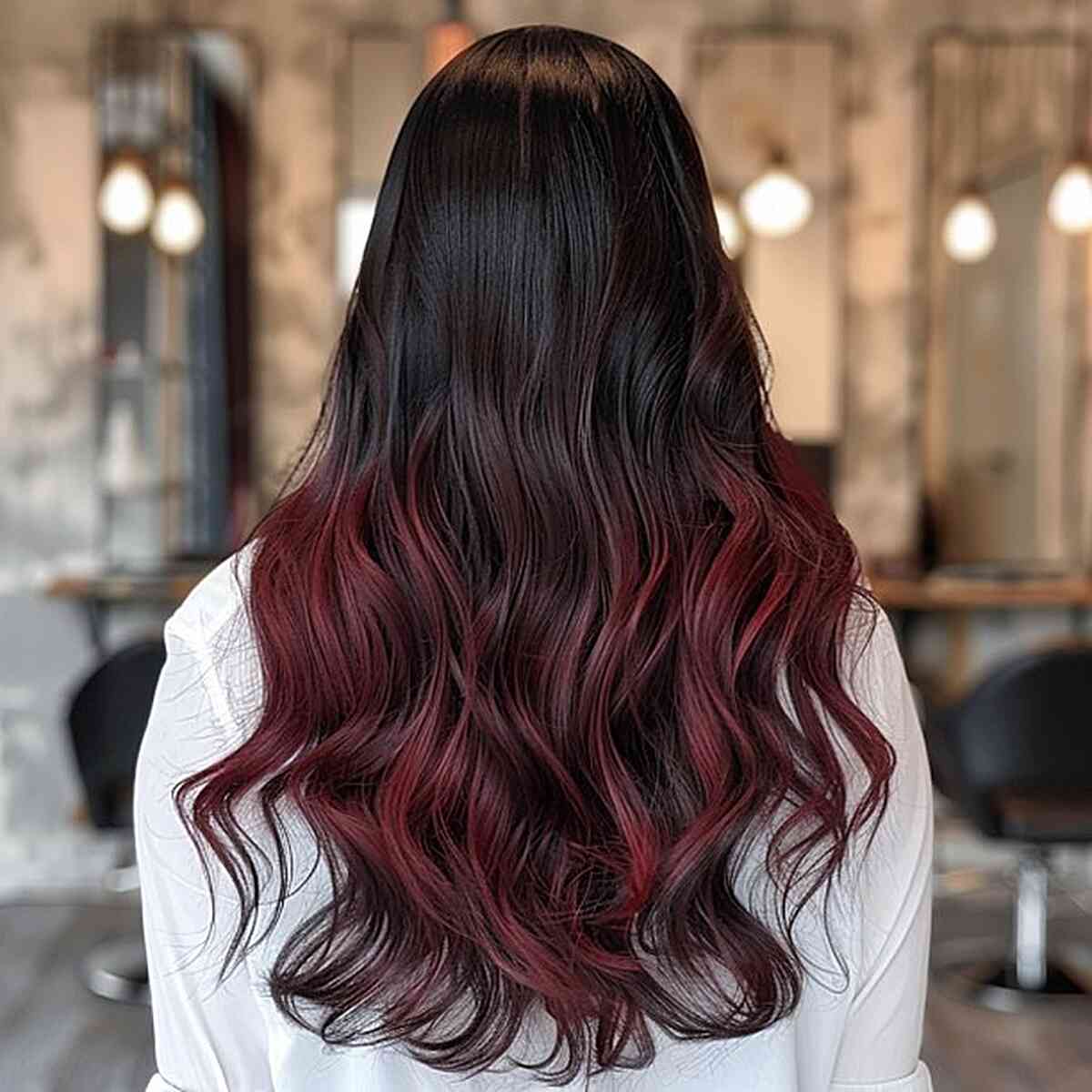
Red at the ends, brown at the roots, and a smooth gradient in between. Dark brown roots anchor the look, while the ends shift to a vibrant deep red. The wavy styling shows the color graduation clearly, each wave catching a different depth. Tell your colorist: dark brown to deep red ombre. Pass when you prefer cooler tones; this one runs warm. A color-safe shampoo is essential to keep the red from turning rusty.
Fiery red ends create a striking contrast
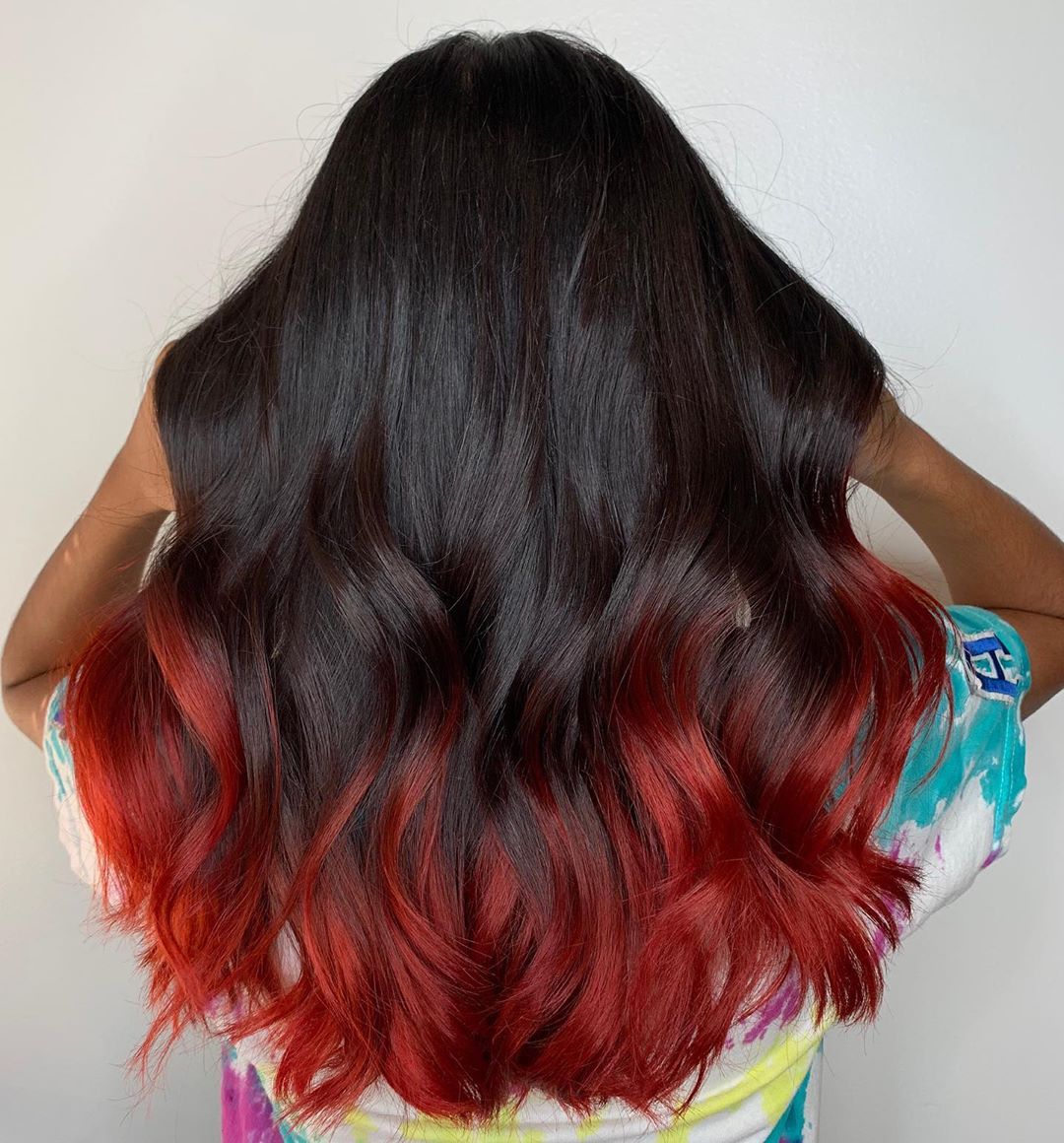
Unlike a subtle balayage, this one announces itself. Dark brown roots hold the base, then the color jumps to a vibrant, fiery red at the ends. The thick, wavy texture adds depth and movement, so the contrast never looks flat. Not for anyone who wants a subtle color change. A smoothing serum helps the waves look neat, not frizzy.
Golden yellow Ombre for a modern look
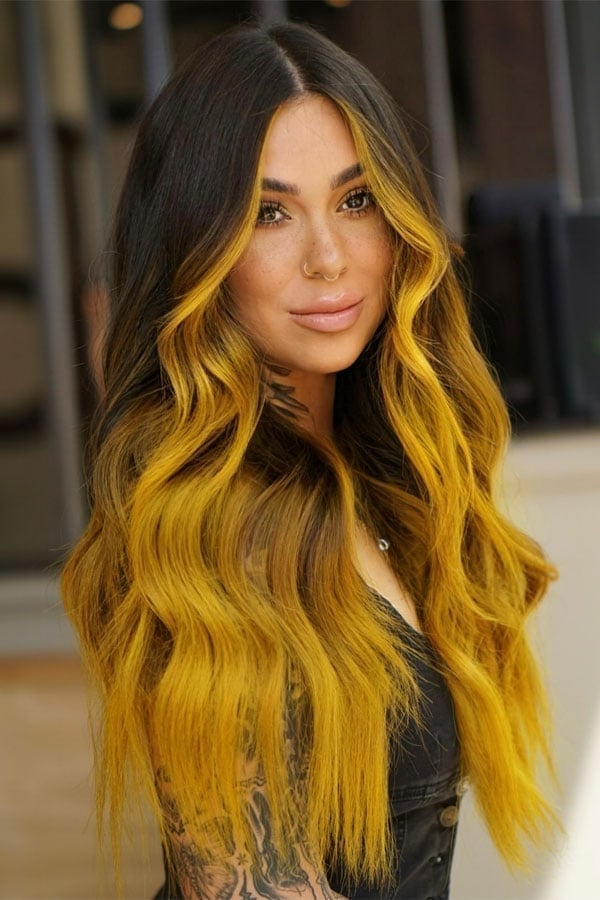
The transition starts mid-length, with dark brown roots giving way to a vibrant golden yellow hue. Wavy, layered cut enhances the blended color, so the shift looks deliberate. Thick, wavy texture holds the shape and the color gradient. Tell your colorist: dark brown to golden yellow ombre. Very fine hair may not support the contrast. Regular trims keep the layers from losing their shape.
Bright blonde ends on a dark brown base with wavy thick
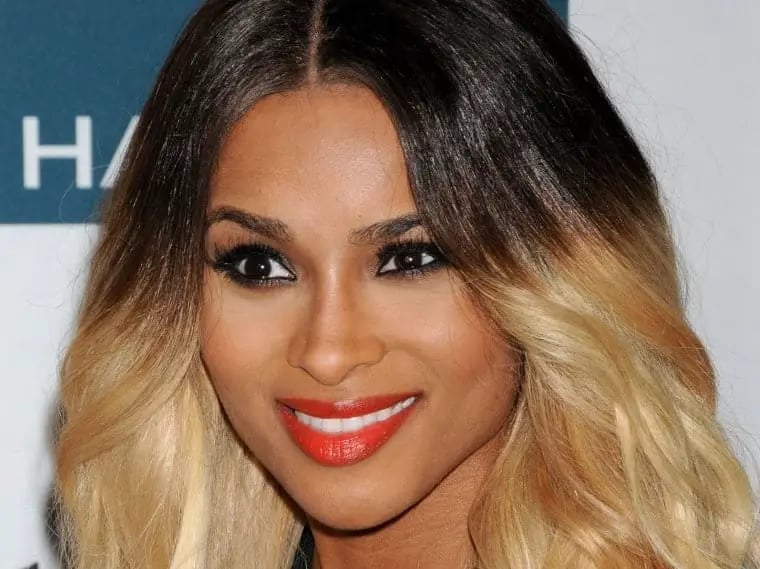
Dark brown roots meet bright blonde ends in a dramatic ombre transition. The wavy blowout adds volume and movement, making the ombre the focal point. Thick, wavy hair at collarbone length or longer handles this dramatic shift best. This look requires substantial lightening, so expect significant bleach exposure.
Cool ash blonde on a dark brown base, everyday version
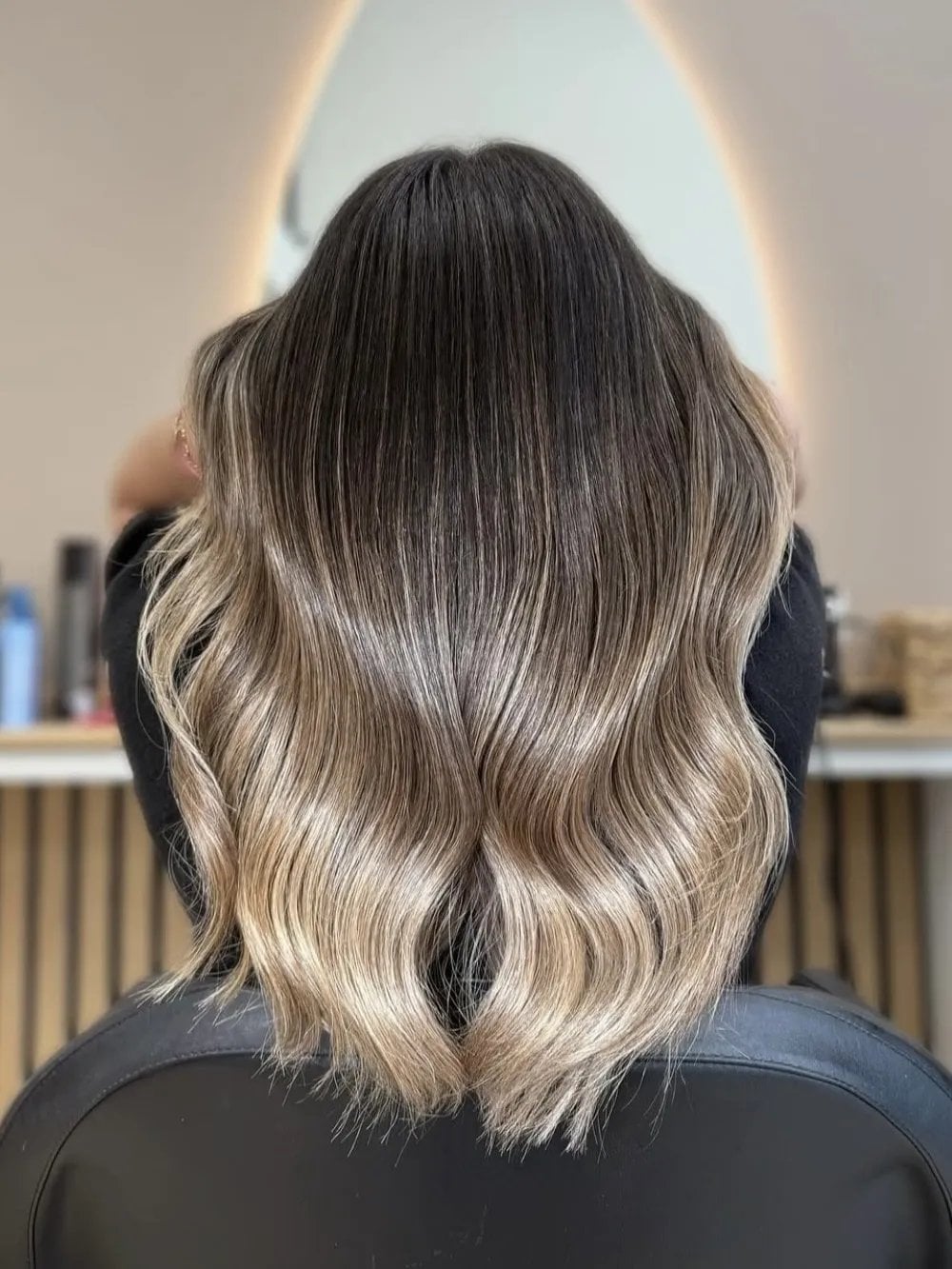
Where a warm blonde ombre reads lighter, this one lands cooler and more deliberate. Dark brown fades into ash blonde with a smooth transition that requires professional blending. Thick, wavy hair suits the look, especially when the base has enough depth to anchor the cool tone. Pass when your hair struggles to lift to pale blonde without excessive damage, ash tones need a clean canvas. The voluminous waves come from a blowout, not natural texture alone.
Caramel blonde ends on a dark brown base, softer variation
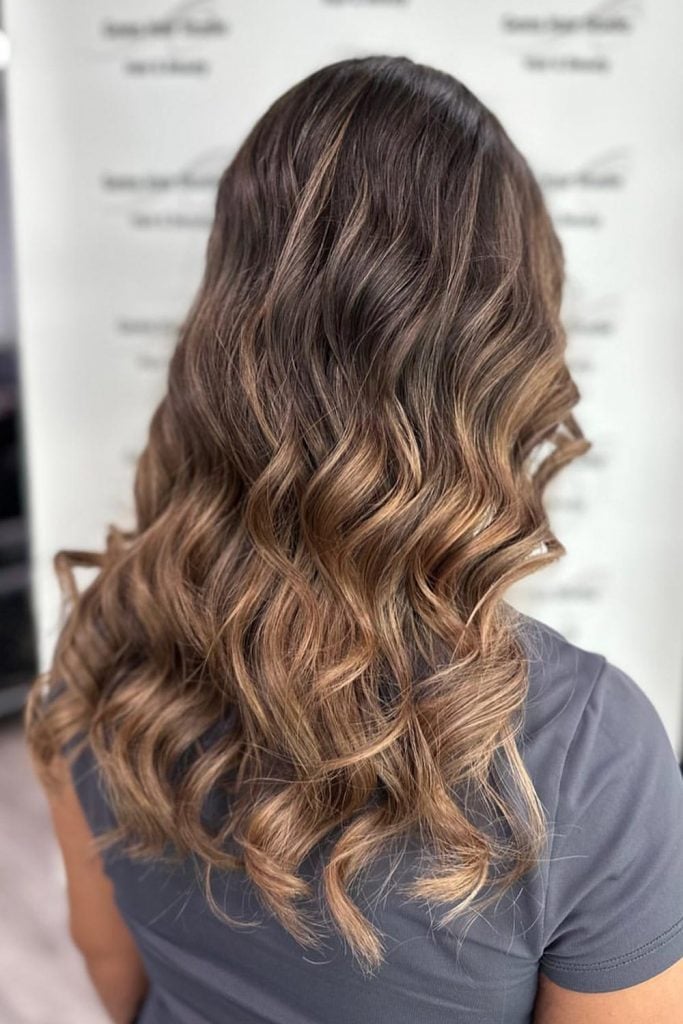
Compared to a stark ash-to-dark contrast, this caramel blonde transition feels warmer and less demanding. Dark brown roots melt into caramel blonde ends through a technique that keeps the midpoint soft rather than striped. The loose waves are styled with a large barrel iron, not natural curl. Thick, wavy hair carries the multi-dimensional color without looking busy. Not for anyone who prefers a cooler, more muted tone, caramel reads golden by design.
Lighter light blonde on dark blonde roots
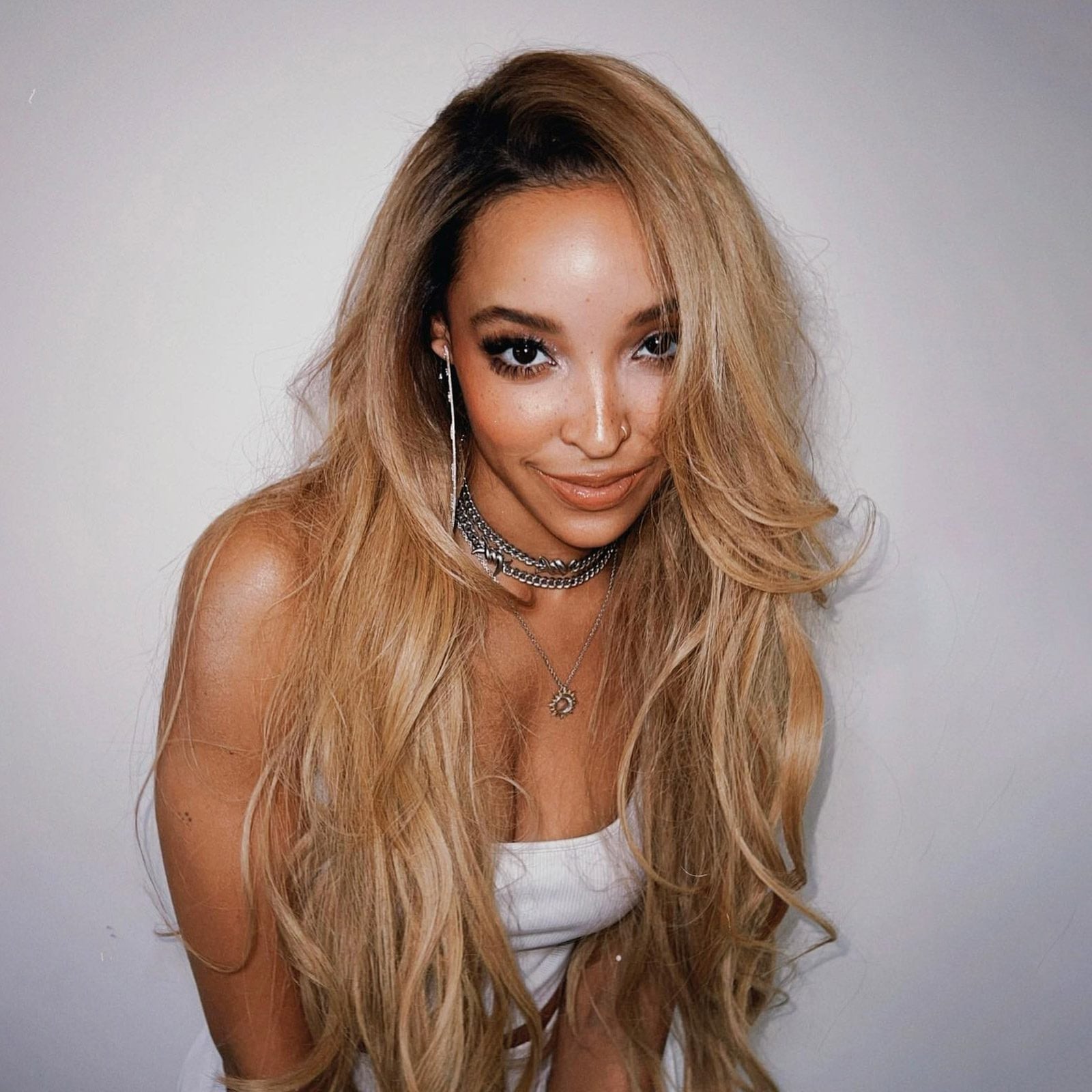
Dark blonde roots keep the grow-out gentle, while light blonde ends create a lighter effect that avoids brassiness. The air-dried texture relies on a texturizing spray, not a curling iron. Thick, wavy hair at collarbone length or longer lets the color breathe. Dark natural hair requires a base close to the end shade for that smooth transition.
Bright blonde melts into dark brown
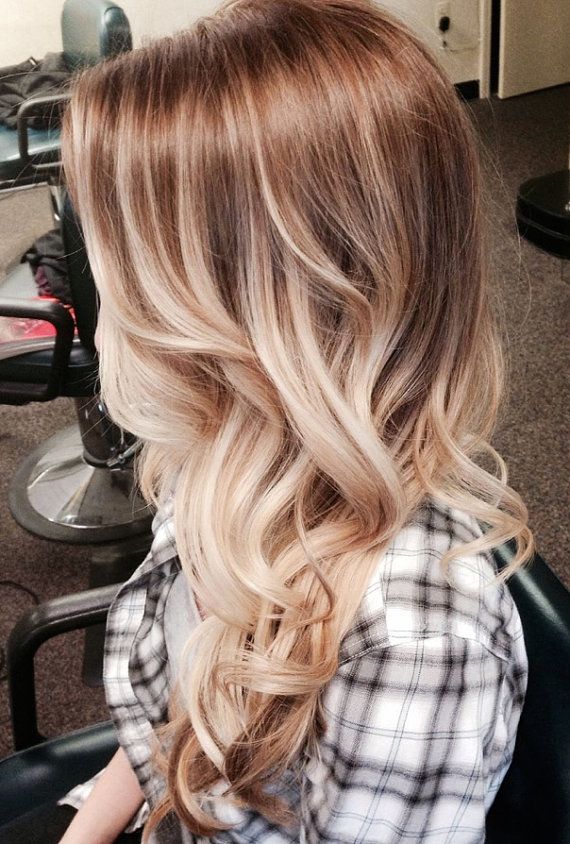
Dark brown roots anchor a bright blonde melt that reads bold rather than subtle. The layers and soft waves create volume without losing the color line. Thick, wavy hair handles the contrast well. The depth at the roots keeps the blonde from washing out the shape. Not for anyone who wants a gradual, barely-there color change.
Honey blonde on a dark brown base
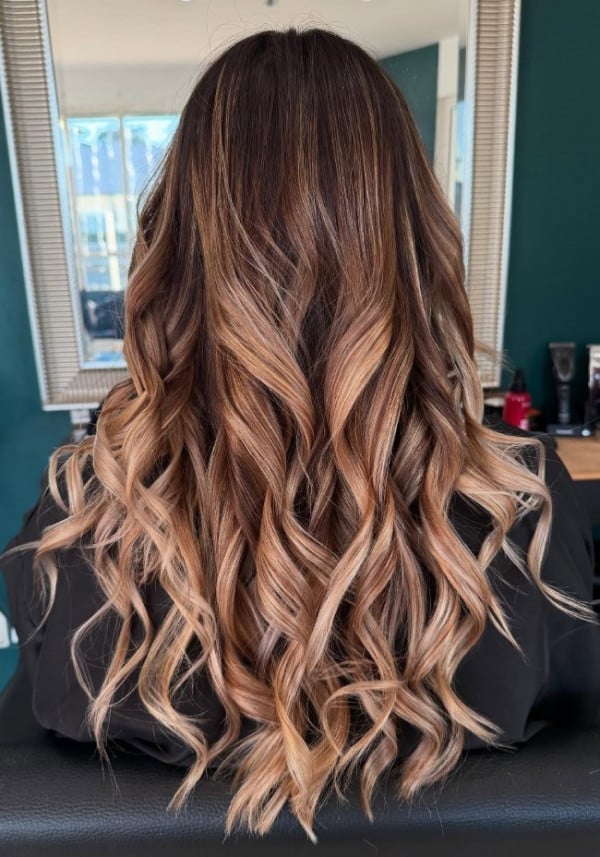
Compared to a caramel ombre, honey blonde reads warmer and richer. The transition from a rich dark brown base to warm honey blonde ends creates a gradient that shifts with movement. Loose, voluminous waves push the color shift into view, making the ombre the focal point. Ask your colorist for: dark brown to warm honey blonde ombre. Thick wavy hair at collarbone length or longer carries the weight of the volume without losing the line. Honey leans golden and stays that way.
Soft blended honey blonde transition
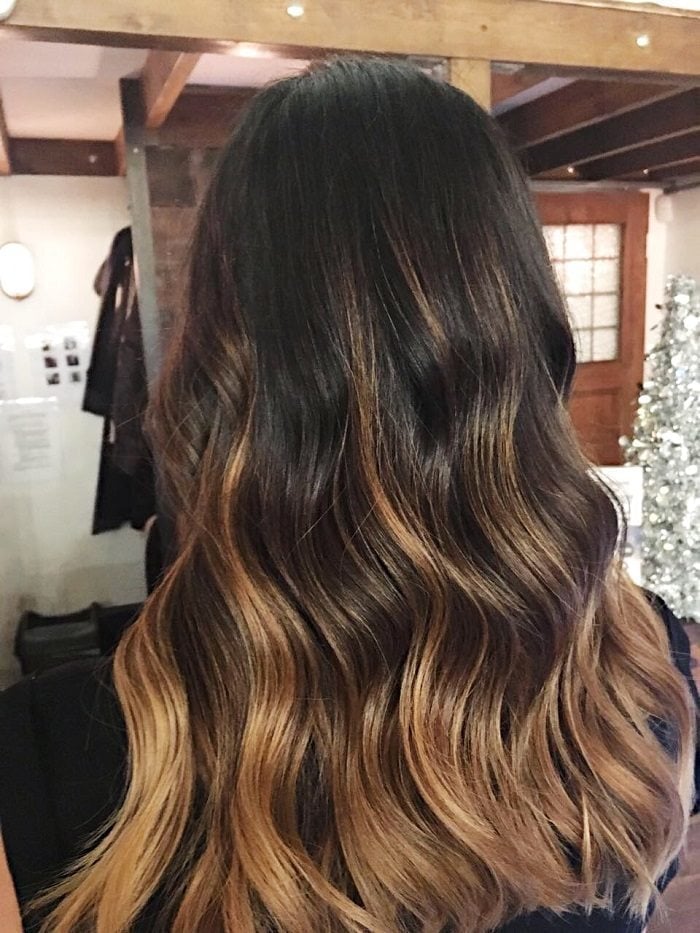
Two tones, one smooth gradient. The design relies on a soft transition from dark brown roots to warm honey blonde ends, with no visible demarcation line. A layered cut and wavy texture add movement, so the color appears dimensional. Thick wavy hair that reaches at least the collarbone allows the layers to fan out properly. This is a melt, not a stripe.
Classic Ombre with blended layers
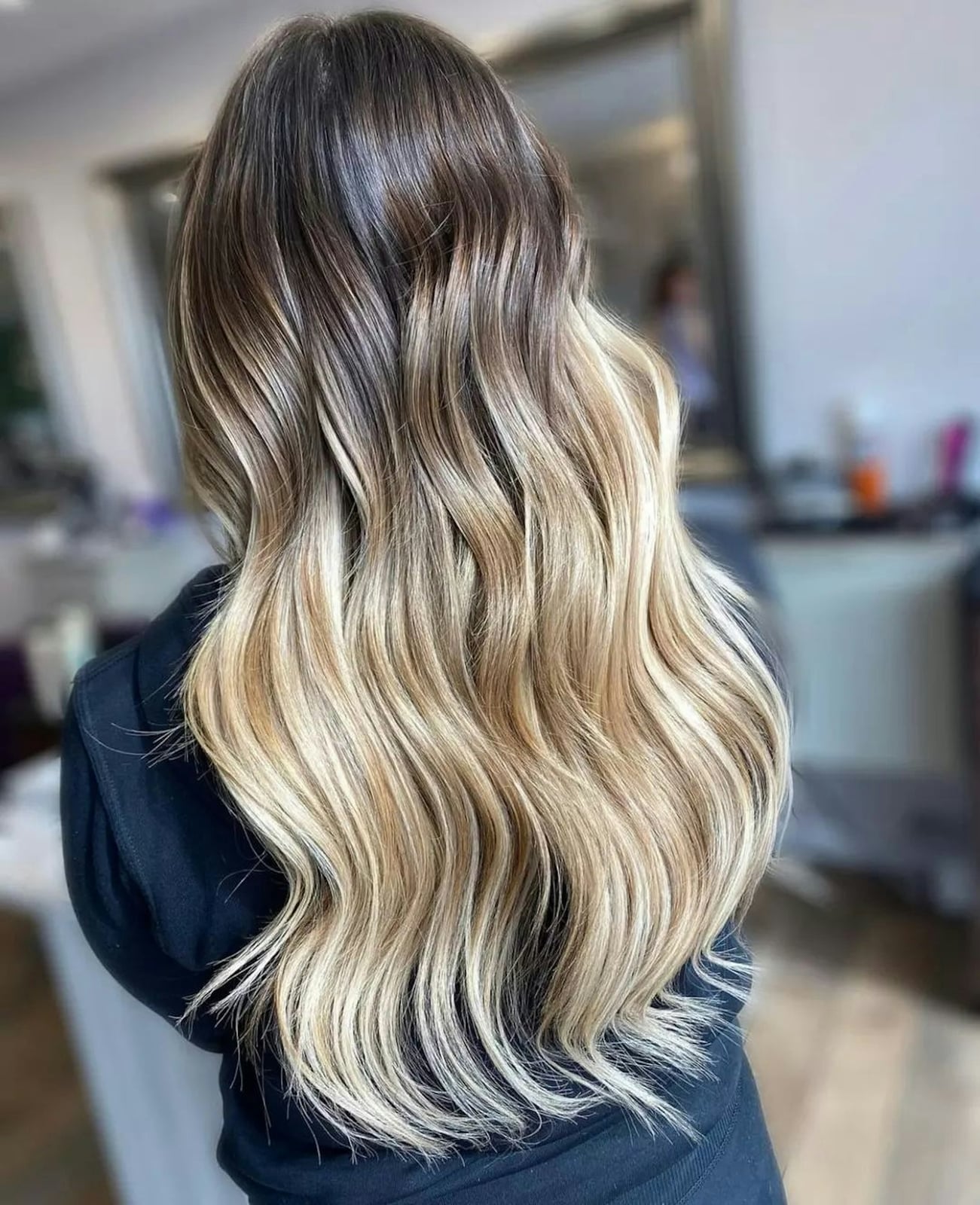
Dark brown roots transition to bright blonde ends through a classic ombre technique. Soft, blended layers prevent the color from sitting in a solid block, letting the waves carry the gradient through the full length. Ask your colorist for: dark brown to bright blonde classic ombre, blended layers. Thick wavy hair at least collarbone length gives the layers room to work. This keeps a visible lightening zone.
Blonde Ombre on a layered lob with curtain bangs
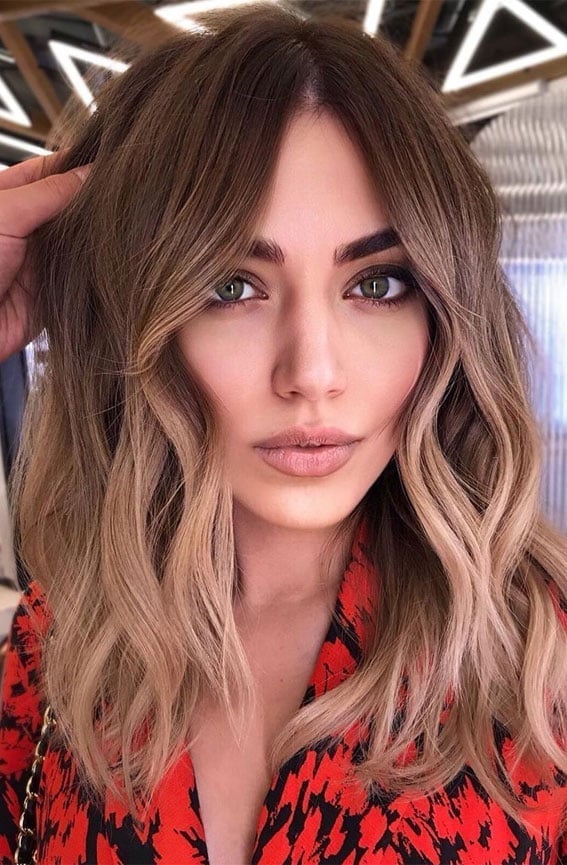
A lob with layers and curtain bangs changes how an ombre reads. Dark brown roots melt into bright blonde ends, and the curtain bangs frame the face without shortening the visible length. Wavy styling adds fullness, making the color shift appear wider than it is. Curtain bangs soften round and heart faces. Skip it if you want to avoid fringe maintenance.
Dramatic blonde Ombre on a pixie cut
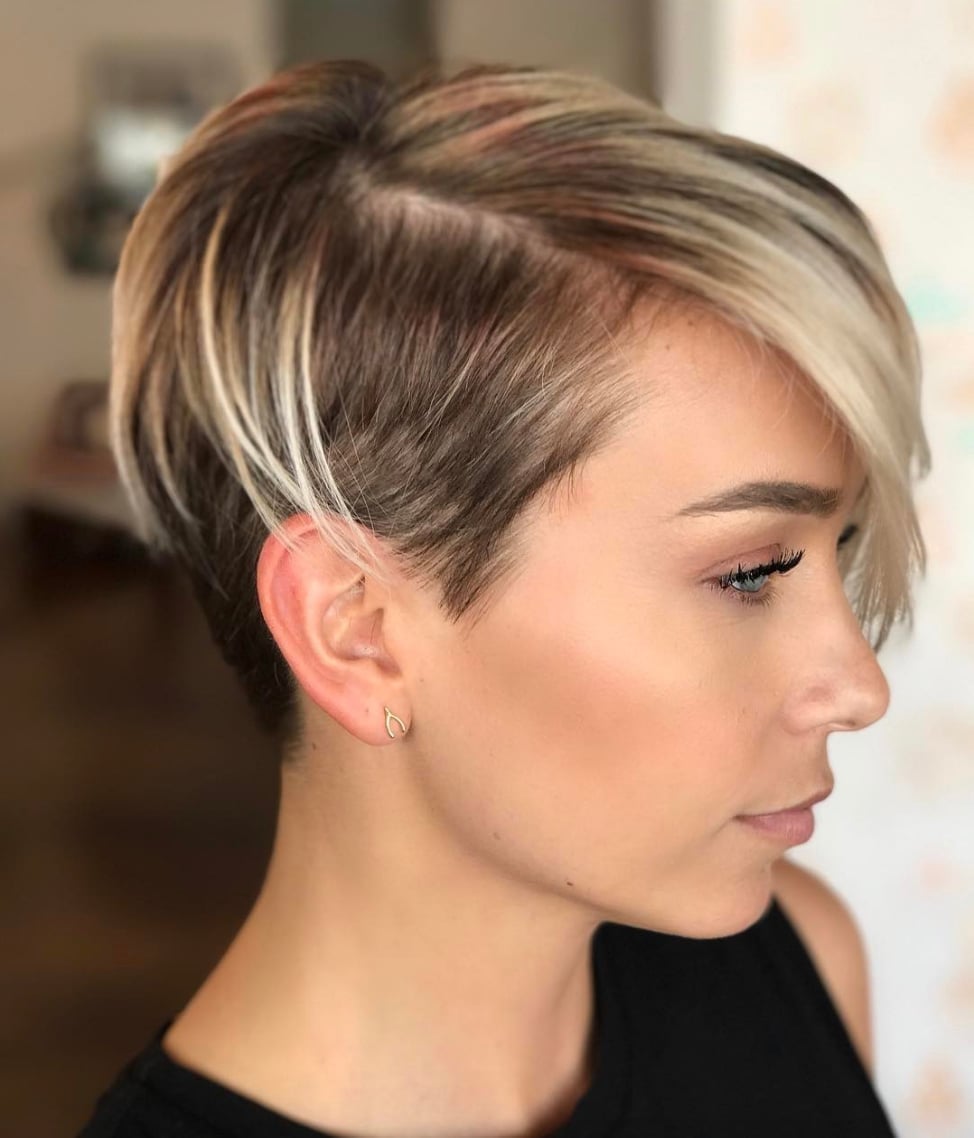
A pixie cut with a dramatic ombre effect from dark brown roots to bright blonde ends. The fine, straight texture keeps the color line sharp, and the slicked-back styling with a side part and swept-over bangs pushes the contrast front and center. Ask your colorist for: pixie cut, dark brown to blonde ombre, swept-over bangs. Side-swept bangs can soften square and oval faces. Not for anyone who prefers longer hair. This is a short commitment.
Dramatic blonde ends on a sharp bob
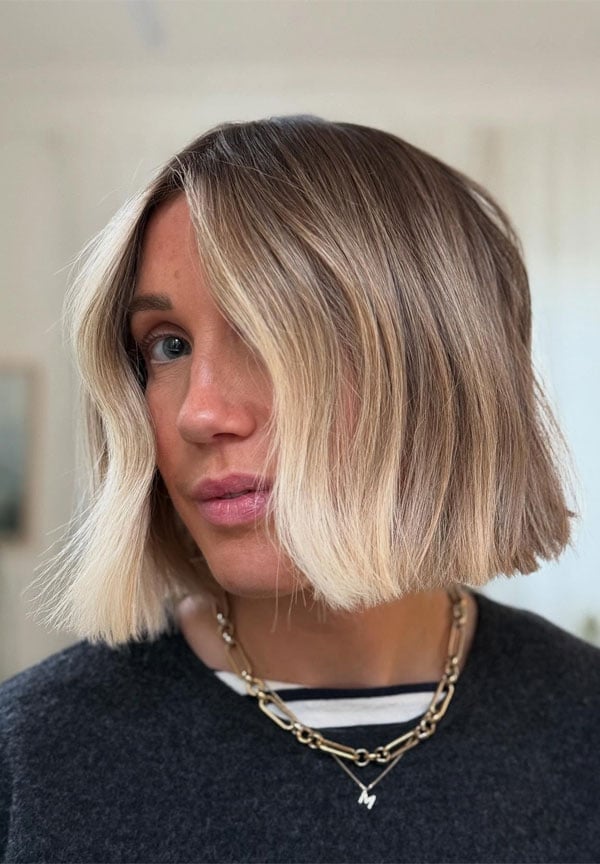
Two ends of the same spectrum exist: a soft melt and a hard line. This bob takes the hard line. The dark blonde base sits close to the root, then shifts sharply into bright blonde ends. Fine wavy hair holds the shape of a sharp bob without puffing. The middle part keeps it clean. Skip it if you prefer a softer blend between shades. The contrast is the point. Subtle waves are best air-dried or set with minimal heat.
Rose gold ends on a dark brown bob
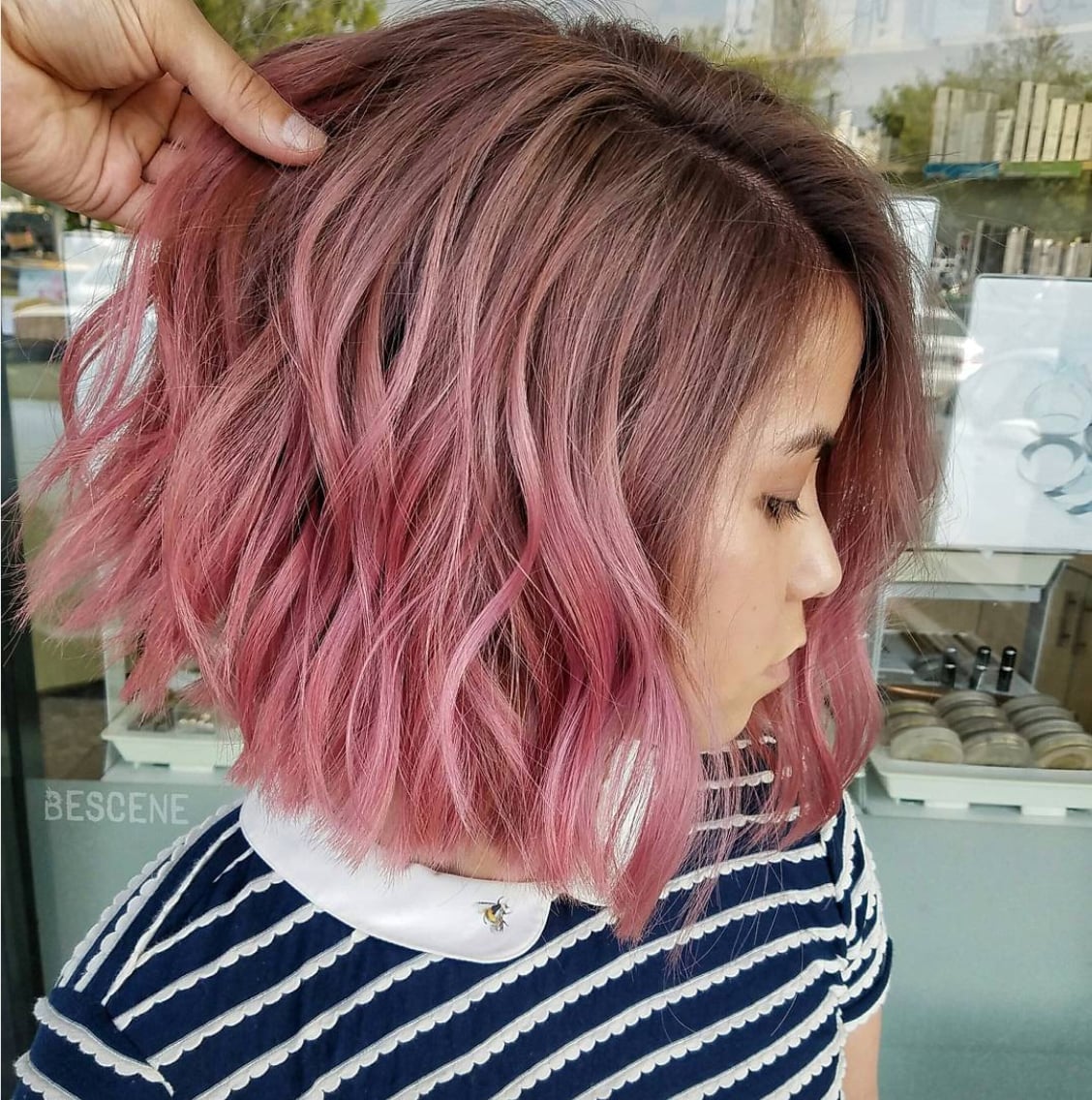
A precise design lives in this angled bob. The dark brown base meets a vibrant rose gold hue at the ends, and the line between them is soft. The wavy texture of the hair and the relaxed blowout let the color look a single unit, not two separate pieces. Fine wavy hair takes the angled bob shape well. Skip it if you prefer cooler or warmer tones exclusively; rose gold sits in the middle. Tell your colorist: dark brown to rose gold ombre, angled bob. The blowout is the styling key.
Light blonde on dark blonde with volume
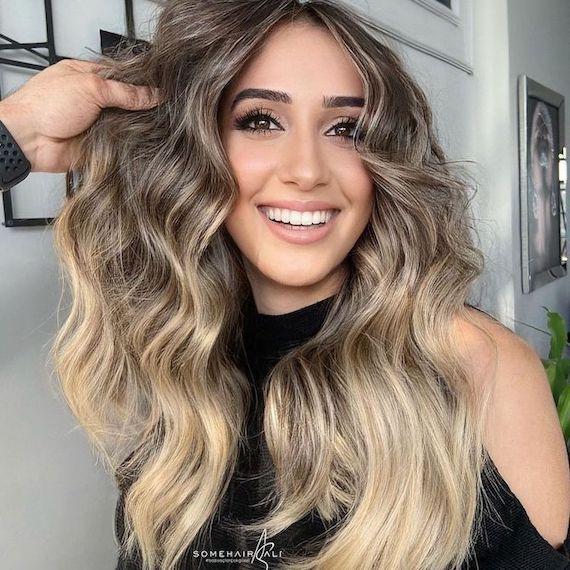
One version starts at the root and stays close to the natural shade. Another starts lighter. This one begins with dark blonde roots and moves to a bright light blonde at the ends. Thick wavy hair with a layered cut gets the volume and movement the transition needs. The seamlessness of the ombre is the draw.
Teal to white to orange color melt
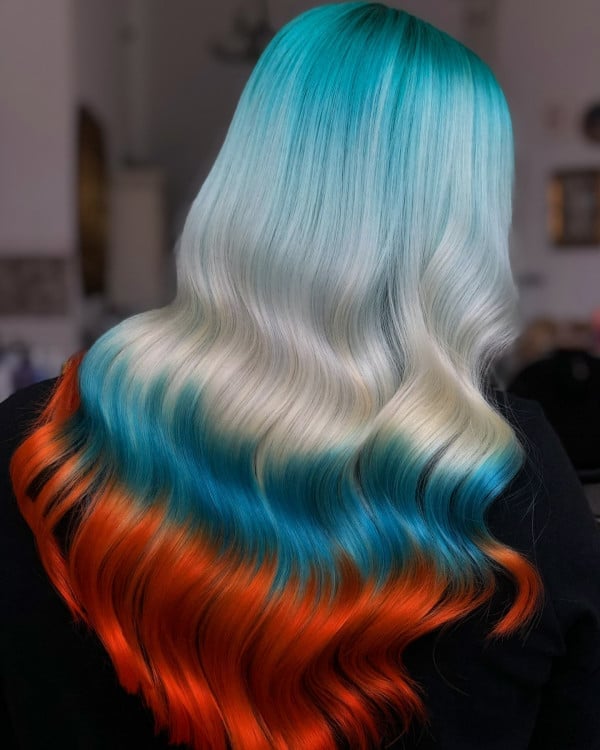
Three colors in one strand sounds like a risk. It works when the technique is a color melt. Bright teal at the crown fades into a cool white band, then into vibrant orange at the ends. Thick wavy hair shows each phase clearly. The back view here reveals the full arc of the transition. A heat protectant is required when styling the waves. The layers help the three tones look like one piece.
Natural lighter blonde balayage
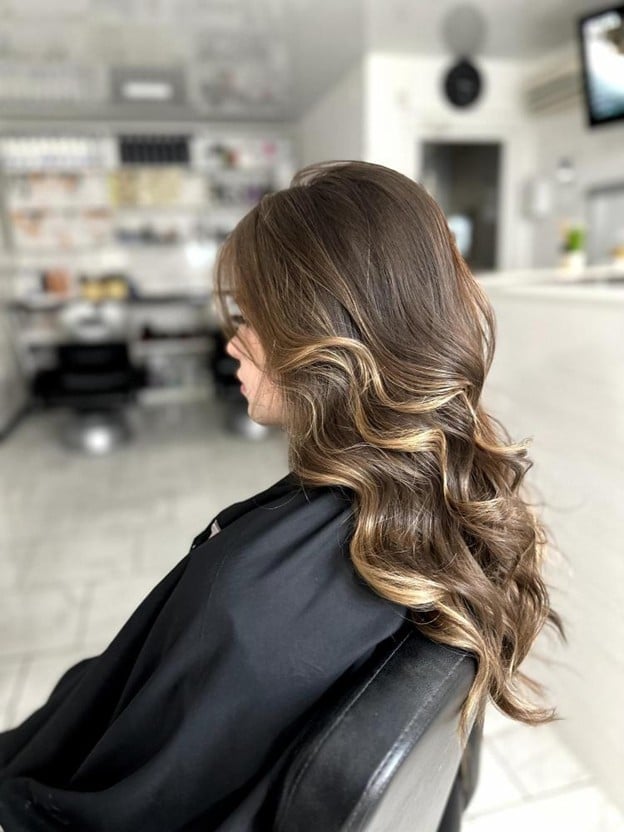
About three hours in the chair gets you this transition from a rich dark brown base to soft blonde ends. The balayage technique paints the lightener on by hand, so the line is never straight. Gentle waves and layers help the multi-tonal color blend. Thick wavy hair carries the dimension without extra product. Skip it if you want a high-contrast look; this one stays subtle.
Ash blonde ends on dark brown waves, bolder variation
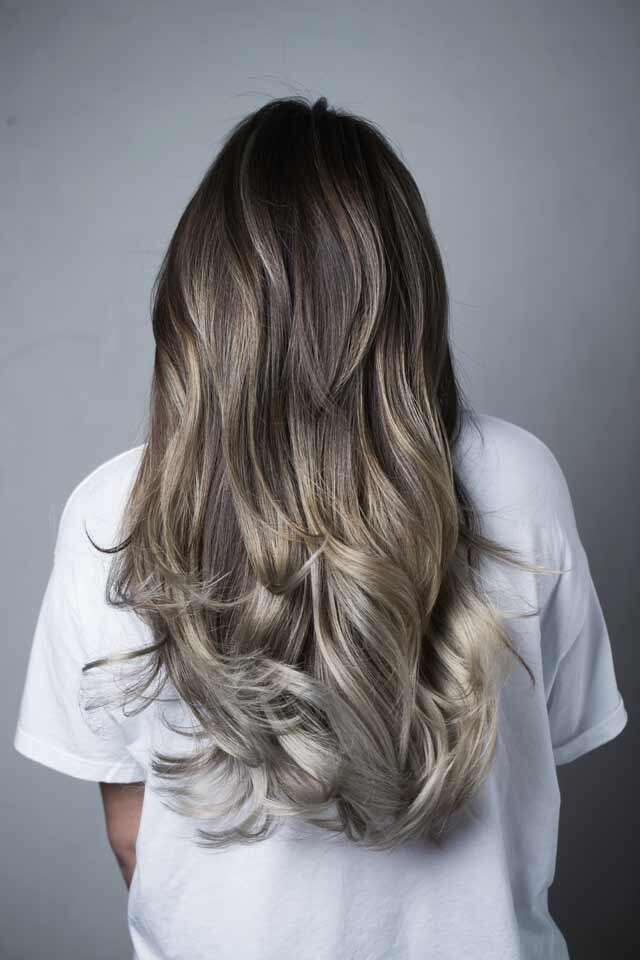
Cool tones need a cool base. A dark brown root with ash blonde ends relies on the hair’s natural undertone staying neutral through the transition. This ombre works best on thick wavy hair. Skip it if your hair pulls warm tones easily. The ash will turn brassy fast. The layered cut lets the color show at different depths. Tell your colorist: dark brown to ash blonde ombre, layered cut. Soft waves are the natural partner here; a blowout with a round brush sets the wave pattern before the color dries.
Platinum blonde on fine straight hair
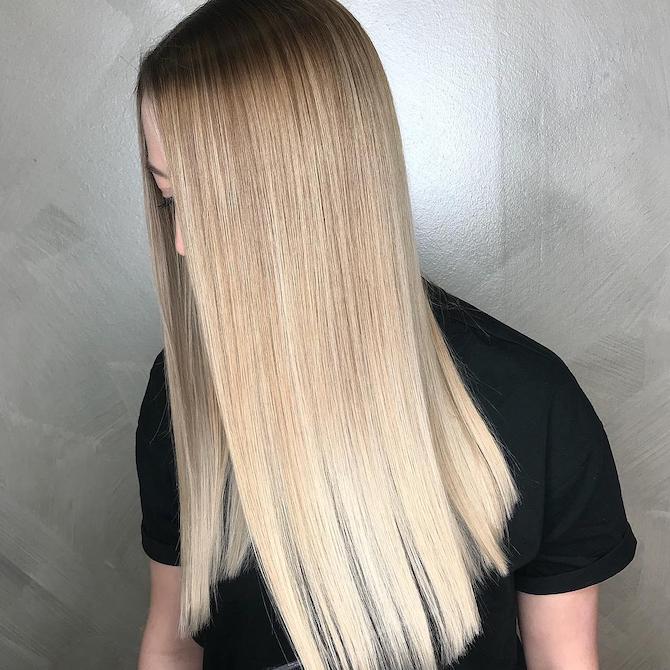
Fine straight hair shows every line. A dark blonde root that melts into platinum blonde ends hides the grow-out phase well. The technique uses a blended ombre application, not a hard stop. Thick hair might fight the sleekness here. The straight blowout is the whole point. It shows the color transition without texture interference. Toning every six weeks keeps the platinum from pulling yellow.
Balayage highlights for lighter effect
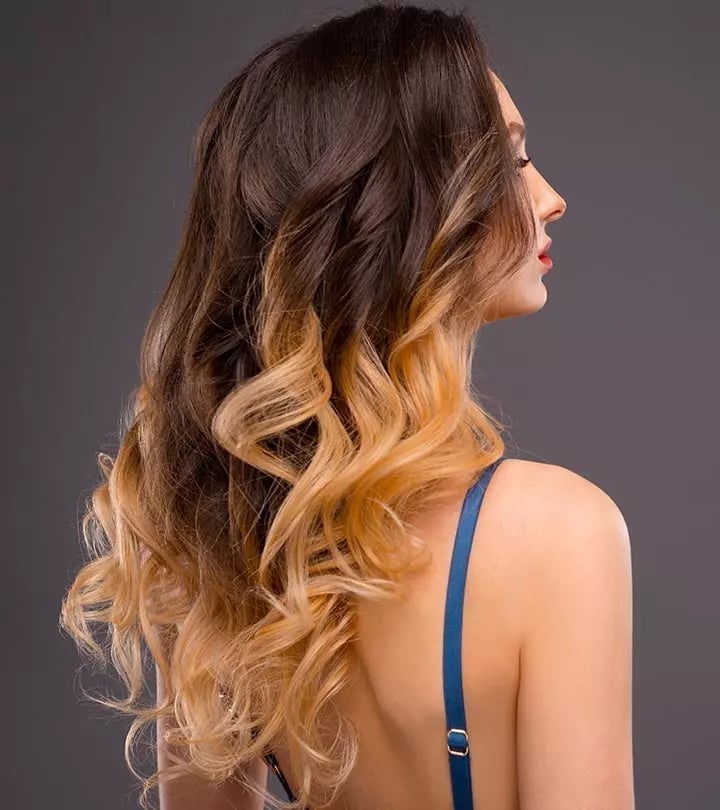
Balayage is not ombre, but this design uses both. A dark brown base gets bright blonde ends, with the balayage technique painting soft highlights through the midsection to bridge the two. The result is a sun kissed gradient. Loose waves push the highlights forward. This one is intentionally blurred. Ask your colorist for: dark brown to bright blonde balayage ombre.
Lavender hue on a dark base with a half-up knot
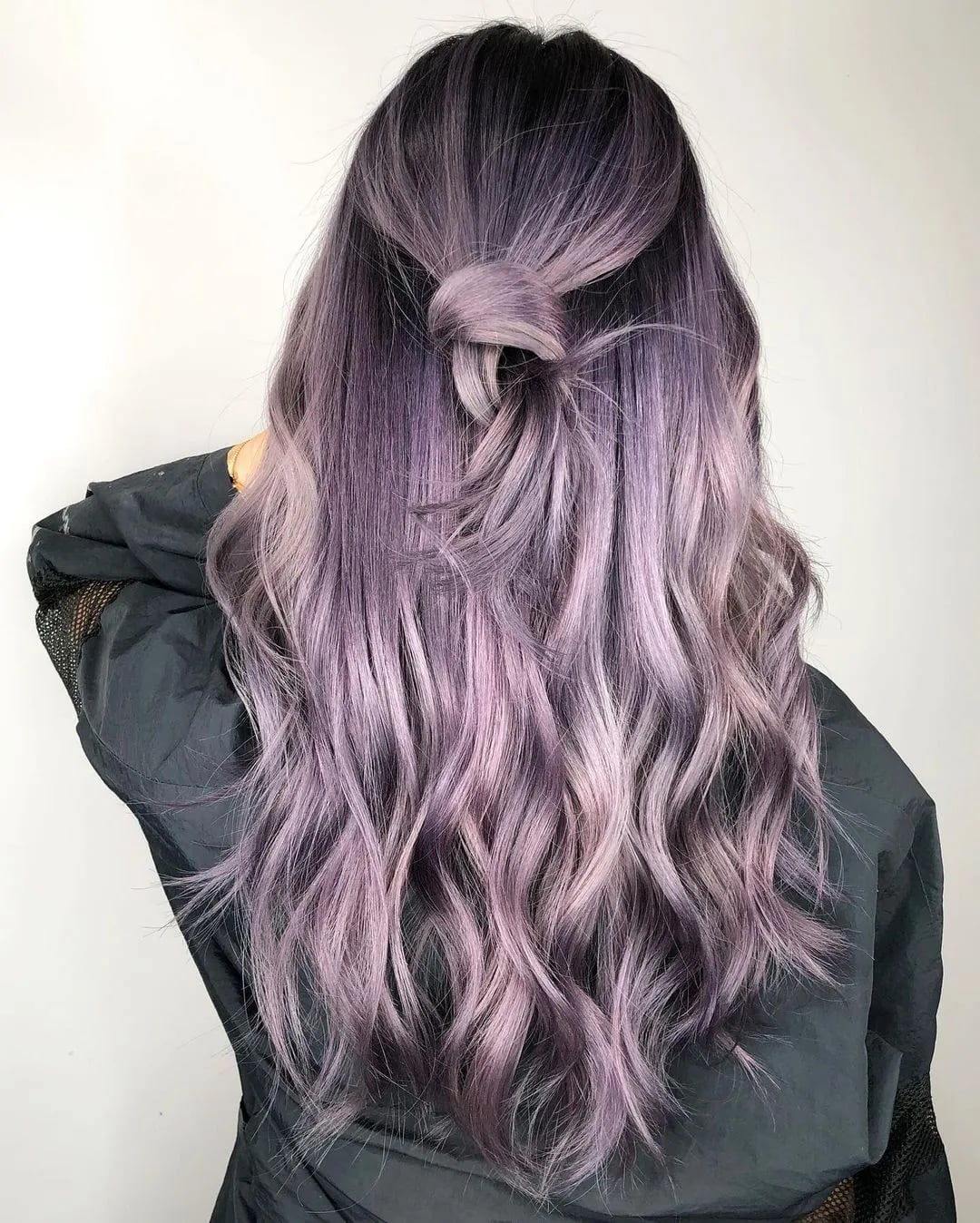
Pastel on dark is a commitment. A dark base that fades into soft lavender requires a pre-lightened mid-length and ends before the lavender toner goes on. The half-up knot works because the color is concentrated on the lengths. Fine wavy hair holds the wave in the knot without weight pulling it flat. Skip it if you prefer warmer tones, lavender is cool by nature. A color-safe shampoo extends the life of the pastel.
Icy silver on deep black roots
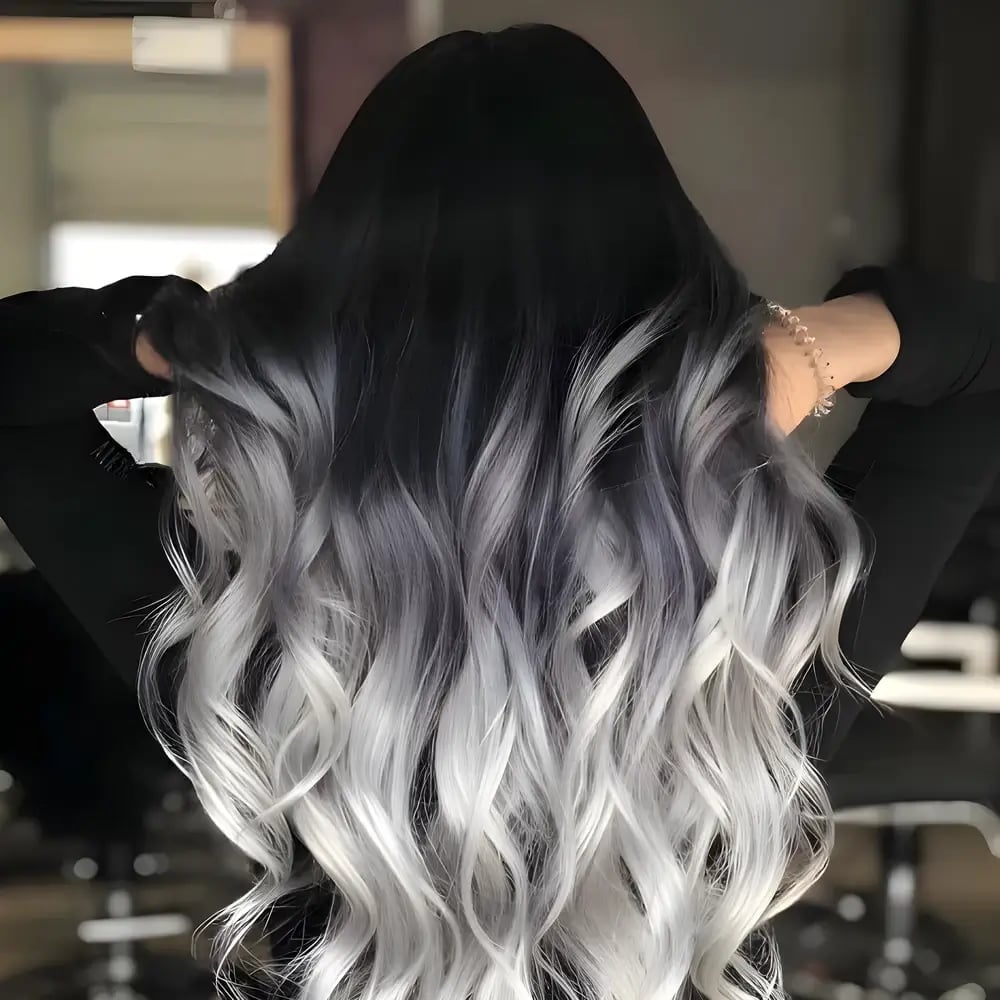
Silver on black is the highest contrast ombre you can wear. Deep black roots stay untouched, while the ends lift to a cool icy silver. The melt needs to be smooth or the line looks a wig. Thick wavy hair softens the gradient effect, making the transition feel organic. Skip it if you have a warm skin undertone. The silver will wash you out. Tell your colorist: deep black to icy silver ombre. Regular toning is non-negotiable; plan for a toner visit every four weeks.
Caramel tones for a lighter look, wavy
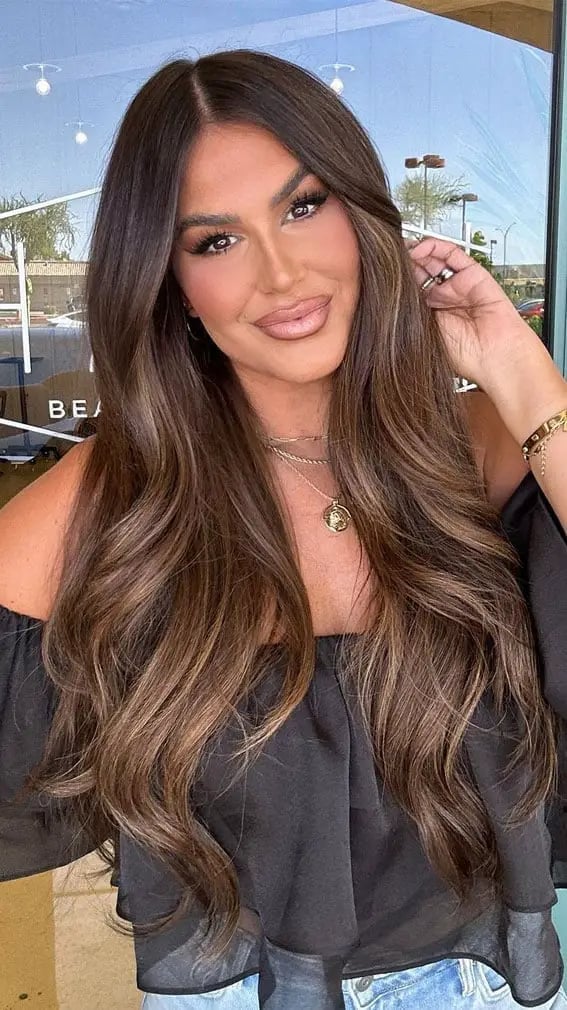
Smooth ombre transitions rely on one thing: placement precision. This version starts with a rich dark brown base and shifts into warm caramel tones through a wavy, layered cut that catches every gradation. Thick wavy hair that starts at the collarbone carries the blend best; the middle part lets the color read evenly on both sides. This is built for subtlety, not drama. A wavy layered cut needs regular trims to keep the shape clean, and a heat protectant is essential when you style the wave pattern. The dark brown caramel ombre layers look grown in, not painted on.
Final Thoughts
Pick the ombre that matches your routine and your risk tolerance.
- Fine hair: a subtle root melt with warm caramel ends adds volume without weight.
- Ten minutes in the morning: a balayage blend that grows out soft.
- Cool base that pulls brassy: schedule toning every six weeks.
- Want a statement: magenta or teal ends on a dark base.
Choose the transition that fits your life.